
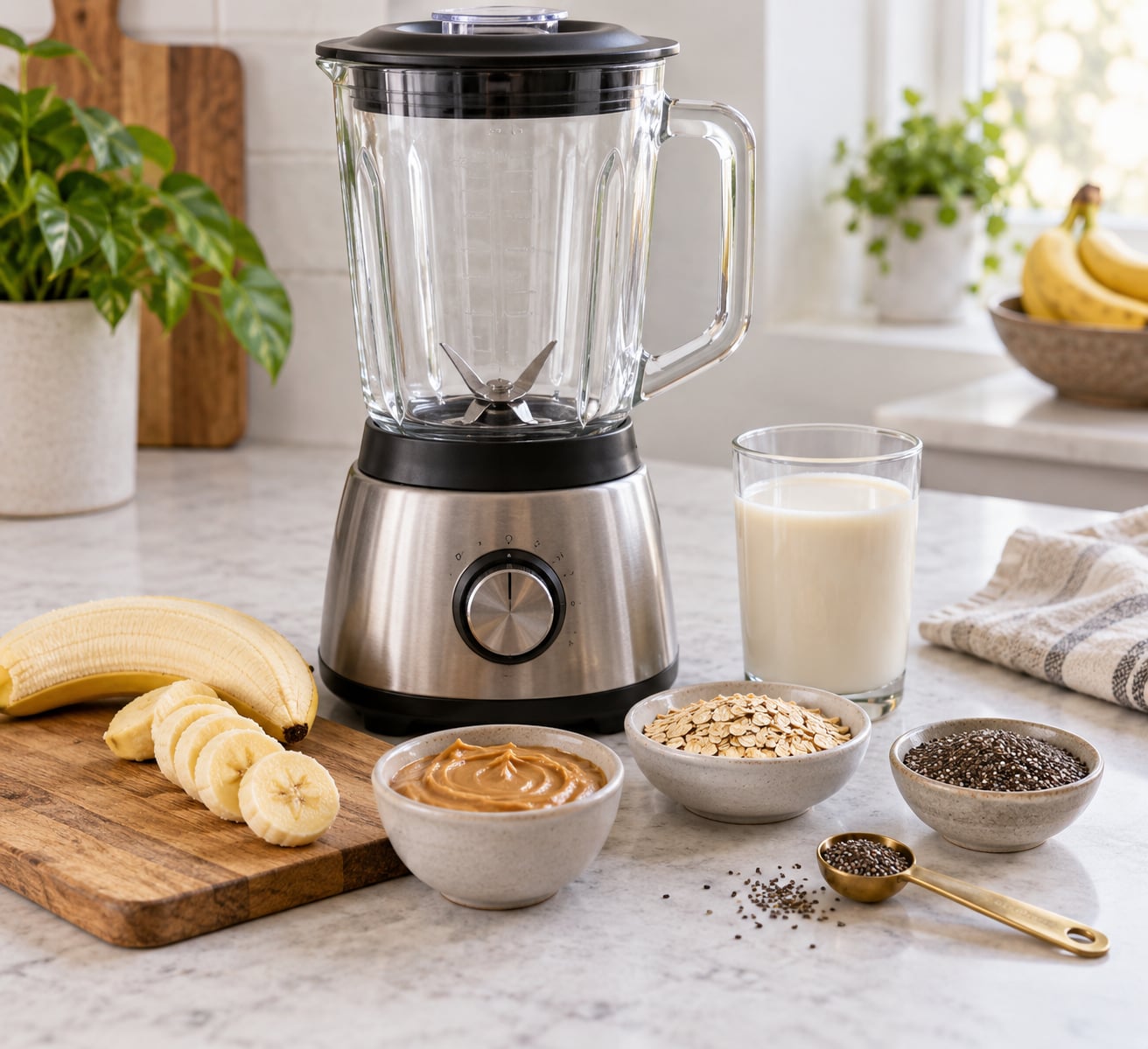
Figuring out how to make a peanut butter banana smoothie healthier comes down to three things: cut the added sugar, add protein, and add fiber. The standard recipe is two bananas, a pour of peanut butter and a cup of sweetened milk, and that usually lands somewhere around 450 to 550 calories with 40 grams or more of sugar and only about 8 grams of protein. A measured tablespoon of peanut butter, one banana instead of two, unsweetened milk and a scoop of oats or chia fixes most of it in a five-minute blend.
Here is the short version if you want to skip ahead:
- Measure the peanut butter at 1 to 2 tablespoons instead of pouring from the jar.
- Leave out honey, maple syrup and sweetened vanilla milks entirely.
- Use unsweetened almond or oat milk for the liquid.
- Add 1/3 cup rolled oats or 1 tablespoon chia seeds for fiber.
- Add 1/2 cup plain Greek yogurt or one scoop of protein powder for protein.
Numbers below come from standard USDA food values and typical label listings, so treat them as a guide rather than a measurement of your exact jar of peanut butter. Brands vary a lot, especially on peanut butter and on flavored milks.
Table of Contents
- What You Need to Make a Peanut Butter Banana Smoothie Healthier
- Step-by-Step
- Common Mistakes That Make It Less Healthy
- Frequently Asked Questions
- Is a peanut butter and banana smoothie healthy for you?
- How much peanut butter should I put in a smoothie?
- Do I need protein powder, or is peanut butter enough?
- Can I use a fresh banana instead of a frozen one?
- How do I reduce the sugar in a peanut butter banana smoothie?
- Why doesn’t my peanut butter banana smoothie fill me up?
- Conclusion
What You Need to Make a Peanut Butter Banana Smoothie Healthier
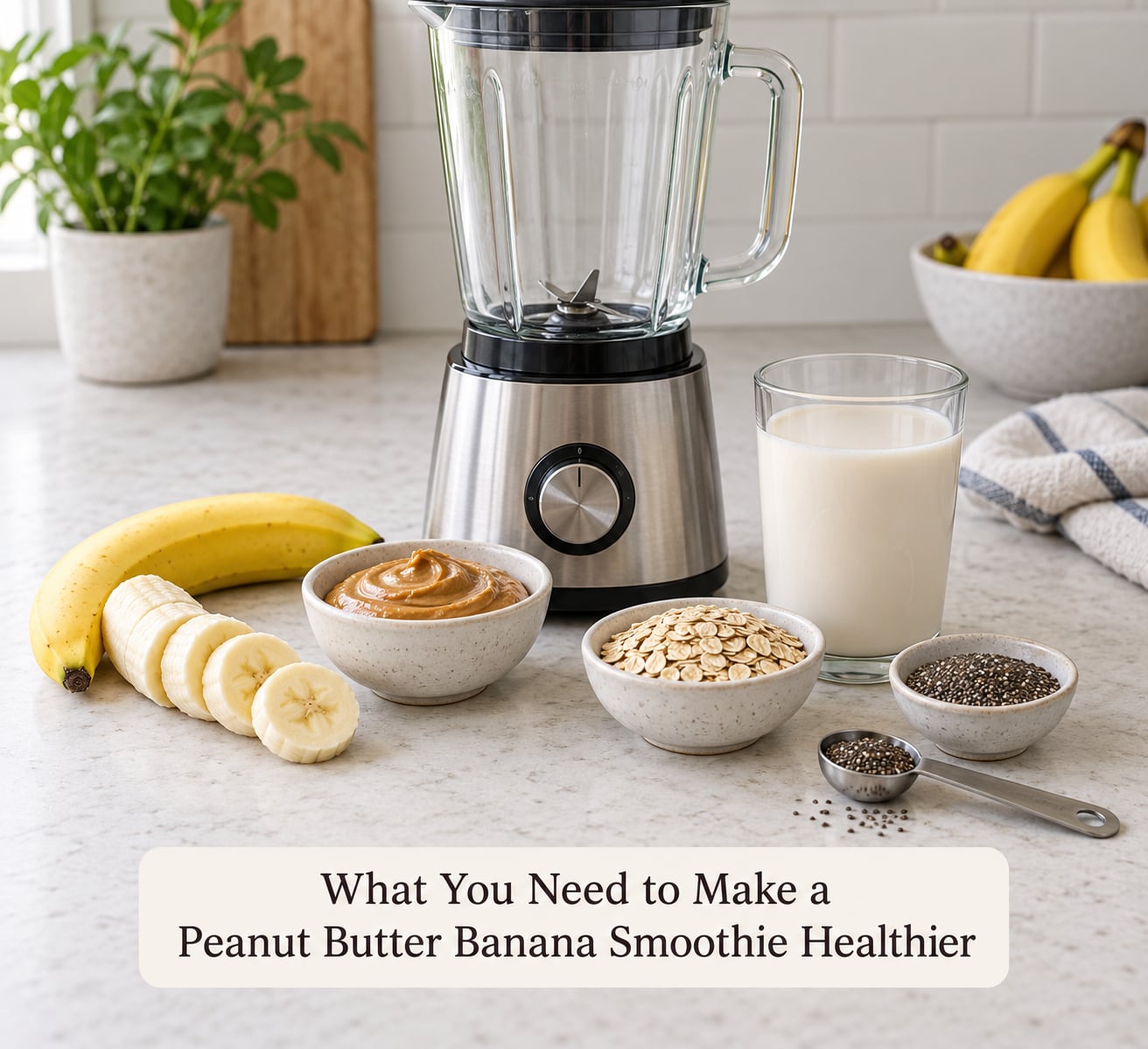
You need a blender, a measuring spoon and about five minutes. The ingredient list is short, and every base item below earns its place by adding something the drink would otherwise be missing.
The base six
- 1 medium banana, sliced and frozen (natural sweetness, thick texture)
- 1 to 2 tablespoons natural peanut butter (monounsaturated fat, plant protein)
- 3/4 cup unsweetened almond or oat milk (creaminess without added sugar)
- 1/3 cup rolled oats (beta-glucan fiber, extra thickness)
- 1 tablespoon chia seeds or ground flaxseed (fiber and ALA omega-3)
- 1/2 teaspoon cinnamon (flavor with zero added calories)
Optional boosters
- 1/2 cup plain Greek yogurt (optional, for an extra protein boost)
- 1 scoop whey, soy or pea protein powder (optional, for 20 grams of protein)
- Handful of spinach or 1/2 cup frozen peas (optional, greens you cannot taste)
- 1 teaspoon vanilla extract or 1 tablespoon cacao powder (optional, for flavor)
- Pinch of salt (optional, it makes peanut butter taste less sweet)
Two details matter more than the rest. First, check the peanut butter label: the current Dietary Guidelines for Americans advise keeping added sugars under about 10 percent of daily calories, and a jar listing peanut butter, palm oil and 6 grams of added sugar per tablespoon will undo the rest of your work. Look for jars with peanuts and salt only. Second, buy unsweetened milk. A cup of vanilla almond milk can carry 5 to 7 grams of added sugar, which is more added sugar than the smoothie should have at all.
Step-by-Step
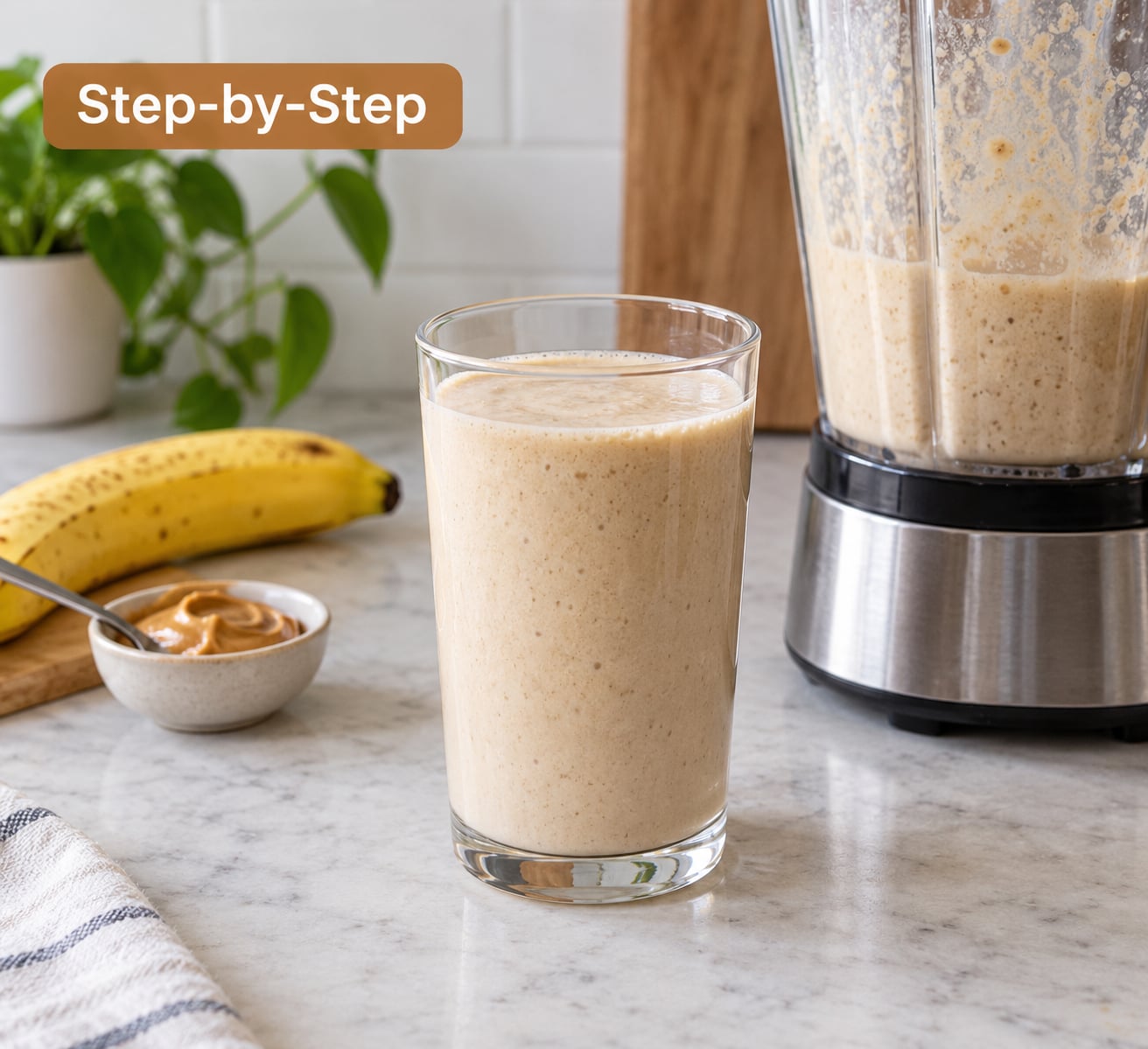
The order of ingredients matters more than most recipes admit. Peanut butter sticks to the sides of the jar, powders clump against the blades, and oats taste gritty if they never get properly broken down.
- Freeze the banana in advance. Thirty minutes on a tray is the minimum, a bag in the freezer for a month is fine, and brown speckled bananas freeze better than green ones because they are sweeter.
- Pour in the liquid first, add the oats, and blend for 30 seconds on low. The oats turn into a powder that disappears into the drink instead of leaving grit in the bottom.
- Drop in the frozen banana and the peanut butter with the motor still on low. Peanut butter needs liquid contact early or it will sit in a stuck ring around the blades.
- Add powders last. Flaxseed, protein powder, cocoa and any sweetener go in after the base is liquid, or they will cake on the blades.
- Blend 45 to 60 seconds, then taste. Thin it with more milk rather than ice, because ice melts into watery flavor while milk adds body.
How to Make a Peanut Butter Banana Smoothie Healthier: The Core Version
Blend half of a large banana or one small frozen banana, 1 tablespoon natural peanut butter, 3/4 cup unsweetened almond milk, 1/3 cup rolled oats, 1 tablespoon chia seeds and a pinch of cinnamon. That comes out near 390 calories with roughly 10 grams of protein and 11 grams of fiber per serving. For a lighter glass, use half the banana and a teaspoon of peanut butter, which drops you closer to 300 calories.
The difference against the classic version is almost entirely arithmetic. Two full bananas plus a quarter cup of peanut butter plus two cups of whole milk is north of 700 calories, and none of the fiber in that drink comes from anything you deliberately added. If you want the thickest possible texture without the extra calories, freeze the banana in advance instead of blending fresh and adding ice.
Choose your add-ins for more protein and fiber
Pick one protein booster and one fiber booster. Two of each makes a very large drink and adds up fast in calories, so most people do better with a clear pair.
| Add-in | Typical amount | What it adds |
|---|---|---|
| Plain Greek yogurt | 1/2 cup | About 17 g protein, creamy thickness |
| Whey, soy or pea protein powder | 1 scoop | About 20 to 25 g protein |
| Silken tofu | 1/2 cup | About 10 g protein, no dairy |
| Rolled oats | 1/3 cup | About 3 g fiber, beta-glucans, body |
| Chia or ground flaxseed | 1 tablespoon | About 4 g fiber plus omega-3 ALA |
| Hemp hearts | 2 tablespoons | About 6 g protein and fat |
| Spinach or frozen peas | Handful or 1/2 cup | Folate, vitamin K, no detectable taste |
| Avocado | 1/4 to 1/2 | About 5 g fiber, very creamy, no fruit flavor |
Spinach and frozen peas are the two add-ins that disappear completely under peanut butter and banana. For a breakfast that has to work for a whole household, that is often the deciding factor. Our spinach-in-smoothie guide covers how much greenery you can get away with before the color shows. If the people drinking it are kids, the same trick plus a smaller portion of banana usually wins them over.
Two final swaps round out the options. Nut-free households can use sunflower seed butter in the same tablespoon-for-b tablespoon spot, and it behaves identically in the blender. Dairy-free drinkers who want more protein than chia and oats give can use silken tofu or a pea protein powder instead of Greek yogurt.
Adjust the sweetness without adding more sugar
Taste the finished smoothie before you add anything to it. Nine times out of ten the banana and cinnamon are already enough, and most people reach for honey out of habit rather than need.
- Use a slightly less ripe banana, one that is still yellow with a little green at the ends.
- Switch from vanilla or chocolate milk to plain unsweetened milk, where the flavor comes from cocoa or vanilla extract rather than sugar.
- Lean on cinnamon, vanilla extract, cacao powder or a pinch of salt. All four add aroma without calories.
- If you use dates, blend them whole and keep it to one or two. They taste like candy but they still load the glass with sugar.
- Halve the banana instead of reaching for a sweetener. This is the single most effective move in the whole guide.
If your smoothie is already in the fridge and has separated, the fix is the same principle in reverse: a splash of milk and a thirty-second blend brings it back together. More detail on that in why smoothies separate in the fridge.
Common Mistakes That Make It Less Healthy
Pouring the peanut butter instead of measuring it. A quarter cup of peanut butter is about 470 calories on its own. Measure 1 to 2 tablespoons, and any extra you want can go on toast instead.
Layering sweeteners. Banana, honey, maple syrup and a vanilla almond milk can put 30 grams of sugar in a glass that started as fruit. Pick one sweetness source and let it be the banana.
Blending a very ripe banana with ice on top. A spotty banana is pure sugar before ice starts diluting it. Use a paler banana, and skip the ice if you can freeze your own.
Making a quart and drinking all of it. That is roughly four servings and most of a day’s calories before you have done anything else. Blend into a 12 to 16 ounce glass instead.
Using a fresh banana with no ice. This is the most common complaint in reader comments about this recipe: thin, room-temperature smoothies that taste watery. Freeze the banana or add 4 to 6 cubes at the end.
Expecting it to fill you up. This is the honest limit. Drinkable food registers differently than food you chew, and plenty of people need texture to feel satisfied after breakfast. Raise protein and fiber together, keep the peanut butter for its fat, and pair it with something you have to bite into. If you want ideas for drinks that go down more easily with younger eaters, our smoothie ideas for kids cover that.
Adding ten ingredients to be healthy. Each one is a few more calories and a more complicated morning. Two boosters is a realistic number for most weeks.
Frequently Asked Questions
Is a peanut butter and banana smoothie healthy for you?
A peanut butter banana smoothie is a reasonable breakfast, mostly because it combines three things most breakfast drinks leave out: protein, fiber and unsaturated fat. A typical glass runs 300 to 500 calories. What decides whether it suits you is the added sugar and the portion of peanut butter, not the banana. For advice on your own health needs, a registered dietitian is the right person to ask.
How much peanut butter should I put in a smoothie?
One to two tablespoons is the useful range for most people, and it is worth measuring rather than eyeballing. A tablespoon runs about 95 calories and 4 grams of protein, so a casual quarter-cup pour can add 470 calories by itself. That is also the easiest way to control texture, because more peanut butter means a thicker drink that needs more liquid. Two tablespoons is a sensible ceiling for a single 12 to 16 ounce serving.
Do I need protein powder, or is peanut butter enough?
Peanut butter alone gets you to roughly 7 grams of protein in two tablespoons, which is decent but low for breakfast. Half a cup of plain Greek yogurt adds about 17 grams, and a scoop of whey, soy or pea protein powder adds 20 to 25. If satiety or post-workout recovery is the goal, add one of those. If you simply want a good-tasting drink, peanut butter plus oats and chia is enough.
Can I use a fresh banana instead of a frozen one?
Yes, but expect a thinner drink and plan to add ice. A fresh banana blends smooth and keeps more of its fiber, yet it contributes no body, so the result tastes closer to juice. Freezing the banana is what gives the drink its creamy thickness without diluting it. If you blend fresh, add 4 to 6 ice cubes and a little extra peanut butter to bring the texture back.
How do I reduce the sugar in a peanut butter banana smoothie?
Drop the added sweetener first. Honey or maple syrup in a 16 ounce glass can add 60 to 90 calories of sugar with nothing else to show for it, and the banana already supplies the sweetness. Then use half a banana, choose one that is slightly less ripe, and switch to unsweetened almond or oat milk, since vanilla varieties can carry several grams of added sugar per cup.
Why doesn’t my peanut butter banana smoothie fill me up?
Drinkable food registers differently than food you chew, and many people need texture to feel satisfied. You can improve your odds by raising protein and fiber together: oats, chia, Greek yogurt or a protein scoop, plus a tablespoon of peanut butter for its fat. If you still feel hungry an hour later, eat something alongside it that requires chewing rather than blending a bigger glass.
Conclusion
Start with the measurement. One tablespoon of peanut butter, one frozen banana, 3/4 cup of unsweetened milk and 1/3 cup of oats is a healthier peanut butter banana smoothie on every axis, and it still tastes like the drink you already love. From there, add one fiber booster or one protein booster depending on what your morning is missing, and adjust the rest as your taste and your goals change.