
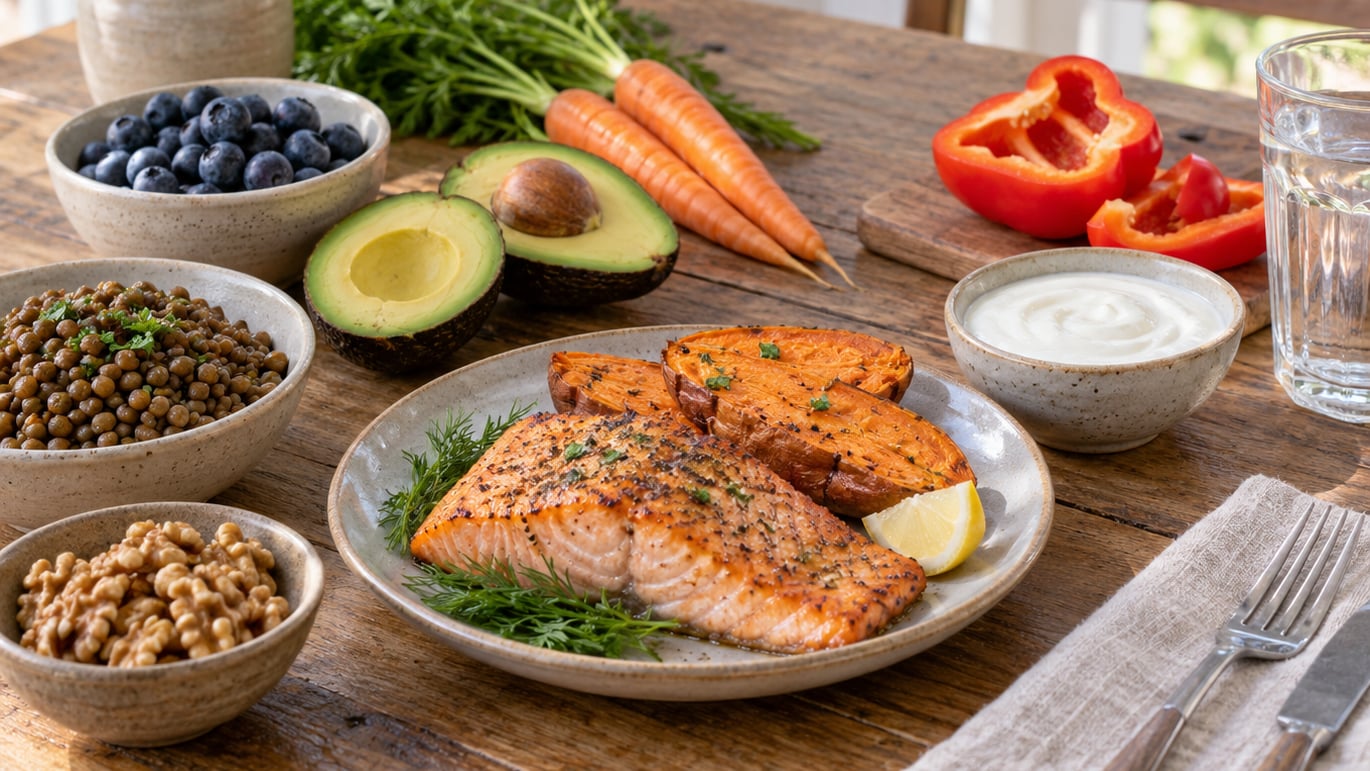
The best foods to eat for glowing skin are nutrient-dense whole foods: fatty fish, colorful vegetables, berries, nuts, seeds, legumes and fermented dairy. They supply the protein, healthy fats, vitamins and antioxidants that skin uses to build collagen, hold moisture and stay calm. No single food creates glow on its own, but an eating pattern built around these foods usually shows up in the mirror within a few weeks.
That last sentence matters, because most glowing-skin advice promises a seven-day fix. Skin cells take roughly a month to turn over, so anything dramatic in a week is probably a change in lighting, hydration or makeup. What food can do is steadily support the structures underneath: your barrier lipids, your collagen, your ability to handle everyday inflammation.
The list below is ordered by how easy each food is to fold into a normal week, not by how magical it is. I have kept every claim to what nutrition guidance actually supports, and flagged where the evidence is softer than the marketing.
Table of Contents
- Foods to Eat for Glowing Skin at a Glance
- 1. Fatty Fish Such as Salmon
- 2. Avocado
- 3. Blueberries and Other Colorful Berries
- 4. Citrus Fruit
- 5. Bell Peppers
- 6. Leafy Greens Such as Spinach
- 7. Sweet Potatoes
- 8. Walnuts and Other Nuts
- 9. Plain Greek Yogurt
- 10. Carrots
- 11. Tomatoes
- 12. Lentils and Other Legumes
- How to Build a Skin-Supportive Plate
- Habits That Matter More Than Any Single Food
- Frequently Asked Questions
- Conclusion: Start with One Simple Change
Foods to Eat for Glowing Skin at a Glance
| Food | Key nutrient | What it supports | Easy serving |
|---|---|---|---|
| Fatty fish, such as salmon or sardines | Omega-3 EPA and DHA, protein, vitamin D | Barrier lipids and moisture retention | Baked fillet, about 110 g |
| Avocado | Monounsaturated fat, fiber, vitamin E, carotenoids | Nourishing fats and antioxidant intake | Half an avocado on toast |
| Blueberries and other berries | Anthocyanins, vitamin C, fiber | Antioxidants and collagen-related support | A small handful over oats |
| Citrus fruit | Vitamin C, folate, water | Collagen synthesis | One orange or two kiwis |
| Bell peppers | Vitamin C, carotenoids, water | Collagen synthesis and hydration | A raw pepper with lunch |
| Spinach and leafy greens | Folate, vitamin K, lutein, beta-carotene | Variety, antioxidant intake, fiber | A cup of raw spinach in a salad |
| Sweet potatoes | Beta-carotene, potassium, fiber, vitamin C | Vitamin A status and fiber | Roasted cubes |
| Walnuts and other nuts | Unsaturated fats, vitamin E, magnesium | Healthy fat and mineral intake | 30 g, a small handful |
| Plain Greek yogurt | Protein, calcium, live cultures when present | Daily protein and food diversity | 150 to 200 g with berries |
| Carrots | Beta-carotene | Vitamin A, best absorbed with fat | Raw sticks with hummus |
| Tomatoes | Vitamin C, potassium, lycopene | Antioxidant and vitamin C intake | Sliced into salad or sauce |
| Lentils and beans | Protein, fiber, iron, zinc, folate | Protein and mineral intake | Half a cup cooked in a bowl |
1. Fatty Fish Such as Salmon
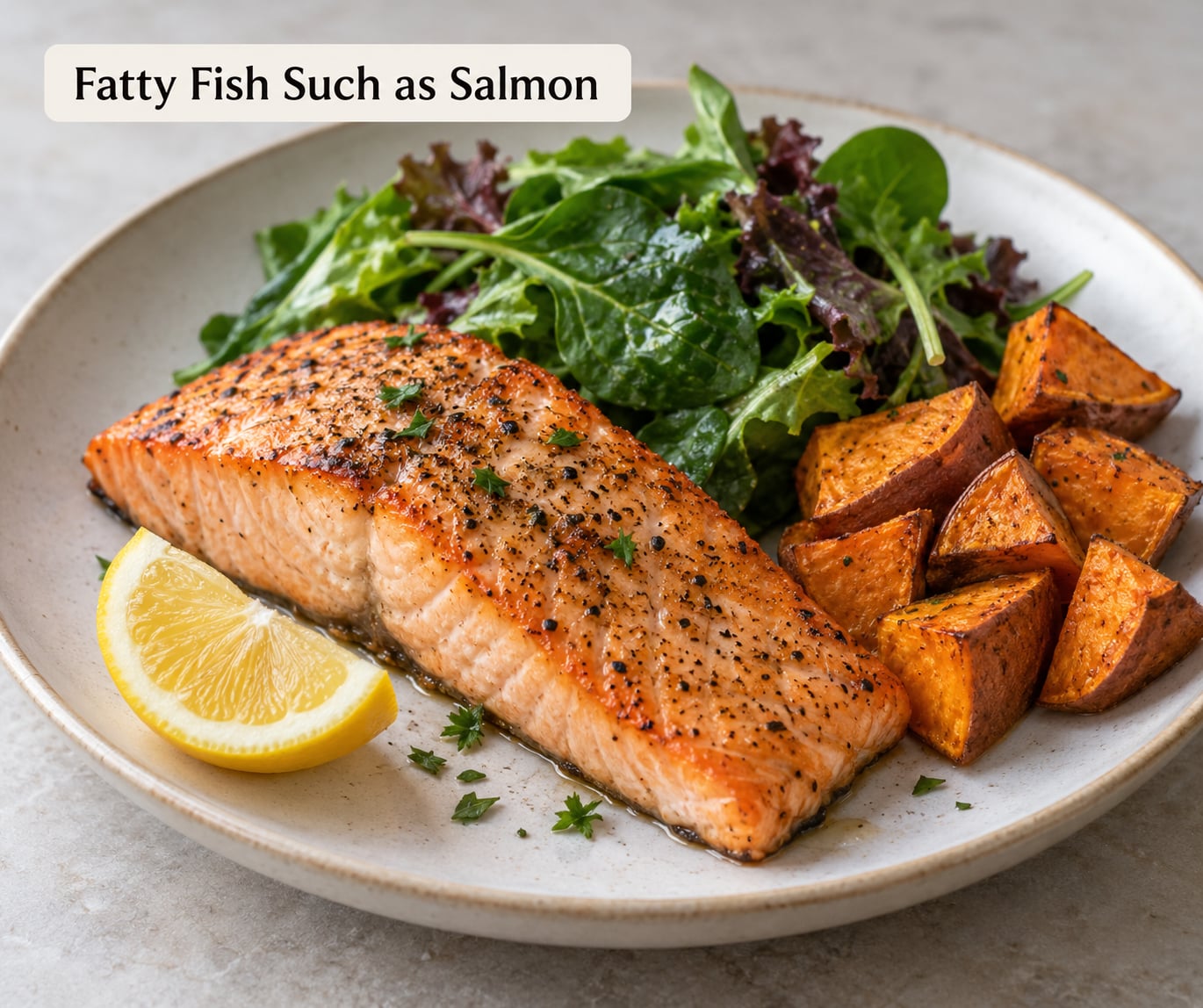
Salmon, sardines, mackerel and trout are the richest everyday sources of the omega-3 fats EPA and DHA. Those two fatty acids are a large part of the skin’s lipid barrier, the layer that decides how much water stays in and how easily your skin gets irritated.
Fatty fish also brings complete protein, which matters because collagen is built from amino acids, mostly proline and lysine. Vitamin D rides along too, and low vitamin D status is common enough that it is worth a mention, though a fillet of salmon is not a treatment for a deficiency.
A baked-salmon bowl with greens, roasted sweet potato and a lemon dressing is the version I end up making most: 110 g of fillet, half a sweet potato, a handful of spinach, olive oil and lemon, about 20 minutes in a hot oven. Canned sardines and salmon are cheaper and just as useful, and the drained oil is worth using in dressings rather than pouring away. If you eat no fish, ground flaxseed, walnuts and canola oil bring some omega-3, though plant sources convert to EPA and DHA far less efficiently.
2. Avocado
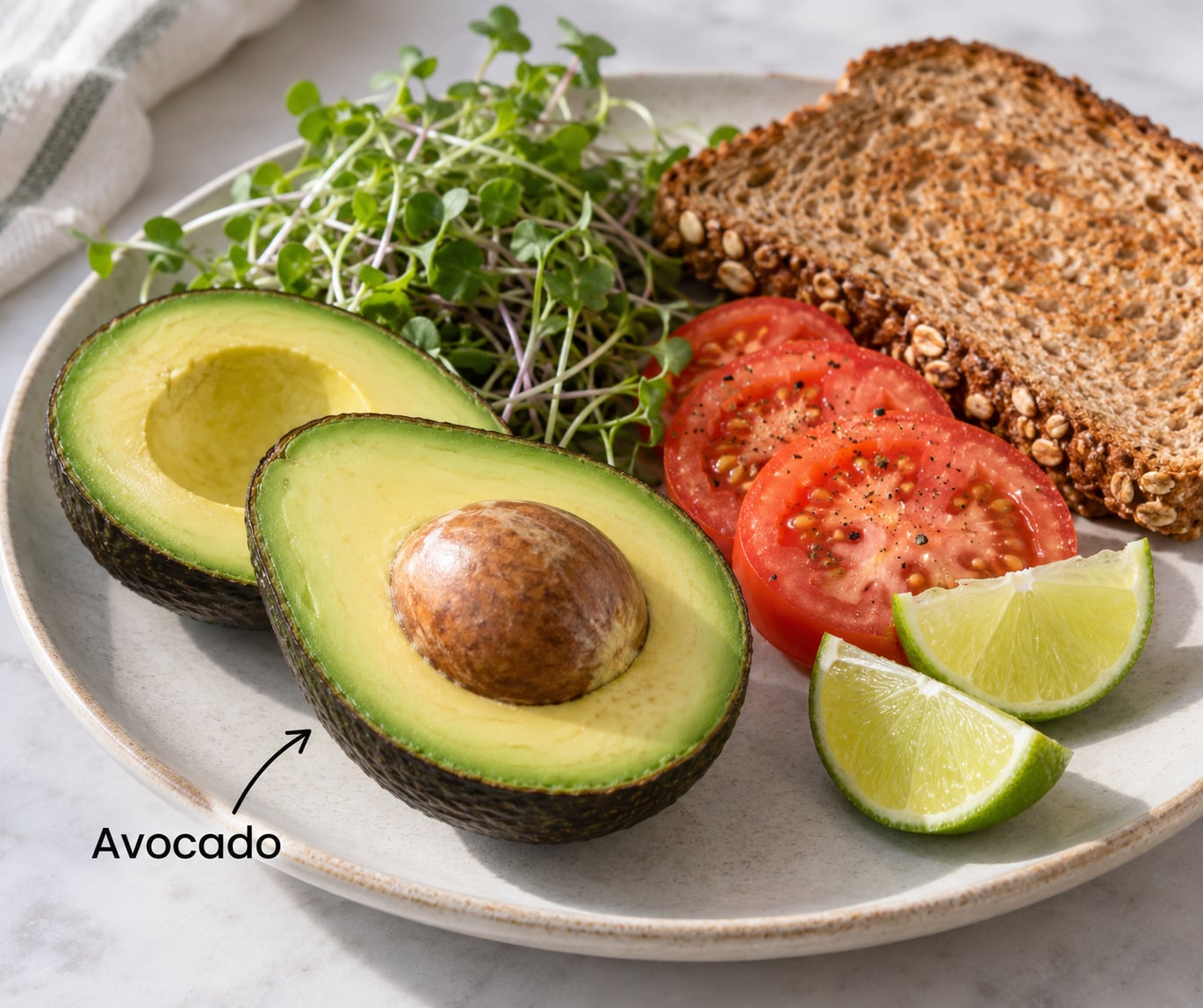
Avocado is one of the few fruits built mainly around fat, and that fat is mostly monounsaturated. It also delivers fiber, vitamin E, potassium and a small amount of carotenoids, and it travels well into other meals, which is the real reason it keeps showing up on these lists.
Avocado toast with tomato and sprouts takes four minutes. Tossing cubes into a chickpea or quinoa salad is just as easy, and half an avocado blended with spinach, frozen berries and milk is a fast breakfast when the morning is busy.
One practical note. Avocado is calorie-dense, and “more is better” is not the right approach with it. Half a fruit at a sitting is plenty; that is roughly 200 calories and a useful amount of fiber.
3. Blueberries and Other Colorful Berries
Berries carry anthocyanins, the pigments that make them blue, red and purple, along with vitamin C and plenty of fiber. Anthocyanins are studied mainly as antioxidants, meaning they help neutralise the free radicals generated by ultraviolet light and air pollution.
Eat them whole rather than as juice. The fiber and the structure disappear in juice, and a glass of berry juice is a much smaller serving than it looks.
For breakfast, a spoon of blueberries over overnight oats with a few walnuts does three jobs at once: fruit, fat and protein in one bowl. Frozen berries work about as well as fresh and cost less, which matters if you are eating them several times a week. If dull, tired-looking skin is your main complaint, our guide to foods that help skin look less dull goes deeper on that specific problem.
4. Citrus Fruit
Vitamin C is the nutrient most consistently linked to skin, because collagen cannot be built properly without it. It acts as a cofactor in the enzymes that turn proline and lysine into collagen, so a shortfall shows up in how collagen-rich your skin stays over time.
Citrus does not create glow, and anyone promising an orange a day for instant radiance is overselling it. What it does is contribute to a nutrient-dense pattern where it belongs.
Easy ways in: an orange with breakfast, kiwi in yogurt, grapefruit at lunch, or a frozen pepper and mango blend if mornings are the problem. Pairing vitamin C rich foods with beans, lentils or fortified grains covers plant iron more efficiently, which matters for iron from plants. Our piece on iron rich plant foods covers that pairing in more detail.
5. Bell Peppers
Red, yellow and green bell peppers are among the best everyday vitamin C sources, and they carry carotenoids and a lot of water in a very few calories. Peppers also add crunch, which makes them easy to add without a big change in volume of food.
It is tempting to rank the colours, and the red ones do lead on vitamin C. I would not build a diet around that difference though; the useful move is eating several colours across the week rather than chasing one.
For a packed lunch, slice peppers into a container with cucumber, cherry tomatoes and a little olive oil. They also roast well on the same sheet pan as sweet potato cubes and chickpeas, which turns one tray into half the week of meals.
6. Leafy Greens Such as Spinach
Spinach, kale, rocket and the rest of the leafy greens bring folate, vitamin K, lutein and beta-carotene, plus fiber that most people in a typical week are short of. They are not dramatic on their own; they are useful because they crowd out the less nutrient-dense things when you cook them.
Four ways I use them: raw in a salad with lemon and olive oil, wilted into cooked grains with garlic, blended into a fruit smoothie where the sweetness hides the bitterness, or folded into eggs in the morning.
Frozen chopped spinach is the cheapest option and works everywhere except the salad. Bagged raw spinach is worth paying a little more for, because it is the difference between actually eating greens and keeping a bag that turns slimy in the drawer.
7. Sweet Potatoes
Sweet potatoes are a generous source of beta-carotene, and they also bring potassium, fiber and some vitamin C. Your body converts beta-carotene into vitamin A as needed, so it is a safer route than preformed vitamin A, which stays in the system at whatever dose you take.
Roasted cubes are the default in our house: 200 g cut into chunks, tossed with oil and paprika, 25 minutes at 200 C. They also go into soup, or into a breakfast hash alongside an egg and some greens.
A practical tip: eating carotenoid rich vegetables with some fat improves how much your body absorbs them. A drizzle of oil on the tray, or a spoon of yogurt alongside, does more than eating the same vegetables dry.
8. Walnuts and Other Nuts
Walnuts are unusual among nuts for containing a meaningful amount of plant omega-3, and alongside almonds, cashews and pistachios they add unsaturated fats, vitamin E, magnesium and a little protein.
Portion size is the whole trick. 30 g, roughly a small handful, is a standard serving and more than enough; a bowl of mixed nuts eaten by the handful is usually several times that without feeling like snacking.
Walnut oatmeal is a two-minute breakfast. A spoon of chopped walnuts on a salad or roasted vegetables adds texture and a fatty, roasted note. Trail mix with pumpkin seeds covers the seed version, and pumpkin seeds are also one of the better plant magnesium bets on this list.
9. Plain Greek Yogurt
Plain Greek yogurt is high in protein and calcium, and when live cultures are present it adds variety to the diet through the gut microbiome. The gut-skin connection is still an active area of research, so treat claims about probiotics fixing skin as unsettled rather than proven.
Yogurt is a useful everyday food, not a glow treatment. The word plain matters: flavored versions often carry a lot of added sugar, which works against the rest of the list.
My default bowl is 150 to 200 g of plain yogurt with berries, oats and a spoonful of seeds. That is protein, fruit, whole grain and fat in one dish, and it holds together when the afternoon gets long. People who avoid dairy get a similar protein and calcium profile from fortified soy milk, tofu or calcium-set tofu, and plant-based options with live cultures are increasingly easy to find.
10. Carrots
Carrots are one of the most familiar beta-carotene sources, and that matters for skin indirectly through vitamin A status, which supports normal cell function. The eye-health reputation is more firmly established than any direct glow effect, so it is worth keeping the two claims separate.
Raw sticks with hummus make a good snack that actually displaces something less useful. Shredded carrots work in salads and slaws, and cooked carrots blend into soups where they add sweetness and color without much effort.
Again, the fat pairing matters. Carrots and a little olive oil or tahini is a better combination than carrots alone, because fat is what carries the carotenoids into absorption.
11. Tomatoes
Tomatoes contribute vitamin C, potassium and carotenoids, with lycopene as the best known of them. Cooking changes the picture: heat breaks down tomato cell walls, so cooked tomato products such as sauce often deliver more lycopene per serving than a raw tomato. Variety of preparation beats a strict raw-only rule.
There is no need to insist on a particular form. Sliced tomatoes in a salad with olive oil, a jar of sauce over lentils, or cherry tomatoes roasted on the same tray as the peppers all count.
For a substantial lunch, lentils simmered with canned tomatoes, onion, garlic and a spoonful of olive oil is about 30 minutes of unattended cooking and covers protein, fiber and a skin-relevant antioxidant in one pot.
12. Lentils and Other Legumes
Lentils, chickpeas, black beans and white beans are among the cheapest protein sources available, and they also bring fiber, iron, zinc and folate. That combination makes them the most useful item on this whole list for anyone whose skin looks dull partly because the diet is short on protein or minerals.
One honest caveat about iron. Plant iron is not absorbed as efficiently as iron from meat, and coffee, tea and calcium eaten at the same meal can reduce absorption further. Vitamin C alongside makes a real difference, which is why a lentil bowl with peppers, lemon or a tomato-based dressing is more useful than lentils on their own.
Concretely: cooked lentils with cucumber, tomato, parsley, olive oil and lemon is a 15-minute lunch. Red or brown lentil soup with carrots and tomatoes is a one-pot dinner that reheats well. Chickpeas roasted with paprika go on top of almost anything.
Why Fatty Fish Belongs in Foods to Eat for Glowing Skin
Oily fish shows up near the top of most lists, and the reason is specific rather than magical. The omega-3 fats in salmon and sardines are among the few dietary sources of EPA and DHA, and those fats are structural parts of the skin’s barrier. Eat them regularly and you are supplying a raw material, not taking an additive.
It is still just one food, though. No single item can make a skin glow, and a diet built on packets of salmon powder with everything else neglected is worse than a varied pattern of ordinary whole foods. Adequate calories, sleep, sun protection and a gentle skincare routine matter more than any superfood. The list works because the items reinforce each other, not because one of them is the answer.
How to Build a Skin-Supportive Plate
Rather than tracking nutrients, build meals: half the plate vegetables or fruit, a quarter protein, a quarter whole grain or starchy food, plus a fat to tie it together. That structure naturally covers most of the list above without any counting.
A sample day using items from this guide:
- Breakfast: plain Greek yogurt with blueberries, walnuts and a spoonful of oats.
- Lunch: lentil salad with cucumber, tomato, red pepper, olive oil and lemon, plus a whole-grain roll.
- Snack: an orange and a small handful of almonds.
- Dinner: baked salmon with roasted sweet potato cubes and wilted spinach.
Portions do not need measuring once the plate method is in place. A palm-sized serving of protein, a fist of whole grain, two fists of produce and a thumb of oil is enough guidance for most days, and it is a far better use of attention than counting calories or tracking grams of omega-3.
For a different angle, foods high in prebiotic fiber is worth a read if beans and lentils are new to you and your digestion needs a week to adjust.
Habits That Matter More Than Any Single Food
Some context on how much this is all worth. Food supports skin health, but it works alongside everything else, and the fundamentals are less glamorous than a list of ingredients.
- Hydration within normal needs: drinking enough that you are not thirsty supports skin hydration. Going far beyond that does not produce a visible improvement, and some people cause problems by overdoing it.
- Variety over perfection: a varied pattern of whole foods supplies a wider range of nutrients than any single food, and it is far easier to sustain.
- Not smoking: smoking accelerates skin aging and damages collagen and elastin, and it works against everything on this list.
- Sun protection: ultraviolet light is the largest preventable driver of skin aging. No food offsets cumulative sun exposure.
- Gentle skincare: mild cleansers, a moisturizer and sunscreen are a reasonable baseline. Patch-test anything new, and stop if a product stings or reddens your skin.
- Sleep: skin repairs itself overnight, and consistently short sleep shows up in how your skin looks and recovers.
Reduce rather than eliminate. On forums, the most common pattern is people cutting back on sugar and refined carbs and seeing the biggest single change, then finding that a total ban on dairy or gluten is exhausting and short-lived. Moderation is a strategy people actually keep. Cutting back on heavily refined carbohydrates also limits advanced glycation end products, which accumulate in collagen and make it stiffer over time.
This is general information, not medical advice. If a skin change is persistent, painful, spreading, or comes with other symptoms, see a doctor or dermatologist rather than adjusting your diet and waiting. A registered dietitian can also help with individual nutrition needs, especially if you are managing a condition, pregnant, or eating a restricted diet.
Frequently Asked Questions
What are the best foods to eat for glowing skin?
The strongest options are fatty fish, avocado, berries, citrus and bell peppers for vitamin C, leafy greens, sweet potatoes and carrots for beta-carotene, walnuts for omega-3 and vitamin E, plain Greek yogurt for protein and calcium, and lentils for protein, fiber and minerals. No food works alone. A varied pattern that includes several of these most days matters more than any single superfood.
How long does it take food to improve the look of my skin?
Skin cells turn over roughly every 28 days, so diet changes tend to show up over four to six weeks rather than four days. Some people notice differences in oiliness or breakouts within a couple of weeks, since those respond faster. Anyone promising visible transformation in seven days is describing a change in hydration or lighting, not new collagen.
Can specific foods make acne worse?
Possibly, and the most commonly reported triggers in reader discussions are dairy, especially skim milk, and high glycemic foods that push up blood sugar. Reactions are individual, so a structured elimination of one food at a time for three to four weeks gives clearer answers than cutting several at once. Persistent or painful acne is worth seeing a dermatologist about rather than managing through diet alone.
Are skincare supplements better than eating whole foods?
For most people, whole foods are the better first step, because they come with fiber, fat and other compounds that help absorption. Supplements can fill a real gap, such as vitamin D or B12 in a vegan diet, when a professional identifies it. Collagen and biotin powders are widely marketed and the evidence for visible skin benefits in healthy adults is limited.
When should I see a doctor about a persistent skin problem?
See a doctor or dermatologist if a rash, discoloration or breakout lasts more than a few weeks without settling, spreads, bleeds, hurts, or comes with fever, weight loss or joint pain. Sudden changes in moles, a non-healing sore, and itching that does not stop all need a look. Food changes are worth trying, but they are not a substitute for checking something that might need treatment.
Conclusion: Start with One Simple Change
Pick the meal you already eat most often and add two colorful whole foods to it. Berries and walnuts on your breakfast oats, peppers and tomatoes in your lunch salad, lentils and a tomato sauce at dinner. Foods to eat for glowing skin are ordinary foods, and they work because they replace something rather than because they sit on top of everything else.
Then give it four to six weeks, keep your sunscreen and your sleep roughly where they are, and expect a calmer, better-hydrated complexion rather than a dramatic change. If nothing shifts after a couple of months of steady eating, that is a good moment to talk to a dermatologist or registered dietitian instead of adding another food to the list.