
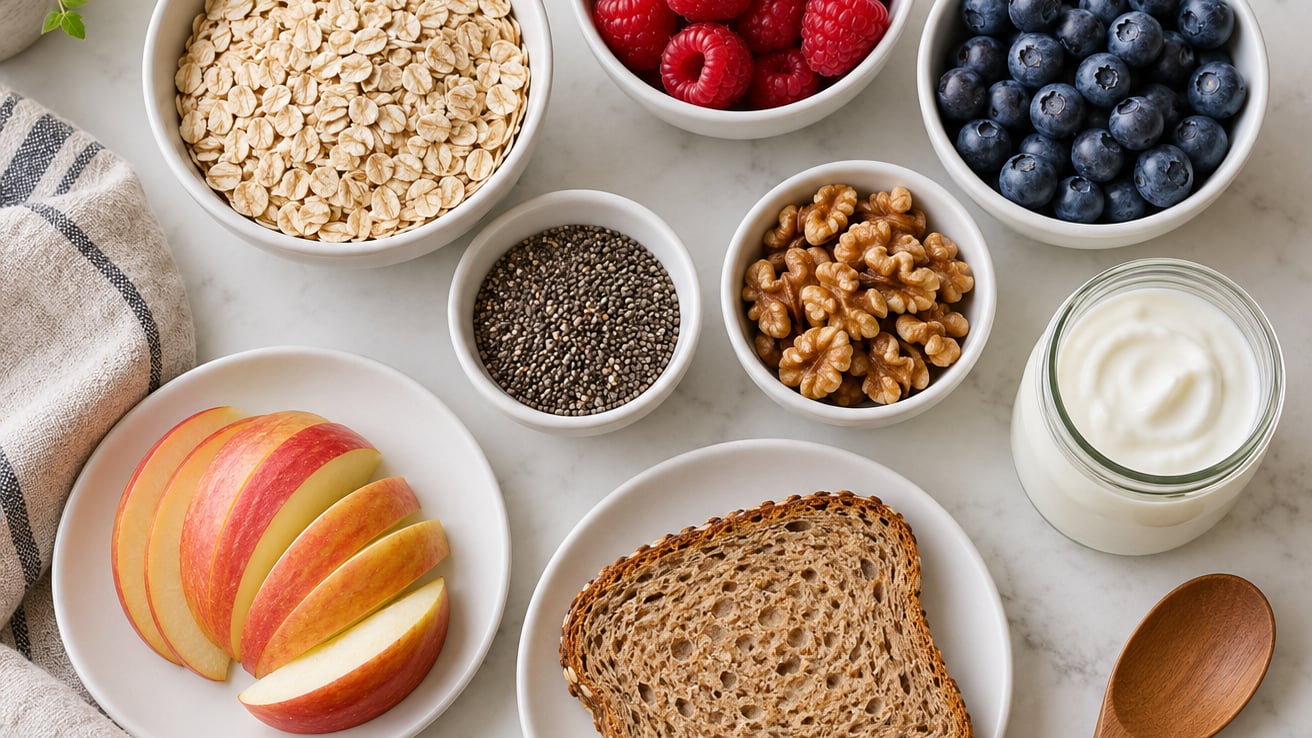
Fiber is the easiest thing to add to breakfast and the easiest thing to leave out. A bowl of white toast, sugary cereal or a pastry can sit under 2 grams, while these twelve easy high fiber breakfast ideas land between 7 and 14 grams per serving with almost no extra effort. Most take under ten minutes, and six of them can be made the night before.
Adults are generally advised to eat 25 to 38 grams of fiber a day, and a quarter to a third of that is far easier to hit at breakfast than at dinner. Each idea below lists what it costs you in prep time, how well it keeps for later and roughly how much fiber you get per plate.
Table of Contents
- High Fiber Breakfast Ideas That Are Easy at a Glance
- 1. Apple Cinnamon Oatmeal with Walnuts
- 2. Berry Chia Pudding Made the Night Before
- 3. High-Fiber Banana Oat Smoothie
- 4. Savory Black Bean Avocado Toast
- 5. Peanut Butter and Apple Whole-Grain Toast
- 6. Raspberry Almond Overnight Oats
- 7. Lentil and Sweet Potato Breakfast Hash
- 8. Greek Yogurt, Kiwi, and Seed Parfait
- 9. Whole-Grain Toast with Hummus and Veggies
- 10. Baked Oats with Apple and Raisins
- 11. Hummus and Avocado Breakfast Wrap
- 12. Fiber-Boosted Fruit and Nut Bowl
- Frequently Asked Questions
- How much fiber should I eat at breakfast?
- Are these high fiber breakfast ideas suitable for people who are gluten-free?
- How can I add fiber to breakfast without feeling bloated?
- Which of these breakfasts are best for meal prepping?
- Can I use fruit and nut butter instead of the toppings listed?
- Are smoothies or oatmeal better for a high fiber breakfast?
- Conclusion
High Fiber Breakfast Ideas That Are Easy at a Glance
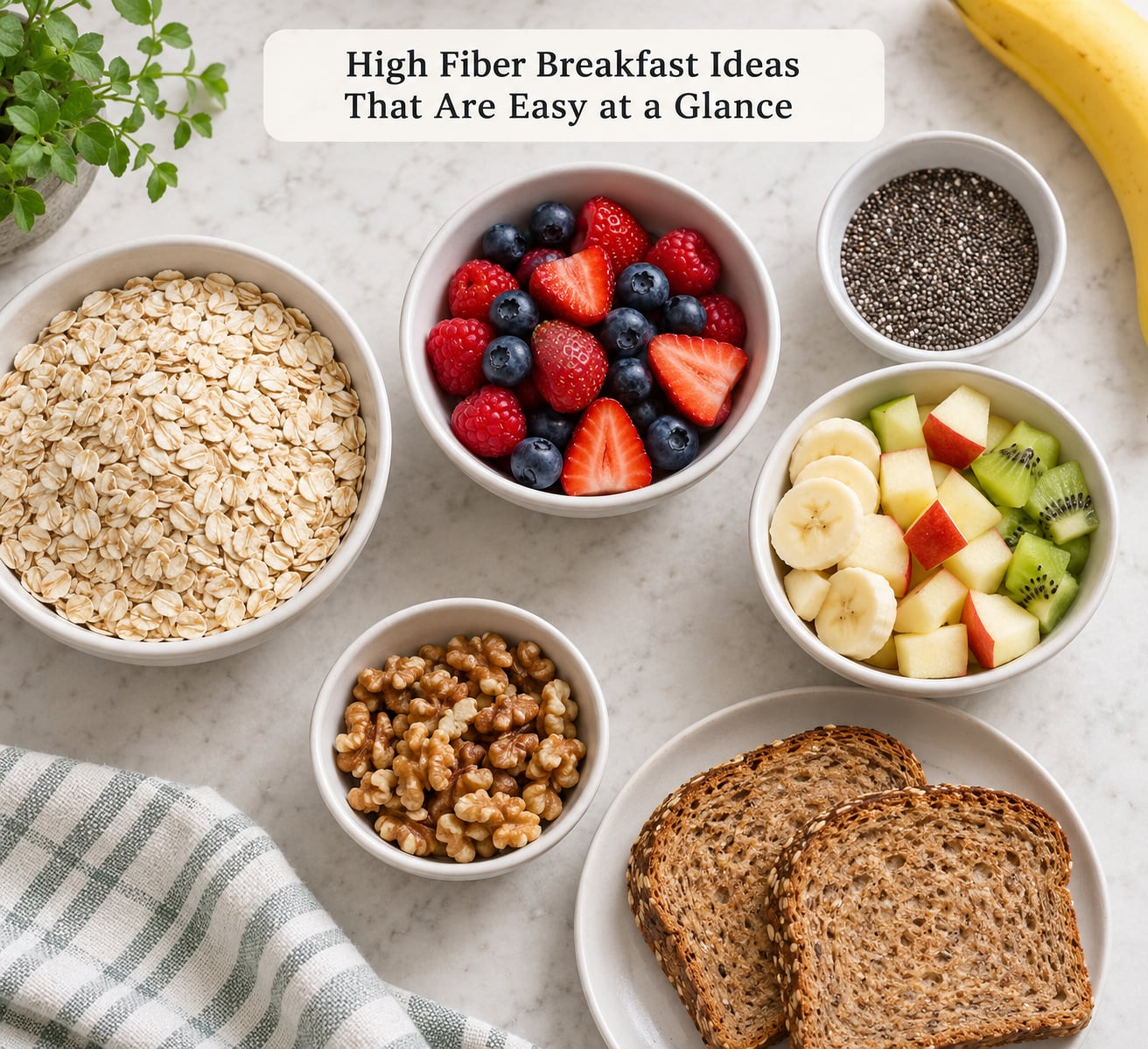
Here is the whole list in one view, so you can pick by the time you actually have and not by the time a recipe blog wishes you had.
| Breakfast | Main fiber source | Prep time | Makes ahead? | Best for |
|---|---|---|---|---|
| Apple cinnamon oatmeal | Oats, apple, walnuts | 10 min | Yes, 4 days | A warm, filling start |
| Berry chia pudding | Chia seeds, berries | 5 min | Yes, 4 days | Zero morning cooking |
| Banana oat smoothie | Oats, flax, fruit | 5 min | Freezer packs | Eating on the go |
| Black bean avocado toast | Black beans, whole-grain bread | 10 min | Bean mix, 5 days | Savory mornings |
| Peanut butter apple toast | Whole grains, apple, seeds | 5 min | Yes | Kids and picky eaters |
| Raspberry almond overnight oats | Oats, chia, raspberries | 5 min | Yes, 4 days | Grab-and-go mornings |
| Lentil sweet potato hash | Lentils, black beans | 25 min | Yes, 5 days | Batch weekend cooking |
| Greek yogurt kiwi parfait | Kiwi, seeds, yogurt | 5 min | Layer ahead | Protein plus fiber |
| Hummus and veggie toast | Seeded bread, chickpeas | 10 min | Yes | No-cook savories |
| Baked oats with apple | Oats, apple, raisins | 35 min | Yes, 5 days | Batch breakfasts |
| Hummus avocado wrap | Whole-grain wrap, chickpeas | 10 min | Yes, 4 days | Portable lunches too |
| Fruit and nut bowl | Chia, nuts, fruit | 5 min | Yes | The five-minute fallback |
1. Apple Cinnamon Oatmeal with Walnuts
This is a one-pot breakfast that lands around 9 grams of fiber, and it tastes like apple pie rather than like a fiber intervention. Grate a medium apple straight into the pot so you get the skin, where most of that apple’s fiber lives.
Simmer half a cup of rolled oats with a cup of milk or water, the grated apple, two tablespoons of chia seeds and a cinnamon shake for eight to ten minutes. Stir in a spoon of almond butter off the heat, then top with chopped walnuts and a few thin apple slices.
How the one-pot method keeps this easy
One pot means one thing to wash before 8 am, and the leftovers reheat in about three minutes. Grated apple also keeps the texture from turning gluey as it cools, which is what usually puts people off leftover oatmeal.
Add a scoop of Greek yogurt, a boiled egg or a spoon of soy protein powder if you want more protein in the bowl. If you like eating slower and feeling full sooner, a warm bowl is a good place to practice it.
2. Berry Chia Pudding Made the Night Before
Chia pudding is the definition of an easy high fiber breakfast: two tablespoons of chia seeds stirred into a cup of milk, refrigerated overnight, done. Two tablespoons of chia alone give you roughly 5 grams of fiber, and raspberries add about 8 grams per cup on top.
Whisk the seeds well, cover, and refrigerate at least four hours or overnight. In the morning, stir, loosen with a splash of milk if it set too firm, and add raspberries, blackberries or a spoonful of yogurt.
The one complaint is that chia can taste chalky, and that is almost always a ratio problem. Use a full two tablespoons, give it a proper whisk, and let it sit longer. Ground flaxseed in place of half the chia softens the texture if it still bothers you.
3. High-Fiber Banana Oat Smoothie
Smoothies hide fiber surprisingly well. Half a cup of rolled oats, one frozen banana, a tablespoon of ground flaxseed, a handful of spinach, a cup of milk and a cup of berries blends into something that tastes like a milkshake and delivers about 8 grams.
Blend the oats and flaxseed with the liquid first, for 20 seconds, before adding the fruit. That short step is what stops oat flour from leaving a gritty layer at the bottom of the glass.
Adjusting thickness and adding protein
Start with less liquid than you think and add more. If it needs to be thinner, splash in milk; if it is too thin, add a spoon of oats and blend again. A scoop of vanilla protein powder or a couple of tablespoons of Greek yogurt raises the protein without dulling the flavor.
For a thicker, spoonable version, blend in half a frozen banana and skip the ice. Frozen smoothie packs made with banana, oats and berries freeze well on a sheet tray, then move to a bag and keep in the freezer for up to a month.
4. Savory Black Bean Avocado Toast
Most high fiber breakfast roundups go sweet-only. This one is the savory counterweight, and a half cup of black beans is about 7 grams of fiber before you even add bread or avocado.
Mash a half cup of rinsed black beans with a fork, then fold through a spoonful of salsa, a squeeze of lime, a pinch of cumin and a few chopped spring onions. Spread it over a slice of whole-grain or seeded toast, pile on sliced avocado, and finish with black pepper.
A soft egg on top turns it into something closer to a full meal. Store the mashed bean mix in the fridge for up to five days and only mash a new batch when the jar runs out.
5. Peanut Butter and Apple Whole-Grain Toast
This is the breakfast that survives a child, a hungry teenager and a ten-minute morning. Two slices of whole-grain bread bring 3 to 4 grams, an apple with the skin on adds about 4, and a tablespoon of natural peanut butter contributes roughly 1.
Spread, layer thin apple slices, dust with cinnamon, and finish with a teaspoon of hemp hearts or chia if you want to push it past 10 grams. Drizzle a little honey only if the apple is tart.
Swaps that suit different diets
Sunflower seed butter works for nut-free households and adds comparable protein, and tahini gives the same creamy base for people avoiding peanuts. Sliced banana instead of apple leans sweeter and costs about the same in fiber. Anyone avoiding gluten simply picks a certified gluten-free seeded loaf, which most sourdough-style breads now are.
6. Raspberry Almond Overnight Oats
Combine half a cup of rolled oats, two tablespoons of chia seeds, half a cup of almond milk, a quarter cup of yogurt and a spoonful of almond butter in a jar. Stir, lid, fridge. Total fiber sits near 10 grams and the jar goes in the fridge rather than the cupboard.
Mash half the raspberries into the mixture before refrigerating so their color and flavor run through the oats overnight, then add the rest fresh in the morning. That stops the texture turning pink and watery by Wednesday.
Overnight oats keep about four days refrigerated, and the chia is what slows oxidation, so they stay decent for the whole working week. Add extra liquid before eating if the bottom has set firm.
7. Lentil and Sweet Potato Breakfast Hash
Cooked lentils give one of the best fiber-per-minute returns in any breakfast. Half a cup of cooked lentils delivers about 8 grams, and this hash pairs them with grated sweet potato, black beans and spices in one skillet.
Soften a medium sweet potato, grated, in a skillet with a little oil for about six minutes. Add a cup of cooked lentils, half a cup of black beans, cumin, smoked paprika and chili flakes, and cook until the edges crisp. Finish with sliced avocado or a fried egg.
Make the full recipe on a Sunday and refrigerate for up to five days. Reheat in a dry or lightly oiled pan rather than the microwave so the potato keeps some texture, or bake the portions until crisp. If beans are new to you and your stomach is objecting, how to increase fiber without bloating has the ramp-up pace that works.
8. Greek Yogurt, Kiwi, and Seed Parfait
This is the shortest route to both protein and fiber at once. Two kiwis give about 4 grams, a tablespoon of pumpkin seeds adds 1, and a spoon of granola or toasted nuts adds 2 more, on top of 7 to 8 grams of protein in the yogurt.
Layer plain Greek yogurt or soy yogurt with diced kiwi, raspberries, pumpkin seeds, hemp hearts and a small handful of granola in a glass. Keep the wet ingredients at the bottom so the yogurt does not dissolve the granola before you eat it.
Soften the kiwi and banana in the layers the night before for a smoother result, but add seeds and nuts in the morning so they keep their crunch.
9. Whole-Grain Toast with Hummus and Veggies
Hummus is chickpeas in a spreadable form, and a quarter cup brings close to 3 grams of fiber. Put it on seeded whole-grain bread and pile on grated carrot, cucumber, tomato, or a handful of baby spinach and kale.
A boiled egg or a few white beans on the side turns it into a balanced plate. Add a piece of fruit, and a pear brings roughly 6 grams on its own. If you enjoy reading about the fiber types that feed gut bacteria, the guide to foods high in prebiotic fiber is worth a look.
10. Baked Oats with Apple and Raisins
This is the one to make when you want breakfast to last four days without cooking at all. Stir half a cup of rolled oats, half a cup of milk, one egg or a flax egg, a diced apple, three tablespoons of raisins, cinnamon and a small handful of nuts into an 8-inch baking dish.
Bake at 350 F for 30 to 35 minutes until the center is set. Let it cool before slicing, or it will crumble. Cut into squares and store in the fridge for up to five days, covered.
Raisins are sweet, so dial back the apple if your oats are already flavored. Ground flax stirred into the batter keeps the fiber up even when the fruit is modest.
11. Hummus and Avocado Breakfast Wrap
Wrap a whole-grain tortilla with hummus, mashed avocado, shredded cabbage or spinach, diced tomato and a few slices of boiled egg or half a cup of chickpeas. Roll it, and you are looking at roughly 9 grams of fiber in something you can hold with one hand.
The shredded cabbage does more work than it looks like. Two handfuls add about 2 grams and make the wrap feel substantial rather than like a spread with a tortilla around it.
For a faster version, slice the wrap into coins instead of rolling it. That works for packed lunches and for anyone who finds a cold, crisp wrap easier to eat than a soft one.
12. Fiber-Boosted Fruit and Nut Bowl
The fallback bowl takes five minutes and no recipe at all. Chop fruit, add walnuts or almonds, a tablespoon of chia seeds and coconut flakes, then spoon over yogurt or soy yogurt.
Aim for two different textures rather than one fruit repeated. Soft pear with a firm apple, or juicy berries with banana, keeps a bowl from tasting flat. Toasted nuts matter more than raw here; they add crunch that survives a fridge night.
This lands between 7 and 9 grams depending on the fruit and the nut quantity, and it is the easiest high fiber breakfast on this list when you have nothing planned and four minutes before leaving.
Frequently Asked Questions
How much fiber should I eat at breakfast?
Most adults are advised to get 25 to 38 grams of fiber a day. Breakfast is the easiest meal to cover, so aim for 7 to 10 grams, roughly a quarter of the daily total. Most of the recipes here fall in that range. A registered dietitian can adjust the target for your own needs.
Are these high fiber breakfast ideas suitable for people who are gluten-free?
Most of them, with small swaps. Oats need certified gluten-free labeling if you are sensitive. Pick a certified gluten-free loaf for the toast and wrap ideas, and check that granola and muesli are labeled gluten-free rather than simply made from gluten-free grains.
How can I add fiber to breakfast without feeling bloated?
Add roughly 3 to 5 grams at a time rather than jumping to a 15 gram bowl. Soluble fiber from oats, chia and psyllium is usually gentler than a large serving of beans or bran. Drink extra fluid through the morning, and back off for a few days if your digestion needs a break.
Which of these breakfasts are best for meal prepping?
The baked oats, overnight oats, chia pudding and lentil hash are the four that genuinely improve with planning. Jars of overnight oats and chia keep about four days refrigerated, baked oats and the hash keep about five. Toast, smoothies and yogurt parfaits are better made fresh.
Can I use fruit and nut butter instead of the toppings listed?
Yes. A tablespoon of peanut, almond or sunflower seed butter brings roughly 1 gram of fiber plus protein and fat, which helps with satiety. It is a swap rather than an equal replacement for seeds or nuts, so keep the chia or nuts if fiber is the goal.
Are smoothies or oatmeal better for a high fiber breakfast?
Both work well. Oatmeal delivers soluble fiber and beta-glucan and keeps you full longer because it is warm and viscous, while a blended smoothie with oats, flax and fruit reaches a similar number in five minutes. Blended oats need a longer blend than most people give them, or the glass turns gritty.
Conclusion
If you only pick one, make the chia pudding the night before and the fruit and nut bowl on the mornings you have nothing. Both need almost no technique, both clear 7 grams, and repeating the same breakfast for three weeks is easier than rotating twelve.
From there, add 3 to 5 grams at a time and drink more water than usual while your gut adjusts. If you are managing constipation, inflammatory bowel disease, diabetes or any condition that affects digestion, get individual advice from a doctor or registered dietitian before making big changes to your breakfast.