
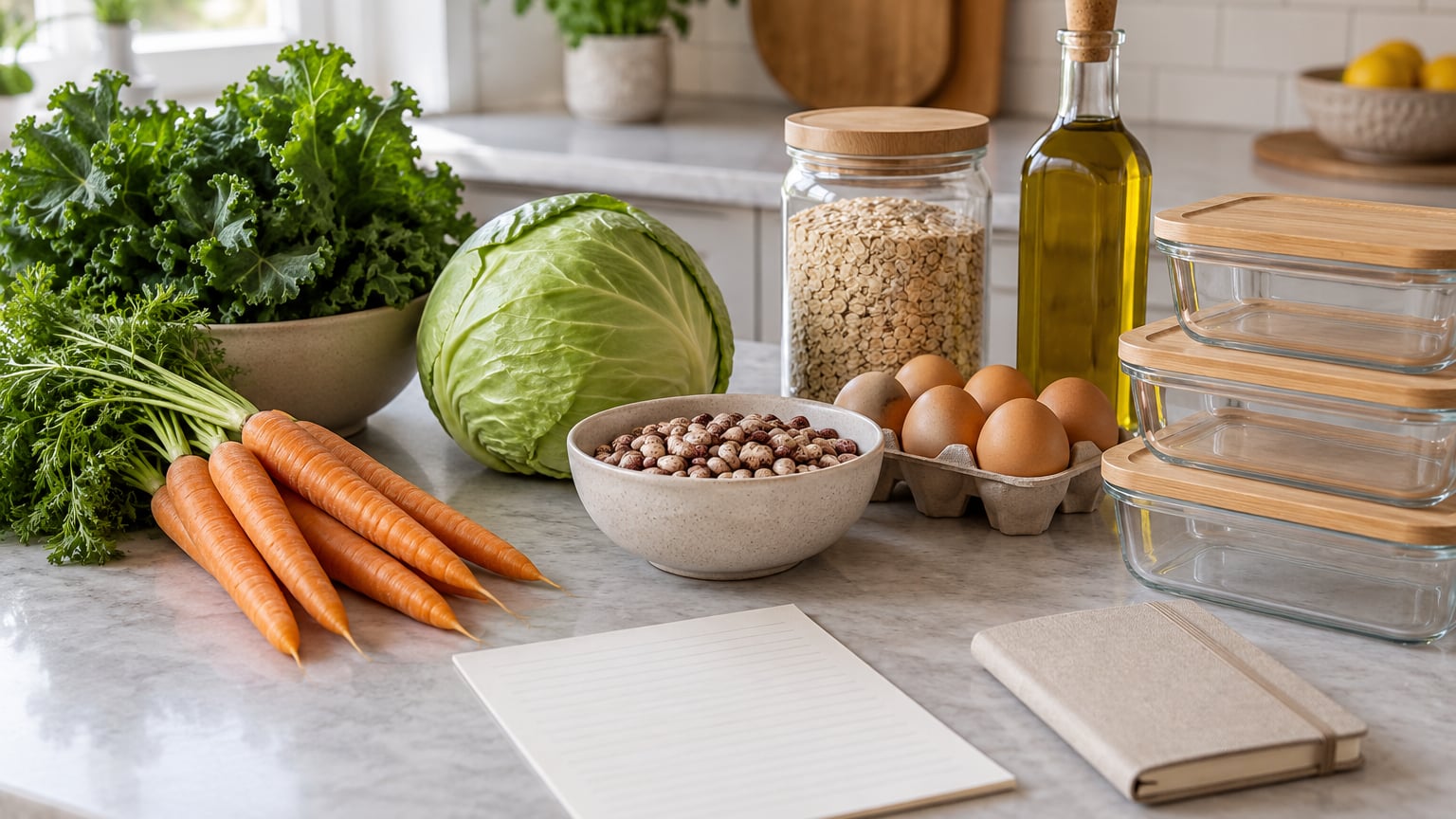
To eat less processed food, focus on two levers: swap the most industrial items in your diet for whole or lightly processed equivalents, and cook a few more meals at home. You do not have to go cold turkey. Swapping three or four things you eat most often will do more than giving up everything at once.
That matters because most of the packaged food on a typical shopping cart is doing something quietly useful. It is engineered to be eaten quickly, kept cheaply, and wanted again within an hour. Researchers studying these foods call them ultra-processed, and large studies have linked high intake of them with more calorie intake, weight gain, and higher risk of type 2 diabetes and cardiovascular disease.
Two ideas make this topic feel harder than it is. The first is that processed and ultra-processed are the same thing, which they are not. The second is that any packaged food is a failure, which is also wrong. Frozen vegetables, canned beans, plain yogurt and cheese are processed, and they are excellent food.
Table of Contents
- What You Need
- Step-by-Step
- Common Mistakes
- Frequently Asked Questions
- Do I have to give up all packaged foods to eat less processed food?
- What are easy swaps for common processed snacks?
- How can I reduce processed foods when meals are busy or takeout is convenient?
- Is organic food necessary for a less-processed diet?
- How do I read a food label when choosing between packaged products?
- Can I eat less processed food without spending more money?
- Start With One Swap This Week
What You Need
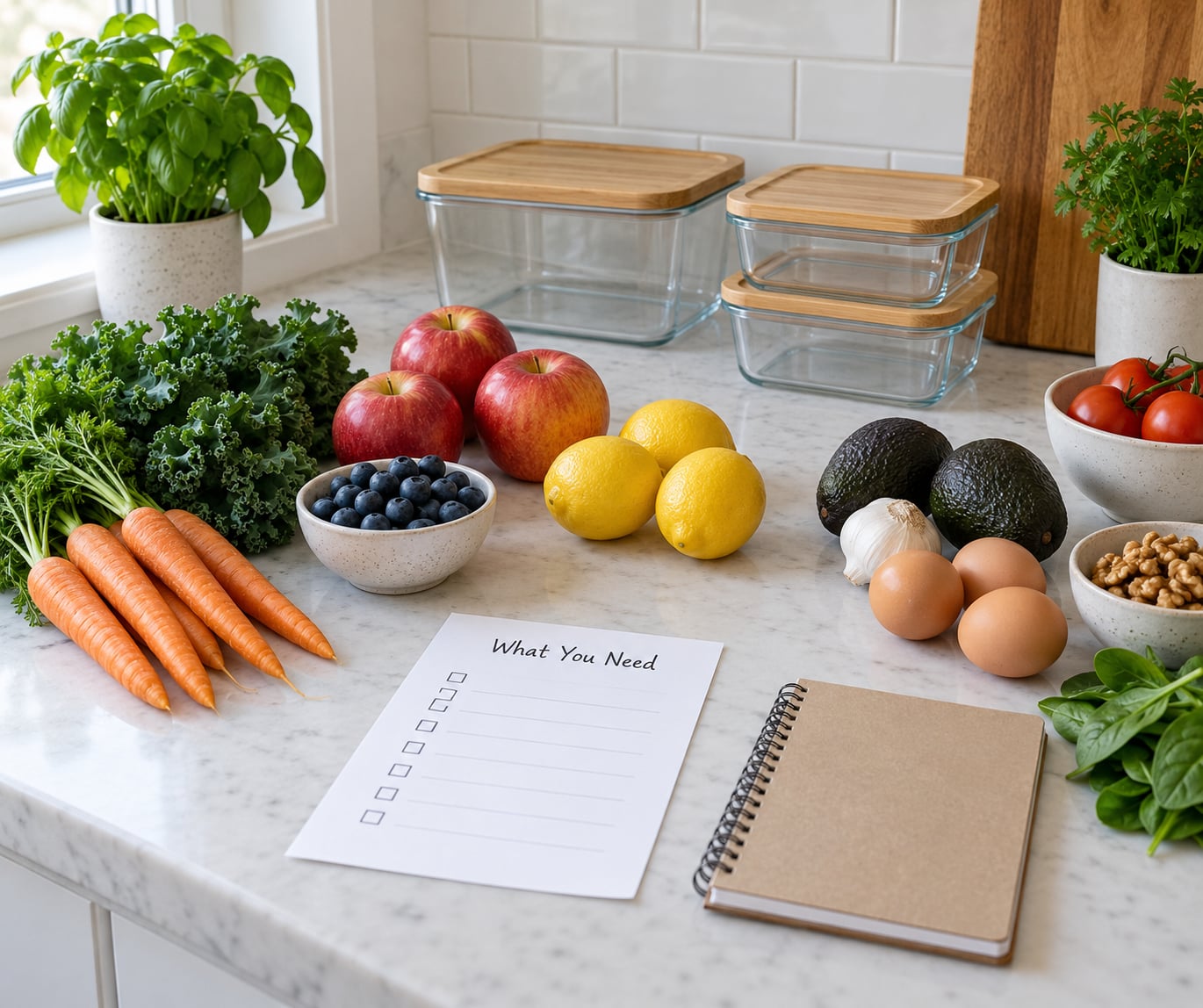
Nothing here requires a new diet, a membership, or imported powders. You need four things, and you probably own three of them already.
- A planning method you will actually repeat. Three anchor meals picked for the week works better than a detailed seven-day spreadsheet.
- A short grocery list written by hand. The physical list is the whole trick. It stops the aisle-end impulse buys that undo the plan.
- Storage that makes food visible. Clear containers stacked at eye level in the fridge turn a prepared meal into the obvious choice instead of the one you forget.
- A reliable way to compare labels. If you are not sure how to weigh fiber, protein and added sugar against each other, our guide on how to read an ingredient list on a food package breaks it down line by line.
If your worry is that plain whole food will not fill you up, start with density. Our piece on how to eat nutrient-dense food without buying imported powders shows how to get there with food you already cook.
Step-by-Step
Start by Identifying the Most Processed Foods You Eat
Do not start by changing everything. Start by looking.
For one week, write down what you actually eat and drink, including the packets and bottles you finish in a sitting. Most people are surprised twice: by the volume, and by how few items account for it. Sugary drinks, chips and crackers, packaged snack bars, sweetened cereals, instant noodles, deli meat, and bottled salad dressing usually appear in the list of every person who keeps one.
The point is awareness, not judgment. Nothing about this exercise is a moral verdict about your food. You are simply finding out which three or four items do most of the work, because those are the ones worth swapping. If you want a starting list, we cover the most processed foods to limit in the steps below.
You know this step worked when you can name your top three offenders without guessing.
Build Meals Around Whole-Food Foundations
A meal does not need a recipe. It needs a base, a protein and something green.
The easiest way I know to build one is to pick from four groups: a starchy whole food such as rice, potatoes, oats or whole-grain bread; a protein such as beans, lentils, eggs, dairy, fish, chicken or tofu; a vegetable in any form you will actually eat; and a fat such as olive oil, butter, nuts or seeds. Mix one from each group and you have dinner.
This works across dietary preferences because the groups are neutral. A bean and rice bowl, a plate of eggs and greens, a lentil soup with bread, a chickpea and feta salad over whole grains all follow the same shape. If you want vegetables in a dish without a fight over them, how to add greens to food without tasting them covers the techniques that work.
Cooking chicken, fish or ground meat safely means hitting an internal temperature of 165F for poultry and ground meat, and 145F for whole cuts and fish. That part is non-negotiable, unlike which snacks you keep in the cupboard.
Shop with a Simple Grocery System
A system beats inspiration every week. Here is the version that takes about fifteen minutes.
- Pick three anchor meals. Choose ones you already cook well, so planning costs nothing emotionally. Write them down with their ingredients.
- Choose two produce items that flex. A head of cabbage becomes slaw, stir-fry, soup and a salad. Two flexible items cover four meals.
- Buy one protein for the week. A large batch of beans, a roast chicken, or a tray of baked tofu. Decant it into small containers.
- Add grains and dairy in the largest plain size. Dry grains keep. Larger tubs of plain yogurt spoil faster, so buy the size you will finish in a week.
- Let yourself add four packaged items. Choose them on purpose: a salsa, a canned soup, frozen dumplings, a good coffee. The difference is that now you decided, rather than the shelf deciding for you.
Shopping the perimeter of the store, where produce, meat, dairy and bread usually sit, is the tip experienced home cooks repeat most often. Do not treat it as a rule. Treat it as a shortcut that saves you from walking the whole store with a snack in hand.
Swap Instead of Ban
Substitution works because it removes the decision instead of arguing with it.
- Chips become air-popped popcorn or a small bowl of nuts.
- Flavored yogurt becomes plain yogurt with fruit you cut yourself.
- Granola and snack bars become apple slices with peanut butter, or a handful of nuts and seeds.
- Sweetened cereal becomes plain oats with a banana and a spoon of peanut butter.
- Instant noodles become noodles cooked in a pot with real vegetables and a spoon of miso.
- Deli meat and hot dogs become roasted chicken, canned tuna, hard-boiled eggs or white beans.
- Bottled dressing becomes oil, vinegar, a squeeze of lemon and a spoonful of mustard.
- Soda and sports drinks become sparkling water with a slice of citrus, or unsweetened tea and coffee.
Make one swap per week and keep it for three weeks before starting another. Nine small changes held onto is a different habit from nine changes attempted on Sunday.
Make Healthy Choices Convenient
Convenience is the real reason most packaged food wins, so take that advantage away from it.
Set aside ninety minutes on a Sunday. Cook one batch of something that reheats well, such as a pot of lentils, a tray of roasted vegetables, a whole grain pilaf or a chili. Portion it into containers and put them at the front of the fridge where your hand lands first. Then do the same thing in a small batch: boiled eggs, washed carrots and celery, a pot of rice. That is the whole prep session.
The freezer is the answer to the week you did not plan. Portioning extra into flat bags means a meal that is worse than your best is still better than a packet of instant noodles, and it takes three minutes from freezer to plate.
Cravings in the first two weeks are normal and predictable, because you are changing what is easy. Expect to reach for a packaged snack around three o’clock for about a fortnight. Pre-portion the alternative instead of the original, and keep the snack visible at eye level rather than at the back of a cupboard.
You know this step worked when you get home tired and still eat something you assembled, rather than the first thing that comes in the door.
Read Labels Without Overlooking Fiber and Protein
Label reading is a comparison tool, not a verdict.
Start at the serving size, because every number after it is meaningless if you eat double. Then scan added sugars and sodium, which the FDA requires to be listed separately, then check fiber and protein, which tell you how long that item will hold you. The ingredient list is the tiebreaker: if you would not find the first three ingredients in your kitchen, the product belongs to the ultra-processed group.
Two popular heuristics are unreliable. A long ingredient list does not automatically make a food unhealthy, since a jar of tomato sauce can list twelve things and still be a reasonable buy. A short list does not automatically make one good, since a three-ingredient candy bar has a very short list. Judge by what the item is doing in your day.
The health-halo shelf deserves real suspicion. Protein bars, granola, yogurt drinks, dressings, wraps and plant milks are frequently sold on nutrition claims while still being formulated from a long additive list. Read those labels with the same care as a chip bag, not less.
Some packaged food is genuinely worth keeping. Canned beans rinsed in water, plain frozen vegetables, whole-grain bread with a short ingredient list, plain yogurt, cheese, and steel-cut oats are all processed, all convenient, and all fine to eat regularly. If a label-reading step feels too fiddly, keep our ingredient list guide nearby and work through one product at a time.
Common Mistakes
Eliminating every packaged food in one week. That approach lasts about four days and ends in a large supermarket run. The correction is a target of roughly 80 percent, with the remaining fifth left for the foods you actually enjoy.
Treating a healthy label as permission for unlimited portions. Granola, nut butter and dried fruit are nutritious by any measure and still easy to overeat. Correction: portion the health-halo foods into containers with lids.
Buying a shelf full of specialty products. Those aisles are marketed to the people already most motivated, and the items cost three times what the ordinary version does. Correction: buy plain versions of the foods you already eat, and change one of them.
Skipping meals and grazing. A missed lunch reliably ends in whatever is nearest, which is rarely a prepared container. Correction: eat three times, even if one of them is small and simple.
Ruling out takeout and restaurants entirely. Nobody eats out only at salad bars. Correction: order one vegetable and one protein-based dish, leave the bread basket alone, and stop there.
Treating one bad meal as a failed week. This is the all-or-nothing thinking that ends more attempts than the food itself does. Correction: repeat the next smallest action, which in practice is just the next meal.
Frequently Asked Questions
Do I have to give up all packaged foods to eat less processed food?
No. Frozen vegetables, canned beans, plain yogurt, cheese, whole-grain bread and steel-cut oats are all processed, and all of them are nutritious, cheap and fast. The goal is to reduce the heavily formulated items, especially sugary drinks, packaged snacks and instant noodles, while keeping the packaged foods that genuinely save you time on a busy week.
What are easy swaps for common processed snacks?
Replace chips with air-popped popcorn or nuts, snack bars with apple slices and peanut butter, and flavored yogurt with plain yogurt topped with cut fruit. For crackers and dip, try cucumber, carrot sticks or peppers with hummus. Keep the alternatives in containers you can see, because a swap you have to remember does not survive a busy afternoon.
How can I reduce processed foods when meals are busy or takeout is convenient?
Cook in batches rather than per meal. A Sunday session of ninety minutes can produce several portions that reheat well, plus small extras like boiled eggs and washed vegetables. Freeze extra portions flat. On the weeks you do not plan, order one vegetable and one protein-based dish at restaurants rather than abandoning the approach entirely.
Is organic food necessary for a less-processed diet?
It is not necessary, and it is not where the biggest gains come from. Buying fewer processed items and adding more vegetables, beans, fruit and whole grains changes what you eat far more than the organic label does. If you buy organic produce anyway, keep doing it, but do not let the price premium delay the swaps that matter more.
How do I read a food label when choosing between packaged products?
Check the serving size first, then compare added sugars and sodium across similar products, then look at fiber and protein to judge how filling the item will be. Use the ingredient list as a tiebreaker: if the first three ingredients are not things you would have in your kitchen, the product is heavily formulated. Claims on the front are marketing, not nutrition information.
Can I eat less processed food without spending more money?
Usually yes, because the most processed foods are the ones engineered to be cheap. Buy dry grains, canned beans, frozen vegetables and plain yogurt in the size you will finish, and shop loose produce rather than pre-cut. Cooking at home mostly shifts your spending from packaged convenience items toward basic ingredients, which are usually the cheaper side of the budget.
Start With One Swap This Week
Pick the item you ate most this week and replace it next week. That is the whole method. Over a month you will have changed about a quarter of your diet, and you will still be eating food you like.
This is general information rather than personal medical advice. If you have a health condition, are pregnant, or want help with a specific diet, talk to your doctor or a registered dietitian before making significant changes.