
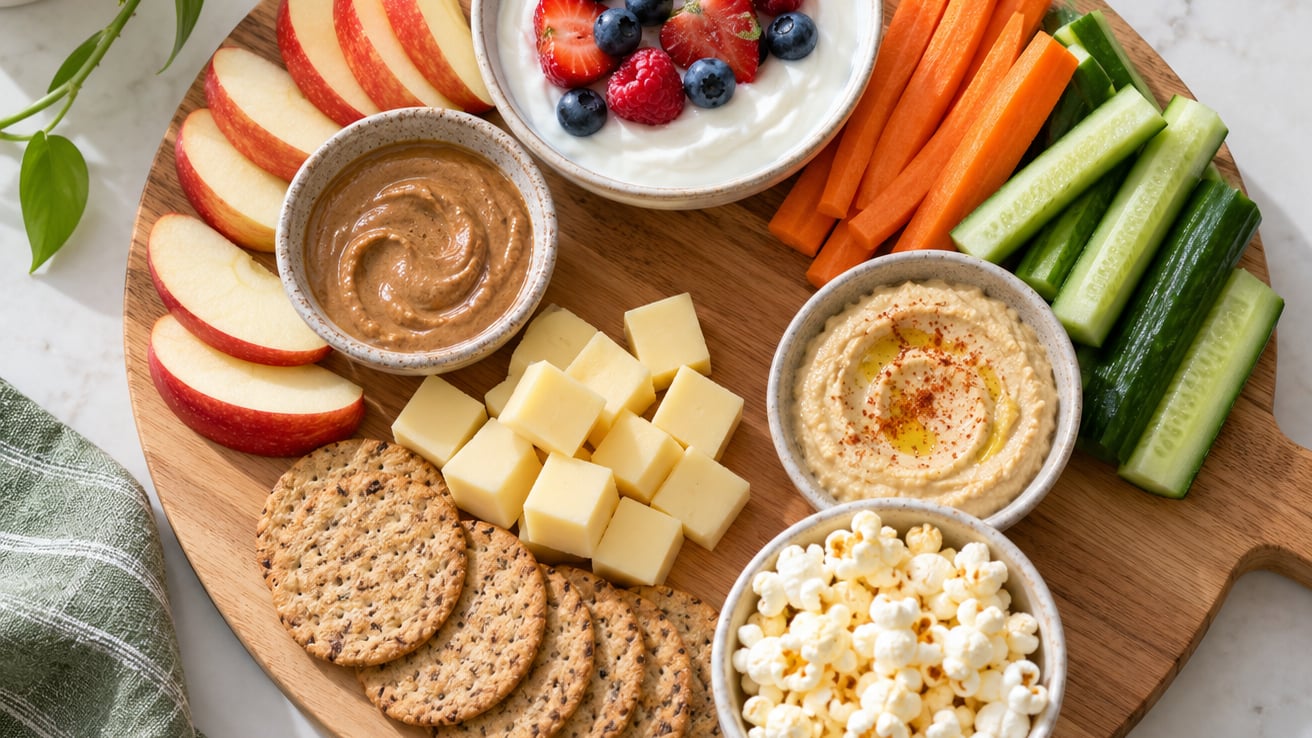
Kids get home hungry, and whatever fills that 3:30 to 5pm gap decides whether they sit down for dinner or graze on crackers from the cupboard. These 20 healthy snacks for kids after school are quick to make, easy to eat one-handed, and balanced enough to hold them until the evening meal.
The rule I use is simple: pair a carbohydrate with protein and a little fat. That trio steadies energy, keeps blood sugar even, and takes the edge off hunger without filling a child up so much that dinner becomes a negotiation. Fruit alone is fine, but it is a short-lived answer to a big appetite.
Updated for October 2026. Every item below lists its honest prep time and the allergy or age check worth making first.
One note on approach. I have a nine-year-old and a six-year-old, and neither of them will eat a “snack plate” that looks like an adult’s. Nothing here requires hiding vegetables or pretending broccoli is a treat. Each one is a real food that happens to be good for them, and the ones that fail get dropped rather than negotiated with.
Table of Contents
- 20 Healthy Snacks for Kids After School at a Glance
- 1. Apple Slices with Peanut Butter
- 2. Greek Yogurt with Berries
- 3. Whole-Grain Toast with Avocado
- 4. Banana with Walnuts
- 5. Hummus with Carrot and Cucumber Sticks
- 6. Cheese Cubes with Whole-Grain Crackers
- 7. Trail Mix with Raisins and Cereal
- 8. Oat Energy Bites
- 9. Whole-Grain Popcorn
- 10. Mini Caprese Skewers
- 11. Rice Cakes with Hummus
- 12. Frozen Yogurt Bark
- 13. Edamame with Sea Salt
- 14. Whole-Wheat Mini Muffins
- 15. Mango and Coconut Yogurt Cups
- 16. Black Bean and Corn Quesadilla
- 17. Fruit and Yogurt Frozen Pops
- 18. Roasted Chickpeas
- 19. Banana and Oat Smoothie Cups
- 20. Seeded Applesauce Cups
- Frequently Asked Questions
- How long should I wait between the after-school snack and dinner?
- What are some healthy filling snacks for kids?
- How do I stop my child from eating junk food between school and dinner?
- Which of these after-school snacks work for picky eaters?
- What can I send to after-school care that is nut-free and does not need reheating?
- How do I stop the after-school snack from spoiling dinner?
- Conclusion
20 Healthy Snacks for Kids After School at a Glance

Prep time is the number most parents search on, so it is the first column. The allergy column lists the ingredients most likely to cause a problem rather than a full label read, and the age column flags the snacks that need a texture change before a younger child can manage them safely.
| Snack | Prep time | Main benefit | Allergy or diet check | Age fit |
|---|---|---|---|---|
| Apple slices with peanut butter | 2 min | Fiber with protein and fat | Peanut; use sunflower seed butter instead | 2 and up |
| Greek yogurt with berries | 3 min | Protein, calcium, vitamin C | Dairy; check added sugar | All ages |
| Whole-grain toast with avocado | 5 min | Complex carbohydrate and unsaturated fat | Gluten; check the bread label | 2 and up |
| Banana with walnuts | 2 min | Potassium with unsaturated fat | Tree nuts; choking risk under 4 | 3 and up |
| Hummus with carrot and cucumber sticks | 5 min | Plant protein and fiber | Sesame; some hummus contains gluten | 2 and up |
| Cheese cubes with whole-grain crackers | 3 min | Calcium, protein, whole grain | Dairy and gluten | 3 and up |
| Trail mix with raisins and cereal | 5 min | Whole grain, fruit, fat | Raisins and nuts under 4 | 3 and up |
| Oat energy bites | 20 min batch | Fiber with protein and fat | Oats and peanut; use certified gluten-free oats if needed | 3 and up |
| Whole-grain popcorn | 5 min | Volume and whole-grain carbohydrate | Popcorn is a choking risk under about 4 | 4 and up |
| Mini caprese skewers | 5 min | Protein, calcium, vegetables | Dairy; remove skewers for under 4 | 3 and up |
| Rice cakes with hummus | 2 min | Crunch with plant protein | Sesame; check cakes are gluten-free | 2 and up |
| Frozen yogurt bark | 15 min plus freezing | Calcium and fruit | Dairy | 2 and up |
| Edamame with sea salt | 5 min | Plant protein and fiber | Soy | 3 and up |
| Whole-wheat mini muffins | 25 min batch | Whole grain with optional fruit | Wheat, egg, dairy | 1 and up |
| Mango and coconut yogurt cups | 5 min | Fruit with calcium | Dairy and coconut | 1 and up |
| Black bean and corn quesadilla | 12 min | Protein and fiber | Dairy, wheat; check tortillas | 3 and up |
| Fruit and yogurt frozen pops | 10 min plus freezing | Fruit with calcium | Dairy | 1 and up |
| Roasted chickpeas | 30 min batch | Plant protein and fiber | Legume; firm texture | 4 and up |
| Banana and oat smoothie cups | 5 min | Fiber, potassium, calcium | Dairy and gluten unless substituted | 1 and up |
| Seeded applesauce cups | 3 min | Fruit with seeds for texture | Chia, flax; swallowing and sugar checks | 1 and up |
A useful dividing line runs down the middle of that table. Everything above the line is ready in five minutes or less, which covers most weekday afternoons. Everything below needs either a batch cook on a Sunday or a freeze ahead, and then it is fast for the rest of the week.
1. Apple Slices with Peanut Butter
Crisp apple plus a thin layer of nut butter is the after-school snack I serve most often. The apple brings fiber and water, the peanut butter brings protein and fat, and the two together outlast a bowl of apple slices on its own. Kids eat it because it looks like a familiar lunchbox combination.
Serve one small apple sliced thin with about a tablespoon of peanut butter in a little cup for dipping. Toss the slices with a squeeze of lemon to slow browning if you are cutting ahead. Check for a peanut allergy first, and swap in sunflower seed butter, which has a similar texture and a similar fat profile without the peanut.
2. Greek Yogurt with Berries
Greek yogurt with berries is a protein-packed snack that arrives before the hunger gets loud. Plain varieties carry far more protein than sweetened ones and none of the added sugar, so read the label rather than trusting the flavor name.
Put half a cup of plain yogurt in a bowl, add a handful of blueberries or sliced strawberries, and finish with a teaspoon of chia or a small spoon of low-sugar granola. Parents should pick a yogurt that suits the child’s age, since whole-milk varieties suit most children and very young children should not be given cow’s milk as a drink before their first birthday. Skip any dairy-free version unless you are dealing with an actual dairy allergy, as plant-based options are often thinner and less filling.
3. Whole-Grain Toast with Avocado
Toasted whole-grain bread with mashed avocado is a carbohydrate and fat combination that quietly holds a child over for an hour. It also survives being eaten while homework gets finished, which is why it earns its place here.
Mash half an avocado on a slice of whole-grain toast, then let the child add cucumber or tomato strips on top. That is the whole method. For the bread, look at the ingredient list first and pick a loaf where whole grain or whole wheat flour is the first item, with roughly 3 grams of fiber or more per slice. Avocado and bread together are a common nut-free, dairy-free option.
4. Banana with Walnuts
A banana with chopped walnuts is potassium-rich fruit next to unsaturated fat, which makes it a good snack after a hard run around the yard. It is also the one kids can eat while walking, which matters on days with no time to sit down.
Peel one banana, scatter a small tablespoon of finely chopped walnuts over it, and let the child mash them together with a fork. Walnut pieces are hard and round, so this suits children around 3 and up. For younger kids, use pumpkin seeds or sunflower seeds instead, and for a nut-free household, chopped sunflower seeds give the same crunch.
5. Hummus with Carrot and Cucumber Sticks
Hummus and vegetables give you plant protein, fat, and crunch in one box, which is exactly what a hungry child needs. The dip is also the trick for picky eaters, because raw vegetables rarely get eaten plain but reliably get eaten dipped.
Put two tablespoons of hummus in a small lidded pot and add carrot and cucumber sticks cut to finger length. If plain vegetables are a hard sell, our guide to getting kids to try new vegetables has a few approaches that work better than repetition. Read the hummus label, since some brands use wheat or gluten-containing ingredients, and keep the portion small so a dip does not replace dinner. Sesame is the other allergen to check.
6. Cheese Cubes with Whole-Grain Crackers
Cheese cubes and fiber-containing crackers make a fast, balanced pair that needs no preparation beyond cutting. String cheese or cubed cheddar delivers calcium and protein, and the crackers add the carbohydrate that keeps a child from being hungry again twenty minutes later.
Cut a small block of cheese into thumb-sized cubes and serve with four or five whole-grain crackers plus a few grapes or a thin slice of pear. Two notes. Check for dairy and gluten, and skip whole grapes for children under about 4, serving them quartered lengthwise instead. A hard cheese block is also a choking risk for very young children, so soft cubes are the safer shape.
7. Trail Mix with Raisins and Cereal
A self-mixed trail mix is the cheapest way to get a grain, a fruit, and a fat source into one handful, and it is built almost entirely from things already in the cupboard.
Mix a cup of whole-grain cereal, half a cup of raisins, a quarter cup of pumpkin seeds, and a quarter cup of sunflower seeds. Portion it into small containers so a child can graze rather than eat the whole bowl, and keep raisins out for under 4s, using dried cranberries or fresh grapes instead. If you are shopping rather than mixing, our piece on telling whether a granola bar is actually healthy is worth a read first.
8. Oat Energy Bites
No-bake oat bites solve the after-activity problem, the one where a child gets home from practice with no time to make anything. They travel, they freeze, and one or two is a reasonable portion for most elementary-aged children.
Stir together one cup of rolled oats, half a cup of pitted dates, a quarter cup of peanut butter, a quarter cup of pumpkin seeds, and a splash of water. Pulse or mash until the mixture clumps, roll into walnut-sized balls, and chill for 30 minutes. They keep about a week in the fridge in an airtight container, or two months in the freezer, so a double batch covers most of the month.
Make-Ahead Oat Energy Bites for After School Snacking
Sunday is the moment for this. Rolling one tray takes about 20 minutes and produces roughly 16 bites, which covers four snack days for a family of four. I keep a labelled container at eye level in the freezer and move a day’s worth to the fridge in the morning so they are ready at pickup.
For school allergen rules, swap peanut butter for sunflower seed butter and check that the oats are certified gluten-free if the school requires it. These are firm, so they suit children around 3 and up rather than babies.
9. Whole-Grain Popcorn
Popcorn delivers volume and a whole-grain carbohydrate in a handful, which is why it is hard to eat a large amount of by accident. Air-popped or lightly oiled versions keep it in that healthy-snack territory; heavy butter and caramel push it somewhere else.
Serve about three cups of air-popped or lightly oiled popcorn in a small bowl. Older children can top it with grated cheese or a little chili powder, and a small cup of yogurt on the side adds the protein this snack otherwise lacks. Skip unpopped kernels entirely, and hold off on popcorn for children under about 4, where it is a recognised choking hazard.
10. Mini Caprese Skewers
Cherry tomatoes, soft cheese, and fresh basil give a snack that feels like a party without being a treat. Assembling them takes a couple of minutes, and the skewer makes it feel like food rather than a side dish.
Thread one halved cherry tomato, one folded basil leaf, and a small piece of mozzarella onto a short wooden skewer, then serve three per child. Adults should remove the skewer and cut everything into small pieces before serving anyone under 4, since pointed sticks and round tomatoes are both choking risks. Check for dairy, and use a mozzarella alternative if that is the household’s allergy.
11. Rice Cakes with Hummus
Two small rice cakes with hummus is about as fast as a snack gets, and the combination works because crunchy plus creamy registers as satisfying. It also travels, which makes it a good after-school-care option.
Spread or spoon two tablespoons of hummus over two plain rice cakes and let the child add cucumber rounds or bell pepper strips on top. Choose brown rice or multigrain cakes when you can, and check the label since many are made on shared equipment with wheat. Sesame in the hummus is the other item to confirm.
12. Frozen Yogurt Bark
Frozen yogurt bark is a small batch snack you cut into child-friendly slabs, and it tastes like dessert without being one. It is the one kids usually ask for by name, which is half the work done before anyone takes a bite.
Spread one cup of plain yogurt mixed with a spoonful of honey on a lined baking sheet, scatter over chopped strawberries and a tablespoon of seeds, and freeze for three to four hours. Break it into pieces and store in a sealed container in the freezer, moving pieces to the fridge about 20 minutes before serving. Check for dairy, and use a coconut yogurt alternative plus a berry-only topping if dairy is out.
13. Edamame with Sea Salt
Shelled edamame is one of the few plant snacks that genuinely feels substantial after school. It carries protein and fiber in a package no child thinks of as a vegetable.
Boil a cup of frozen edamame for three minutes, drain, and serve in a small bowl with a pinch of sea salt and a squeeze of lemon. A little sesame oil and flaky salt on top turns it into something a teenager will eat too. Skip it entirely for a soy allergy, and note that the pods are not snack food, so serve shelled and keep the bowl within reach. Texture matters as well, so start with younger children on a well-cooked, softer batch.
14. Whole-Wheat Mini Muffins
Mini muffins are the workhorse of the make-ahead list: one batch covers several snack days and they freeze well. A whole-wheat version with fruit or vegetables in the batter sneaks in ingredients that would be rejected on their own.
Beat one egg into a cup of plain yogurt, stir in half a cup of oil and a mashed banana, then fold in a cup and a half of whole-wheat flour, half a teaspoon of baking soda, and a cup of blueberries. Fill a mini muffin tin about three-quarters full and bake at 350F for 14 to 16 minutes. Cool completely on a rack before serving, store covered at room temperature for two days, or freeze. Check for wheat, egg, and dairy, and avoid hard additions like chopped nuts or raw apple chunks for young children.
15. Mango and Coconut Yogurt Cups
Mango and plain yogurt make a naturally sweet snack that does not depend on added sugar to taste like something. It is also a good use for fruit that has gone soft in the fruit bowl.
Dice half a mango, layer it with half a cup of plain yogurt in a clear cup, and add a spoonful of chia seeds if the child likes the texture. Fresh or frozen and thawed both work. Plain coconut yogurt with coconut milk makes a dairy-free version. Watch the added sugar on flavored varieties, since mango yogurt is often among the sweetest things in the dairy aisle.
16. Black Bean and Corn Quesadilla
A small whole-wheat quesadilla filled with black beans and corn is the warm option on this list, and it is the one that works when a child comes home starving rather than peckish. Warm food feels more like a meal and often buys more time before dinner.
Warm a small whole-wheat tortilla, spread a thin layer of mild salsa, add a tablespoon of rinsed black beans, a tablespoon of corn, and a small spoon of shredded cheese, then fold and pan-fry for two minutes a side. Cut into four triangles and serve with yogurt or extra salsa for dipping. Keep the seasoning mild for younger children, check the tortilla label for wheat, and remember the cheese means dairy. Smaller triangles for under 4s.
17. Fruit and Yogurt Frozen Pops
Fruit and yogurt pops are the make-ahead answer for a warm afternoon or a week when nobody has time to blend anything at 4pm. They are popular enough that kids often ask for them, which does most of the work.
Blend half a cup of plain yogurt, one cup of berries or diced mango, and a spoonful of honey, pour into a small popsicle mould, and freeze for at least four hours. Run the outside under warm water for about 10 seconds before pulling the stick so they slide out. Keep them in the freezer and move two to the fridge an hour ahead. Check for dairy, and skip or reduce the honey for children under 1.
18. Roasted Chickpeas
Roasted chickpeas give plant protein and fiber in a form that travels well and, unlike a bag of chips, is actually a legume. They are a genuinely crunchy snack rather than a soft one, which surprises plenty of children.
Toss a can of rinsed and dried chickpeas with a teaspoon of olive oil, half a teaspoon of cumin, and a pinch of paprika, then roast at 400F for 25 to 30 minutes, shaking twice. Cool them fully, then serve in a small bowl; they crisp further as they sit. They are firm and round, so hold off under 4 and cut them for younger children. Check for legume allergies before serving.
19. Banana and Oat Smoothie Cups
A banana and oat smoothie cup is a drinkable snack that works on days when even sitting down feels like too much. Blended fruit plus oats plus dairy gives fiber, potassium, and calcium in one small glass.
Blend one banana, half a cup of rolled oats, half a cup of plain yogurt, and about half a cup of milk, then let it sit for five minutes so the oats soften before drinking. That rest matters, because blended raw oats can leave a gritty texture that children refuse. For more ways to get a kid to actually finish one, see how to make smoothies kids actually drink.
How to Blend a Banana and Oat Smoothie Cup
Start with the liquid, add the banana, then the oats, then the yogurt, and blend on high for 30 seconds. Order matters less than people think, but adding the liquid first stops the blades jamming on frozen banana. Serve in a small cup with a straw, since a straw slows a child down enough to finish it.
Swap dairy milk for oat or soy if dairy is out, use certified gluten-free oats for a gluten-free version, and skip added sweetener entirely, because a ripe banana carries the sweetness. A tablespoon of nut butter blended in adds staying power for a teenager coming off the field.
20. Seeded Applesauce Cups
Seeded applesauce is a smooth snack with optional texture, which makes it a useful first step for younger children and a lunchbox staple for older ones. It is also the cheapest item on the list by a wide margin.
Stir a teaspoon of chia, ground flax, or sunflower seeds into half a cup of unsweetened applesauce and let it sit for ten minutes so the seeds thicken it. Spoon into a small pot or cup and add a few apple pieces on top for texture. Serve fourths to sixths depending on age, keep it refrigerated, and use it within three to four days of opening. Skip whole seeds for under 4s, and check the label, since many flavored varieties carry added sugar.
Frequently Asked Questions
How long should I wait between the after-school snack and dinner?
Aim for a gap of about an hour and a half, and serve the snack as soon as the kids get in rather than stretching it out. That window gives them time to eat, digest, and get on with homework or play without arriving at the table still ravenous. Serving something heavy and greasy right before dinner is what usually causes the mealtime standoff, so keep the fat and fiber moderate rather than huge.
What are some healthy filling snacks for kids?
Filling snacks combine protein, fiber, and fat rather than carbohydrate alone. Apple slices with nut butter, plain Greek yogurt with berries and seeds, shelled edamame, a banana with walnuts, or a small black bean and corn quesadilla all hold a child for roughly an hour. Fresh fruit on its own fills for about fifteen minutes, which is why parents often see a hungry child again almost immediately.
How do I stop my child from eating junk food between school and dinner?
Give a real snack within about fifteen minutes of getting home, before the hunger peak. Hunger is what makes crackers and sweets from the cupboard appealing, so a carbohydrate plus protein combination such as toast with avocado or rice cakes with hummus takes the edge off. Keep the unopened treats out of sight rather than relying on willpower, and let the child help build the afternoon snack themselves.
Which of these after-school snacks work for picky eaters?
Start with anything the child already eats, even if it is plain and boring. Fruit with a dip, crackers with cheese, and deconstructed versions of familiar meals, such as rice cakes with hummus instead of a wrap, work better than introducing something new. A tiny portion on a bigger plate helps. Our guide to getting kids to try new vegetables has specific strategies, and repeating the same accepted food for two weeks does more than switching weekly.
What can I send to after-school care that is nut-free and does not need reheating?
Whole-grain crackers, single-serve fruit cups, cheese cubes, plain rice cakes, homemade trail mix with pumpkin and sunflower seeds, and oat bites made with sunflower seed butter are all shelf-stable, nut-free, and eaten cold. Check the school rules, since many kitchens handle peanuts, and read labels for shared-equipment warnings. Send a separate dip rather than a mixed pack if cross-contact is a worry.
How do I stop the after-school snack from spoiling dinner?
Portion it. A full bowl of anything, even carrots, ends the meal, so serve a small bowl, a small plate, or two or three pieces. Serve it immediately on arrival rather than grazing, keep it separate from the dinner table, and if the child is still hungry afterwards, add a second small round of protein rather than a bigger portion of the first. Skip anything fried or heavily buttered in that window.
Conclusion
Start with the two snacks your child already eats without complaint. Add one from the list above each week, and keep the note about allergies and age next to the list, not in your head.
On the days when nothing works, remember that repetition beats novelty. The same snack offered calmly for two weeks is more likely to be accepted than twenty different foods in a month. And for the afternoons when you have nothing at all, apple slices with nut butter take two minutes and solve the problem well enough.