
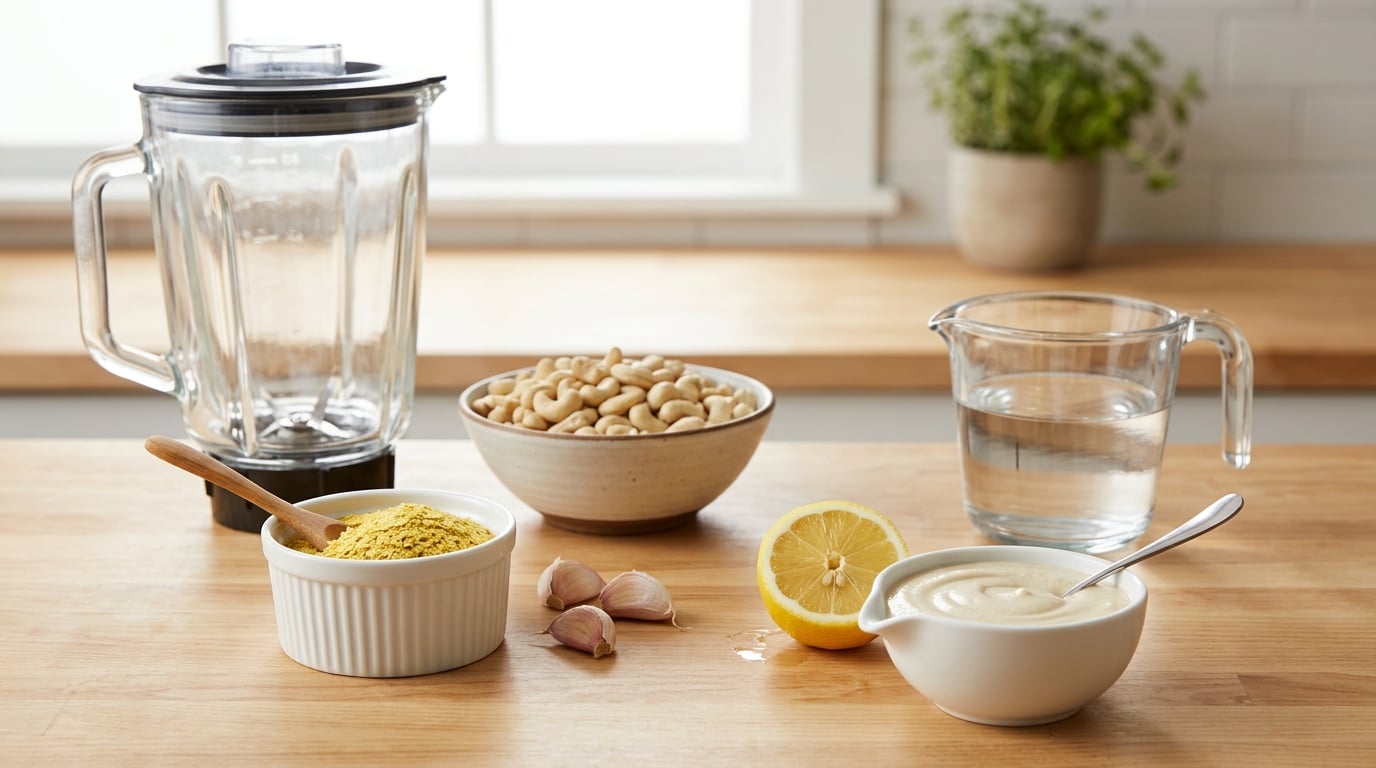
This is how to make cashew cheese sauce without dairy, and once the cashews have soaked, the whole thing takes about 15 minutes. Soak raw cashews, blend them with water and a few seasonings until silky, then thin or thicken the result to match whatever you’re serving. Nothing needs a store trip mid-week. The one step most people get wrong is soaking the cashews long enough to break them down.
Here’s the short version before the details.
- Soak: raw cashews in cool water for 4 hours or overnight, or in boiling water for 15 minutes if you’re in a hurry.
- Blend: cashews with about a quarter cup of water for a full minute, then add lemon juice, nutritional yeast, salt, and any spices.
- Adjust: add water a tablespoon at a time for a drizzle, or leave it thick for dipping.
The version I keep coming back to is plain: cashews, water, lemon, nutritional yeast, salt, and a little garlic powder. Everything else is a variation on that.
Table of Contents
- What You Need
- Step-by-Step: How to Make Cashew Cheese Sauce
- Flavor Variations
- How to Use Cashew Cheese Sauce
- How to Store Cashew Cheese Sauce
- Common Mistakes
- Frequently Asked Questions
- Do I need to soak cashews for cashew cheese sauce?
- Can I make cashew cheese sauce without nutritional yeast?
- Why is my cashew cheese sauce grainy or thick?
- How do I make cashew cheese sauce smoother?
- Can cashew cheese sauce be used as a vegan Alfredo sauce?
- How long does homemade cashew cheese sauce last?
- Conclusion
What You Need
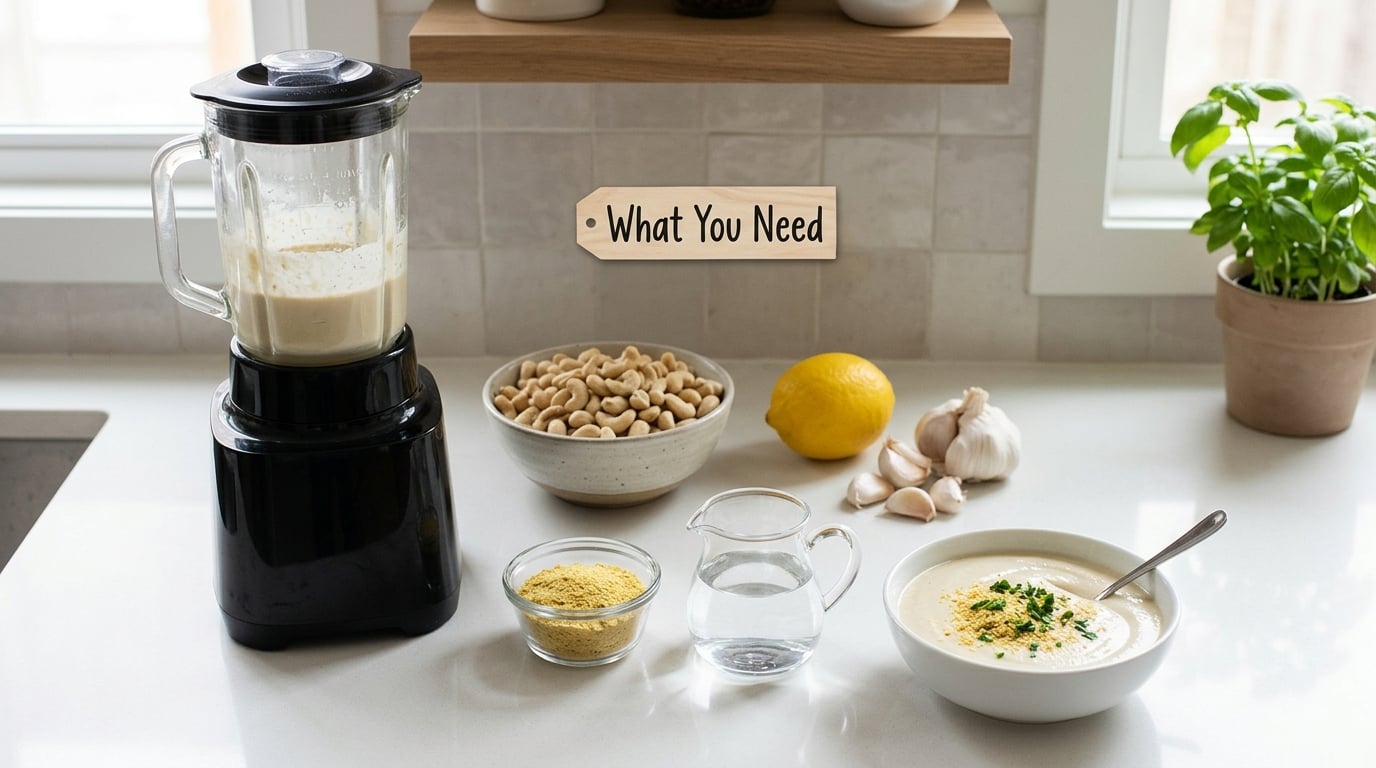
The base recipe is short enough to memorize.
- 1 cup raw cashews (about 140 g), soaked
- 1/4 to 1/2 cup water, plus more as needed
- 2 tablespoons nutritional yeast
- 1 tablespoon lemon juice or white wine vinegar
- 1 small garlic clove or 1/2 teaspoon garlic powder
- 1/2 teaspoon fine sea salt, plus more to taste
That makes roughly one and a half cups of sauce, which is enough for about a pound of pasta or a tray of roasted vegetables. Prep time is five minutes, blending is three, and the sauce is edible immediately after that.
Raw cashews are the part you shouldn’t skip
Roasted cashews are cheaper and easier to find, and they will make you wonder why your sauce tastes nutty and slightly burnt. The roasting drives off the neutral flavor that makes cashews work as a cheese substitute in the first place. It’s a persistent complaint on cooking forums, and it’s correct.
If that’s all you have, they’re still usable. Just expect a stronger, nuttier sauce and add a little extra lemon juice to balance it.
What each ingredient is doing
Nutritional yeast is the flavor engine. It’s a deactivated yeast grown on molasses, and it carries the savory, faintly nutty note people describe as cheesy. Two tablespoons is a solid starting point; go to three if you’re layering onto pizza or nachos.
Lemon juice or vinegar supplies the acidity that cuts the richness. Without it the sauce tastes flat no matter how much yeast you add. White wine vinegar is the sharper option, lemon juice is rounder, and either works.
Water is your consistency dial. Some cooks use unsweetened plant milk for a slightly richer body, and that’s fine, but water keeps the flavor clean and the calories honest. A spoonful of the starchy water from your pasta pot is the best addition of all, because the starch helps the sauce cling.
Step-by-Step: How to Make Cashew Cheese Sauce
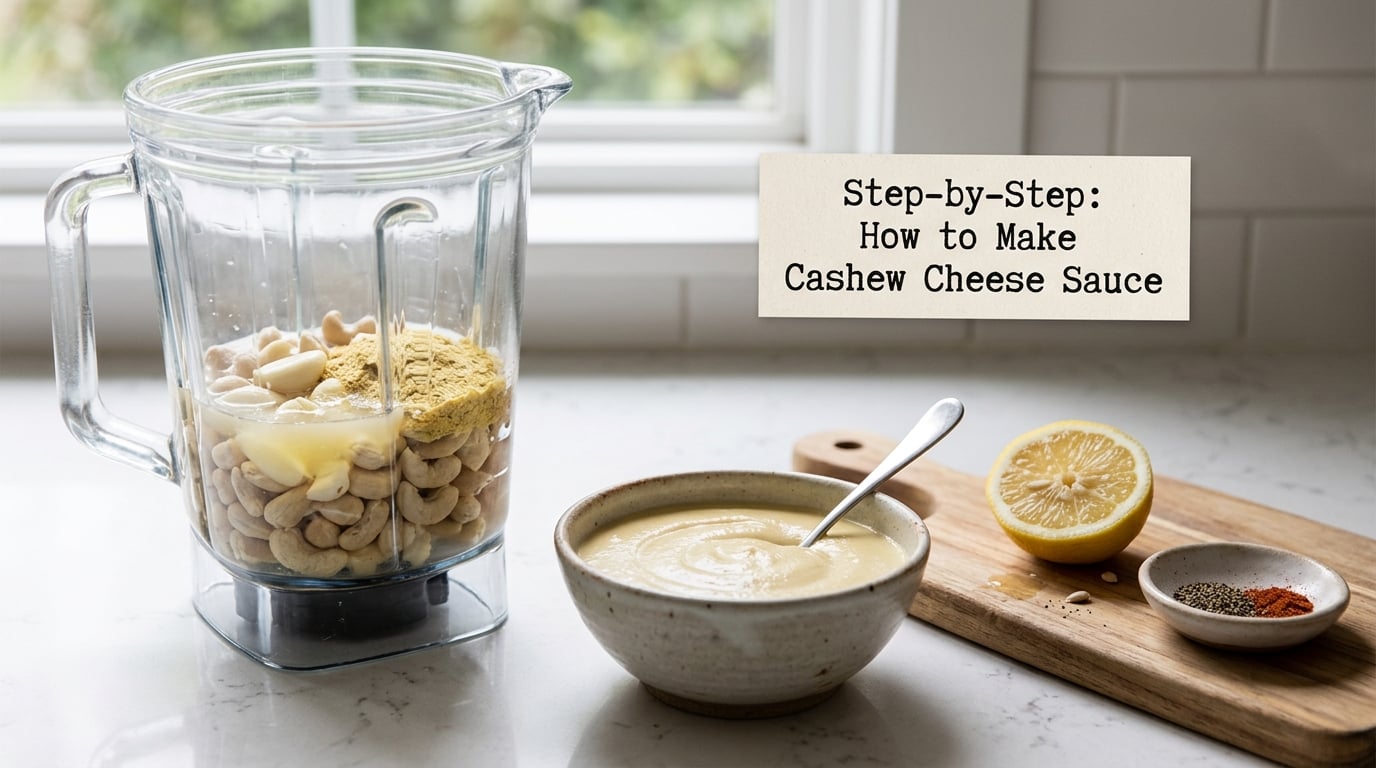
1. Soak the cashews
Cover the cashews with cool water by about an inch, then wait. Four hours is the floor for a decent result, and overnight is the sweet spot. The cashews roughly double in size and the skins loosen, which tells you they’re ready.
For the quick route, put the cashews in a small saucepan, add boiling water to cover, and let them sit off the heat for 15 minutes. Drain and rinse. The texture is very slightly softer than an overnight soak but the difference is minor in a home sauce.
2. Blend the cashews with water first
Drain the soaked cashews and drop them in the blender with about a quarter cup of fresh water. Blend on high for a full 60 to 90 seconds, stopping once or twice to scrape down the sides. You’re waiting for a smooth, spoonable paste with no sandy grit. If it’s still loose and chunky, keep going; the cashews release starch and the sauce thickens as you blend.
3. Add the seasonings
Now add the nutritional yeast, lemon juice, garlic, and salt. Blend another 30 to 60 seconds until everything is fully incorporated and the sauce turns a uniform pale yellow. Taste it with a clean spoon here, before thinning, because the flavor is more intense when it’s thick.
4. Adjust the consistency
This is the step that separates a good sauce from a disappointing one. Add water one tablespoon at a time, blending briefly after each, until you hit the texture you want.
| Target use | Consistency | How far to thin |
|---|---|---|
| Drizzling over roasted vegetables or grains | Loose, pourable | Thin with 3 to 5 extra tablespoons of water |
| Pasta or mac and cheese | Creamy, coats the noodles | Thin with 1 to 2 tablespoons, or use starchy pasta water |
| Nachos, tacos, quesadillas | Thick, holds a spoon upright | Do not thin beyond the original amount |
| Dip for vegetables or crackers | Thick but spreadable | Leave as blended, maybe a teaspoon less water |
5. Taste, season, and rest
Cashew sauce tastes flatter straight from the blender than it does ten minutes later, because the flavors need a moment to settle. Give it a few minutes, taste again, and adjust the salt. Most of the time the answer is another pinch of salt and a squeeze of lemon.
6. Use it or store it
Serve warm over pasta, or transfer to a jar if you’re not cooking immediately. It thickens noticeably in the fridge, so plan to loosen it with a splash of water when you reheat.
How to Make Cashew Cheese Sauce in a Blender
A high-speed blender gets you there in about a minute. A standard kitchen blender works too, just expect to run several pulses and to stop more often for scraping. The texture you’ll reach is slightly coarser, closer to a rustic queso than a smooth Alfredo.
Three things make blending easier. Add the cashews and a small amount of liquid first, before anything else, so the blades can actually move. If your blender has a tamper, use it, because cashew paste climbs the walls. And give the machine a rest between bursts if the motor starts to strain, which it will if you pack the jar full.
No blender at all? A food processor works with the same order of operations, and an immersion blender in a tall narrow container does the job in about two minutes, though you’ll need to break up the cashews first with a whisk or the back of a spoon. Some cooks with no machine at all make a loose, textured version by mashing soaked cashews with a potato masher and thinning it with water, which is more of a rustic dip than a sauce.
If you want a nut-free version, sunflower seeds with the hulls left on work remarkably well. Soak them the same way, and expect a slightly earthier flavor that suits roasted vegetables and tacos better than it does pasta.
Flavor Variations
Once you’ve got the base down, the changes are all about the seasonings rather than the method.
Mild and kid-friendly
Leave out the garlic powder and any chili, then add a pinch of turmeric for a buttery yellow color. A small spoon of white miso and a teaspoon of mild Dijon mustard make it taste more like the family pasta sauce people expect, without a sharp edge.
Smoky
Add a teaspoon of smoked paprika, or a half teaspoon of chipotle powder if you want heat with it. A spoonful of sun-dried tomato paste also adds a rounded, smoky sweetness that works well on roasted cauliflower.
Spicy queso
Blend in a jalapeño, a tablespoon of pickled green chiles, or a few dashes of hot sauce. The version that gets repeated on r/vegan is a whole can of diced chiles with green chilies, which turns the sauce into a proper queso for tortilla chips.
Herbed
Stir in chopped basil, parsley, or dill after blending rather than during, so the herbs stay bright. A spoonful of pesto mixed in at the end is the fastest route to a herby sauce, and a rosemary version has a loyal following in home kitchens.
Tomato
Add two tablespoons of tomato paste and a splash of pasta water, then simmer the sauce in a small pan for three to four minutes. The paste cooks off the sharp edge and turns the sauce into a pink, dairy-free tomato cream that works over rigatoni.
Alfredo-style
Use twice the water reduction, meaning you finish with a thicker paste, then loosen it slowly with warm water until it falls off the spoon in a ribbon. A spoonful of olive oil at the end gives it the gloss and weight of a dairy Alfredo, which several regular makers add for exactly that reason.
From sauce to spreadable cheese
The same base makes a soft cheese. Skip the water entirely, blend the soaked cashews with the yeast and lemon, and spoon the thick paste into a lined container. Chill for a few hours and it holds a spreadable, crumbly shape that’s good on crackers or stirred into soups.
How to Use Cashew Cheese Sauce
The sauce is more useful than pasta deserves. Here’s where it earns its place in a weeknight rotation.
- Pasta and mac and cheese: loosen with starchy pasta water until it coats the noodles. Fold in roasted broccoli or peas at the end.
- Roasted vegetables: thin it until pourable and drizzle over cauliflower, carrots, or butternut squash straight from the oven.
- Tacos and nachos: keep it at full thickness so it stays put on a tortilla. Warm it gently in a pan first.
- Baked potatoes: split a potato, fluff the inside with a fork, and stir the sauce through with chopped chives.
- Grain bowls: a thin drizzle over quinoa, brown rice, or farro with roasted chickpeas.
- Vegetable dip: the thickest version works for carrot sticks, peppers, and crackers.
- Loaded fries: spoon over hot fries, then add pickled onions and hot sauce.
- Sandwich spread: the chilled, thick version is a spread with strong flavor on seeded bread.
- Pizza topping: spread it on dough before baking rather than spooning it on after, so it doesn’t slide.
One honest limitation: cashew cheese sauce is a sauce, not a melting cheese. It softens under heat and browns at the edges, but it won’t stretch like mozzarella or form a cheese pull on a pizza. People who expect dairy melt behavior tend to be disappointed, while everyone else uses it as a creamy sauce and is happy.
How to Store Cashew Cheese Sauce
Put it in an airtight jar in the fridge and it keeps for about four days. That’s the window where the texture and flavor are still where you left them, and it’s a good reason to make a half batch rather than a full one.
For longer storage, freeze it in portions. Scoop it into an ice cube tray, freeze until solid, then move the cubes into a freezer bag. Portions thaw in about ten minutes on the counter or overnight in the fridge, and you only thaw what you’re using. Thaw in the fridge rather than the microwave if you can, because reheating hard splits the emulsion.
To reheat, warm it in a small pan over low heat with a splash of water or plant milk, stirring constantly. The sauce will look tight coming out of the fridge, and it loosens as it warms. If it looks loose instead, a minute over low heat takes care of that.
Discard the sauce if there’s a sour or off smell, visible mold, or if it sat on the counter for more than about two hours. Cashew sauce has no preservatives, so it doesn’t get the same safety margin a jarred sauce would.
Common Mistakes
The sauce is grainy. Almost always the cashews weren’t soaked, or the blender stopped too early. Fix it by blending another full minute with a splash more water. If the grit survives, the cashews weren’t hydrated enough, so next time soak overnight or use the boiling water method.
The sauce is too thick. Add water a tablespoon at a time. A common mistake is dumping in a large amount and overcorrecting, so go slow and taste between additions.
The sauce is watery and won’t cling. You went too far. Blend in a tablespoon of starchy pasta water, a teaspoon of cornstarch, or a few more soaked cashews. Cookers on r/veganrecipes use cornstarch when they want a stretchy, queso-like result.
The sauce tastes bland. Almost always under-salted and under-acid. Add a pinch of salt, then a squeeze of lemon, and taste again before adding more of anything else. Nutritional yeast beyond three tablespoons turns pasty rather than savory, so more yeast is rarely the fix.
The sauce separates in the fridge. That’s normal for a nut-based emulsion, and a few stirs bring it back together. Thin with a tablespoon of water while warming, and a spoon of olive oil will keep the emulsion tighter next time.
The sauce tastes bitter or burnt. You used roasted cashews, or the jar got hot from blending too long in high gear. Raw cashews and a minute of blending is the safe combination.
It thickens into a paste overnight. Expected, and easy to fix. Loosen it with warm water in the pan, not in the jar, so you can judge the consistency as you go.
Frequently Asked Questions
Do I need to soak cashews for cashew cheese sauce?
Soaking is what separates a silky sauce from a gritty one. Cashews have dense cell walls that resist blending, and 4 hours of soaking in cool water softens them enough to break down, with overnight being the most reliable option. A boiling water soak for 15 minutes off the heat works in a pinch and gives a slightly softer result. You can skip soaking entirely, but expect a grainy, thinner sauce no matter how long you blend.
Can I make cashew cheese sauce without nutritional yeast?
Yes, and the sauce is still good, just different in character. Without nutritional yeast you lose the savory, cheesy note, so lean on the other seasonings: white miso paste, a teaspoon of mustard powder, garlic and onion powder, and a squeeze of lemon. Many people prefer this version because it tastes more like a garlic cream sauce. Expect it to be creamier and milder rather than distinctly cheesy.
Why is my cashew cheese sauce grainy or thick?
Grainy texture means the cashews were not fully hydrated or the blend stopped too soon. Blend on high for a full 60 to 90 seconds and scrape the sides twice, since cashew paste climbs the jar walls. If grit remains, the soak was too short, so use overnight soaking or a 15 minute boiling water soak next time. Thickness is a separate issue and is fixed with water, a tablespoon at a time.
How do I make cashew cheese sauce smoother?
Four things help. Soak the cashews overnight rather than four hours. Blend cashews and liquid first, before adding anything else, so the blades work. Give it a full 60 to 90 seconds on high and scrape down twice. Finally, if grit persists, pass the sauce through a fine mesh sieve or a nut bag, which removes the last sandy particles. A high-speed blender makes the biggest difference of all.
Can cashew cheese sauce be used as a vegan Alfredo sauce?
It works well for that. Keep the blended sauce thicker than usual, then loosen it slowly with warm water until it falls off the spoon in a ribbon. A tablespoon of olive oil at the end adds the gloss and weight of a dairy Alfredo. Toss it with cooked pasta and enough starchy pasta water to coat, and it lands very close to the original. It will not, however, melt or stretch the way dairy cheese does.
How long does homemade cashew cheese sauce last?
About four days in the refrigerator in an airtight container, and that is the window where flavor and texture are unchanged. For longer storage, freeze it in ice cube tray portions, move the frozen cubes to a bag, and thaw one at a time in the fridge overnight. Discard the sauce if it smells sour, shows mold, or sat out for more than about two hours, since a homemade nut emulsion has no preservatives.
Conclusion
To make cashew cheese sauce, soak a cup of raw cashews until they’re soft, blend them with a quarter cup of water for a full minute, then add nutritional yeast, lemon juice, salt, and garlic before thinning to the texture you need. Start there, taste it, and adjust from that baseline rather than chasing a recipe that was written for a different dish.