
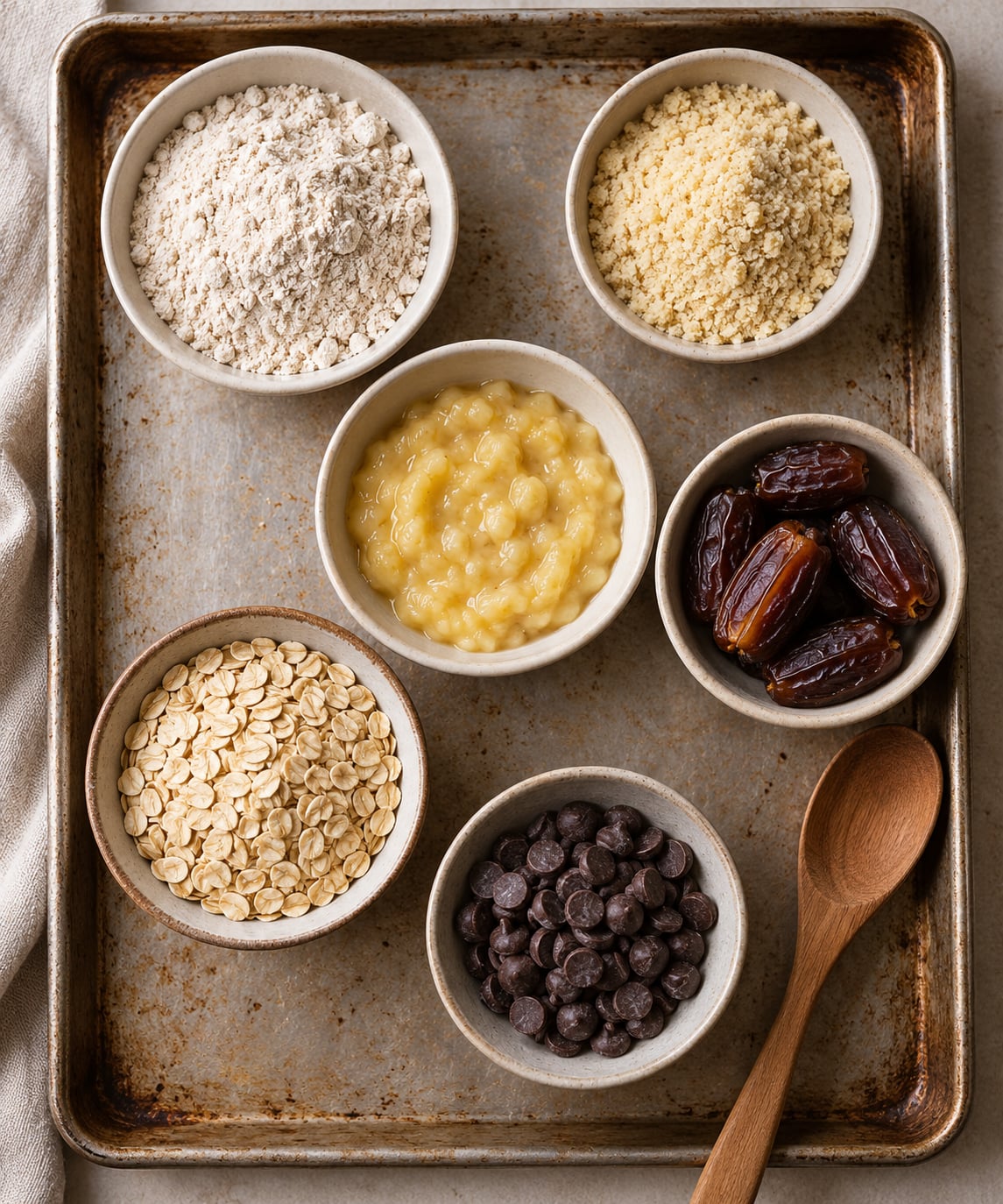
The short answer is that ripe fruit does the work sugar used to do. If you want to know how to make healthy cookies without refined sugar, mash two very ripe bananas, pair them with oats and a little nut or seed flour, sweeten with maple syrup or mashed dates, and pull the cookies out while the centers still look soft. You get a chewy, brown-sugar-adjacent cookie in about 30 minutes, start to finish.
There is no magic involved, only two jobs that granulated sugar normally does. It sweetens, and it gives cookies bulk and chew. Take both jobs over with fruit and a grain, and the dough behaves. Total time is roughly 15 minutes of prep and 11 to 13 minutes of baking, and the recipe is forgiving enough for a first attempt.
Table of Contents
- What You Need
- Step-by-Step
- Common Mistakes
- Frequently Asked Questions
- Are healthy cookies without refined sugar actually sugar-free?
- Can I use dates instead of banana in these cookies?
- Can I make healthy cookies without refined sugar vegan?
- How do I keep banana oat cookies from becoming dry?
- Can these cookies be frozen for later?
- Are cookies made with maple syrup or honey automatically healthy?
- Conclusion
What You Need
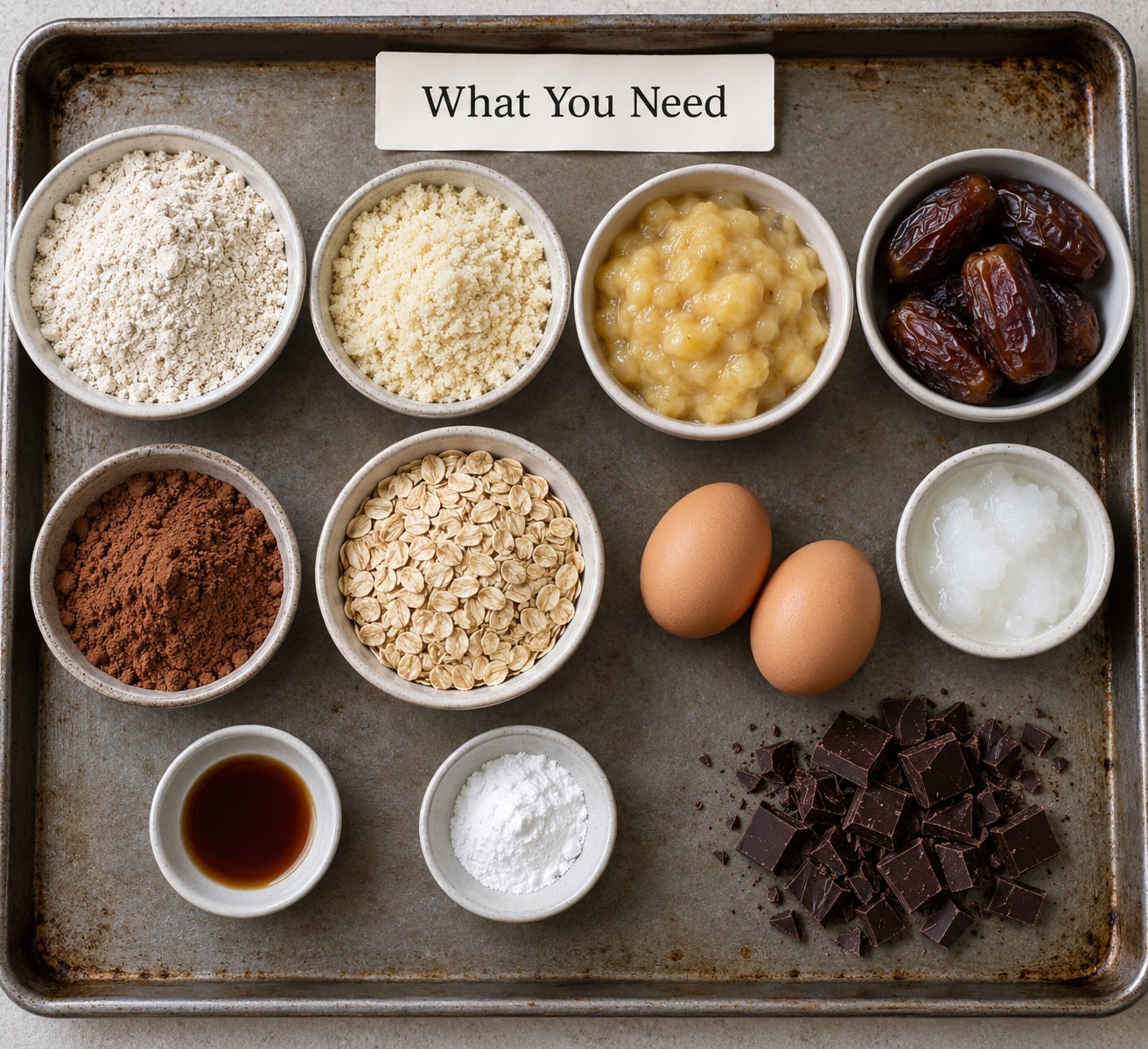
This base makes 10 to 12 medium cookies. Prep is about 15 minutes, baking runs 11 to 13 minutes, and cooling takes another 15 before they are firm enough to move. Difficulty is easy, but the single thing that matters is fruit ripeness.
- 1 cup (120 g) rolled oats, blended into a coarse flour or left whole for a chewier cookie
- 1/2 cup (60 g) almond flour, which also carries most of the fat and structure
- 2 very ripe bananas, roughly 1 cup mashed, with brown freckled skins
- 1/4 cup (60 ml) pure maple syrup, or 4 soft medjool dates soaked and mashed
- 1/3 cup (45 g) unsalted almond butter, or coconut oil melted and cooled slightly
- 1 large egg, plus 1/2 cup unsweetened applesauce if you want it egg-free
- 1 tsp vanilla extract and 1/2 tsp baking powder
- 1/4 tsp fine sea salt, which is what makes it taste like a cookie and not a muffin
- 3/4 cup (85 g) dark chocolate chips or chopped bittersweet bar
Flour swaps work in a fixed order of reliability. Oat flour keeps things soft, whole wheat flour gives you a nuttier crumb and a firmer cookie, and spelt, buckwheat or chickpea flour each push the flavor further from a classic sugar cookie. Nut butter is the fat that makes these taste rich rather than flat, and unsweetened applesauce replaces part of the banana if you want a lighter cookie.
For flavor, add a teaspoon of cinnamon, half a teaspoon of espresso powder, grated orange zest or a pinch of ginger. Chopped walnuts and dried cherries are the mix-ins that hold up best, since they add their own sweetness and keep the cookie from tasting like a bowl of oats.
Allergens to flag: this recipe contains tree nuts, wheat (oats and almond butter may both be processed in wheat facilities), and eggs. Swap in sunflower seed butter and a flax or chia egg for a nut-free, egg-free version, and certified gluten-free oats if gluten matters to you.
Step-by-Step
1. Choose and Mash the Fruit Base
Banana supplies both the moisture and the sweetness, and it is the piece most recipes get wrong. The fruit has to be spotty and soft enough to mash with a fork in about thirty seconds, the kind you would not want to eat straight off the counter.
Mash the bananas in a bowl, then stir in the maple syrup or the mashed dates, the almond butter, the egg, and the vanilla until it looks like one thick, glossy mixture. If you swap in medjool dates, soak them in hot water for ten minutes first, remove the pits, and blend until completely smooth, or the skins show up as strings in the dough.
A green banana will not mash smoothly and will not carry enough sweetness, so it can leave you with a pale, cracker-like cookie. If your bananas are still slightly underripe, roast them at 400°F for 10 minutes first, skins on. That concentrates the sugars and softens them enough for the job. There is more on that trade-off in substituting maple syrup for sugar in recipes.
2. Blend the Dry Ingredients
Whisk the oat flour or blended oats, the almond flour, the baking powder, the salt, and 1 to 2 tablespoons of unsweetened cacao powder if you are making chocolate cookies. Whisk rather than stir, so the baking powder has no pockets and the cookies spread evenly.
For a chewy result, process the oats until they look like coarse sand, not powder. Fine oat flour bakes up crumbly, and whole rolled oats stay chewy but can make a dough too loose to shape. A food processor is optional here; a blender works, and if you have neither, buy oat flour and skip the step entirely.
3. Mix and Rest the Dough
Add the wet mixture to the dry one and stir with a spatula until no dry flour streaks remain, about 30 seconds. Then stop. Overmixing develops gluten from the oat and almond flour and gives you a tough, bready cookie instead of a tender one.
Cover the bowl and let it sit for 10 minutes so the oats drink up the liquid. The dough should look like thick, slightly sticky batter, looser than a classic cookie dough. Resist adding flour when it looks a bit wet, since the dough firms up in the oven and in the fridge.
4. Shape the Cookies
Preheat the oven to 350°F and line a baking sheet with parchment. Portion 2 tablespoons of dough per cookie, roll each into a ball about 1.5 inches wide, and space them 2 inches apart so air can move between them. A crowded pan bakes uneven and pushes the cookies into one sheet of discs.
Flatten each ball to about 3/4 inch thick with the bottom of a glass. Wet dough sticks to everything, so dust your palms with a little oat flour, or work with damp hands and a silicone mat on the counter. Press the chocolate chips into the tops now, before baking, so they set into the surface rather than sliding off.
5. Bake Until the Edges Set
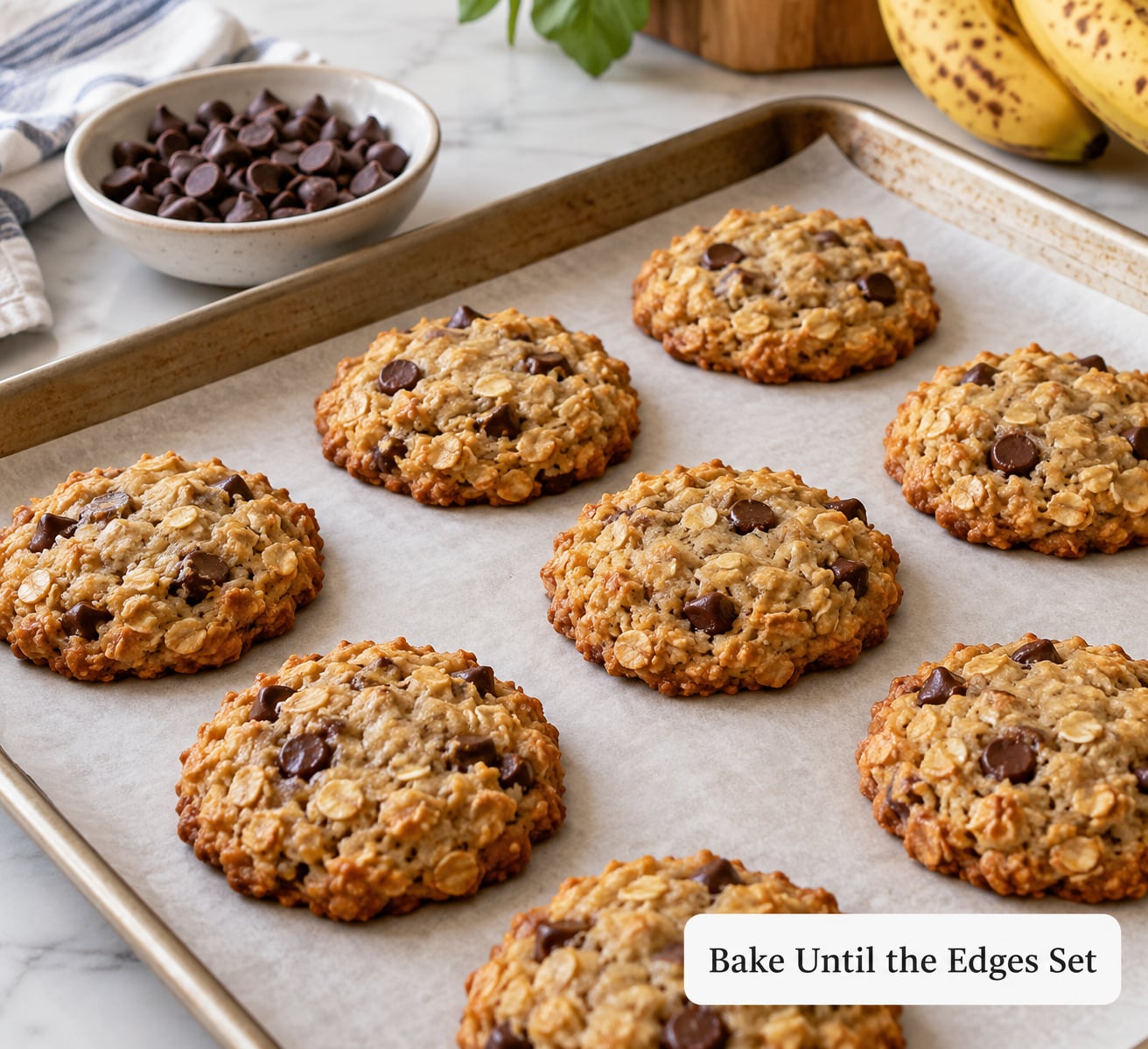
Bake at 350°F for 11 to 13 minutes. The cookies are done when the edges look set and faintly golden and the centers still look a touch underdone, almost like they should fall out of the pan. That slight softness is the whole trick, because the residual heat finishes the center while the cookies cool.
If you wait until the middle looks baked through, you get a dry cookie that has lost the chew you came for. Color is a better cue than the clock: pale edges mean another minute or two, deep golden edges mean pull the pan now.
6. Cool, Store, and Serve
Leave the cookies on the pan for at least 15 minutes. They are fragile when warm, and moving them early cracks the tops, so give them the full cooling period on parchment.
For storage, keep them in an airtight container in the refrigerator for up to 4 days, layered with parchment so the chocolate does not stick. To freeze, set the baked cookies on a tray first, freeze until solid, then move them into a container in layers for up to 2 months. Thaw them at room temperature in the container, or warm one for 15 seconds in the oven.
Refrigeration softens the texture a little, so if you bake mostly to snack on, portion what you will not freeze into smaller bags now. A dozen fresh cookies on a Sunday covers most of the week.
Common Mistakes
The most common failure is fruit that is not ripe enough, which leads to a dry, pale cookie with no sweetness behind it. The second is measuring flour loosely. Spoon almond flour into the cup and level it off; packing it in adds up to a quarter cup of extra flour and the dough will crumble instead of chew.
Other things go wrong in predictable ways. Dough that is too dry comes from adding extra flour after mixing, so leave it alone and let the rest do its work. Spreading into thin wafers means the pan was crowded or the cookies were under 3/4 inch thick. And expecting a crisp, snappy cookie is a mismatch of goals: banana and maple syrup cookies are chewy by chemistry, and no amount of extra baking time changes that without drying them out.
One distinction worth getting right, since the wording gets blurry all over the internet. Refined sugar free means no white granulated sugar, brown sugar, or other highly processed sugar, and it does not mean zero sugar. Maple syrup, honey, coconut sugar, and dates are all still sugar. If you are avoiding sugar entirely, that is a separate goal with a separate label and a different recipe. My guide to cutting back on sugar without going cold turkey covers the realistic version of that approach.
A note on moderation, since these cookies are not a health food in the way a carrot is. Maple syrup, honey, and coconut sugar all raise blood sugar, just more slowly than white sugar because they carry some fiber and minerals along. Use them deliberately, size your portions, and think of a cookie as a cookie.
For the best results: rest the dough, chill shaped cookies for 15 minutes if you want thicker ones, salt the tops lightly, and add chocolate chips. Kids who will not eat a healthy-looking cookie usually will eat one that looks like the chocolate chip cookies they already know.
Frequently Asked Questions
Are healthy cookies without refined sugar actually sugar-free?
No. Refined sugar free means no white granulated sugar, brown sugar, or other highly processed sugar. Maple syrup, honey, coconut sugar, and mashed dates all count as added sugar even when they are unrefined. If you need zero added sugar, look for recipes using only whole fruit, and read labels carefully, because most cookies marketed as healthy still contain some form of sugar.
Can I use dates instead of banana in these cookies?
Yes, and the cookies get chewier and more caramel flavored. Soak 4 soft medjool dates in hot water for 10 minutes, remove the pits, and blend until completely smooth. Replace the 1/4 cup of maple syrup with them and use a third less banana, roughly half a banana, so the dough does not turn to mush.
Can I make healthy cookies without refined sugar vegan?
Yes. Swap the egg for a chia egg, 1 tablespoon ground chia seeds mixed with 3 tablespoons water, or a flax egg made the same way with ground flaxseed. Let it sit for 10 minutes to gel before you add it. Use coconut oil or a nut butter in place of any butter, and check that your chocolate chips are dairy free, which most dark ones already are.
How do I keep banana oat cookies from becoming dry?
Pull them out of the oven while the centers still look slightly underdone, at around 11 to 13 minutes at 350°F. They finish setting on the pan. Avoid adding flour to loosen the dough, since oat and almond flour already absorb a lot of liquid, and store cookies airtight rather than leaving them on a plate where air reaches them.
Can these cookies be frozen for later?
Yes, for up to 2 months. Bake the cookies fully, cool them, then freeze them on a tray until solid before moving them into an airtight container in layers with parchment between. Thaw them in the closed container at room temperature, which takes about an hour, or warm individual cookies for 15 seconds in a 325°F oven.
Are cookies made with maple syrup or honey automatically healthy?
Not automatically. Both are still added sugars and both will raise blood sugar, just a little more slowly than white sugar because they arrive with some fiber and minerals. They are better swaps than granulated sugar in a cookie, and they pair well with oats, nut butter, and dark chocolate. Portion size and how often you eat them matter more than the label on the syrup.
Conclusion
The easiest path is four habits: use fruit with freckled brown skins, level your flour instead of scooping it, stop mixing the moment the streaks disappear, and pull the cookies while the centers still look soft. Bake the plain chocolate chip version first, then adjust the flavor once you know how your own oven runs. And if you are building a broader kitchen around food that does more than satisfy a sweet tooth, I keep a running list of ways to eat nutrient dense food without buying imported powders.