
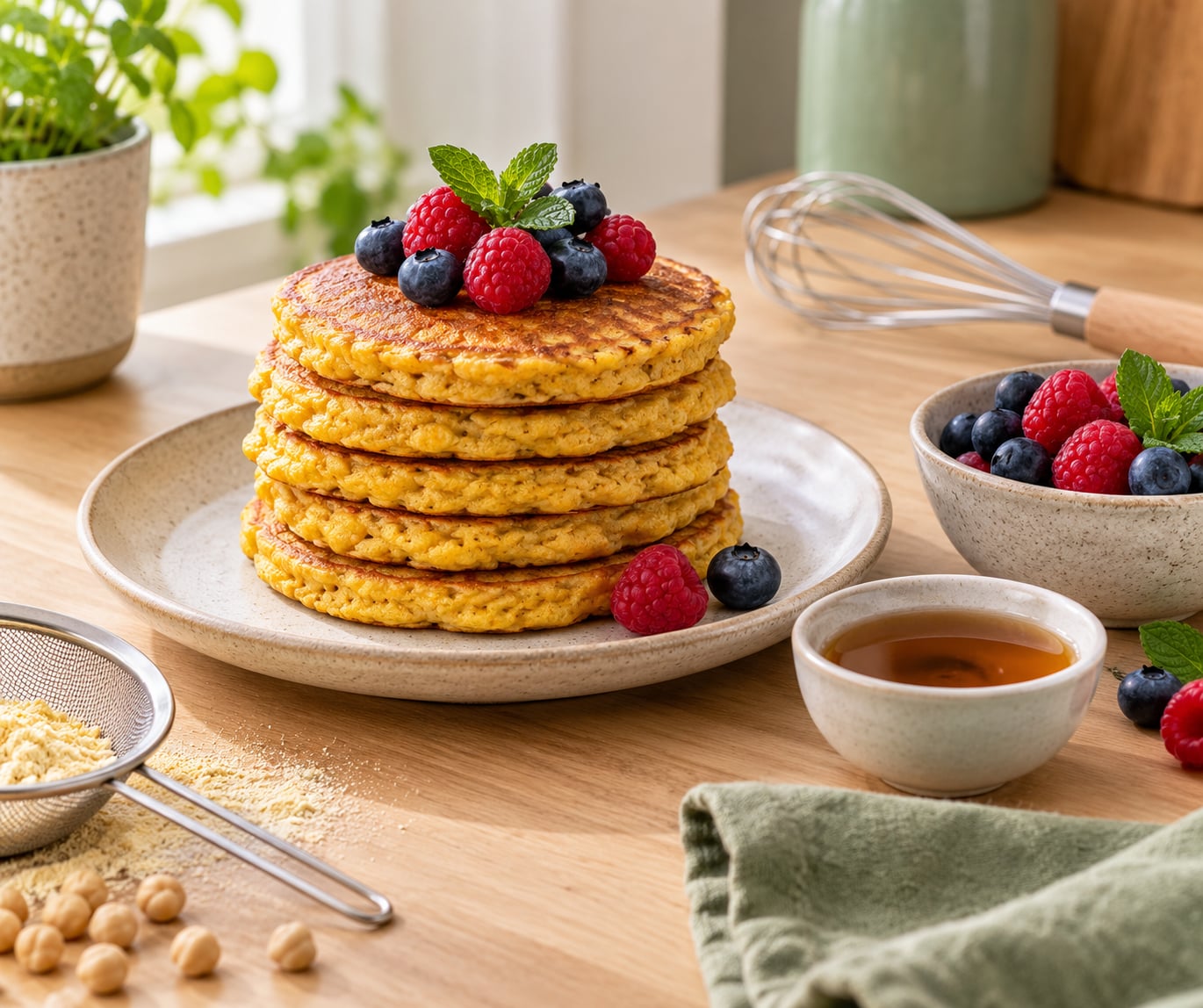
Chickpea flour pancakes are a four-ingredient batter of garbanzo bean flour, baking powder, plant milk and a little sweetener or salt, whisked thin and cooked 2 to 3 minutes a side on a non-stick pan. The whole thing takes about 20 minutes and needs no eggs, no dairy and no gluten.
The one thing worth knowing before you start: chickpea flour is not wheat flour with a different colour. It is high in protein and has no gluten at all, which is exactly why a lot of recipes end up dense and chewy.
Once you know how to handle the batter, it is one of the most forgiving pancakes you will cook. No yeast, no rising time, no special equipment, and the leftovers freeze well for a weekday breakfast. If you want more savoury breakfasts in rotation, how to make savory oatmeal takes the same ten-minute-start approach.
Table of Contents
- What You Need
- How to Make Chickpea Flour Pancakes Step by Step
- 1. Get the pan heating while you mix
- 2. Whisk the dry ingredients
- 3. Add the liquid and mix until smooth
- 4. Rest the batter for 10 minutes
- 5. Cook the first side for 2 to 3 minutes
- 6. Flip once and cook 1 to 2 minutes more
- 7. Keep warm and repeat
- How to Make Chickpea Flour Pancakes Fluffy and Tender
- How to Make Chickpea Flour Pancakes With Vegetables or Herbs
- Cooking and Serving the Chickpea Flour Pancakes
- Common Mistakes
- Frequently Asked Questions
- Why are my chickpea flour pancakes rubbery and dense?
- Is chickpea flour the same as besan, and can I use besan instead?
- How do I make a 3-ingredient chickpea flour pancake?
- How do I stop chickpea flour pancakes tasting bitter?
- Can I make chickpea flour pancakes without baking powder?
- How long do cooked chickpea flour pancakes keep, and can I freeze them?
- Conclusion
What You Need
This makes about eight 5-inch (12 cm) pancakes, four if you cook them larger. Prep time is five minutes, cook time roughly twelve, and the whole thing is beginner-friendly.
Base batter (US and metric)
- 1 cup (100 g) chickpea flour, also sold as garbanzo bean flour
- 1 teaspoon baking powder
- 3/4 cup (180 ml) water or unsweetened plant milk such as almond or oat milk
- 1 tablespoon maple syrup or coconut sugar, plus 1/2 teaspoon vanilla, for a sweet pancake
- 1/4 teaspoon fine salt, plus black pepper, for a savoury pancake
- 1 teaspoon apple cider vinegar (optional, but it helps the lift)
Tools
- A non-stick frying pan or crepe pan, 10 to 12 inch (25 to 30 cm)
- A whisk or fork, and a rubber spatula for the pan edges
- A fine sieve, only if your flour clumps when you pour it
- A spatula wide enough to slide under a thin pancake without tearing it
Optional additions
A tablespoon of chopped spinach, sliced scallions, or a spoonful of cooked vegetables folded in at the end. For savoury batches, a quarter teaspoon of turmeric, a pinch of kala namak (black salt) for its eggy note, or two teaspoons of nutritional yeast all work well. Skip the baking powder only if you are making a crepe-style pancake and accept a thinner, flatter result.
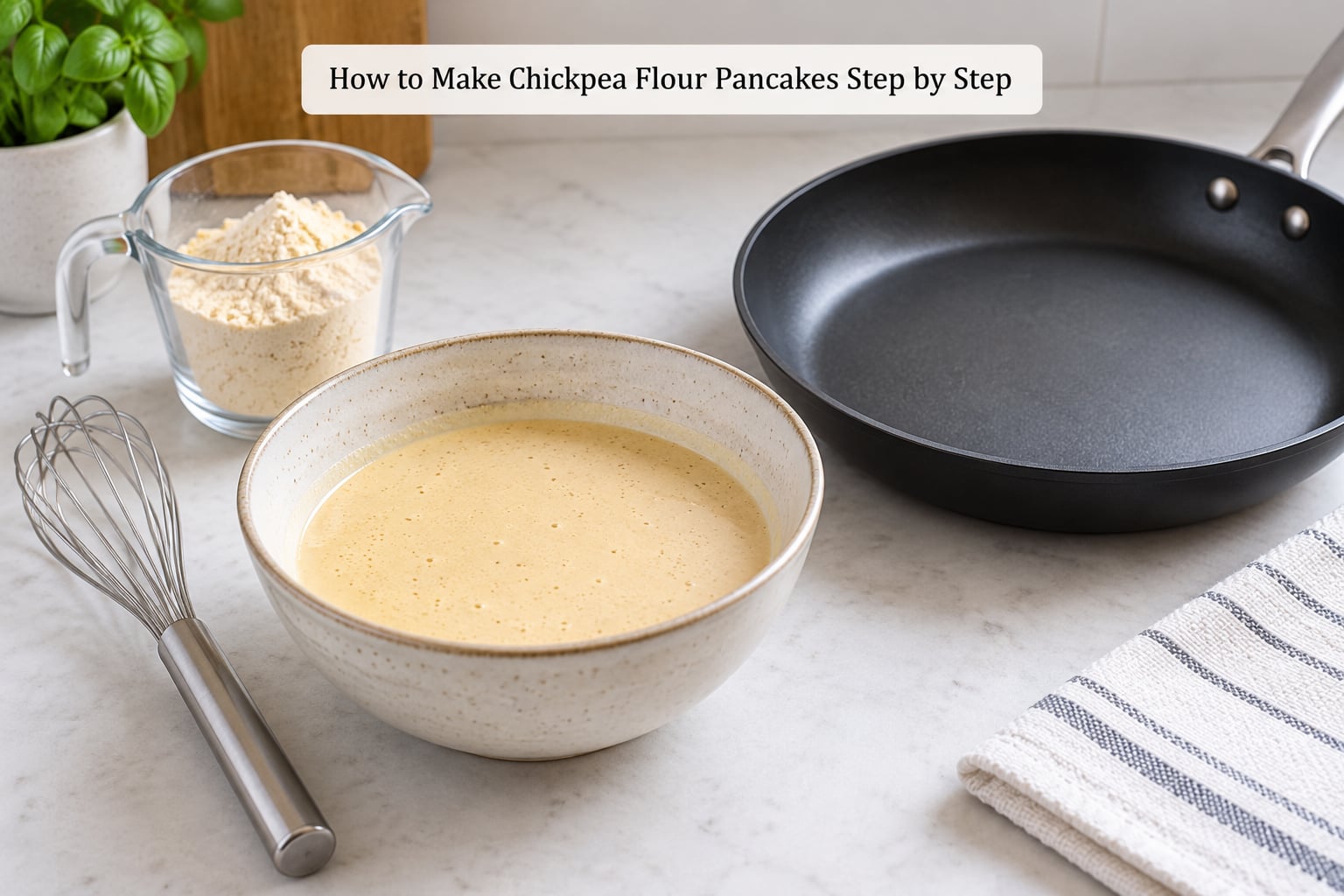
How to Make Chickpea Flour Pancakes Step by Step
1. Get the pan heating while you mix
Set a non-stick pan over medium heat. Starting the heat first matters, because the batter should hit a hot pan, not a warming one. A medium-hot surface is what sets the outside before the middle can turn gummy.
2. Whisk the dry ingredients
Whisk the chickpea flour, baking powder and salt together in a large bowl until there are no streaks of white powder left. The baking powder is the lift here, and readers on baking forums say flat, cornbread-like batches almost always came from a recipe that left it out.
3. Add the liquid and mix until smooth
Pour in the milk or water while whisking, then whisk for 30 to 45 seconds until no dry flour is visible. It will look thinner than pancake batter should, and that is normal at this point. The vinegar goes in last, right before you rest it, so it does not eat the baking powder while it sits.
4. Rest the batter for 10 minutes
Cover the bowl and leave it on the counter. In that time the chickpea flour hydrates fully and the batter thickens to a pourable, cream-like consistency. It will not double or rise. You know it is ready when a spoon dragged through the bowl leaves a clean trail that fills back in slowly.
5. Cook the first side for 2 to 3 minutes
Scoop about a quarter cup of batter onto the pan and swirl it into a thin round. Cook until bubbles open across the surface, stay open, and the edges look dry and set, roughly 2 to 3 minutes. Flipping before those bubbles appear is the single most common reason a pancake tears or goes rubbery.
6. Flip once and cook 1 to 2 minutes more
Slide the spatula right to the edge, run it under the pancake, and flip in one confident motion. Cook the second side until golden brown and no longer glossy in the centre, 1 to 2 minutes. It should spring back lightly when you press the centre with a fingertip.
7. Keep warm and repeat
Move finished pancakes to a rack or a warm plate in a single layer. Stacking them traps steam and softens the bottom into something gummy. Repeat until the batter is used up, then serve straight away.
How to Make Chickpea Flour Pancakes Fluffy and Tender
Tenderness comes down to three things: a leavener, the right liquid ratio, and restraint on the heat. Wheat flour forms a gluten network that traps air on its own. Chickpea flour has no gluten, so the structure has to be built entirely from the baking powder reaction and from the protein in the flour itself, which sets firmer and needs liquid time to soften.
For a classic fluffy pancake, start at 1 cup of flour to 3/4 cup of liquid and treat that as a hard ratio. Liquid chickpea flour batter looks thin because the flour absorbs slowly. It thickens as it rests, and if you add more liquid to fix the appearance before resting, you will have a batter that spreads too far and dries out around the edge before the middle cooks.
Keep the heat at medium. High heat browns the outside fast and leaves the inside raw and pasty, while low heat lets the pancake set without browning and dries the edges out. Resist the urge to grease the pan generously; a non-stick surface needs a wipe of oil at most, and extra oil is the main reason this recipe turns greasy.
One more trick matters more than it sounds: mix the baking powder into the flour rather than into the liquid, and add the apple cider vinegar only after the rest. That gives you the gas release right when the heat arrives.
How to Make Chickpea Flour Pancakes With Vegetables or Herbs
Vegetables and herbs go in after the batter has rested, right before cooking, so the pan gets the full heat time and the batter does not get watered down. Wilt spinach first with a splash of water and squeeze it dry, and cook any other vegetable until soft. Raw or watery vegetables are the most common reason a veggie pancake falls apart in the pan.
A quarter cup of dry ingredients per pancake keeps things together. Beyond that, stir in scallions, chopped parsley, cilantro or dill, two teaspoons of nutritional yeast for a savoury umami note, a pinch of turmeric for colour, or half a teaspoon of smoked paprika. For an eggy flavour without eggs, a small pinch of kala namak does what a fried egg does in a full breakfast sandwich.
One home cook on a vegan cooking forum made a savoury gram flour version with cilantro, red onion, ginger, cumin seeds, salt and nutritional yeast, and it worked as a cheap weeknight meal rather than a treat. Others stuff the batter with peas, kale and tofu and fry it more like a fritter, with the same ratio and a slightly longer cook.
If you want a filling rather than a mix-in, stack two pancakes with hummus, sliced tomato and a handful of greens. A cashew-based drizzle works well here too, and how to make cashew cheese sauce takes about ten minutes if you want to make the sauce from scratch.
Cooking and Serving the Chickpea Flour Pancakes
The doneness cue is colour plus texture: golden brown on both sides, matte rather than glossy in the centre, and slightly springy under a finger. A pancake that looks pale underneath when you flip is underdone, so give it another 30 seconds on that side rather than stacking it with the rest.
Cooked pancakes keep three to four days in the fridge in an airtight container, separated by parchment. Cool them fully on a rack first; putting a warm pancake in a closed box creates the condensation that turns the crust soft and the middle gummy. Cooled pancakes freeze flat on a tray, then move to a freezer bag for up to two months.
Reheat on a dry pan over medium heat for about a minute a side, or in a toaster oven until the edges crackle. Microwaving works but wets the surface, so save it for a folded pancake that is going straight into a breakfast sandwich.
For serving, keep the toppings simple. Nut butter with sliced banana and a pinch of cinnamon, yogurt with berries and a drizzle of maple, or mango chutney for the savoury side. These are filling pancakes on their own, so a stack of three sits you through a morning better than a stack of flour ones.
Common Mistakes
Almost every disappointing batch traces back to one of the nine things below. The fix is nearly always a change to the ratio, the leavener or the heat, not a change to the recipe.
Gummy in the middle
Too much liquid, or the pancake was flipped before the bubbles set. Use 1 cup flour to 3/4 cup liquid, and wait for bubbles that stay open before flipping.
Dense and flat
No leavener, or the batter sat too long after the leavener was added. Add 1 teaspoon baking powder and mix the vinegar in only after resting.
Rubbery or chewy
Cooked too long or on too high a heat, so the protein set hard. Drop to medium heat and cut the first side back to 2 to 3 minutes.
Runs apart when you flip
Batter was thinner than you thought, or you flipped too early. Let it rest longer, and swirl a thinner round for the first pancake to check the pan heat.
Bitter or strongly eggy
Unsweetened batter, and raw chickpea flavour comes through once there is no sugar to balance it. Add maple syrup or coconut sugar, a little vanilla, and a pinch of salt.
Pale and floury
Pan was not hot enough, or the pancake was flipped too soon to colour. Preheat the pan for two full minutes and give the first side the full cook time.
Oily and heavy
Too much oil in a non-stick pan, so the pancake fried instead of baked. Wipe the pan with a little oil instead of pouring it in.
Burnt outside, raw inside
Heat too high for the thickness you poured. Use medium heat and pour a thinner round for crepe-style pancakes.
Falls apart in the pan
Wet vegetables folded in, or too much mix-in for the flour. Wilt and squeeze the greens, and keep additions to a quarter cup per pancake.
On the bitterness question specifically: raw chickpea flour does taste earthy and faintly bitter, and sugar is doing real work in the sweet version rather than just adding sweetness. Salt, lemon juice and spices pull the same lever if you are going savoury. If your pancakes taste bitter even with sweetener, the flour may have gone rancid, which happens because the oils in the bean germ oxidise slowly over months.
Frequently Asked Questions
Why are my chickpea flour pancakes rubbery and dense?
Chickpea flour has no gluten, so it cannot trap air the way wheat flour does, and its high protein content sets firm as it cooks. Most dense batches are missing a leavener, and most chewy batches are cooked too long or too hot. Use 1 teaspoon baking powder, hold the ratio at 1 cup flour to 3/4 cup liquid, and cook 2 to 3 minutes per side on medium heat.
Is chickpea flour the same as besan, and can I use besan instead?
They come from the same ingredient, so they behave almost identically, but they are milled and packed differently. Besan, gram flour and chana dal flour are usually stone-ground and used in Indian cooking, while chickpea flour sold in Western baking aisles is often lighter. Both swell more than wheat flour, so use the same 3/4 cup of liquid for either and add a little more if the batter looks tight.
How do I make a 3-ingredient chickpea flour pancake?
Whisk 1 cup chickpea flour, 1 teaspoon baking powder and 1 tablespoon maple syrup together, then stir in 3/4 cup water. Rest the batter for 10 minutes so the flour hydrates, then cook it thin on a medium non-stick pan. Without the salt or vanilla you lose a little seasoning depth, but the pancake itself is genuinely a three-ingredient pancake.
How do I stop chickpea flour pancakes tasting bitter?
Balance the raw chickpea flavour rather than trying to remove it. Add a tablespoon of maple syrup or coconut sugar, half a teaspoon of vanilla, and a quarter teaspoon of salt, which is what the sweet version above already does. On the savoury side, turmeric, black pepper, kala namak or a squeeze of lemon work just as well. If it still tastes bitter, the flour itself has probably turned rancid on the shelf.
Can I make chickpea flour pancakes without baking powder?
You can, but you will get a flat, dense pancake closer to a crepe or a savoury patty, and that is a real option if you want something to fill a breakfast sandwich. For anything you would call fluffy, the baking powder is not optional, because there is no gluten in the flour to do that job. A quarter teaspoon of baking soda with a teaspoon of apple cider vinegar also works if that is what you have.
How long do cooked chickpea flour pancakes keep, and can I freeze them?
Cool the pancakes completely on a rack, then store them in an airtight container in the fridge for three to four days, with parchment between layers so they do not stick. For longer storage, lay them flat on a tray to freeze, then move them to a bag for up to two months. Reheat in a dry pan over medium heat for about a minute a side, which brings the crust back better than a microwave does.
Conclusion
If you only remember one thing from this, do the ten-minute rest. It is the step that hydrates the flour, thickens the batter to the right pour and gives the baking powder time to work, and skipping it is why so many first batches turn out gummy in the middle.
Beyond that, hold the ratio at 1 cup of chickpea flour to 3/4 cup of liquid, keep the pan on medium, and wait for bubbles that stay open before you flip. Once that base is right, you can branch into savoury with spinach and turmeric, thin them into crepes, or fry them crisp as patties without relearning anything. If you are building out a breakfast rotation, how to make steel cut oats faster is the other slow-start breakfast worth getting right.