
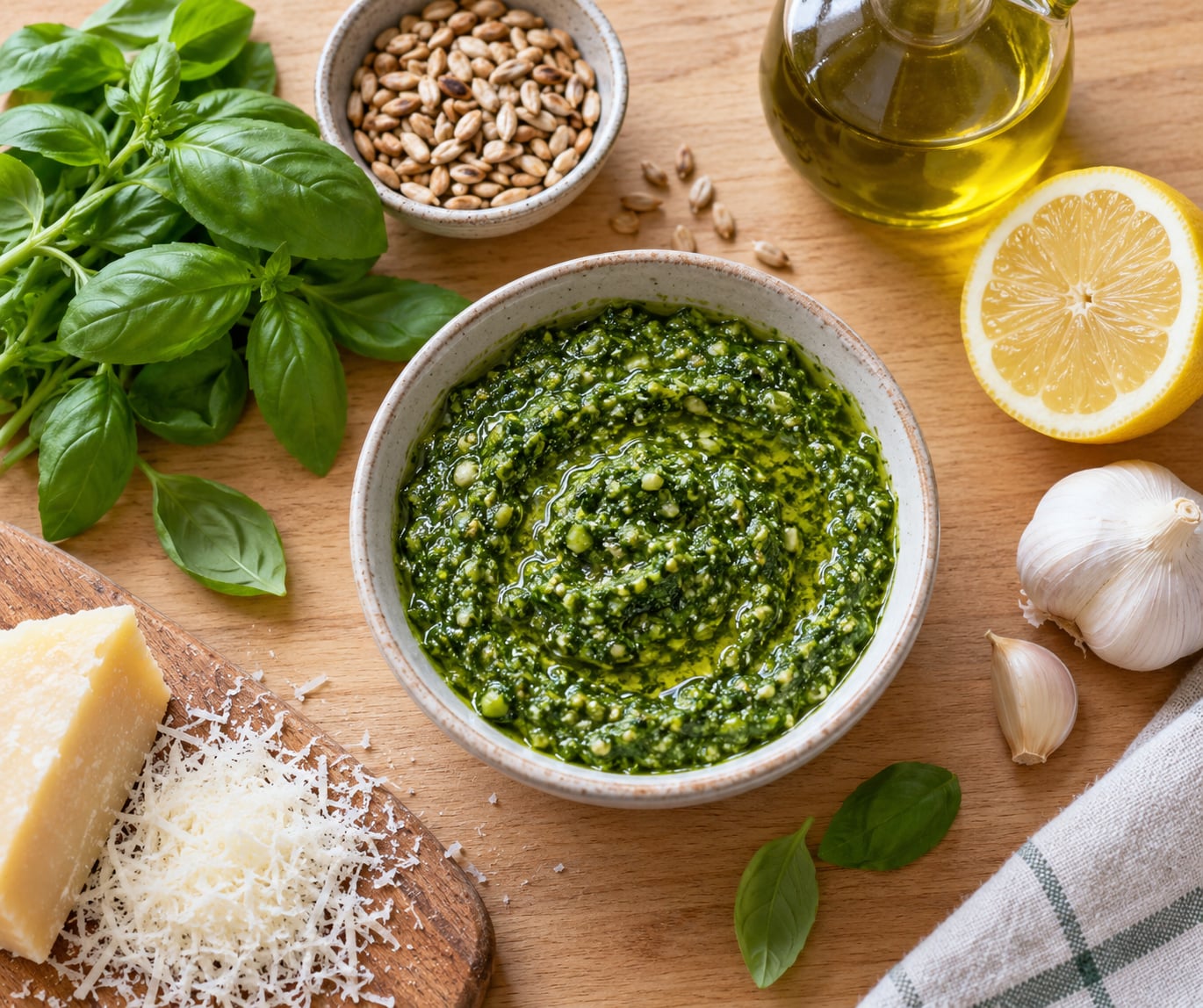
To make pesto without pine nuts, swap them 1:1 for walnuts, blanched almonds, cashews, sunflower seeds or pumpkin seeds, then blend everything the same way you always would. The whole thing takes about 10 minutes and tastes close enough to the classic version that most people never notice the swap.
Most cooks reach for pine nuts because the classic Genovese recipe calls for them, not because the sauce falls apart without them. Basil, garlic, good olive oil and Parmesan carry most of the flavor. The nuts add body, mild sweetness and a creamy texture, and that’s exactly what a substitute needs to reproduce.
Two situations push people toward a swap: the cost of pine nuts, which runs roughly twice what walnuts do for the same weight, and nut allergies in the household. Reddit cooks describe both constantly, with walnut swaps coming up most often and sunflower seeds as the standard nut-free answer at the same 1:1 ratio.
Table of Contents
- What You Need
- Step-by-Step: How to Make Pesto Without Pine Nuts
- Common Mistakes
- Frequently Asked Questions
- What can I use instead of pine nuts in pesto?
- Can I make pesto without pine nuts and without any nuts?
- What is the best seed substitute for pine nuts in pesto?
- Does pesto taste the same without pine nuts?
- How long does homemade pesto last in the refrigerator?
- How do I freeze pesto made without pine nuts?
- Conclusion
What You Need
Classic pesto alla Genovese is really just three things: basil, olive oil and pine nuts, with garlic and Parmesan added in most modern kitchens. Take the pine nuts out and you need something to hold the body together. Here’s a workable base for about 1.5 cups of sauce.
- 2 cups packed fresh basil leaves, stems removed, roughly torn
- 1/3 cup substitute, roughly 1/3 to 1/2 cup depending on how much body you want
- 1/3 to 1/2 cup extra virgin olive oil, plus more to taste
- 1/3 cup finely grated Parmesan, or Pecorino Romano for a sharper, saltier sauce
- 1 to 2 garlic cloves, peeled and lightly crushed
- 1 tablespoon lemon juice
- 1/2 teaspoon fine salt, plus black pepper
A mortar and pestle gives you the most control and the best texture, a food processor is the fastest realistic option in a home kitchen, and a blender works too if you keep it low. If your blender has been through tomato sauce or chili, clean it first — leftover heat and acidity will flatten the basil. Our guide to cleaning a blender without taking it apart walks through that.
Which substitute should you use?
The best swap depends on whether you need it nut-free and how much flavor you want to carry. All of these work at a 1:1 substitution by volume, and all of them benefit from toasting first.
| Substitute | Flavor | Texture | Nut-free |
|---|---|---|---|
| Walnuts | Rich, slightly woody, closest to pine nut depth | Creamy and full | No |
| Blanched almonds | Mild and sweet, very clean | Smooth, light | No |
| Cashews | Buttery, the creamiest option | Silky, thickens the sauce | No |
| Sunflower seeds | Mild, faintly grassy, no nut character | Smooth and pale | Yes |
| Pumpkin seeds | Earthy and slightly bitter if undertoasted | Coarse, adds bite | Yes |
| Hemp seeds | Soft, slightly nutty, must be toasted hard | Fine and loose | Yes |
| No nuts or seeds | Bright and garlicky, relies on oil and cheese | Looser, needs more blending | Yes |
Sunflower seeds are the one to reach for in a nut-allergy house. They’re mild enough to disappear into the basil, they blend smoothly without leaving grit, and they carry plenty of vitamin E, which is the antioxidant most people associate with them. One Reddit commenter made a basil-only pesto specifically for a nut-allergic child, skipping both the nuts and the seeds entirely.
For a fully vegan sauce, swap the Parmesan for 3 tablespoons of nutritional yeast plus a tablespoon of lemon juice. That is what pulls the missing savory punch into a nut-free, dairy-free pesto.
Step-by-Step: How to Make Pesto Without Pine Nuts
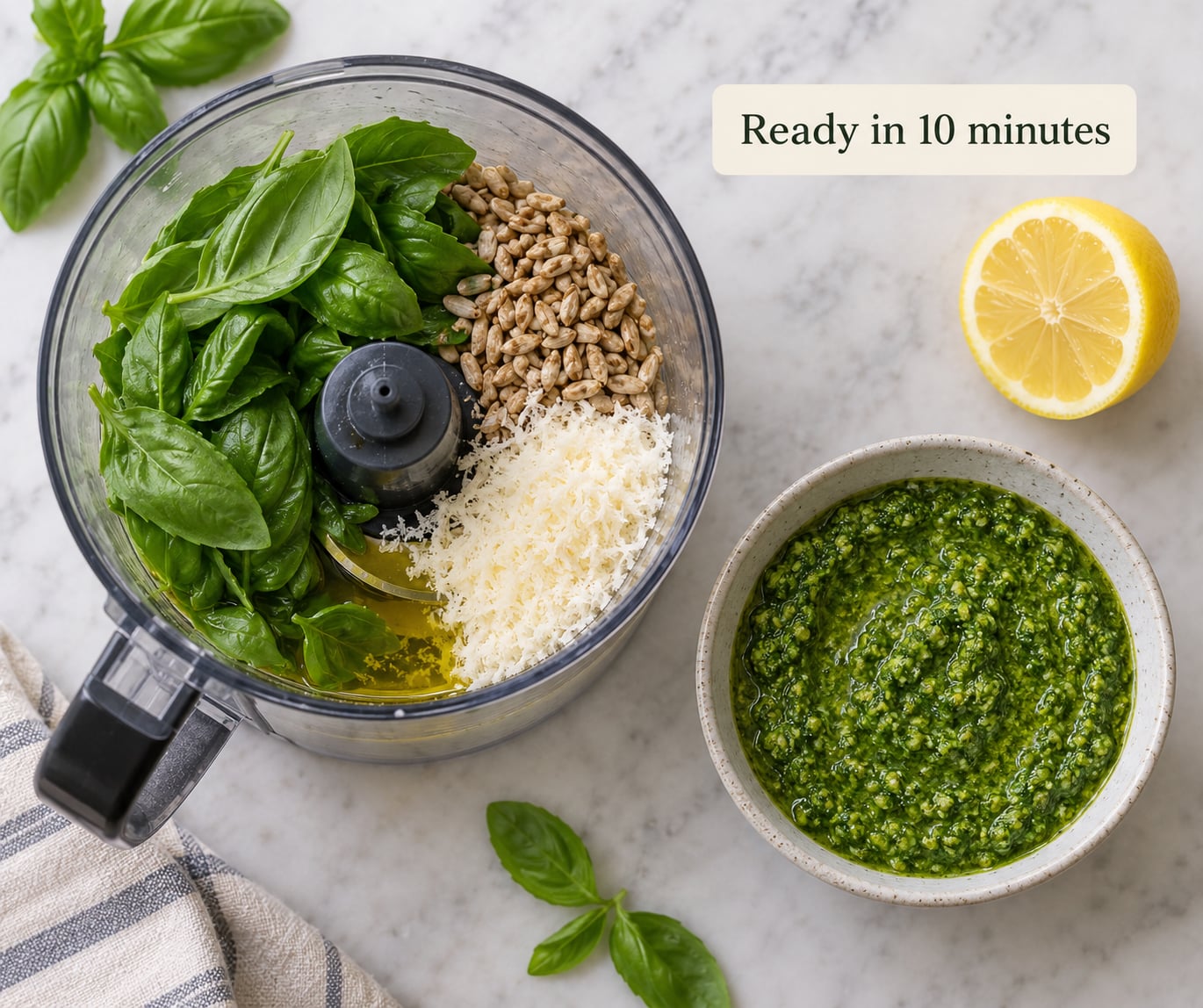
The method is identical whether you’re using walnuts or sunflower seeds. The only thing that changes is whether you toast first, and how hard you toast.
Step 1: Toast the Nuts or Seeds You Are Using Instead of Pine Nuts
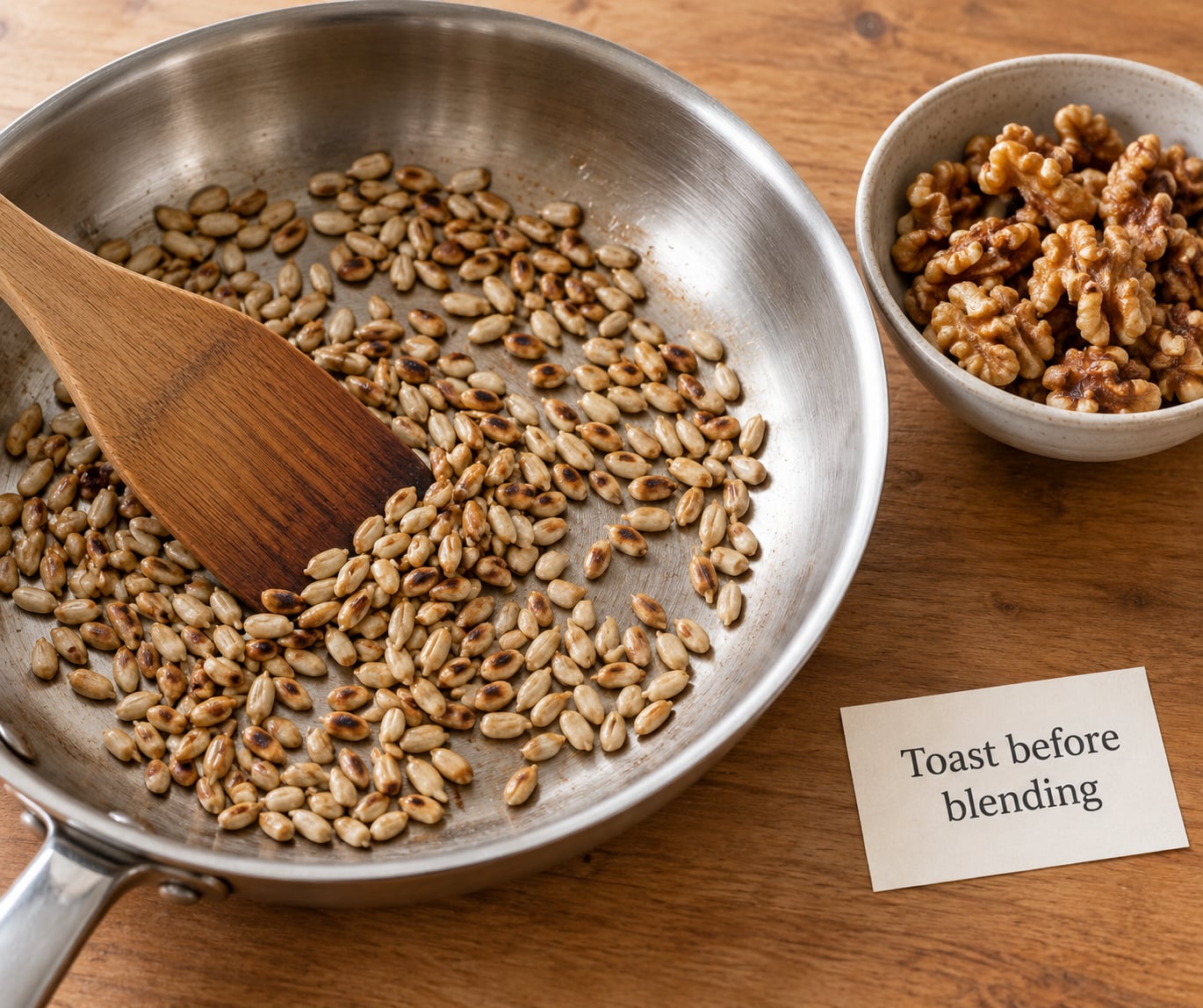
Heat a dry skillet over medium heat and add the substitute in a single layer. Toast for 3 to 5 minutes, shaking often, until the nuts smell like toast and pick up a patch of color. Seeds need a touch longer and should smell nutty before you pull them off the heat.
Toasting removes the raw, starchy edge that makes a blend taste flat, and it takes the bitterness out of pumpkin seeds and hemp seeds, which will otherwise ruin the sauce. Walnuts toast quickly and go acrid fast, so pull them the moment they smell deep, not brown.
Cool them for 5 minutes. Pushing hot nuts into a food processor can dull the basil by cooking it.
Step 2: Blend the Aromatic Ingredients
Put the cooled nuts or seeds in the food processor with the garlic and the salt. Pulse in short bursts until the mixture looks like coarse sand, about 30 seconds. Then add the basil and pulse again until it’s chopped but not yet pureed.
Garlic and salt come in before the basil so the blades chew them down properly, which is what gives you a smooth sauce instead of flecks. If you’re using a blender rather than a processor, add a tablespoon of the olive oil now so it doesn’t clump, and use the tamper.
Salt preference matters here. Pecorino is salty enough that many cooks skip added salt entirely, while Parmesan usually needs the full half teaspoon.
Step 3: Add the Olive Oil Gradually
With the machine running on low, stream in the olive oil slowly. Hold a steady pour for about a minute rather than dumping it in, and let the sauce thicken and turn glossy as it emulsifies.
Pouring fast is the single most common reason homemade pesto looks broken. It seizes into an oily green pool instead of clinging to the pasta. If that happens, stop the machine, add a spoonful of cold water or a few ice cubes, and blend again. It comes back together.
You can also thin the finished sauce with a splash of pasta water if it will be tossed with dry pasta.
Step 4: Season and Check the Texture
Add the Parmesan and 1 tablespoon of lemon juice, then blend until smooth. Taste before serving. The sauce is ready when the basil is bright green, the texture is the consistency of thick cream, and it tastes balanced rather than flat or sharp.
The lemon juice is not optional decoration. Without the rich bite of pine nuts, pesto reads as flat, and a small amount of acid is what makes it taste finished. Add a second teaspoon at the end if it still feels heavy.
If you’re going to store it rather than serve it now, press a thin layer of olive oil over the surface in the jar. That film keeps air out and stops basil from oxidizing into brown sludge overnight.
Common Mistakes
Why is my pesto bitter?
Three things cause bitterness, and two of them are the substitute’s fault. Undertoasted pumpkin and hemp seeds taste grassy and slightly bitter, and raw walnut skins are genuinely bitter, which is why some cooks use blanched walnuts. Over-blending basil turns it from bright green to dark olive and pulls out a harsh, peppery note, so stop pulsing as soon as it’s smooth.
Why is my pesto watery?
Wet basil is the usual culprit. Dry the leaves in a salad spinner or between towels before they go in, and skip the jar of herbs a store will sell you if the leaves are already limp. If the sauce still loosens after blending, let it sit in a sieve for 10 minutes, then stir the thick part back together.
Why is my pesto grainy?
Cheese was added too early or too cold. Parmesan clumps unless it’s finely grated and near room temperature, so pulse the nuts first, add the cheese with the basil, and give the machine a full 30 seconds between additions. A whole clove of garlic that didn’t get chopped down is another common cause of grainy bits.
Why is my pesto oily and separated?
You added the oil faster than the sauce could emulsify. Start over with a splash of oil and a few pulses, then trickle the rest in. If it has already split, an ice cube and a few more pulses usually pull it back together into a sauce that looks properly emulsified rather than watery with green streaks.
Why does my pesto taste flat?
Compensate, don’t just accept it. Add another tablespoon of Parmesan, a second squeeze of lemon, a small extra clove of raw garlic grated fine, or a few more toasted nuts blended in at the end. Home cooks managing an allergy swap often double the garlic for exactly this reason, and it works. If you’d rather start from a sauce you already know the seasoning on, the lemon-forward approach in our tahini dressing that isn’t bitter transfers straight over.
Frequently Asked Questions
What can I use instead of pine nuts in pesto?
Walnuts, blanched almonds, cashews, pistachios, sunflower seeds, pumpkin seeds and hemp seeds all work, and every one of them substitutes 1:1 by volume for pine nuts. Walnuts give the richest, closest flavor; cashews make the creamiest sauce; sunflower seeds are the standard nut-free pick. Toast any of them in a dry skillet for 3 to 5 minutes before blending to remove the raw, starchy taste.
Can I make pesto without pine nuts and without any nuts?
Yes. Basil, garlic, extra virgin olive oil and Parmesan make a perfectly good pesto on their own, and plenty of cooks prefer it that way. The sauce is looser and brighter, so blend 10 to 15 seconds longer, hold back a little olive oil, and lean on lemon juice for lift. For a fully vegan version, use 3 tablespoons of nutritional yeast in place of the cheese.
What is the best seed substitute for pine nuts in pesto?
Sunflower seeds are the easiest all-purpose option because they blend smooth, taste mild and leave no grit behind. Pumpkin seeds work when you want more body and a deeper, earthier note, but they need thorough toasting or they will taste bitter. Hemp seeds are nut-free and mild but must be toasted hard to lose their raw edge. All three work at a 1:1 ratio.
Does pesto taste the same without pine nuts?
Not identically, but most people cannot tell once the sauce is finished and dressed. Pine nuts contribute body, sweetness and creaminess rather than the signature flavor, so the difference shows most in texture. Close it with more Parmesan, a squeeze of lemon and a few seconds longer in the processor. Walnuts land closer to pine nuts than any seed does.
How long does homemade pesto last in the refrigerator?
Homemade pesto keeps about 3 to 4 days refrigerated in an airtight container, sometimes up to 5 if you press a layer of olive oil over the top to block air. Keep it below 40F (4C) and use clean, dry utensils each time, since moisture and introduced bacteria are what spoil it first. If the sauce smells flat or the color has dulled to brown, toss it.
How do I freeze pesto made without pine nuts?
Freeze it in a silicone ice cube tray, filling each well about three-quarters full, then pop the frozen cubes into a sealed bag or container once solid. They keep for up to 3 months in the freezer and thaw in a minute on the counter, which makes them the easiest way to keep single-serving portions of pesto on hand. Leave the olive oil layer off when freezing.
Conclusion
Start with fresh basil, a well-toasted substitute, good olive oil and Parmesan, then season slowly with lemon and salt until it tastes finished. Walnuts give you the closest match to the classic sauce, sunflower seeds keep it nut-free, and cashews make it the creamiest.
Whichever you pick, the sauce is done when it is bright green, glossy and the thickness of cream. Stir it into pasta, spoon it over roasted vegetables, or thin it with a little water to turn it into a dressing like our homemade salad dressing guide describes, then keep the rest in the freezer for 2026‘s weeknight meals.