
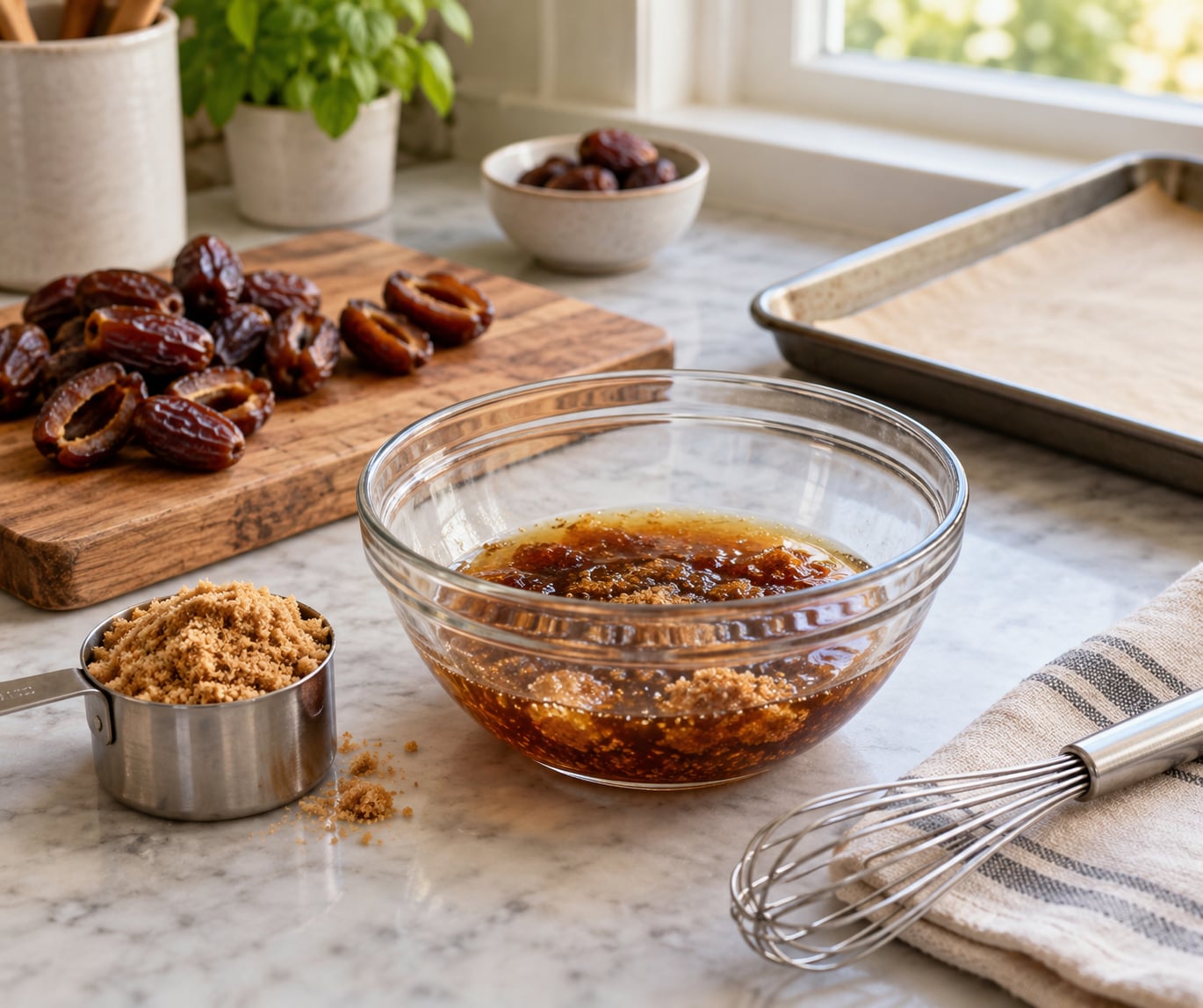
Coconut sugar is unrefined cane sugar from a coconut palm, and the good news is that almost everything you would use to replace it is probably already in your pantry. For most cookies, cakes and quick breads, light or dark brown sugar goes in 1:1 by volume, no adjustment needed. If you want something with more moisture and a deeper caramel edge, a homemade blend of maple syrup and brown sugar is the move.
Everything takes about 15 minutes of active work plus whatever oven time the bake needs. Difficulty: easy, as long as you measure carefully and adjust the other liquids in the batter.
If you are working on cutting the sweetness of a bake rather than swapping one sugar for another, my guide to substituting maple syrup for sugar in recipes covers the liquid math in more depth. For context on how much sugar is hiding in the things you already buy, see how to spot hidden sugar in packaged foods.
Table of Contents
- What You Need to Make Coconut Sugar Substitutes
- Step-by-Step
- Common Mistakes
- Frequently Asked Questions
- Can I use brown sugar instead of coconut sugar in baking?
- Can I make coconut sugar substitutes in baking with just maple syrup?
- How do I stop maple syrup from making cookies too soft?
- Is date paste a one-for-one substitute for coconut sugar?
- What is the best homemade substitute for coconut sugar in cake?
- Conclusion
What You Need to Make Coconut Sugar Substitutes
The full method set here needs very little. A set of dry measuring cups, a kitchen scale if you have one, a small saucepan or bowl, and either a food processor or a blender are the only tools involved. No special equipment, no dehydrator, no tempering.
For the maple-brown-sugar blend you need light or dark brown sugar and pure maple syrup. For the date paste you need pitted Medjool or any soft dried dates plus a small splash of hot water. For the monk fruit version you need a monk fruit or allulose baking blend, plus a little brown sugar to bulk it out.
A couple of small extras make the process smoother: a silicone spatula for stirring the maple blend, parchment paper if you are baking the date paste down, and a sieve or fine-mesh strainer for sifting blended sugar.
One habit worth setting up before you start is writing the substitution on the label of whatever you mix up. Date paste in a jar with no label looks exactly like a weird caramel sauce, and you will not remember what it is three weeks later.
Step-by-Step
1. Choose the Best Replacement for Your Recipe
Equal amounts of light or dark brown sugar are the simplest replacement for coconut sugar, cup for cup, with no changes to any other ingredient. That single swap covers cookies, muffins, quick breads and most cakes, and the finished bake comes out slightly darker with a more pronounced caramel note.
Moist recipes, or recipes that need the sugar to dissolve into a liquid, are where the other options win. Date paste, maple syrup, honey or a monk fruit blend each bring their own water content, so you trade one adjustment for another.
Here is the short version of conversion guidance. Granulated sugars go in 1:1 by volume. Syrups go in at about three-quarters of a cup per cup of coconut sugar, with roughly 3 tablespoons cut from the other liquids in the batter. Date paste is closest to 1:1 by weight once you subtract the water you added.
The swap is not one-to-one when the recipe is a meringue, a souffle or a plain white angel food cake. Those bakes depend on sugar dissolving cleanly into an egg white foam, and coconut sugar never fully dissolves, so a granulated replacement behaves the same way and a liquid one will not work at all. Delicate lemon and lavender cakes are the other place I would leave the coconut sugar alone, because the caramel and butterscotch notes sit right next to those flavours.
2. Make a Quick Maple-Brown-Sugar Blend
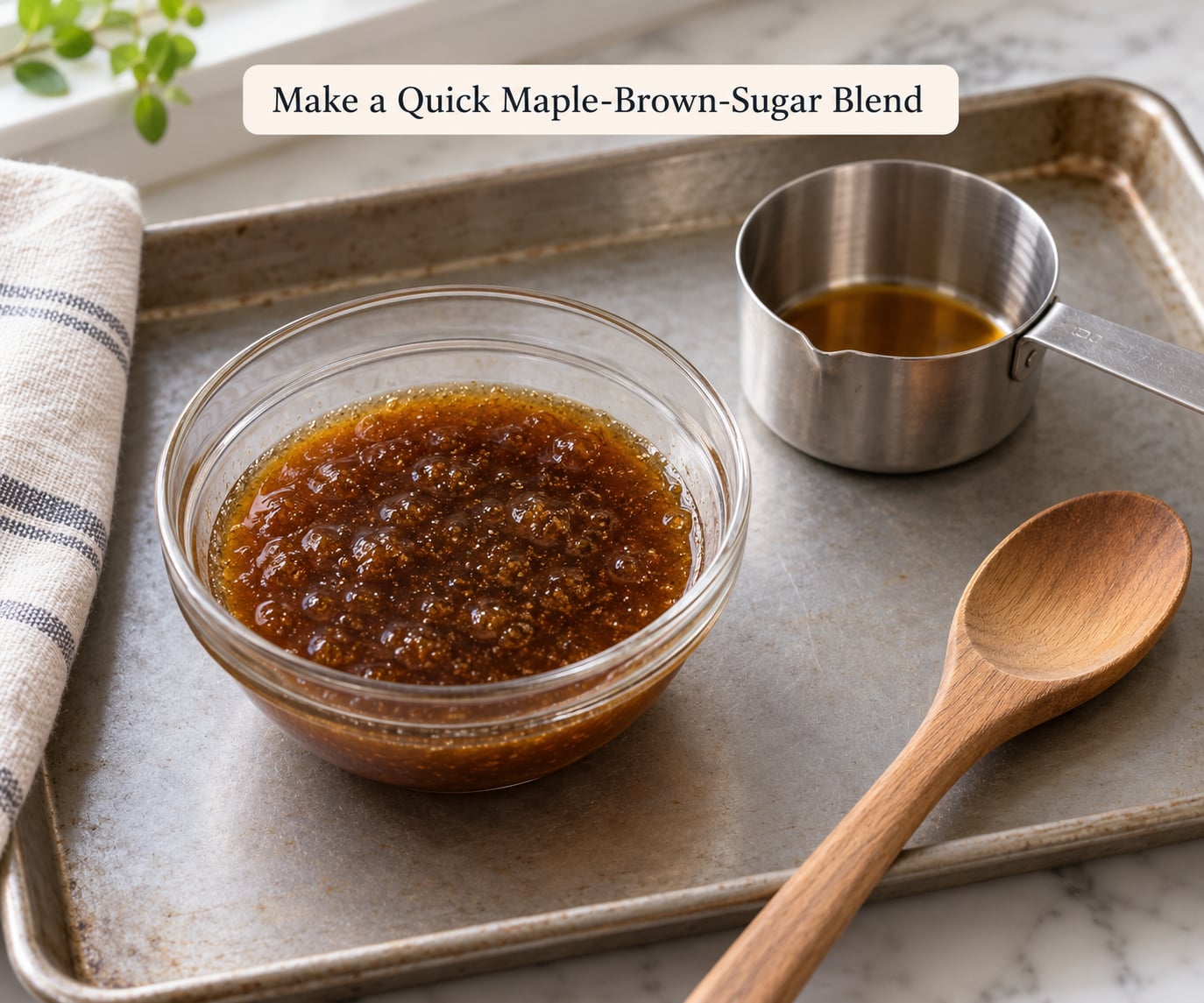
Mix equal parts maple syrup and light or dark brown sugar until the syrup is fully absorbed and the mixture looks like damp, packed sand. Use one cup of this blend for every one cup of coconut sugar the recipe calls for. That is the whole method.
The texture will be softer and stickier than dry coconut sugar, closer to a fresh brown sugar. Expect a fudgier cookie, a more tender crumb, and edges that colour faster because of the extra sugar and moisture.
Because the blend is wetter than dry sugar, pull about 1 to 2 tablespoons of liquid out of the recipe per cup of blend. I start at the low end and adjust on the second bake, because it is far easier to add liquid than to dry out a dough.
Drop the oven temperature by about 10 to 15 degrees Fahrenheit and start checking a few minutes early. The surface will darken well before the centre sets, and that colour is flavour rather than a mistake. If it goes past deep amber, cover the tray with foil for the rest of the bake.
You can read more about how syrup behaves in a bake in my maple syrup substitution guide.
3. Blend Dates Into a Thick Date Paste
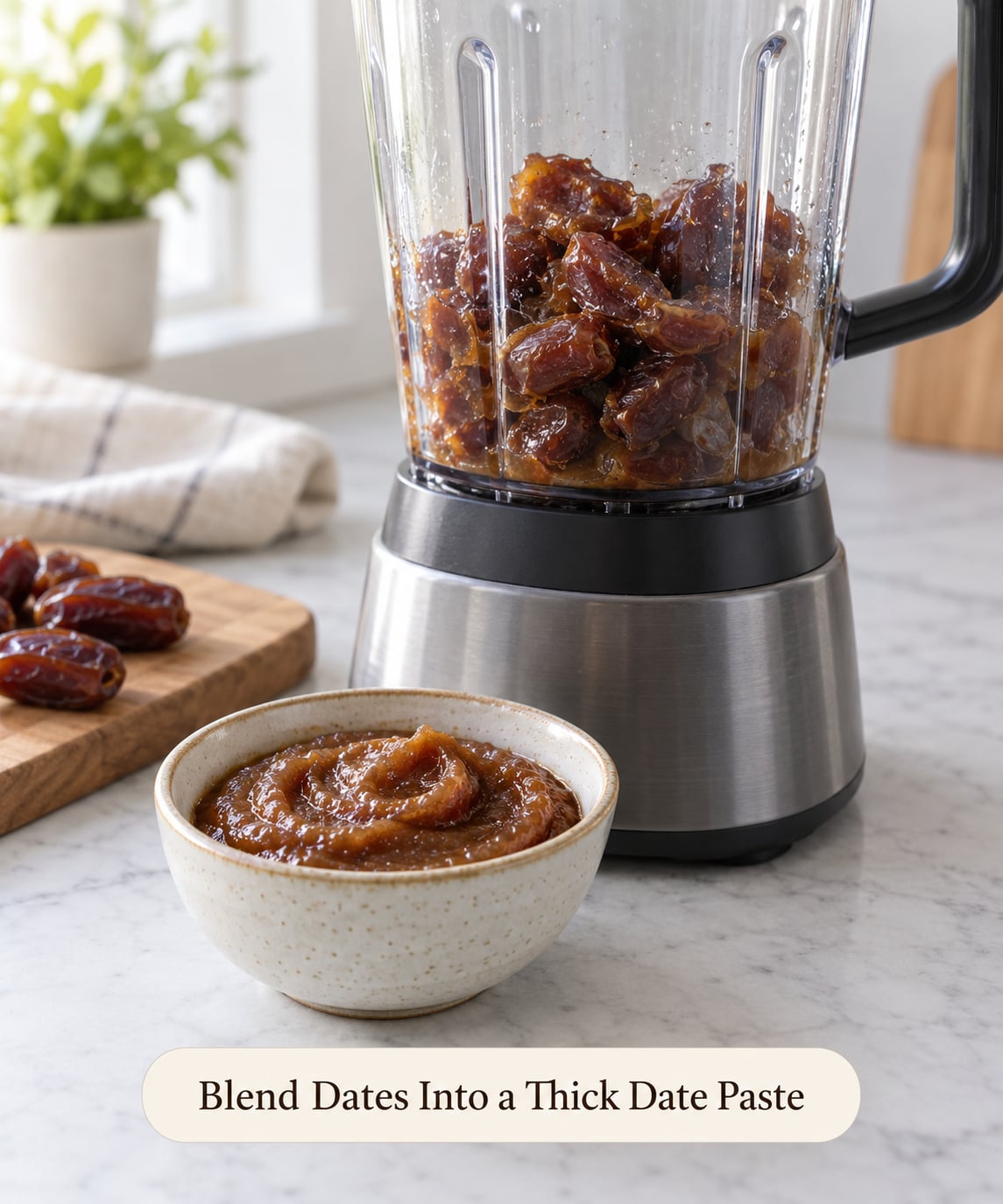
Cover pitted dates with hot water and let them sit for 15 minutes until they are soft enough to bend without snapping. Drain off the soaking water, then blend the dates with one to two tablespoons of fresh hot water until completely smooth.
Scrape down the sides as you go. A high-power blender gets this in under a minute; a food processor takes a bit longer and you may need to work in small batches so you do not jam the lid.
Let the paste cool to room temperature before it goes into a batter. Warm date paste melts butter and chocolate faster than you expect, and it will thin cookie dough into something you cannot roll.
Measure by weight if you have a scale: roughly 7 ounces of paste stands in for 1 cup of coconut sugar, depending on how much water you used. Because dates are moist, cut 1 to 2 tablespoons of liquid from the rest of the batter, same as you would for the maple blend.
Date paste will not dissolve. It works well in quick breads, oatmeal cookies, energy balls and anything already dark and chewy, and it is the wrong choice for a vanilla pound cake or a light frosting.
4. Make a Monk Fruit Baking Blend
Plain monk fruit sweetener is intensely sweet and carries no bulk, so on its own it bakes into a hard, dry, rubbery crumb. Blend it with something that behaves like sugar instead. The two options are brown sugar, for a closer match to the original taste, or allulose, which bakes and browns like sugar and has no cooling aftertaste.
A workable starting ratio is half monk fruit blend to half brown sugar or allulose by volume. Then check the conversion chart on the container, because concentration varies a lot between brands and a 1:1 claim on a generic blender product does not always hold in a real oven.
Only use a product labelled for baking. Table sugar blends are not interchangeable with baking blends, and mixing them up is the reason some people get a disappointing batch the first time.
Home bakers on r/Cooking single out allulose as the sugar alcohol that actually tastes good, because it lacks the bitter or cool note that erythritol leaves behind. The trade is cost: monk fruit and allulose blends run well above what you pay for coconut sugar.
5. Test Texture, Sweetness, and Baking
Before you commit a full batch, bake a small test. Use one quarter of the batter, shape it the same way, and put it on the middle rack at the temperature you plan to use. Fifteen minutes is usually enough to see spread, edge colour and crust.
Check spread first. A dough that runs flat and thin before it sets means the replacement was too wet, so cut liquid next time. A dough that holds its shape but bakes hard and chalky means the replacement had no structure, which is the usual monk fruit and stevia problem.
Check crispness next. If you want snap, let the tray cool on the pan for five to ten minutes before moving it. Cookies set firm as they cool, and pulling them warm almost always leaves you chewing something soft.
Taste for sweetness only after the bake has fully cooled. Warm cake tastes far sweeter than the same cake at room temperature, and judging sweetness early is how you end up with a second batch that is too flat and bland.
Adjust temperature last, and in small steps. If the edges colour in under half the stated bake time, drop the oven by 10 degrees and add a few minutes. If the centre stays raw while the outside is well done, tent it with foil rather than raising the heat.
Common Mistakes
Treating a syrup swap as 1:1. Maple, honey and agave all carry water into the batter. Cut 3 tablespoons per cup of syrup and your dough will behave.
Confusing volume with weight. Coconut sugar, brown sugar and date paste do not weigh the same per cup. Weighing is the only reliable fix, especially once you are past the 1:1 granulated swaps.
Baking at the full temperature. Coconut sugar and any syrup blend brown faster than white sugar. Drop 10 to 15 degrees and start checking early.
Expecting identical crispness. Coconut sugar cookies carry more moisture than white sugar ones. Chill the dough for 30 minutes and give them a full cool on the tray before they firm up.
Forgetting that monk fruit has no bulk. Sweetness is not structure. Blend it with allulose or brown sugar or the bake comes out dense and hard.
Overlooking date flavour. Dates are not neutral. They suit oatmeal, banana, chocolate and spice bakes, and they will fight a plain vanilla or lemon recipe.
Beyond the fixes, three habits do most of the work. Measure everything before you start rather than eyeballing mid-recipe. Bake a small test batch first, every time you try a new replacement. And if the goal is less sugar rather than a different sugar, cutting back gradually keeps more of the structure in the bake than swapping to a zero-calorie sweetener does.
Frequently Asked Questions
Can I use brown sugar instead of coconut sugar in baking?
Yes, and it is the simplest swap there is. Use light or dark brown sugar 1:1 by volume for coconut sugar, with no changes to the other ingredients. The bake will come out a little darker with a stronger caramel flavour, which suits cookies, muffins and quick breads. If you need the coconut sugar’s moisture instead, use my maple-brown-sugar blend rather than dry brown sugar.
Can I make coconut sugar substitutes in baking with just maple syrup?
You can, but you must reduce the other liquids. Use three-quarters of a cup of maple syrup for every cup of coconut sugar the recipe calls for, then cut about 3 tablespoons of milk, water or egg from the batter so the dough does not turn wet. Optionally add a quarter teaspoon of baking soda per cup of syrup to offset its acidity. The result is chewier and darker than a straight brown sugar swap.
How do I stop maple syrup from making cookies too soft?
Two adjustments fix soft cookies. First, cut 3 tablespoons of liquid from the recipe for every cup of maple syrup you add, or mix the syrup with an equal amount of brown sugar so some of that water evaporates during mixing. Second, drop the oven temperature by 10 to 15 degrees and let the cookies cool completely on the baking sheet before moving them. Maple cookies also need less baking time, so check them two minutes early.
Is date paste a one-for-one substitute for coconut sugar?
Close, but not quite. Fresh date paste is wetter than dry coconut sugar, so cut 1 to 2 tablespoons of liquid from the rest of the batter. About 7 ounces of paste replaces 1 cup of coconut sugar, and weighing the paste is far more accurate than measuring it by volume. Expect a moister, denser result with visible date flecks, which works best in quick breads, oatmeal cookies and energy balls.
What is the best homemade substitute for coconut sugar in cake?
For most cakes, equal parts light brown sugar and maple syrup is the best homemade option. Use one cup of that blend for each cup of coconut sugar, pull back 1 to 2 tablespoons of liquid, and drop the oven by 10 degrees for an even bake. For a plain vanilla or delicate citrus cake, plain brown sugar at 1:1 is the safer choice, since the maple will not disappear into those flavours.
Conclusion
The quickest starting point is equal parts maple syrup and brown sugar, one cup of that blend for every cup of coconut sugar, with 1 to 2 tablespoons of liquid removed and the oven turned down by 10 degrees. If you want zero prep, plain brown sugar at 1:1 works without any adjustment at all.
Whichever route you take, adjust the other liquids, bake a small test batch first, and wait for the finished bake to cool completely before you judge the texture.