
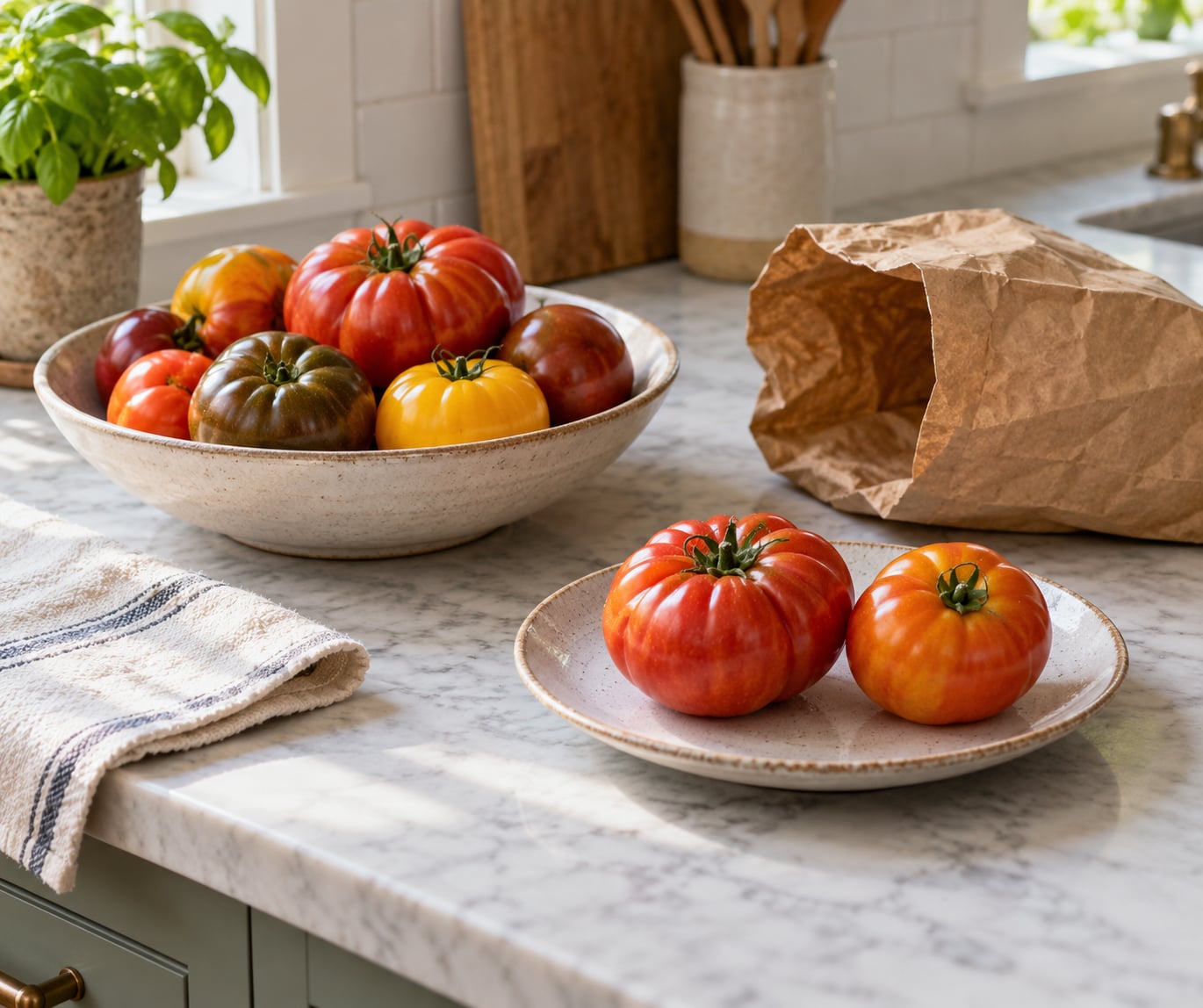
Most tomatoes lose more from bad storage than from being a few days old. If you know how to store tomatoes on the counter or in the fridge, you keep the fruit tasting like a tomato instead of like fridge water, and you waste far less of it. The whole decision comes down to ripeness: unripe and ripe tomatoes stay out, cut tomatoes go in.
There is one wrinkle worth naming up front. Whether the fridge is the right call is a question of quality, not safety. A refrigerated tomato is perfectly safe to eat. It just tastes duller and feels grainier, and that trade only makes sense when you need the extra days.
Below is the setup, the five-step method, the mistakes that shorten shelf life, and straight answers to the questions people search for most. It takes about five minutes to sort a basket of tomatoes properly, and that five minutes is the difference between a week of good salads and a bag of mush.
Table of Contents
- What You Need
- Step-by-Step: How to Store Tomatoes on the Counter or Fridge
- Common Mistakes
- Refrigerating tomatoes that were never ripe
- Stacking tomatoes in a bowl
- Washing before storing
- Sealing tomatoes in plastic or a closed bag on the counter
- Using a sealed container in the fridge
- Storing tomatoes next to high-ethylene produce
- Leaving soft or damaged fruit in the pile
- Assuming the fridge makes a bad tomato good again
- Frequently Asked Questions
- Is it better to refrigerate tomatoes or leave them on the counter?
- Why are you not supposed to put tomatoes in the refrigerator?
- How do you keep tomatoes fresh longer in the fridge?
- Can I take tomatoes out of the fridge and leave them on the counter?
- How long can tomatoes last on the counter?
- Should I wash tomatoes before storing them?
- Conclusion
What You Need
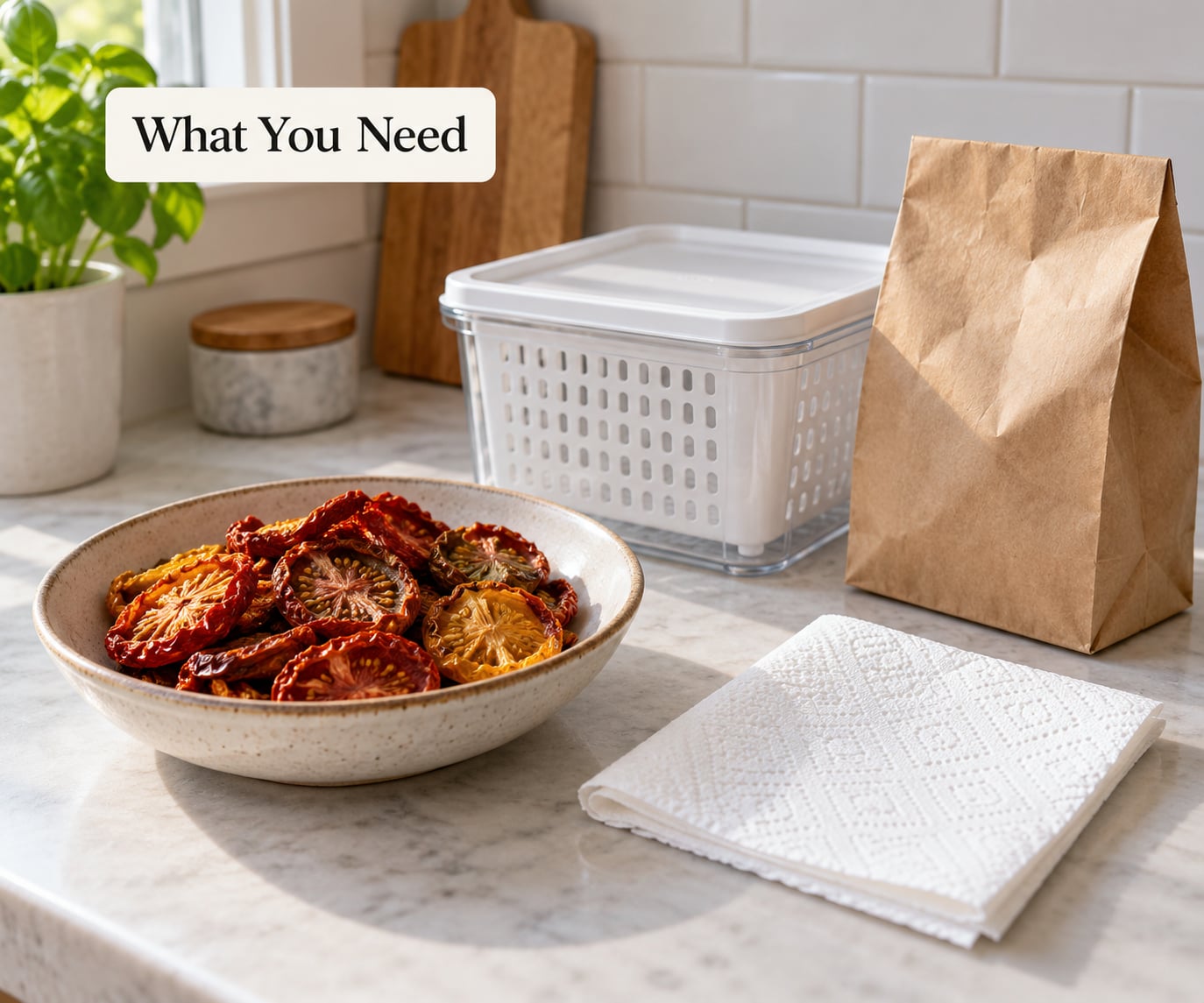
You do not need anything special. A shallow bowl or a single layer on a plate, a paper towel or two, a paper bag for ripening, and a container that lets air through are enough for most kitchens.
- A paper towel or two. Line the bowl or plate. It catches the juice from the ripest fruit and keeps the others from sitting in moisture, which is what invites mold.
- A shallow bowl or a single layer on a plate. Depth is the enemy here. A heaped bowl bruises the tomatoes at the bottom.
- A paper bag. A plain grocery bag from the counter is the classic ripening tool. Close the top loosely and you have a warm, slightly humid space that speeds things along.
- A ventilated container for the fridge. A bowl loosely covered with a paper towel, or a container with the lid cracked, is better than a snap-lid sealed tight. If the drawer has a vented crisper, use that instead.
- Colander or a strainer for washing, but only at the moment you plan to eat. Water on stored tomatoes is the single most common reason they mold early.
One thing to skip: plastic wrap and sealed containers on the counter. A tomato needs moving air and a little ethylene to finish ripening, and sealing it in plastic traps moisture and flatly stops the process.
If you are setting up more than one kind of produce at once, it is worth reading how to store leafy greens so they stay crisp too, because greens and tomatoes want opposite handling and end up in the same fridge drawer.
Step-by-Step: How to Store Tomatoes on the Counter or Fridge
Step 1: Check the Tomato’s Ripeness and Condition
Sorting is the whole game, so do it before anything goes into a bowl. Put the tomatoes into three piles on the counter: eat now, still ripening, and use or discard today.
Eat-now tomatoes are deeply colored, slightly soft when you press the shoulder, and smell like tomato. Still-ripening fruit has a pale shoulder, a hard-ish feel, and little aroma. Everything with a bruise, a split, a soft dark patch or a leaking cut goes into the third pile, and you deal with it the same day.
A tomato with a small soft spot is not a total loss. Cut the bruised area away, use the rest that day. A tomato that feels hollow, smells sour or is leaking liquid belongs in the compost, no matter how good it looks on the outside.
This is also where you decide about washing. My rule is simple: wash only when you are about to cut or cook. Washing before storing leaves moisture on the skin, and damp tomatoes stored for days get patchy mold. If you prefer to wash first, dry them thoroughly with a towel before they go back in the bowl.
Step 2: Choose Counter Storage for Flavor and Continued Ripening
Room temperature is the right home for whole, uncut tomatoes, and the sweet spot is between 55F and 70F. Below 55F the flavor-producing enzymes switch off; above about 70F ripening speeds up and the fruit gets soft fast.
Set the tomatoes in a single layer, stem end down, on a paper-towel-lined plate or in a shallow bowl. Not touching each other, not in a closed bag, not under direct sun. A windowsill gets you warm light that pushes ripening along, but it also cooks the fruit from the outside, so a shaded counter is better.
Here is the argument the internet keeps having settled. The Florida Tomato Committee advises storing large tomatoes stem side up to avoid the stem scar sitting in moisture and inviting rot. Martha Stewart’s produce experts advise stem side down, because the crown end is the weakest part and resting it there lets any rot show up on the side you can see. Either way, the practical answer is the same: rest the tomato on something dry and check it daily. A towel that gets damp gets replaced.
You will know the method is working when the color deepens, the fruit gives slightly under gentle pressure, and a tomato smell reaches you from across the kitchen. Green shoulders fading to even color is the sign to move on to the next step.
Most ripe tomatoes hold about 3 to 7 days on the counter depending on variety and how warm the kitchen is, and up to 7 days is a reasonable expectation for a room kept around 60F. Two weeks on the counter is possible only for very firm Roma types kept in a genuinely cool room, and it is not something to plan around.
To speed ripening, put the tomatoes in a paper bag with a ripe apple or banana, fold the top loosely, and leave it on the counter. The fruit gives off ethylene gas, the apple adds more, and the trapped warmth in the bag nudges the whole thing along. Check daily and pull anything that turns soft or shows fuzz. Skip the sunny windowsill; direct sun is not a ripening trick, it is just a way to get a cooked, leathery shoulder.
Step 3: Use the Fridge for Ripe or Vulnerable Tomatoes
The fridge earns its keep in three situations: the tomatoes are already fully ripe and you need four or five more days, your kitchen is consistently above 70F, or you have a soft, thin-skinned heirloom that is about to go past its window.
Cold halts ripening, which is the point. A fully ripe tomato on the counter has maybe a day or two left before it softens past usefulness, and the same tomato in a fridge is often good for 2 to 7 more days depending on how ripe it was going in.
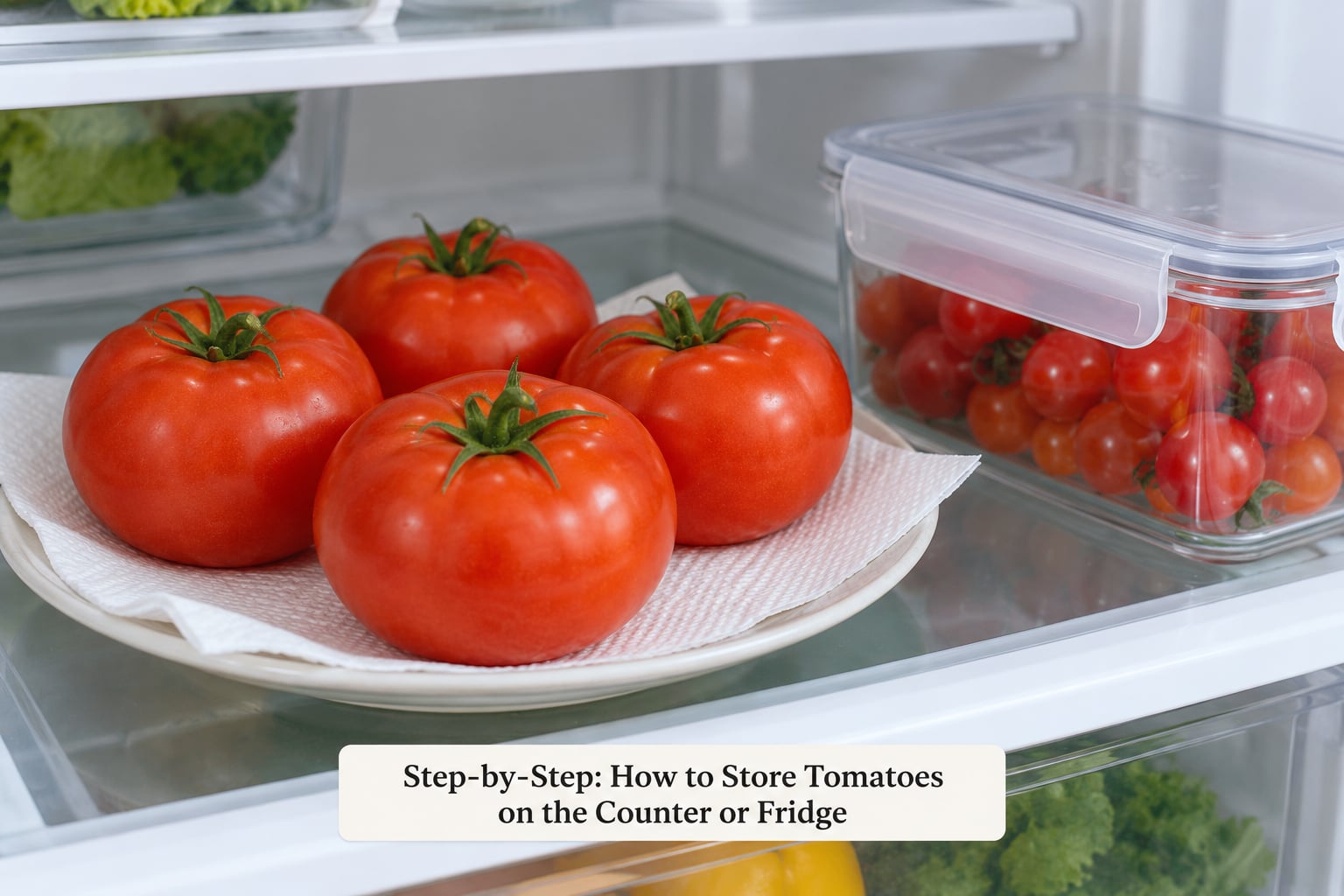
Put them in the fridge loosely. A bowl in the crisper drawer with a paper towel draped over the top works, as does a container with the lid cracked open. Do not wrap a whole tomato in plastic and do not seal it airtight, because condensation builds inside and the skin goes damp.
Take them out 30 to 45 minutes before you eat them. Cold dulls both aroma and texture, and a short rest brings a surprising amount of the flavor back. It is also why a fridge tomato works fine in a cooked sauce and poorly on a sandwich.
If you take a tomato out of the fridge and want to leave it on the counter, go ahead. It will not restart ripening, because the enzymes that drive ripening are the ones that went quiet in the cold, and they do not switch fully back on once chilled. It will soften and eventually spoil on the counter like any ripe tomato, so treat it as a ripe tomato and use it within a day or two.
Step 4: Store Different Tomato Types and Forms
Variety matters more than most guides admit. Cherry and grape tomatoes are structurally different from a big beefsteak, and the storage life gap between them is large enough to plan meals around.
Storage times by type, with the best container for each:
- Cherry. 3 to 5 days on the counter around 60F, up to 7 days in the fridge once ripe. Paper-towel-lined plate or a loose bowl.
- Grape. 3 to 5 days on the counter, 5 to 7 days in the fridge. Same as cherry, in a single layer.
- Beefsteak. 3 to 5 days on the counter, 3 to 5 days in the fridge. Plate, stem side down, on a towel.
- Roma or plum. 5 to 7 days on the counter, up to 7 days in the fridge. Bowl or paper bag while still firm.
- Heirloom. 1 to 3 days on the counter, 2 to 4 days in the fridge. Single layer, never stacked, softest eaten first.
- On the vine. 2 to 4 days on the counter, 3 to 5 days in the fridge. Vine attached, in a bowl, out of direct sun.
- Cut or halved. No counter option, 1 to 2 days in the fridge. Airtight container or plate, cut side down.
Heirlooms are the reason people get into this mess. Thin skin, a shoulder that bruises easily, a shelf life that is often counted in days rather than weeks. Buy fewer, eat them in order of softness, and treat the fridge as an emergency brake rather than a storage plan.
Roma and plum tomatoes are the opposite. Firm, thick-walled, and happy in a paper bag for a week. They are the ones to buy in bulk if you cook often, and the ones to freeze if a haul outruns your week.
Cherry and grape tomatoes do not need much attention at all. Rinse them, blot them dry, and keep them in a container in the fridge where most people leave them anyway. A paper towel in the bottom of the container is the whole trick. They share a shelf happily with other soft fruit; if you want that handled well too, read how to store summer berries so they last longer.
Cut tomatoes are the one case with no counter option. Store them cut side down on a small plate, or in an airtight container in the fridge, and use them within 1 to 2 days. Let them sit out for 20 minutes before serving so they are not refrigerator cold, and note that a cut tomato kept more than a few days gets slimy and should go.
Step 5: Check Freshness Before Using Them
Do a quick check every day or two rather than staring at the bowl. Pick one up, press the shoulder gently, and smell it.
Fresh tomatoes smell like tomatoes, which is a clean, green, slightly sharp scent. A tomato that smells sour, yeasty, or faintly alcoholic has been sitting too long at room temperature. A very ripe tomato still smells good but gives completely under pressure, and that one is fine for sauce within a day.
Skip any tomato with fuzzy white or grey-green mold, a soft sunken patch wider than a coin, liquid pooling in the bottom of the bowl, or a split that has turned dark inside. One moldy tomato in a bowl is a reason to check all of them, because the neighbor is usually next.
Mealy is different from spoiled, and this trips people up. Mealy means dry, grainy, and slightly cottony, usually after a spell in the fridge, but the fruit smells fine and shows no mold. That tomato is not dangerous. Dice it into a salsa or a cooked sauce where texture does not matter, and skip it for anything served raw.
Common Mistakes
Almost every spoiled tomato traces back to one of these.
Refrigerating tomatoes that were never ripe
Cold stops the enzymes that make a tomato taste like a tomato, and that shutdown is not fully reversible. Put an unripe tomato straight into the fridge and it may still redden, but the flavor will not come back. Keep it on the counter until it is ripe, then move it.
Stacking tomatoes in a bowl
Every tomato resting on another one develops a soft spot where the weight sits, and soft spots turn into rot. A single layer costs you a little more counter space and saves you half the fruit. If space is tight, add a second layer only on the day you plan to eat them.
Washing before storing
Water sitting on the skin is an invitation to patchy mold, especially in a warm kitchen. Wash at the moment of use, or dry completely with a towel if you really want to wash first.
Sealing tomatoes in plastic or a closed bag on the counter
Airtight means trapped moisture and no airflow, which gives you mold rather than ripe fruit. A paper bag folded loosely is the correct counter setup because it breathes while holding a little warmth.
Using a sealed container in the fridge
A snap-lid container traps condensation against the skin. Leave the lid cracked or drape a paper towel over the top, and change the towel when it is damp.
Storing tomatoes next to high-ethylene produce
Ripe tomatoes, apples, bananas, avocados and pears all give off ethylene gas, which speeds ripening. That is what you want in a paper bag and what you do not want on a crowded counter shelf, especially in a hot kitchen. Bananas on a counter next to a bowl of tomatoes will soften the fruit faster than you planned.
Leaving soft or damaged fruit in the pile
One bruised tomato spoils its neighbors. Pull anything with a soft spot, a split, or a questionable smell out of the bowl the day you see it. Cut the sound part off and use it, as in a dressing you can make from the odds and ends, rather than letting the whole bowl follow it down.
Assuming the fridge makes a bad tomato good again
Cold hides aroma and firms up soft fruit, but it does not repair one that is already breaking down. A slimy, leaking, or deep-red-black tomato is done. Cold storage only buys time for fruit that was still good when it went in.
Two more situations worth planning for. In a hot kitchen that sits consistently above 70F, treat the counter as a short-term ripening station and move ripe tomatoes to the fridge the same day. And in that 50F to 55F band, ripening stalls without chilling, so tomatoes can sit looking fine for a long time and then soften all at once; check them more often rather than assuming they are fine.
Frequently Asked Questions
Is it better to refrigerate tomatoes or leave them on the counter?
Leave whole tomatoes on the counter until they are fully ripe, then refrigerate them only if you need several more days. Room temperature protects flavor and juicy texture, and ripe tomatoes hold about 3 to 7 days there. Cold storage stops ripening and adds roughly 2 to 7 days, but dulls aroma and turns the flesh grainy, so take them out 30 to 45 minutes before eating.
Why are you not supposed to put tomatoes in the refrigerator?
Below roughly 55F, the enzymes that build tomato flavor slow down or stop, and the change is not fully reversible once it happens. The cell membranes break down and the water inside them shifts as it expands in the cold, which is where the mealy, grainy texture comes from. Tomatoes also absorb nearby refrigerator odors. The fruit stays perfectly safe, it just loses what people actually eat tomatoes for.
How do you keep tomatoes fresh longer in the fridge?
Refrigerate only fully ripe or very soft fruit, and keep it breathable rather than sealed. A bowl in the crisper drawer with a paper towel draped over it works well, as does a container with the lid cracked. Expect 2 to 7 extra days depending on how ripe the tomato was. Take it out 30 to 45 minutes before serving so aroma and texture recover, and skip plastic wrap on whole tomatoes.
Can I take tomatoes out of the fridge and leave them on the counter?
You can, but treat them as ripe tomatoes rather than as ripening ones. Chilling switches off the ripening enzymes, and they do not fully restart, so the fruit will soften and spoil on the counter without ever getting more flavorful. Leave it out for at most a day or two, and expect softer texture than you would have had if it had stayed on the counter the whole time.
How long can tomatoes last on the counter?
Most ripe tomatoes hold 3 to 7 days on the counter, and up to 7 days is a fair expectation in a room around 60F. Firm Roma and plum types can manage a week or more, while thin-skinned heirlooms often give you only 1 to 3 days. Two weeks on the counter is possible only in a genuinely cool room with firm fruit, so plan on closer to a week and use the fridge for anything beyond that.
Should I wash tomatoes before storing them?
No. Water left on the skin encourages patchy mold, and stored tomatoes last longer dry. Wash them at the moment you plan to cut or cook them, then pat them dry. If you prefer to wash ahead of time, use a towel and make sure they are completely dry before they go into the bowl or the fridge, and never put damp tomatoes into a sealed container.
For the underlying numbers, the U.S. Department of Health and Human Services FoodKeeper app, the Florida Tomato Committee, and the National Center for Home Food Preservation all give broadly similar guidance: above 55F on the counter for whole tomatoes, refrigeration once ripe when you need time, and a cool, dry place for cut fruit and short-term holding.
Conclusion
Keep tomatoes dry, unwashed, and in a single layer on the counter between 55F and 70F while they finish ripening, then move them to a breathable spot in the fridge when you need a few extra days or the fruit is already fully soft. Cut tomatoes skip the counter entirely and go straight into an airtight container in the fridge for a day or two. Pull anything bruised, leaking, or fuzzy out of the pile the day you spot it, and most of the waste simply stops happening.