
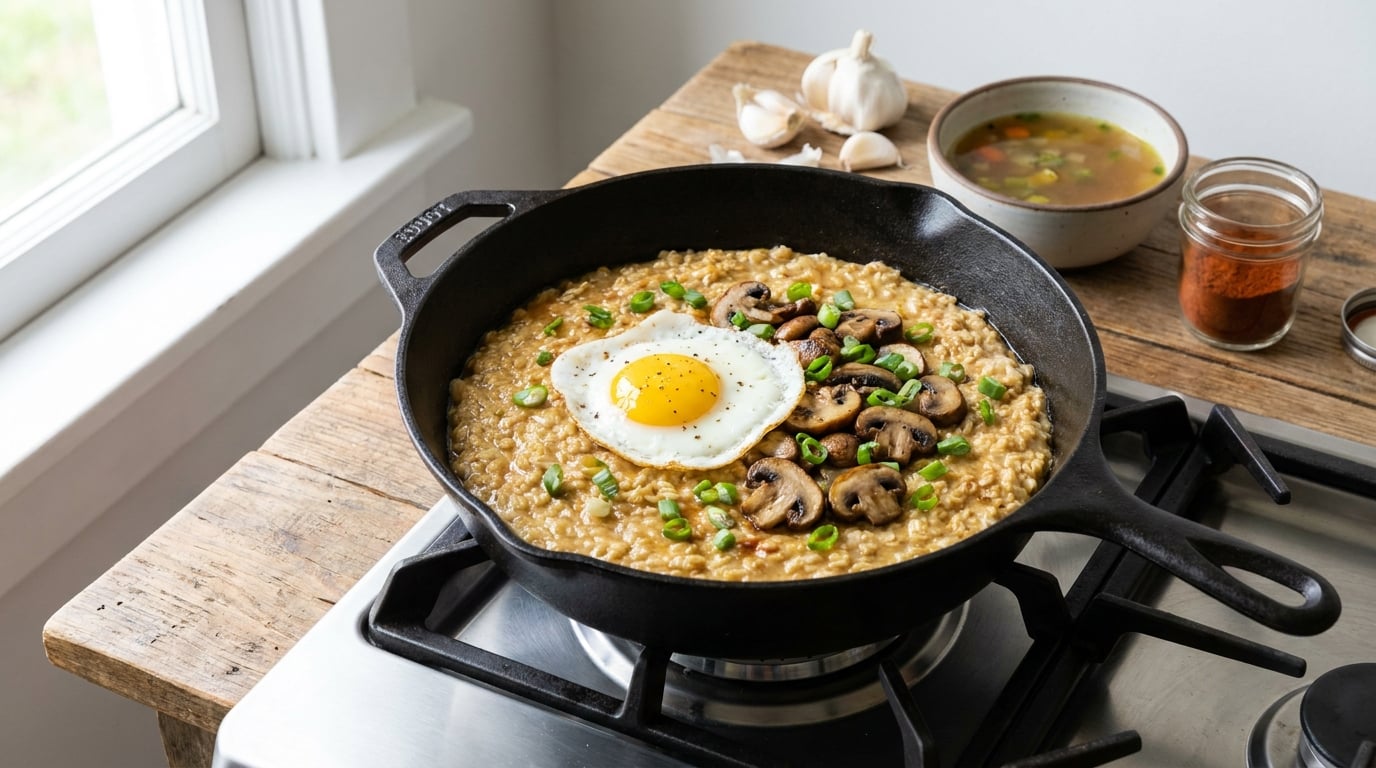
To make savory oatmeal, skip the sugar and milk and simmer old-fashioned rolled oats in seasoned broth with garlic, salt and fat, then finish with vegetables, protein and umami boosters like cheese, soy sauce or nutritional yeast. One pot, about 20 minutes, and the result sits somewhere between risotto and congee.
Most people who try it land on the same surprise: broth is the whole trick. Water cooks oats, broth seasons them. It’s been part of our morning rotation for a few years now, and it’s the version my picky eater asks for without being asked.
Table of Contents
What You Need
You need very little, and almost all of it is pantry food you probably already own.
- The oats: 1 cup old-fashioned rolled oats. Quick-cooking oats work too and need less liquid. Skip instant oats for anything you want to keep a texture.
- The liquid: 2 cups chicken or vegetable broth, plus up to half a cup of water if you like it looser.
- The fat: 1 tablespoon butter, olive oil or avocado oil. This is what carries aroma into the oats.
- The aromatics: 3 to 4 garlic cloves, minced, or 1 teaspoon garlic powder. Half a yellow onion works well if you have one.
- The seasoning: 1 teaspoon smoked paprika, 1/2 teaspoon cumin or chili powder, 1/2 teaspoon black pepper, and salt to taste. Low sodium soy sauce, miso or nutritional yeast add depth.
- The vegetables: 1 to 2 cups. Mushrooms, spinach, bell pepper, zucchini, corn, peas or diced tomato all work.
- The protein: a fried egg, shredded cheddar, parmesan, tofu scramble or roasted chickpeas.
- The finish: green onion, avocado, cilantro, sour cream, salsa or a spoonful of chili crisp.
A wide skillet is the best vessel. It gives you room to toast oats and sauté vegetables in the same pan without crowding, which matters more than any single ingredient. A medium saucepan works fine if that’s all you have.
For a gluten-free version, buy oats labeled gluten-free and check that your broth is gluten-free too, since some brands add barley. For a vegan version, use olive oil instead of butter, vegetable broth, and lean on nutritional yeast, miso and soy sauce for the savory depth that cheese would otherwise provide.
Which oats work best for a savory recipe?
| Oat type | Liquid per cup of oats | Cook time | Result |
|---|---|---|---|
| Old-fashioned rolled | 2 to 2.25 cups broth | 18 to 20 minutes | Creamy with a slight bite. The best all-round choice. |
| Quick-cooking | 1.75 to 2 cups broth | 8 to 10 minutes | Faster and softer. Good for a weeknight bowl. |
| Steel cut | 2.5 to 3 cups broth | 35 to 45 minutes | Nuttier and chewier. Needs a long simmer and extra liquid. |
| Instant | 1.5 cups broth | 2 to 3 minutes | Turns to paste. Only use it if you want porridge. |
How to Make Savory Oatmeal
If you are learning how to make savory oatmeal for the first time, the method runs in four stages: toast the oats, cook the vegetables, simmer everything together, then season and top off the heat. Each stage takes five minutes or less.
You’re aiming for risotto consistency, looser than a cooked risotto and thicker than soup. It should hold the shape of a spoon for a second before relaxing. If it pools, it needs another minute; if it holds like paste, splash in broth a quarter cup at a time.
Everything can be prepped ahead. Dice the onion and mushrooms, mince the garlic and measure the spices the night before, then the morning cook is assembly only. Veggies cut that way keep two days in the fridge covered.
The same base becomes three different meals depending on what you do at the end. As a breakfast bowl, keep it vegetable-light and top with a fried egg. For lunch, double the vegetables and add a protein that holds up cold. As a side dish, loosen it with extra broth and spoon it next to a soup or a roast.
1. Toast the Oats and Season the Cooking Liquid
Melt the butter or olive oil in a wide skillet over medium heat, add the rolled oats, and stir constantly for 2 to 3 minutes.
You’re watching for two cues: the oats turn a light gold color, and the kitchen smells like toasted grain rather than raw oatmeal. If you only smell porridge, keep going. Those two minutes are what separate a nutty bowl from a beige one.
Pour in the broth, the water, the salt, the smoked paprika, cumin, pepper and garlic. Stir to combine and bring to a simmer. Seasoning the liquid now matters because the oats drink it up as they cook. Seasoning only at the end gives you a salty surface and a bland middle, which is the most common complaint about savory oats.
2. Cook the Vegetables and Aromatics
Push the oats and liquid to one side of the skillet. Add the onion and a tablespoon of oil to the empty half and cook for 3 to 4 minutes until softened and just beginning to brown.
Add the garlic and mushrooms next. Cook undisturbed for 2 minutes so the mushrooms sear instead of steam, then stir everything together. Peppers, zucchini and corn go in at this stage too, since they need real heat to taste like something.
Don’t crowd the pan. If the mushrooms are sitting in a puddle of water, they’ll never brown and the bowl will taste flat. Cook in two batches when your skillet is small, or accept that the first batch is more liquid than texture.
Delicate vegetables wait. Spinach and any other greens go in during the simmer, and pre-cooked vegetables, like roasted peppers or leftover roasted squash, can be folded in during the last minute.
3. Simmer Until Creamy
Turn the heat down to low. Simmer gently, stirring every minute or two, for 12 to 15 minutes.
A lazy simmer is the difference between creamy and gluey. If you see a rolling boil, drop the heat and give it another minute before stirring. Rolled oats need that long to release starch; instant oats need about 3 and will turn to paste if you give them the full time.
Thicken and loosen as you go. A spoon drawn through the mixture should leave a clean trail that closes slowly. Add a quarter cup of broth at any point the bottom starts to catch.
You’ll know it’s done when the oats have swollen and gone creamy but still have a faint tooth to them. Taste a spoonful at room temperature, not straight from the pan. Hot food tastes sweeter and less salty than it will at the table, so your last seasoning should happen off the heat.
4. Finish with Seasoning and Toppings
Pull the pan off the heat and stir in the things heat would spoil or dull: a spoonful of miso, soy sauce, nutritional yeast, and any cheese you’re using.
Taste again and correct. If it’s flat, a pinch of salt and a squeeze of lemon do more than another spoon of broth. If it’s rich but not savory, add soy sauce. If it’s missing warmth, a small amount of chili crisp or a drizzle of toasted sesame oil fixes it in seconds.
Then pile it on. A fried or poached egg on top turns breakfast into a real meal. Shredded cheddar and grated parmesan give the classic cheesy version; nutritional yeast gives the same savory note for plant-based eaters, and a vegan cheddar melted on top adds the pull people miss most. Sliced avocado, chopped green onion, sesame seeds, salsa, sour cream and hot sauce all go on at the table.
Keeping it vegetarian is a matter of what you add at the end. Bacon and shredded meat cook separately or go on off the heat; mushrooms, white beans, tofu scramble and roasted chickpeas keep it plant-based without any special technique.
Common Mistakes and How to Fix Them
The bowl tastes bland. Almost always under-salted, because oats soak up more salt than you expect. Season the broth before the oats go in, then taste again at the end. Soy sauce, miso and tomato paste add umami that plain salt can’t.
The oats are mushy or gluey. Too much liquid, too much heat, or too long a cook. Oats have no way to un-thicken, so prevention is the fix: use less broth, keep the simmer lazy, and stop when the texture looks right rather than cooking to a timer. A spoonful of nutritional yeast or grated cheese stirred in at the end will mask some of the stickiness.
The oats are watery. You didn’t stir enough, so the oats settled and cooked unevenly. Stir every minute or two, and give it another 3 to 5 minutes at low heat. Thickening also happens fast in the last two minutes of cooking.
The bottom scorched. The pan sat too long on a boil. Turn the heat to low and use a thicker-bottomed pan next time, or add 1/2 cup of water and scrape the bottom before continuing.
The vegetables are soggy. They released water into the pan and simmered in it. Sear them separately, in a hot pan, before they meet the oats, and drain anything that releases a lot of liquid.
Reheated oats turn rubbery. This is the complaint that comes up most often about savory oats, and it’s a texture problem, not a safety one. Reheat with a splash of broth or water on low and stir often, only until hot, and stop before it looks done. Expect the texture to be softer than fresh.
The toppings swallow the bowl. Too much of something wet or heavy. Keep wet toppings like salsa and sour cream to a tablespoon, and put the crunch on last so it stays crunchy.
On food safety, cook eggs to a firm set, and if you’re cooking chicken or another meat in the same pan, take it to 165°F (74°C) before serving. Refrigerate cooked savory oatmeal within two hours and use it within three to four days. Reheat only the portion you’re eating, in a pan or microwave, until steaming hot throughout.
Tips for the Best Savory Oatmeal
For more protein, stir in a cup of white beans, a scoop of protein powder mixed with a little water, or a spoonful of peanut or tahini sauce before the final seasoning. Any of these changes the dish from breakfast side to a proper lunch.
For creaminess without dairy, mash a few white beans or roasted squash into the liquid before the oats go in. That blended base does the same work as milk and holds heat better than cream. Cream, if you use it, goes in off the heat so it never splits.
For gluten-free preparation, certified gluten-free oats plus a gluten-free broth, and skip soy sauce if you’re sensitive, since many brands brew it with wheat. Oats are naturally gluten-free but frequently milled alongside wheat, which is why the label matters.
For meal prep, cook a double batch of the oats with broth, aromatics and sturdy vegetables only. Portion it, refrigerate up to three to four days, and freeze what you won’t eat. When reheating, add the spinach, eggs, fresh herbs and avocado at the last second rather than cooking them into the batch, which keeps them from going soft and rubbery.
For texture, remember that sturdy vegetables such as broccoli, carrots and corn can handle a full batch cook, while delicate ones cannot. For balance, a rich bowl needs an acidic or acidic-sparkling finish, so lemon, vinegar, pickle brine or a non-sweet hot sauce at the end.
One more trick worth stealing from home cooks: after the first batch, stop adding liquid by guesswork. Measure how much broth actually went in, write it down, and use that number next time. Savory oatmeal is a repeatable formula once you know your own ratio.
Frequently Asked Questions
Can I make savory oatmeal with instant oats?
Yes, but use about 1.5 cups of broth per cup of instant oats and cook it for only 2 to 3 minutes. Instant oats break down quickly, so they turn gluey fast and give you a texture closer to porridge than to risotto. Rolled oats keep a slight bite and are worth the extra ten minutes if texture matters to you.
Are savory oats healthy for breakfast?
Savory oats are a reasonable breakfast, and the change from sweet to savory cuts out added sugar. Oats carry soluble fiber including beta-glucan, which supports heart health, and the vegetables, eggs, beans or cheese you add supply protein and micronutrients that a sweetened bowl usually lacks. Watch added salt in broth and soy sauce if you are limiting sodium.
How do I keep savory oatmeal from becoming mushy?
Use less liquid than you think, keep the heat at a gentle simmer instead of a boil, and stop cooking as soon as the oats look creamy with a slight bite. Stir often so nothing settles and overcooks on the bottom. You cannot thicken oats back up once they have gone gluey, so prevention is the only real fix.
What vegetables work best in savory oatmeal?
Mushrooms, spinach, bell pepper, zucchini, corn and peas are all reliable choices and cook in the time the oats need. Onions and garlic form the savory base, and pre-cooked or roasted vegetables such as blistered tomatoes can be folded in at the end. If you want a thick bowl rather than a loose one, skip very watery vegetables like cucumber and raw tomato, and pat zucchini dry before it goes in.
How long can I store cooked savory oatmeal?
Cooked savory oatmeal keeps in the fridge for three to four days when refrigerated within two hours of cooking. For longer storage, freeze it in portions and reheat with a splash of broth, only until hot, since reheated oats turn rubbery and dry. Reheat only the portion you plan to eat, and steam it through and through.
Can savory oatmeal be made without dairy?
Yes. Skip the butter and use olive oil, use vegetable broth instead of dairy-based stock, and build savory depth with nutritional yeast, a spoonful of white miso, low sodium soy sauce and smoked paprika. Melting a vegan cheddar on top gives you the cheesy pull, and coconut milk stirred in off the heat adds creaminess if you want it.
Conclusion
The simplest version is 1 cup rolled oats, 2 cups salted broth, 1 tablespoon fat, and 1 teaspoon each of smoked paprika and garlic, cooked low and slow for about 18 minutes.
Start there before adding anything clever. Toast the oats, season the liquid properly, simmer without boiling, and finish with vegetables and protein off the heat. Get those four steps right and learning how to make savory oatmeal stops being a recipe and starts being whatever you have left in the fridge.