
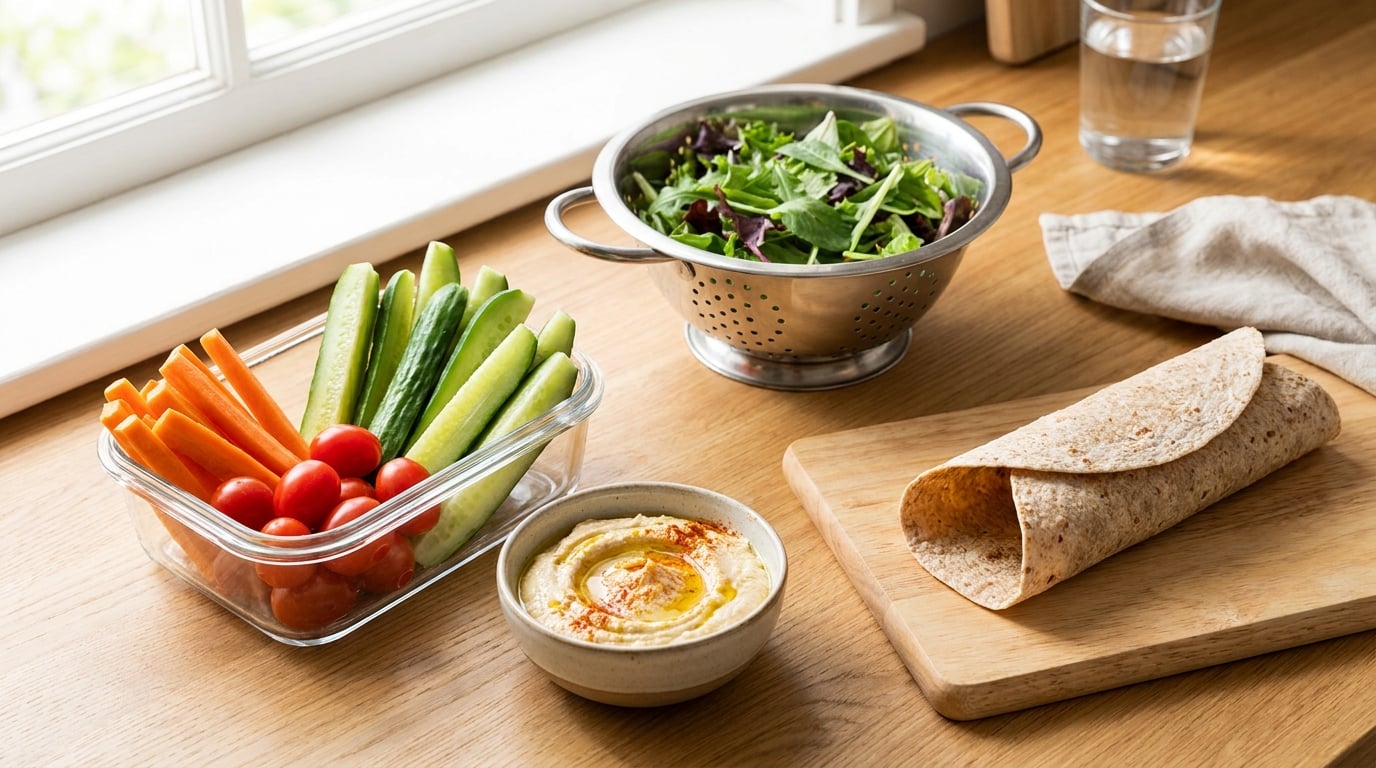
You eat more vegetables without cooking every night by doing three things: add produce to meals you already make, prep it once so it sits where you can see it, and blend or hide it inside dishes you already like. That is the whole system behind this guide to eating more vegetables without cooking every night, and it takes about fifteen minutes a week to set up.
For context on why it matters, the US Dietary Guidelines put the vegetable target for adults at roughly two and a half cups a day, and most people land well under it. The gap is rarely about not knowing which vegetables are healthy. It is about the six o’clock decision, when you are tired and the easiest thing wins.
I will walk through the food, storage and tools first, then the daily system itself, and close with the mistakes that quietly undo the whole thing. This is general information, not personal nutrition advice.
Table of Contents
- What You Need
- Step-by-Step
- Frequently Asked Questions
- What is the easiest way to eat more vegetables without cooking?
- Are raw vegetables enough for dinner if I add other foods?
- How can I make a no-cook vegetable meal more filling?
- How long should cut vegetables be stored in the refrigerator?
- Are smoothies a good way to eat more vegetables?
- What vegetables are easy to eat without cooking?
What You Need
You do not need a specialty kitchen. You need somewhere for vegetables that is not the back of a crisper drawer, and a small amount of prep you do once.
- Clear containers. Straight-sided glass or deli containers so you can see what is inside without opening the door. A wide-mouth jar keeps carrot and cucumber sticks upright rather than lying in a puddle of water, which keeps them crisp.
- A small lidded pot for dips. Hummus, guacamole, or a yogurt dip. Dips are the difference between a carrot being boring and a snack you actually reach for.
- A colander, a sharp knife, a cutting board. Wash, dry, cut. That is the entire prep job.
- A microplane or food processor. Optional, but it turns carrots, zucchini and broccoli into fast grated additions to eggs, pasta sauce and meatballs.
- A blender. Optional, and only if you plan to drink your vegetables.
A paper towel and a salad spinner earn their place too. Wet leaves and wet carrot sticks are the reason so many people decide vegetables are not for them.
For food, keep the list boring on purpose: prewashed bagged greens and spinach, carrots, cucumber, peppers, celery, cherry tomatoes, avocados, lemons and limes, apples or bananas, canned beans or chickpeas, hummus, eggs, tuna, plain yogurt, a handful of nuts or seeds, and whole-grain bread or wraps. Frozen vegetables belong on this list too, not in a separate category. Washing, chopping and freezing happens at peak quality, so they are a shortcut rather than a compromise.
If you would rather not buy anything new, a clean glass jar, a loaf of bread and a can of beans will carry you through the first two weeks.
Step-by-Step
The system below works because each step removes one decision from your evening. Follow them in order and the no-cook meal starts assembling itself.
Build a No-Cook Vegetable Base
A no-cook vegetable meal is a formula, not a recipe: two cups of raw vegetables, a handful of greens, something with protein, a fat, and something crunchy.
Wash everything under cool running water, no soap, and dry it thoroughly before it goes into a container. If a piece of produce has been sitting in water, expect it to turn soft and grey within a day. Keep cut vegetables covered and refrigerated, and eat them within three to four days. That window comes from the guidance food-safety agencies give for cut produce, and it is shorter than most people assume.
Build the base like this:
- Bulk vegetables. Grated carrot and cucumber, sliced bell pepper, celery, radish, sugar snap peas, or cabbage cut into ribbons with a sharp knife. These need two minutes, not twenty.
- Leafy greens. Baby spinach, arugula, or chopped romaine straight from the bag.
- Something juicy. Cherry tomatoes, cucumber, or a handful of grapes or orange segments. Fruit belongs here too; it is not cheating.
- Protein. A scoop of hummus, half a can of chickpeas, a few rinsed canned beans, or two hard-boiled eggs made once on Sunday.
- Fat and crunch. Olive oil, avocado, seeds, or chopped nuts. Without fat, vegetables feel thin and you go looking for something else ten minutes later.
You know it is working when a bowl takes you three minutes to build and you look forward to it. If it takes longer, you have bought the wrong vegetables for that night.
Turn Pantry Staples Into a Meal
Raw vegetables alone rarely carry a meal. Pairing them with pantry protein fixes that without turning on the stove.
Use canned beans and chickpeas, rinsed and ready, for fiber and staying power. Use tuna packed in olive oil or water for a protein hit that needs no heat beyond a fork. Add nuts, seeds, or peanut butter for fat and calories. Avocado does the same job and tastes better on day three. Whole-grain wraps or toast turn the whole bowl into lunch.
A wrap with hummus, spinach, shredded carrot, cucumber, and a slice of tomato is a five-minute meal with real staying power. So is a bowl of greens with two scoops of hummus and a boiled egg. You will notice these meals do not feel like a compromise, which is the point. The vegetable portion is large enough to register as the meal, not the side.
Use a Blender or Food Processor Smoothie
A smoothie is a blender formula: two cups of leafy greens, one or two servings of fruit, about one cup of liquid, a protein source, and a small amount of fat.
Put the greens in first with the liquid, blend, then add the rest. Order matters more than people think; dry powder sitting on top of greens can stay stuck to the sides.
The fat is not optional if you care about absorption. Vitamin K, vitamin A and carotenoids are fat-soluble, so a tablespoon of nut butter, a quarter of an avocado, or a small handful of seeds means you get more out of the same cup of greens.
Keep whole fruit in there rather than juice. Blending does not remove fiber, and the fiber plus the protein is what stops a smoothie from being a dessert in a glass. Treat smoothies as a way to add vegetables to a day that already includes solid meals, not as a replacement for them.
Add One Heated Vegetable, Not a Full Dinner
Some nights you want vegetables warm, and that is a ten-minute job rather than a cooking project.
Microwave a bowl of chopped broccoli, pepper, or zucchini with a spoonful of oil for two to three minutes. Roast a sheet pan of chopped vegetables in a hot oven while something else bakes. Sear sliced peppers or mushrooms in a skillet over high heat and they are done in five. An air fryer does the same job faster and with less oil.
If you are adding protein to the same pan, food safety rules apply. Poultry reaches a safe minimum internal temperature of 165°F, ground meats 160°F, and whole cuts and fish 145°F. Use a thermometer rather than guessing from color, especially with reheated chicken.
One heated vegetable next to a salad or a plate of cold leftovers counts. You are not building a full dinner, and pretending you must is how the whole system collapses.
Plan a Vegetable Rotation For the Week
Rotation works because it removes twenty-one small decisions and replaces them with two.
On your shopping day, buy a mix rather than one thing. I aim for three vegetables that keep about a week (carrots, cucumber, cabbage, peppers, onions, squash), two that I will eat within three days (greens, corn, peas, berries), and one item for the freezer. Buying what is affordable and in season matters more than buying the aspirational version.
Then spend twenty minutes cutting. Chop what you bought, put it in clear containers, and store them at eye level rather than in the crisper drawer where they are effectively invisible. The single most-endorsed habit in online eating communities is this one: when the default option in the fridge is already cut vegetables, you reach for them without deciding to.
A few practical details:
- What holds. Carrots, celery, peppers, cabbage and broccoli keep well chopped. Cut leafy greens, tomatoes and mushrooms soften within a couple of days.
- What to freeze. Grated zucchini, chopped peppers, corn, peas and any cooked vegetable go straight into the freezer in a flat bag with the air pressed out.
- Wilting rescue. Soft greens become a smoothie. Soft tomatoes and zucchini become a ten-minute skillet or sheet-pan dish. Slightly tired carrots and celery go into soup stock. Rescue produce the same day and nothing is wasted.
- Cooking for one or two. Cut quantity is the reason single households avoid vegetables. Prep a quarter of what a recipe uses, and freeze the rest in single portions.
You know it is working when a Wednesday you had not planned still produces a vegetable-heavy meal with no cooking.
Common Mistakes
Six habits undo most attempts, and each has a direct fix.
- Living on salad. A plain pile of lettuce is low-volume and unsatisfying by evening. Fix: two cups of bulk vegetables plus protein, fat and crunch, every single time.
- Skipping protein. Vegetables alone rarely hold you past the hunger dip. Fix: keep hummus, canned beans, eggs, tuna and yogurt on hand and add one every meal.
- Preparing nothing in advance. If the vegetables are whole and unwashed at 7pm, you will not eat them. Fix: twenty minutes on grocery day, or buy pre-cut.
- Relying on one raw vegetable. Carrots every night gets old fast, and variety is what keeps the habit alive. Fix: rotate colors across the week and buy one vegetable you have never cooked before.
- Thinking frozen or canned does not count. It counts, and it is the lowest-effort option available. Fix: frozen for cooking, canned and rinsed for beans and tomatoes, jarred for peppers and artichokes.
- Rinsing without drying. Water in a container makes everything limp and slimy by the next morning. Fix: dry produce before it goes in, and keep containers in the fridge, not on the counter.
If texture is the real obstacle rather than taste, that is common and fixable. Many people describe mushiness and skins, not flavor, as the thing they dislike. Roast instead of boil, serve vegetables cold in salads rather than warm as mush, mix raw vegetables into a sauce you already like, and always pair them with something flavorful, since fat and seasoning carry far further than the vegetable itself.
Frequently Asked Questions
What is the easiest way to eat more vegetables without cooking?
Keep pre-cut vegetables in clear containers at eye level in the fridge, and pair them with a protein you already have, such as hummus, canned beans, tuna or eggs. Wash, dry and chop on grocery day so the default option is already vegetables. Most of the effort happens once a week, and no heat is involved at any point.
Are raw vegetables enough for dinner if I add other foods?
For many adults, yes, when the meal has protein, fat and some whole-grain carbohydrate alongside the vegetables. Two cups of raw vegetables with chickpeas, olive oil and whole-grain toast is a complete meal rather than a side dish. If you train hard, are pregnant, or have a medical condition affecting what you can eat, a registered dietitian can help you build meals that fit your needs.
How can I make a no-cook vegetable meal more filling?
Add a protein and a fat. Two cups of raw vegetables with hummus, chickpeas, tuna, eggs or yogurt, plus olive oil, avocado, nuts or seeds, will hold you until the next meal. A slice of whole-grain bread or a wrap turns the same bowl into lunch. Raw vegetables alone are bulky but low in calories and protein, which is why they fail on their own.
How long should cut vegetables be stored in the refrigerator?
Cut produce is generally good for three to four days when covered and kept at or below 40u0026deg;F. Dry it well before storing, and keep it below any raw meat in the fridge to avoid cross-contamination. Whole leafy greens keep a little longer than chopped ones, and mushrooms, tomatoes and cut greens soften earliest. Anything past that window is better blended, cooked, or frozen.
Are smoothies a good way to eat more vegetables?
Yes, as an addition to your day rather than a replacement for meals. Two cups of leafy greens plus fruit, liquid, a protein source and a small amount of fat such as nut butter gives you a nutrient-dense drink in a couple of minutes. Whole fruit keeps the fiber in, and the fat helps absorb fat-soluble vitamins. Smoothies alone will not give you the variety a varied diet provides.
What vegetables are easy to eat without cooking?
Carrots, cucumber, bell peppers, celery, cherry tomatoes, radishes, sugar snap peas, cabbage, leafy greens, avocados, turnips and fresh herbs are all good straight from the bag. Peel or leave the skin on depending on your preference, and grate or ribbon the cabbage if you want it tender. Wash everything under running water and dry it before storing.
Start with one container. Wash and chop a few carrots and peppers when you get home from shopping, put them where you can see them, and add a scoop of hummus to the fridge door shelf. Ten minutes of setup buys you a week of meals that involve no cooking at all, and that is the habit that actually moves the number. If you have a medical condition, are pregnant, or need help hitting a specific vegetable target, talk to your doctor or a registered dietitian.