
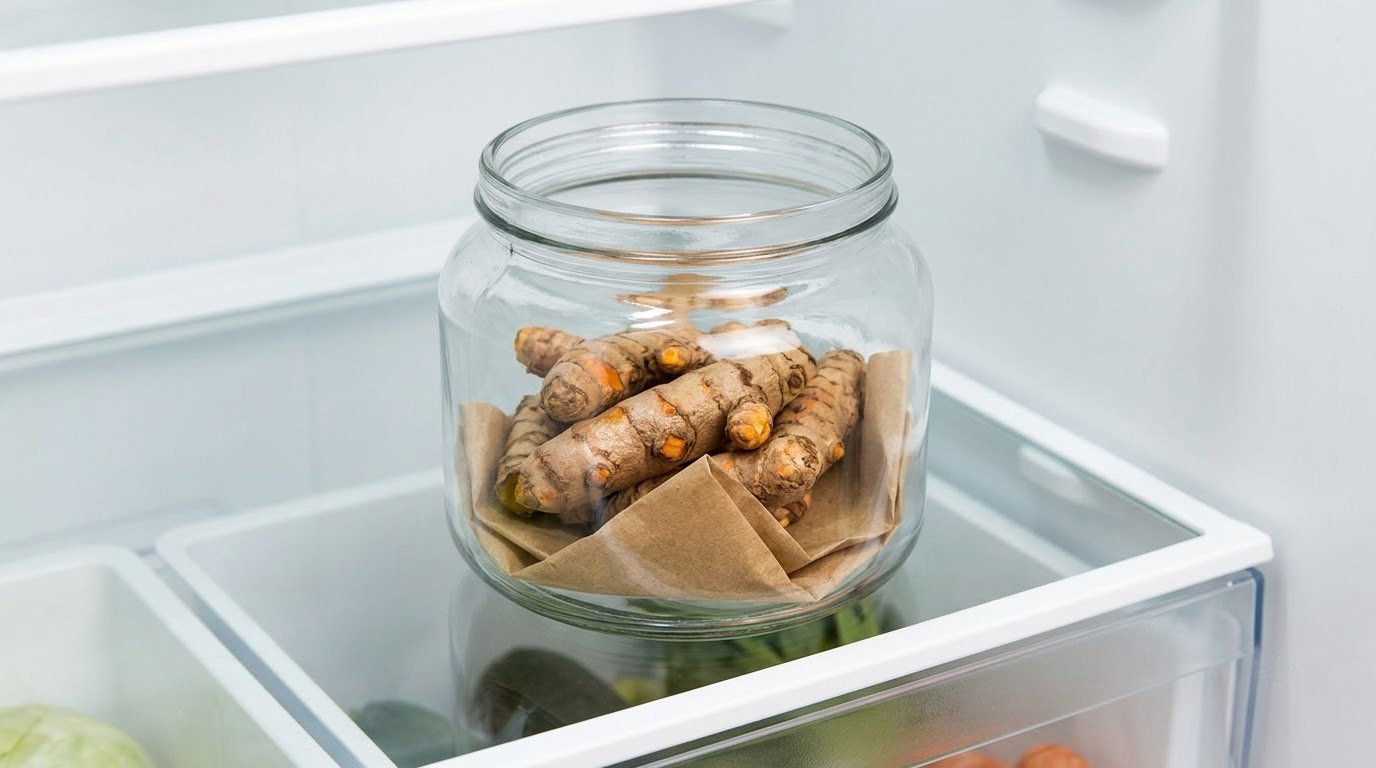
If you know how to store fresh turmeric root, one finger-sized knob lasts you weeks instead of days. Wrapped in paper and kept in the crisper drawer it holds 2 to 4 weeks; cut and frozen it keeps up to 6 months; a vinegar cure or fully dried root stretches that to several months more.
The whole game is moisture. Fresh turmeric is roughly four-fifths water, and it spoils from damp, heat and light, not from age. Seal a wet root in a plastic bag and you have built a tiny greenhouse. Dry the surface first, give the skin a little air, and the same root keeps twice as long.
Pick the method that matches how fast you actually cook. A two-week supply of curry paste does not need the freezer, and a home garden surplus definitely does not belong in the crisper.
Table of Contents
- What You Need
- Step-by-Step
- Common Mistakes
- Frequently Asked Questions
- How long does fresh turmeric root last in the refrigerator?
- Should I wash turmeric root before storing it?
- Can I store fresh turmeric root at room temperature?
- How do I know if fresh turmeric root is bad?
- How do I thaw frozen turmeric root without making it mushy?
- Should cut turmeric root be wrapped before refrigerating?
What You Need
Almost nothing. A clean glass or plastic container, a sheet of paper towel or plain paper, and either a refrigerator or a freezer. For the longer methods you add a jar, some vinegar, a dehydrator or the oven, and a few labels.
Before you store anything, buy the root with the storage method in mind. Choose pieces that are firm and heavy for their size, with unbroken skin and no soft spots, dark patches or a musty smell. Skip anything that already bends when you press it. Wrinkled skin is a sign of age but not always of spoilage, and one old root in a bag spoils the whole lot.
| Method | Shelf life | Prep before storing | Best for |
|---|---|---|---|
| Crisper drawer, wrapped in paper | 2 to 4 weeks | Brush off soil, leave unwashed, pat surface dry | A small weekly amount you cook within a month |
| Freezer, whole or cut | Up to 6 months | Wash, dry completely, cut or grate, freeze airtight | Most home cooks, and anything bought in bulk |
| Vinegar or brine cure | Several months | Slice, pack, cover fully with vinegar or brine | Pieces you use sparingly, and achar-style pickles |
| Dried root or homemade powder | Roughly a year | Slice thin, dehydrate or bake dry, store away from light | Cupboard spice shelf, teas, big garden harvests |
Step-by-Step
How to Store Fresh Turmeric Root in the Refrigerator
Refrigeration is for the short and middle term, up to 2 to 4 weeks. The surprising part is that you should not make it airtight. Turmeric needs to breathe slightly more than a carrot does.
- Brush off loose soil and rinse only if the root is visibly dirty, then pat it completely dry.
- Wrap each piece separately in a paper towel, a square of plain paper or a beeswax wrap.
- Put the wrapped pieces in a clean container or a paper bag, loosely closed rather than pressed shut.
- Slide it into the vegetable crisper drawer, toward the front so you actually see it.
Now the conflict you will find all over the internet. Some sources insist you must wash first, others say never wash. Both are right, depending on the method: for the refrigerator, store it unwashed, because the dry outer skin is a barrier and every drop of water under it becomes a mold spot. If it came from the garden and is caked with soil, wash it, dry it properly, and let the skin harden again before wrapping.
For the freezer, do the opposite and wash first, because you will not be washing it again and the dirt can hold bacteria against the skin. The rule is simple: dirt is a barrier, moisture is the enemy.
If a root is already going soft when you get home, peel it, cut it, and move it to the freezer tonight rather than the crisper. A soft root in the fridge is a root you will find fuzzy in ten days.
How to Freeze Fresh Turmeric Root
Freezing is the longest-lasting method most home cooks will use, and it keeps the volatile turmerone oils better than drying does. You have two choices, and people who grate it often freeze grated.
Whole pieces:
- Wash the root and dry it thoroughly, including the crevices between the knuckles.
- Cut it into chunks about 1 inch (3 cm) across, or leave small fingers whole.
- Spread the pieces in a single layer on a tray and freeze for an hour so they do not clump.
- Transfer to a resealable freezer bag or airtight container, push out the air, seal, and date it.
Grated portions:
- Peel and grate the root on a Microplane or fine box grater.
- Spoon the grated turmeric into an ice cube tray, filling each well halfway to three-quarters.
- Drizzle a little oil over each portion so the colour and aroma stay locked in.
- Freeze solid, then pop the cubes into a sealed bag so they never sit against a warm tray.
You do not need to thaw either version. A frozen piece goes straight into hot oil or a simmering pot, and frozen grated turmeric shaves down fine on a Microplane while it is still hard enough to grate. One cube is roughly a teaspoon, which is about what most recipes want.
It does not matter if the pieces freeze into one solid block, and squeezing the air out of a ziplock is optional rather than essential. It matters that the turmeric is bone dry before it goes in and that the bag is sealed after, because that is what stops freezer burn.
How to Store Fresh Turmeric Root for Several Months
Plenty of readers would rather not freeze everything. Two cupboard methods do the job, and both start by cutting the root into smaller pieces so they dry or cure faster.
Vinegar cure: slice the root into thin coins or small chunks, pack it into a clean jar, and pour over enough vinegar or brine to cover every piece completely. Store the jar in the fridge and keep it away from light. Most people get several months this way, and the pieces soften into something between a pickle and an achar ingredient. The vinegar and salt are what preserve it, so no piece may float above the liquid.
Dried root or powder: slice the root as thinly as you can manage, then dry it in a dehydrator at around 120°F (50°C) until it snaps rather than bends, or in an oven on its lowest setting with the door cracked open. Grind the dried slices in a spice grinder and store the powder in an airtight glass jar away from light and heat. A whole dried root keeps roughly a year; ground powder keeps a little longer than the fresh root ever would, though it has lost most of the turmerone aroma that makes fresh root worth buying.
Neither method replaces freezing if you want fresh-tasting turmeric in March. Drying is a good way to rescue a garden surplus, not a way to keep the flavour.
How to Keep Cut Turmeric Root Fresh
Half a root is where most people lose turmeric, because a cut face loses moisture far faster than an intact one and picks up everything in the fridge.
- Seal the cut face tightly with cling film pressed directly onto the flesh, or stand the cut end in a small cup of water like a bunch of flowers and change the water every couple of days.
- Use the cut piece within a few days. If it is going to sit longer than a week, move it into the freezer instead.
- Grate only what you need. Grated turmeric dries out in a day or two even in the fridge, so grate straight into a dish or freeze it immediately.
- Keep cut turmeric away from raw meat and unwashed produce on the same shelf.
The oil-drizzled ice cube method above is the version that works for people who grate turmeric for golden lattes and smoothies twice a week. Make a batch, freeze it, and stop thinking about it.
Common Mistakes
Storing it wet. This is the number one reason fresh turmeric molds at the back of the fridge. Loose produce from a market is often already damp, and rinsing it right before it goes into a sealed bag gives mold a week, sometimes less. Dry the surface properly, every time.
Wrapping the whole root in nothing. A bare root in the crisper loses moisture, shrivels and eventually goes soft, and you will forget about it entirely. Paper wrapping costs nothing and slows all of that down.
Sealing in excess moisture. An airtight container is right for the freezer and wrong for the fridge. Cold air holds less water, so anything trapped with the turmeric condenses onto the surface, which is exactly the surface the mold wants.
Using a container with a tired closure. A ziplock bag that no longer seals lets the freezer air in and dries the turmeric out. If the zip has gone stiff, the bag is decorative now. Test the seal over a glass of water before you trust it with a root you waited a week for.
Freezing it in a damp bag. Water that freezes into ice crystals dulls the flavour and texture and leaves grey patches when the root thaws. Dry first, seal second.
Quick Storage Tips
- Label every bag or jar with the date. Frozen turmeric is easy to forget and impossible to judge by eye later.
- Keep the oldest root at the front of the crisper and the newest behind it, so you use it in the order you bought it.
- Press a thumbnail into the root when you check it. Firm means it is fine; soft and bendy means it is done.
- Wrinkled skin on its own is dehydration, not spoilage. Peel it and grate the flesh underneath into a soup, a smoothie or a vinaigrette.
- Fuzzy white or grey patches, black spots, a sour or musty smell, or a slimy surface mean you bin it without tasting it.
- Do not keep a part-used root at room temperature, even in a cool kitchen. That is the fastest way to lose it.
One community claim worth correcting outright: fresh turmeric does not stay good in the fridge for 6 months sealed in an airtight container. Two to four weeks wrapped in paper is the realistic figure. Six months belongs to the freezer, and anything claiming otherwise is describing a mold experiment.
Frequently Asked Questions
How long does fresh turmeric root last in the refrigerator?
Two to four weeks when the root is dry, unwashed and wrapped in paper or a paper towel, kept loose in the crisper drawer. Sealing it airtight in plastic can cut that to a week or two, because condensation settles on the skin. If the root is already soft when you buy it, freeze it instead of refrigerating it.
Should I wash turmeric root before storing it?
For the refrigerator, leave it unwashed. Dry soil and the outer skin act as a barrier, and any water trapped underneath becomes a mold spot. Wash it only if it is genuinely dirty, then dry it completely. For the freezer, wash first, because the dirt stays on the skin for months and you will not be washing the root again.
Can I store fresh turmeric root at room temperature?
Only for a short time in a cool, dark, dry cupboard away from the stove, and not in a sealed bag. In a warm kitchen, room temperature storage lasts a week or two at best and usually turns soft first. If you have no fridge space, freeze the root or cut and dry it rather than leaving it out.
How do I know if fresh turmeric root is bad?
Press it with a thumbnail: firm is good, soft and bendy is not. Watch for fuzzy white or grey patches, black spots, a slimy surface or a sour, musty smell. Wrinkled skin on its own means dehydration rather than spoilage, so peel the root and use the flesh inside. Anything moldy, discolored or smelling off should be discarded.
How do I thaw frozen turmeric root without making it mushy?
You usually do not need to thaw it at all. Drop a frozen chunk straight into hot oil or a simmering pot, and grate frozen pieces or grated portions directly on a Microplane while they are still firm. If a whole piece must be thawed, move it to the fridge rather than the counter and use it within a day, before the texture softens.
Should cut turmeric root be wrapped before refrigerating?
Yes. Press cling film directly onto the cut face so it cannot dry out or pick up smells from the fridge, then keep the piece in a container in the crisper. Use it within a few days, or move it to the freezer. Standing the cut end in a little water and changing the water daily also works if you are using it in the same week.
Do one thing tonight: if the root on your counter is firm, wrap it in a paper towel and put it in the crisper drawer. If it is already soft, peel and grate it, freeze the portions in an ice cube tray, and stop worrying about it until you need a teaspoon for golden milk.
Last reviewed in 2026 against standard food-safety guidance. If you are pregnant, managing gallbladder or bile duct conditions, or taking blood-thinning medication, check with your doctor or pharmacist about how much turmeric suits you.