
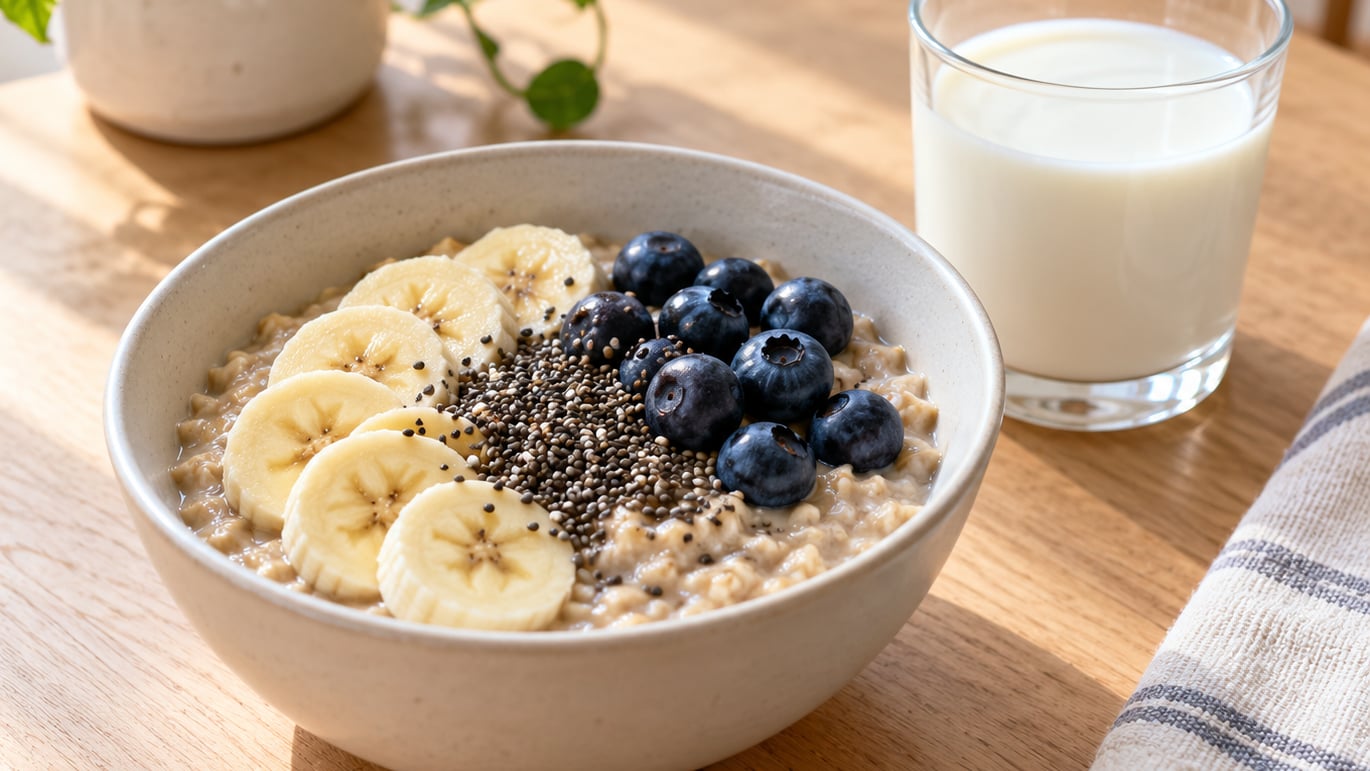
Eating oatmeal every morning gives you a bowl built from oats, a whole grain with more soluble fiber and more protein than most other common breakfast cereals. Regular bowls are linked to steadier blood sugar, better cholesterol numbers, easier digestion and longer-lasting fullness. The honest part of the answer: oats earn their place next to fruit, nuts and eggs, not instead of them.
I eat oats most mornings and the reason is boring and practical. It cooks in five minutes, keeps in the fridge for three days, and costs about the same as a bag of sugary cereal once you stop buying both. What follows covers what the research actually supports, where the marketing runs ahead of the evidence, and how to build a bowl you will actually look forward to.
Table of Contents
- What Are the Benefits of Eating Oatmeal Every Morning?
- How Does Oatmeal Support Heart Health?
- Can Oatmeal Help with Digestion and Gut Health?
- Will Eating Oatmeal Every Morning Help with Weight Management?
- Does Oatmeal Provide Steady Energy for the Morning?
- Which Type of Oats Is the Healthiest?
- How Many Calories and Nutrients Are in a Bowl of Oatmeal?
- How Can You Eat Oatmeal Without Boring It?
- Who Should Eat Less Oatmeal or Choose an Alternative?
- Frequently Asked Questions
- The Short Version: What to Do With Tomorrow Morning’s Bowl
What Are the Benefits of Eating Oatmeal Every Morning?
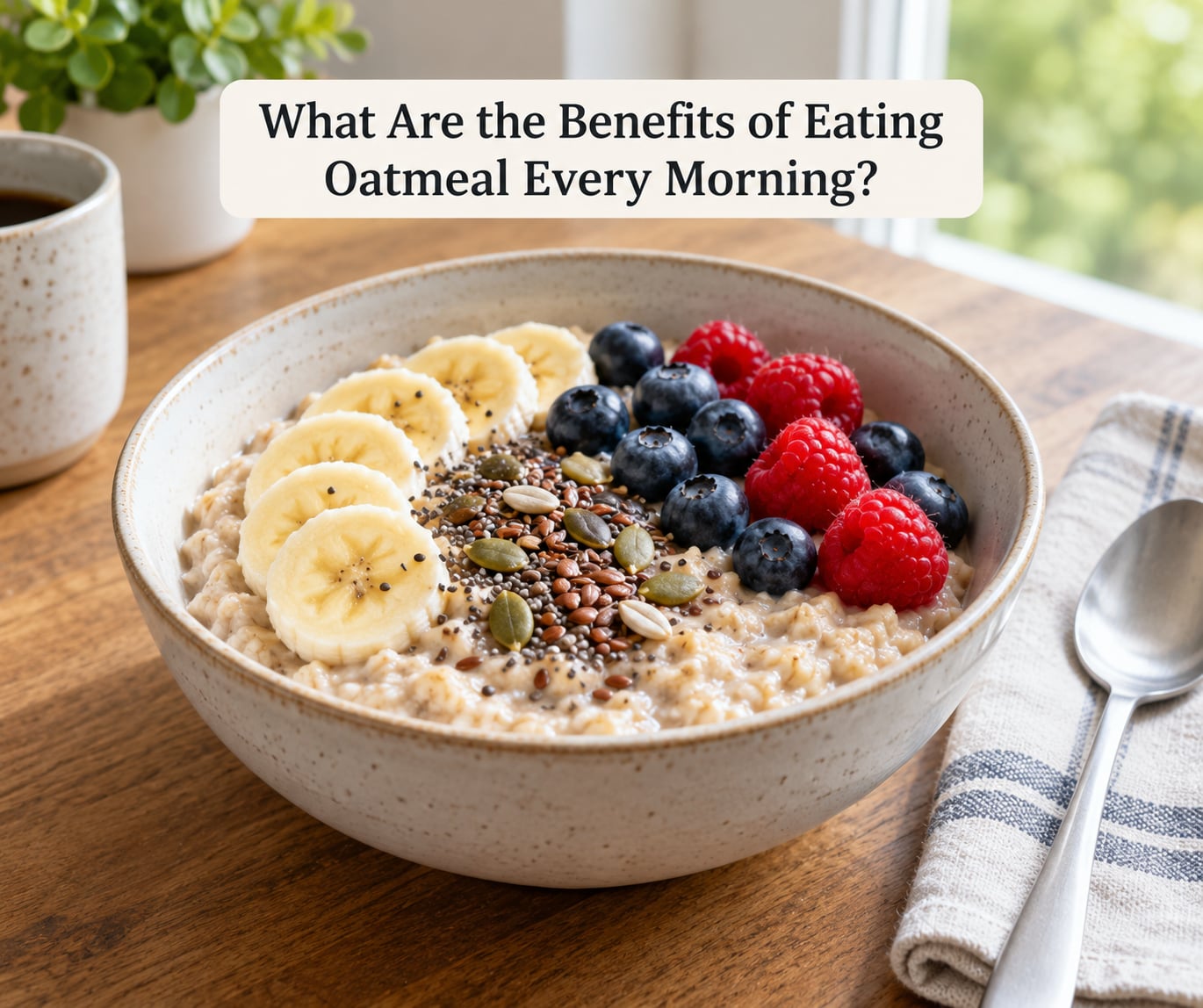
Oatmeal every morning supplies slow-release carbohydrate, soluble and insoluble fiber, a modest amount of plant protein, and trace minerals such as magnesium and manganese. That combination is why a bowl at breakfast tends to hold you longer than most sugar-first cereals.
The short version of the benefits of eating oatmeal every morning: steadier energy, a supportive effect on cholesterol and blood sugar, more regular digestion, and better satiety than most breakfast options.
What makes oats different from other breakfast grains
Oats are a grass seed rather than a true grain, but nutritionally they behave like a whole grain because the bran and germ stay attached. Most oats also contain avenanthramides, antioxidant compounds unique to oats that show up in skin and inflammation research.
Here is a quick map of the benefits and the mechanism behind each one.
- Heart health: beta-glucan binds to cholesterol in the gut and helps remove it.
- Blood sugar control: the same gel slows glucose absorption after a meal.
- Digestion: insoluble fiber adds bulk while soluble fiber feeds gut bacteria.
- Weight management: water plus fiber means a big volume for relatively few calories.
- Steady energy: complex carbohydrate releases over hours rather than minutes.
- Nutrient density: magnesium, manganese, phosphorus and a little vitamin E.
- Versatility: the same grain works sweet, savory, cold and baked.
One serving of oats, a half cup of dry rolled oats cooked in water, delivers roughly 4 grams of fiber. Most people eat about half the daily fiber recommendation in a single bowl.
How Does Oatmeal Support Heart Health?
The main heart-health mechanism is beta-glucan, a gel-forming soluble fiber found only in oats. It thickens the contents of the gut, binds bile acids carrying cholesterol, and lets the body excrete more of that cholesterol instead of reabsorbing it.
In the United States, oats were the first food to earn an FDA health claim, in 1997, for lowering coronary heart disease risk. That claim is tied to a specific daily amount: about 3 grams of beta-glucan, which works out to roughly three-quarters of a cup of dry oats.
Regular intake also fits into the broader pattern that matters. Oats on their own are not a heart-protective super food. Combined with vegetables, legumes, fish and unsaturated fats across a week, they are part of an eating pattern that is well supported.
How to tell an oat product that actually contains beta-glucan
Read the label, because some oat products are mostly filler. A plain rolled, steel-cut or oat groat product has roughly 2 grams of beta-glucan per half cup dry. Oat bran is concentrated, more than 3 grams per half cup, because the beta-glucan sits in the bran layer.
Products that say granola, muesli, instant oatmeal or cereal clusters often list oats as the second or third ingredient, and flavored instant packets are usually higher in added sugar than the oats themselves contribute in fiber. Watch for partially hydrogenated oils too, because those push the fat profile in the wrong direction.
Can Oatmeal Help with Digestion and Gut Health?
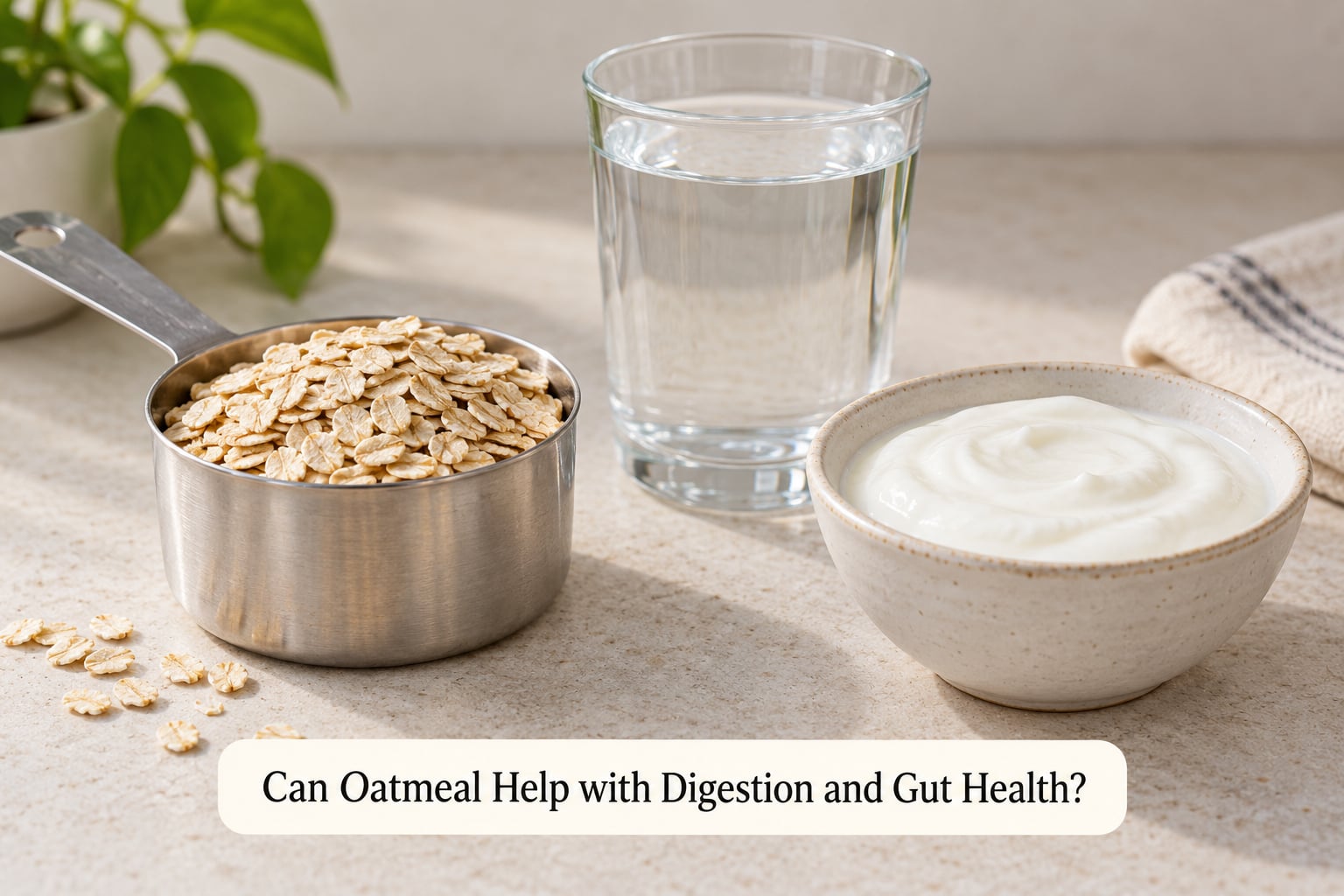
Oats carry both kinds of fiber. Insoluble fiber adds structure and bulk, which supports stool regularity. Soluble fiber, mostly beta-glucan, holds water in the gut and acts as a prebiotic, feeding the bacteria in your colon that ferment it into short-chain fatty acids.
That is the honest mechanism behind claims that oats improve gut health: you are feeding a specific group of bacteria a substrate they can use. The result over weeks tends to be more predictable digestion and less bloating after meals, provided you drink enough water.
Getting more oat fiber without the bloating
The most common complaint from people starting daily oats is gas and cramping in week one. That is usually a fiber and water problem, not an oat problem.
- Start at a quarter cup dry and build to a half cup over two weeks.
- Drink a full glass of water with the bowl and through the morning.
- Cook oats until thick. Looser, wetter oatmeal moves through faster.
- Soaking rolled oats overnight softens some of the compounds that irritate a sensitive gut.
- Add a fermented food such as yogurt or kefir alongside, not just more oats.
Most people report that the adjustment settles after two to four weeks of consistent intake, which matches what nutritionists generally see when fiber ramps up gradually.
When oats stop agreeing with you
A smaller group of people never adapt. If you have a diagnosed gut condition, symptoms that get worse rather than better, or pain after meals, stop experimenting with portions and talk to a clinician. Persistent bloating is worth investigating on its own merits.
Will Eating Oatmeal Every Morning Help with Weight Management?
Oatmeal helps with weight management indirectly, through satiety, and only within a broader pattern. Nothing about oats burns fat or blocks calories. What they do is make the next meal easier to skip when you are not actually hungry.
Two things drive that feeling. Soluble fiber and water give you volume: a bowl of cooked oats measures about one and a half cups for roughly 150 calories, which is hard to do with most other breakfast foods. And the gel that beta-glucan forms slows stomach emptying, which is the difference between being satisfied at 9 AM and hungry at 10:30.
Portion size is where most daily-bowl plans go wrong
The classic mistake is assuming a bowl is a serving. A half cup of dry rolled oats becomes roughly one and a half cups cooked, and a measuring cup of dry oats becomes three. Add nut butter, dried fruit and a splash of honey and a modest breakfast becomes an 800-calorie one.
Use these numbers as a sanity check rather than a prescription.
- Quarter cup dry, about 75 calories, cooked — a lighter start.
- Half cup dry, about 150 calories, cooked — the standard breakfast bowl.
- Three-quarters cup dry, about 225 calories, cooked — for a very active morning.
Weight changes over months come from your overall intake. What oats change is the number of days you get through without a mid-morning vending machine run.
Does Oatmeal Provide Steady Energy for the Morning?
Yes, provided the bowl is built from oats rather than sugar. Oats are roughly 60 percent carbohydrate, most of it starch, wrapped in fiber that slows digestion. Add a protein source and the release stretches further.
Compare that with a typical sweetened instant packet, which can carry 10 to 12 grams of added sugar and dissolves into something closer to a glucose drink. Plenty of readers who switched from flavored packets to plain rolled oats report exactly that: a steadier morning and no mid-morning crash.
Why instant oatmeal can leave you sluggish by 11 AM
If you feel tired after breakfast, the bowl is more likely the cause than oats as a food. Check three things in order. First, added sugar, including honey, maple syrup and flavored instant varieties. Second, portion, since three cups of cooked oats is a very large volume. Third, the oat type, because instant oats are digested faster than steel-cut even though the fiber content is similar.
People training in the morning eat oats deliberately for the same reason: slow-release carbohydrate that does not sit heavily before lifting. Our notes on what to eat before a morning workout for energy go into the timing side of it. If you plan to train fasted, a lighter bowl works better. For a longer session or a cold morning, more is fine.
Which Type of Oats Is the Healthiest?
All of them are the same grain at different processing levels, and the least processed option is the most nutritious. Processing changes texture and cooking speed more than it changes what the oat actually contains.
| Type | Processing | Texture | Cook time | Blood sugar behaviour | Best for |
|---|---|---|---|---|---|
| Oat groats | Husk and whole seed | Nutty, firm bite | 45 to 60 minutes or slow cooker | Slowest release | Weekend batches, granola |
| Steel-cut oats | Chopped with a steel blade | Coarse, crumbly | 25 to 35 minutes | Slow | People who like a thicker texture |
| Rolled oats (old-fashioned) | Whole seed pressed flat | Soft, flaked | 5 to 10 minutes | Moderate | The everyday bowl, overnight oats, baking |
| Quick oats | Rolled then cut shorter | Soft, less defined | 3 to 5 minutes | Moderate to slightly faster | Busy mornings with a microwave |
| Instant oats | Steamed, dried, cut thin | Soft, sometimes powdered | 1 to 2 minutes or just boiling water | Fastest, most prone to spikes | Convenience, travel, not daily use if sweetened |
| Oat bran | Outer bran layer only | Fine, floury | 5 minutes | Moderate, very high fiber | Adding soluble fiber to other meals |
| Oat flour | Whole grain ground fine | Flour | Baking only | Varies by recipe | Pancakes, cookies, bread, thickener |
Plain traditional and whole-grain varieties are the nutritious choice for daily eating. Heavily sweetened instant products are the least suitable, mostly because of the added sugar rather than the oat itself.
How Many Calories and Nutrients Are in a Bowl of Oatmeal?
The table below covers half a cup of dry rolled oats cooked with water, the most common US serving. Treat these as typical values rather than exact ones.
| Nutrient | Amount per bowl (1/2 cup dry, cooked in water) |
|---|---|
| Calories | About 150 |
| Protein | About 5 grams |
| Total carbohydrate | About 27 grams |
| Fiber | About 4 grams, including roughly 2 grams beta-glucan |
| Added sugar | 0 grams when cooked plain |
| Total fat | About 3 grams |
| Sodium | Under 5 milligrams |
| Magnesium | About 60 milligrams, roughly 15 percent of daily value |
| Phosphorus | About 165 milligrams |
| Manganese | About 1.4 milligrams, a little over the daily value |
| Iron | About 1.5 milligrams |
| Vitamin B1 (thiamin) | About 0.2 milligrams |
| Zinc | About 1.4 milligrams |
Values change with brand, serving size and how you cook. Swapping water for milk roughly doubles calories and adds protein, and sweetened packets add 5 to 12 grams of sugar on top. Oat bran concentrates fiber and calories in the same serving, while oat flour used in baking behaves differently again.
One honest gap: plain oatmeal is low in vitamin B12 and D, and moderate in iron. Pairing it with a fortified food or an animal product covers that.
How Can You Eat Oatmeal Without Boring It?
The fix for repetitive oats is a rotation of toppings rather than a bigger pile of sugar. These combinations each solve a different problem.
- Fruit and seeds: berries or a sliced banana, a tablespoon of chia or pumpkin seeds. Best for fiber diversity and staying full.
- Peanut butter and banana: two tablespoons of nut butter turns 5 grams of protein into about 15. Best for a long morning or a workout.
- Apple and cinnamon: grate half an apple into the pot while it cooks. Adds moisture and sweetness without added sugar.
- Cocoa and yogurt: a spoonful of unsweetened cocoa powder and a dollop of plain yogurt stirred in at the end.
- Savory: sautéed spinach, a fried egg, black pepper and a spoon of grated cheddar. Good for people who find sweet breakfasts unappealing. Our how to make savory oatmeal method covers the technique in detail.
- Chia pudding: two tablespoons of chia seeds soaked in the cooked oats and left in the fridge overnight.
For a powder-based upgrade, using maca powder in smoothies and oatmeal works well if you want more flavor than fruit alone gives you.
Cold, hot and savory prep methods
Overnight oats mix half a cup of rolled oats with milk or water, a spoon of yogurt and whatever you want to sweeten it, then sit in the fridge for six to eight hours. No heat, no cleanup, and the texture softens without becoming gluey.
For a hot bowl, bring one cup of liquid to a boil, stir in half a cup of oats, drop the heat and cook for five to seven minutes. Steel-cut takes about 30 minutes; groats need close to an hour.
Both of these come up constantly as dinner and snack questions in reader discussions. Oats at night are fine for most people, though a large bowl right before lying down is exactly what triggers the heavy feeling and reflux some readers report. A smaller portion a few hours earlier avoids the issue.
If you like oat flavor in baking, oat flour replaces a portion of wheat flour in pancakes and cookies and works as a thickener for sauces and smoothies.
Who Should Eat Less Oatmeal or Choose an Alternative?
Most people can eat oats daily without trouble. Several groups need individual guidance rather than a general answer.
- Celiac disease and gluten-related conditions: oats contain avenin, a protein related to wheat gluten. Many people with celiac can tolerate oats, but only after their specialist confirms it, and oats are frequently milled on shared equipment with wheat, barley or rye. Look for a certified gluten-free label if that applies to you.
- Diabetes: oats are generally a suitable choice because of their fiber, but glucose response is individual. Monitor your own numbers and discuss portion and pairing with your care team.
- Oat allergy: uncommon and distinct from gluten intolerance, but real. Anyone with a diagnosed allergy avoids oats entirely.
- Gastroparesis, IBS or active gastritis: fiber can aggravate symptoms in some people. Soluble fiber and small portions may still work, but this is worth a conversation with a clinician.
- Calorie-sensitive eating plans: the oat itself is low calorie, but large bowls with calorie-dense toppings add up quickly. Measure dry oats rather than eyeballing the cooked volume.
- Thyroid medication: oats contain phytates, which can interfere with absorption of some medications. Taking them a couple of hours apart from levothyroxine and some supplements is a simple precaution.
Registered dietitians and physicians handle these cases properly. This article is general information and not personal medical advice.
Frequently Asked Questions
Is it good to eat oatmeal every morning?
For most people, yes. Oats are a whole grain with around 4 grams of fiber and 5 grams of protein per standard bowl, and eating them daily is a simple way to keep fiber consistent. Nothing about oats requires a break from them. If you feel bloated, heavy or sluggish, the usual suspects are added sugar, oversized portions or not drinking enough water rather than oats themselves.
How much oatmeal should I eat for breakfast?
Half a cup of dry rolled oats, which cooks up to about one and a half cups and roughly 150 calories, is the standard serving most nutrition guidance uses. A quarter cup dry is a lighter start at about 75 calories, and three-quarters cup suits a very active morning. Measure the dry oats, since cooked volume is genuinely hard to judge and is where unexpected calories come from.
Are instant oats as healthy as traditional oats?
Plain instant oats are nutritionally close to rolled oats, since the fiber and protein are similar. The real difference is processing speed and what gets added. Instant varieties dissolve faster, digest faster, and flavored packets commonly carry 10 to 12 grams of added sugar. Steel-cut and groats have a slower glycemic effect. For daily eating, plain rolled or steel-cut is the better default.
Does oatmeal make you lose weight?
No, oats are not a weight-loss treatment. They can help indirectly because fiber and water create volume and beta-glucan slows stomach emptying, so you feel full longer. If oats contribute to weight loss in your case, it is through better satiety and replacing a higher-calorie breakfast, not through any direct effect on fat. Portion size and toppings matter more than the choice of oat.
Is oatmeal better cooked with water or milk?
Water keeps the bowl light, around 150 calories, and the fiber and beta-glucan do not change. Milk roughly doubles the calories and adds roughly 3 to 4 grams of protein, which many people find more satisfying through mid-morning. Oat milk behaves closer to dairy milk, while fortified soy milk adds protein with less saturated fat. Cook it in whichever liquid you will actually enjoy every day.
Can I eat oatmeal if I have diabetes?
Oats are commonly recommended because their soluble fiber slows glucose absorption compared with refined cereals. That said, individual response varies, and sweetened instant packets and large portions raise blood sugar faster. A practical starting point is half a cup of dry rolled oats cooked with water or unsweetened milk, paired with protein, and then checking your own glucose response. Your doctor or dietitian can confirm the plan that fits your medication.
The Short Version: What to Do With Tomorrow Morning’s Bowl
Start with half a cup of dry plain rolled oats cooked in water or milk, measure rather than guess, and add a protein plus a piece of fruit. Hold back sweetened instant packets for travel. Then watch how your digestion responds over two to four weeks and adjust the portion, not the ingredient. Talk to a doctor or registered dietitian before changing anything if you have celiac disease, diabetes or an ongoing gut condition.