
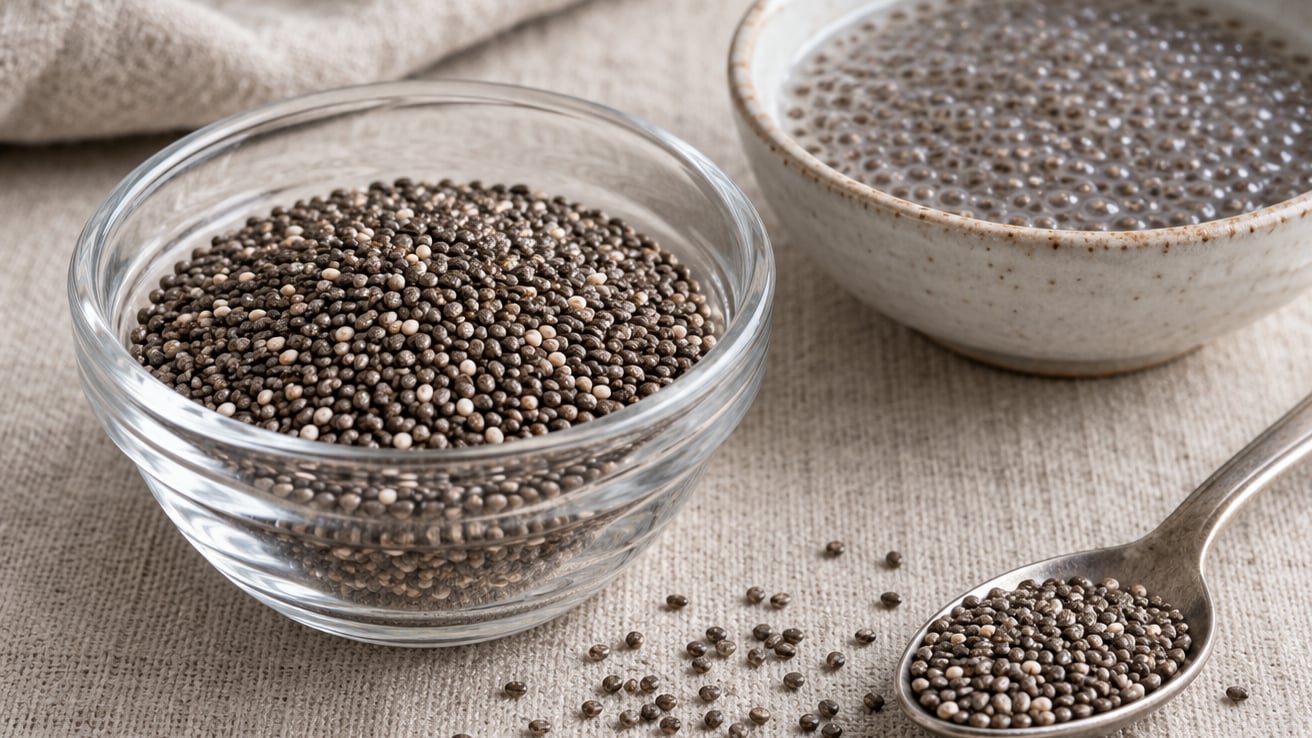
Chia seeds pack a surprising amount into a teaspoon: soluble fiber, plant protein, the omega-3 fat ALA, and several minerals. The benefits of chia seeds and how to eat them come down to one simple rule — the seeds form a gel when they meet liquid, and that gel is what makes them filling and gentle on digestion. Most people start with one to two tablespoons a day, and beginners do best with half that for the first week.
Table of Contents
- What Are the Benefits of Chia Seeds?
- What Nutrients Do Chia Seeds Contain?
- How Do Chia Seeds Affect Digestion and Satiety?
- How to Eat Chia Seeds
- Do You Need to Soak Chia Seeds Before Eating Them?
- Are Chia Seeds Safe to Eat?
- How Do You Store Chia Seeds So They Stay Fresh?
- Frequently Asked Questions
- Conclusion
What Are the Benefits of Chia Seeds?
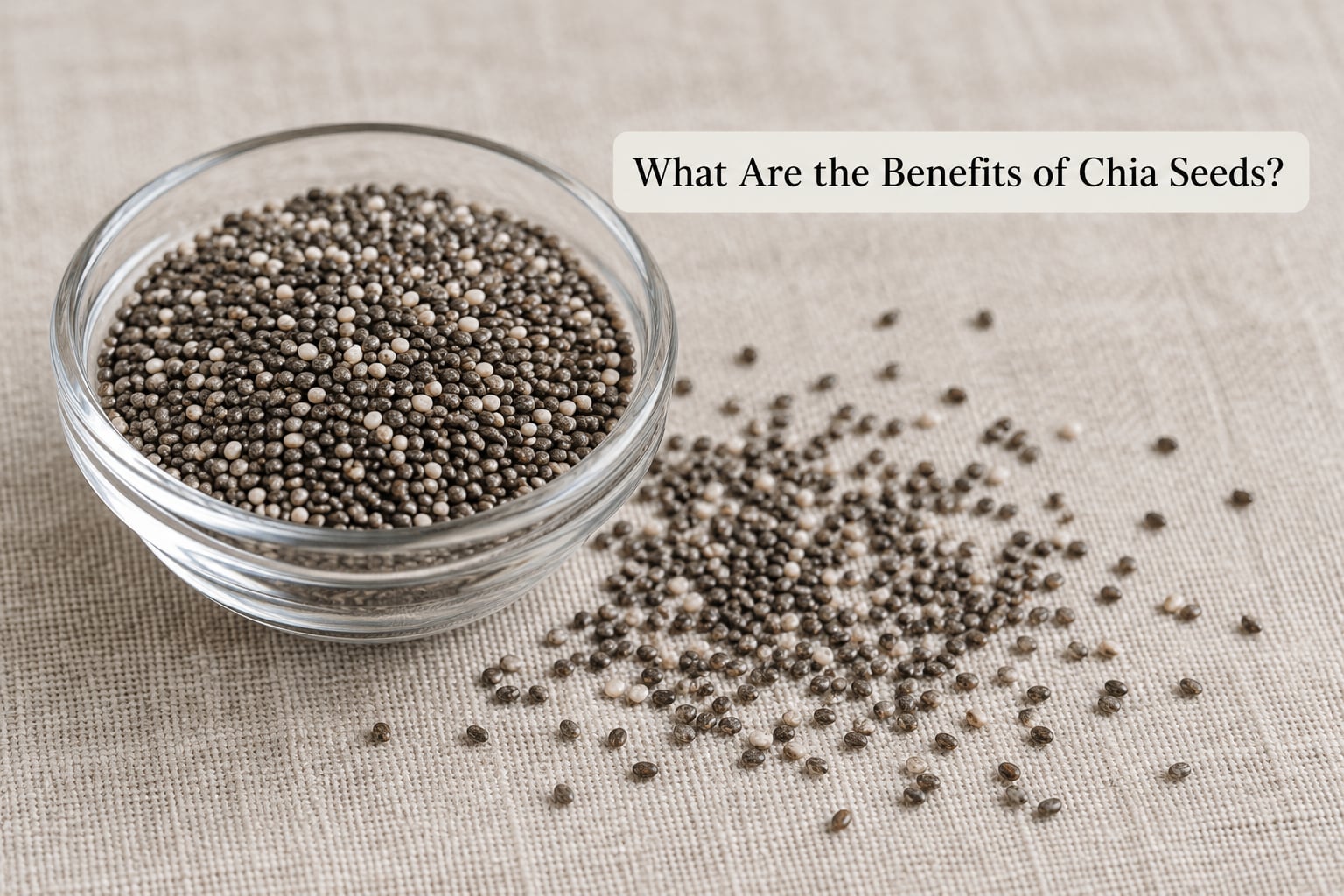
Chia seeds are the tiny edible seeds of Salvia hispanica, a plant native to Central America that Aztec and Mayan cooks used as a staple food thousands of years ago. They are naturally gluten-free, vegan, and mild enough in flavor that they work in both sweet and savory food.
The honest answer about benefits: they are a genuinely nutrient-dense addition to an ordinary diet, not a treatment for anything. Researchers studying chia have looked at appetite, blood sugar, cholesterol, blood pressure, and bowel regularity, and most of the studies are small and short. What that means in plain terms is that chia can support those areas as part of a balanced way of eating, and it cannot replace one.
Here is where the nutrients in the seed actually come from:
- Fiber for fullness and regularity. Roughly 10 grams per ounce, and most of it soluble. That is close to a third of the daily fiber most adults are advised to get.
- Plant omega-3 fat (ALA). About 5 grams per ounce, which makes chia one of the few common plant foods with a meaningful amount. Your body converts only a small share of ALA into the EPA and DHA your brain and heart use, so treat chia as a complement to oily fish rather than a replacement.
- Protein with all nine essential amino acids. About 5 grams per ounce. The amino acid profile is complete, though the total amount is modest for someone chasing a protein target.
- Minerals. Calcium, phosphorus, magnesium, and manganese, all in forms your body absorbs reasonably well when the seeds are soaked or ground.
- Antioxidant compounds. Including tocopherols and phytosterols, which is why the seeds show up in so many reviews of plant foods.
None of this is unique to chia. What is unusual is the combination: very few foods deliver fiber, ALA, protein, and minerals in a seed that costs little, keeps for months, and needs no cooking.
What Nutrients Do Chia Seeds Contain?
These figures are a general guide for one ounce, which is about 28 grams or roughly four tablespoons of whole seeds. Amounts shift a little between brands and between whole and ground seeds, so read the label on your own bag.
| Nutrient | Approximate amount per 28 g ounce | What it does in the diet |
|---|---|---|
| Calories | 138 | Very dense for the serving size |
| Dietary fiber | About 10 g | Soluble and insoluble; supports fullness and bowel regularity |
| Protein | About 5 g | Contains all nine essential amino acids |
| Fat | About 9 g | Mostly polyunsaturated, including ALA omega-3 |
| ALA omega-3 | About 5 g | Plant omega-3 the body converts partly to EPA and DHA |
| Calcium | About 180 mg | Bone and muscle function; often cited because the amount per gram is high for a plant food |
| Phosphorus | About 305 mg | Energy metabolism and bone health |
| Magnesium | About 95 mg | Muscle and nerve function |
One serving is small. A tablespoon is closer to a fifth of an ounce, so most people land somewhere between 5 and 10 grams of fiber a day from chia alone once they settle on a routine.
How Do Chia Seeds Affect Digestion and Satiety?
The gel is the mechanism. A chia seed carries a coating of soluble fiber called mucilage, and when it sits in water it swells, drawing in roughly ten to twelve times its dry weight and forming that loose gel you see in a jar of chia pudding.
That slow, water-absorbing expansion is why chia tends to keep you full. It adds bulk to the meal and slows how quickly it leaves your stomach, which is the part people notice when they are trying to hold off on a mid-morning snack.
Digestion tends to move in the helpful direction too, because soluble fiber draws water into the bowel and softens stool. Plenty of people report easier regularity once they are eating them consistently.
There is a catch, and it is the same catch for any fiber increase. Going from almost none to a couple of tablespoons in a day can mean gas, cramping, and bloating, and the effect is worse when you are not drinking enough water. Increase slowly, drink normally, and give your gut a week to adjust. Persistent discomfort is a reason to stop and talk to a doctor rather than pushing through it.
How to Eat Chia Seeds
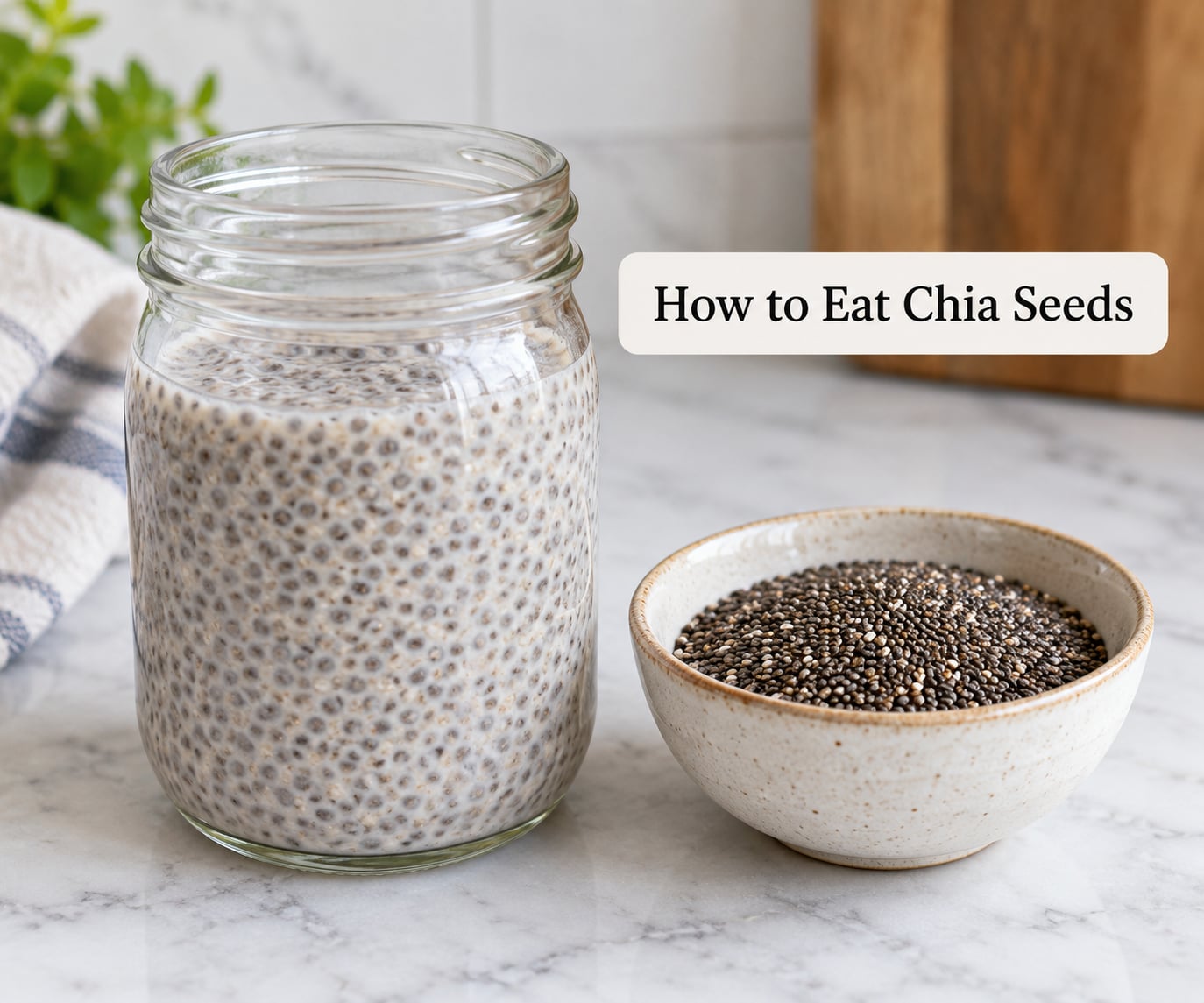
Preparation is where the gel does its work. Start with the ratio, not the recipe: one tablespoon of seeds to about half a cup of liquid, stirred, then left alone. Ten minutes gets you a soft gel you can eat straight away. Overnight in the fridge gives you the pudding texture most people make on repeat.
Beyond that, a handful of formats work reliably:
- Quick soak. Two tablespoons of seeds in a cup of water or any milk. Stir, wait ten minutes, stir again, eat. This is the fastest route from bag to plate.
- Overnight pudding. Same ratio, left in the fridge eight to twelve hours. Looser puddles need more liquid, not more stirring.
- Blended into a drink. A tablespoon in a smoothie, or blend the soaked gel itself until smooth. Blending is the fix for anyone who cannot stand the texture.
- Sprinkled on something already moist. Oatmeal, yogurt, wet cereal, cottage cheese. Dry seeds on a dry bowl of cereal tend to stay dry, which is a choking risk, so wet the food first.
- Ground into a powder. A spoonful blended with coffee beans or whatever else you grind. Ground chia goes into smoothies, oatmeal, and sauces without any gel at all.
- Stirred into hot food. Porridge, soup, stew, congee, mashed vegetables. Add off the heat so the texture stays smooth.
- Baked in. Muffins, crackers, bread, pancakes. The seeds survive the oven, though expect some crunch on top.
- Used as an egg replacement in baking. One tablespoon of seeds plus six tablespoons of water, mixed and rested ten minutes, then used in place of one egg in muffins or quick breads. It works as a binder, not as a substitute for the leavening a real egg provides.
10 Simple Ways to Add Chia Seeds to Food
Texture is the biggest reason people give up on chia, so these lean on different vehicles rather than ten versions of the same pudding.
- Overnight oats. Two tablespoons into a jar of rolled oats with milk and a spoonful of chopped dates as a sweetener, chilled overnight.
- Classic chia pudding. Two tablespoons to half a cup of milk, layered with yogurt and fruit in the morning.
- Smoothies. A tablespoon blended with fruit, spinach, and protein powder. The seeds disappear entirely.
- Warm oatmeal. Stir a tablespoon into cooked porridge with a little cinnamon. In cooked oats there is no clumping.
- Yogurt. Mixed through plain yogurt with berries, which covers the mild nuttiness well.
- Chia water. Two tablespoons in a liter bottle, shaken, drunk within a few hours before the gel at the bottom gets thick. Read more about keeping hydrated seeds and dry seeds separately.
- Fruit salad. Tossed through melon, berries, and citrus a few minutes before serving so the fruit does not go watery.
- Savory salad bowl. Sprinkled over lentils, roasted squash, and greens with a lemon dressing. Savory use is the escape hatch for anyone tired of sweet breakfast bowls.
- Energy bites. Rolled oats, nut butter, a splash of maple syrup, and two tablespoons of seeds, rolled and chilled for an hour.
- Baked goods. Stirred into muffins, banana bread, or crackers. Add a tablespoon per loaf for texture rather than bulk.
Do You Need to Soak Chia Seeds Before Eating Them?
Soaking is about texture and comfort more than safety. It is not a requirement, and plenty of people eat them dry every day without trouble. But the difference in how the seeds feel and move through you is real.
| Method | Seed to liquid ratio | Time | Resulting texture |
|---|---|---|---|
| Quick soak | 1 Tbsp to half a cup | 10 to 15 minutes | Soft gel, still slightly loose |
| Overnight soak | 2 Tbsp to 1 cup | 8 to 12 hours, chilled | Thick, spoonable pudding |
| Hot soak | 1 Tbsp to half a cup of warm liquid | 5 minutes | Fast gel, mild nutty flavor |
| Dry | None | None | Crisp, crunchy, chewy work |
| Ground | None needed | None | Powdery, no gel, disperses easily |
| Sprouted | Seeds soaked, then drained and rinsed daily | About a week | Sprouts with a softer, lighter bite |
Soaking gives you something closer to the texture people expect from a pudding, and expanded seeds are easier to chew than hard dry ones. If you want a comparison beyond puddings, our guide to how to soak nuts and seeds before eating covers the same reasoning for other seeds and nuts.
Are Chia Seeds Safe to Eat?
For most people chia seeds are a low-risk food, and the number of genuine problems is short. Here is what deserves attention.
Choking risk from dry seeds. Dry chia expands in the throat as it takes on saliva, and that is how pets have ended up in emergency rooms after eating a bag of dry seeds. Never give a pet a bag to play with, and never spoon dry seeds straight into your mouth. Liquid first, always. Soaking also reduces the risk for people who find chewing hard.
Swallowing problems. Chia can swell in someone with a narrowed esophagus or a history of swallowing difficulty, which is worth raising with a clinician before you make them a daily habit.
Allergy. Allergy to chia is uncommon but documented, and people with a seed or nut allergy have more reason to be cautious. Stop eating them and seek advice if you notice hives, swelling, or wheezing.
Medication interactions. Because chia supplies omega-3 fat and fiber, it is something to mention if you take blood-thinning, blood-pressure, thyroid, or diabetes medication. It is a conversation to have with a doctor or pharmacist, not a reason to guess. Registered dietitians can also help you fit it into a diabetes or kidney meal plan.
Digestive symptoms. Bloating, gas, and cramping are common when people jump to two tablespoons cold. Ramp up instead.
This guide is general information, not personal medical advice. If you are pregnant, managing a condition, or taking regular medication, ask your own clinician before making chia a daily habit.
How Do You Store Chia Seeds So They Stay Fresh?
Dry seeds are among the easiest foods to keep. Whole chia stored airtight in a cool, dark cupboard keeps for a long time, and the main things that shorten its life are air, moisture, and heat.
- Keep whole seeds in a sealed jar or pouch away from light and humidity. This is where most of the shelf life comes from.
- Refrigerate ground chia. Ground seeds oxidize faster because the oils are exposed, and refrigeration slows that noticeably.
- Treat hydrated seeds as a refrigerated food, not a pantry item. A jar of pudding belongs in the fridge and gets eaten within a few days.
- Use the jar within a couple of weeks if it has taken on condensation or smells slightly musty.
- Discard seeds that smell off, look damp, or show fuzzy spots. That applies to raw and prepared alike.
If you buy in bulk, how to store chia seeds so they stay fresh has the full routine, including portioning seeds into small amounts instead of dipping into the whole bag each time.
Frequently Asked Questions
How many chia seeds should I eat per day?
Most people land on one to two tablespoons a day, roughly 10 to 20 grams. Beginners do better starting with one teaspoon and doubling after a week, because the fiber jump is what causes most early discomfort. That amount delivers around 4 grams of fiber and close to 2 grams of ALA omega-3. Larger portions are possible, but more is not automatically better. If you are pregnant, managing diabetes or kidney disease, or taking regular medication, ask your doctor or a registered dietitian for a number that fits your situation.
Should chia seeds be eaten dry or soaked?
Either is fine, but soaking gives you a softer gel that is easier to chew and usually easier on digestion. Soak one tablespoon in half a cup of liquid for 10 minutes, or refrigerate a jar overnight for pudding texture. Dry seeds work too, as long as they are mixed into something moist first, such as oatmeal or yogurt. Eating a spoonful of dry seeds on an empty stomach is the version to avoid, because that is the choking risk most safety warnings are about.
Can chia seeds help with weight loss?
Chia seeds can make a calorie-controlled diet easier to stick with, because fiber, fat, and protein together keep you full longer between meals. They are not a weight loss food on their own, and no single food burns fat. Studies that have measured appetite and body weight with chia are small and short, so treat the evidence as supportive rather than conclusive. If you add chia to an unchanged diet and your portions stay the same, the seeds will not move the scale on their own.
Do chia seeds cause constipation or diarrhea?
For most people chia moves digestion toward regularity, since soluble fiber draws water into the bowel and softens stool. The opposite happens when the fiber increase is fast and fluid intake is low, which can leave someone bloated and backed up, or occasionally loose. Both directions trace back to the same cause: too much too soon. Increase to one tablespoon, drink normally, and give it about a week before adding more. If constipation continues after a couple of weeks, speak to a doctor.
Can you eat chia seeds every day?
Daily use is how most people get any benefit from them, and one to two tablespoons a day is a common routine that fits into a normal diet. Chia has a long history of use as a staple food, and no strong evidence shows that daily amounts are harmful for healthy adults. Two things change that answer: jumping straight to a large amount when you are a beginner, and taking medication that interacts with omega-3 fat or high fiber. Check with a pharmacist or doctor in that case.
Conclusion
Start with a food you already eat. Sprinkle a teaspoon into oatmeal, stir one tablespoon into yogurt, or leave a jar of overnight pudding in the fridge so breakfast is already handled. Give the seeds liquid before anything else, increase your amount slowly, and keep drinking water normally. Do that for a few weeks and judge it on appetite and digestion, not on dramatic promises.
Updated for 2026.