
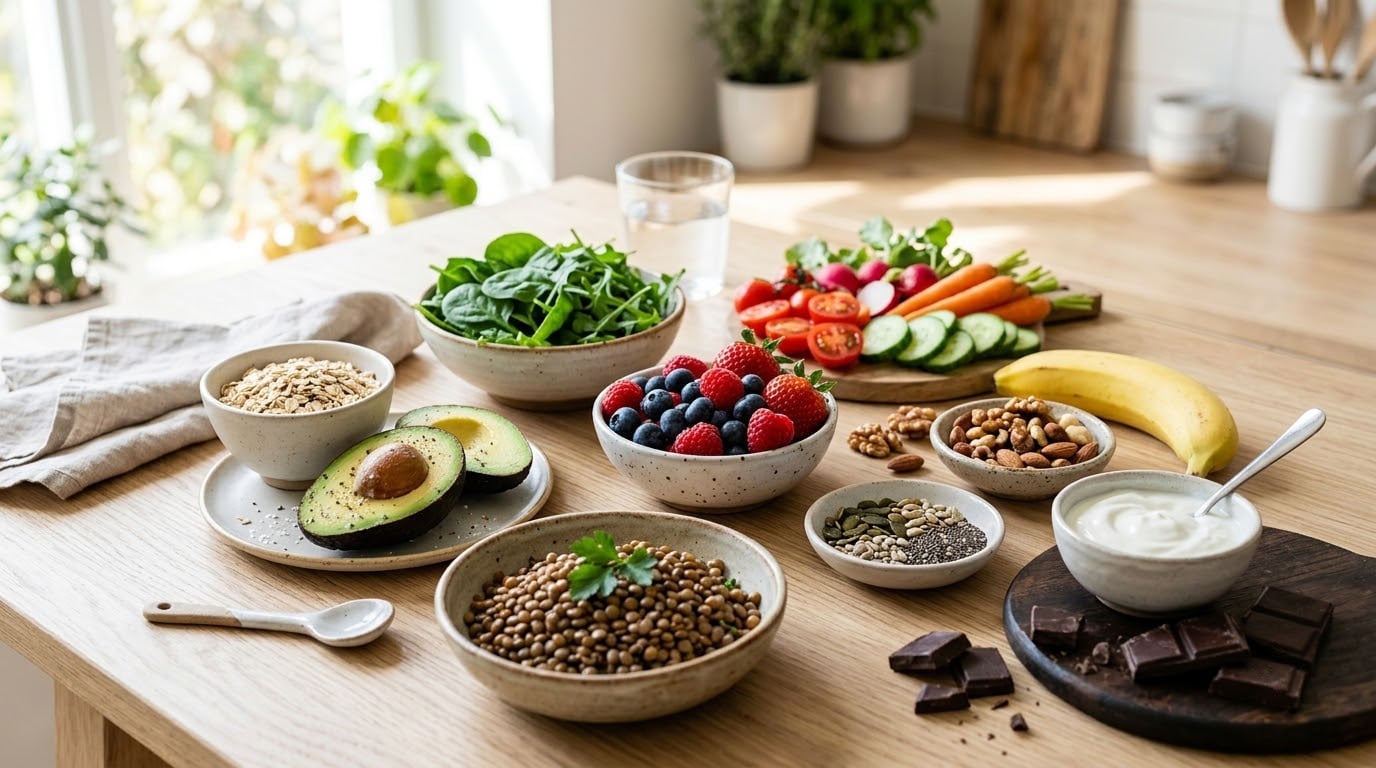
Foods that boost mood naturally are whole, nutrient-dense options that supply the raw materials your brain needs to build serotonin, dopamine and other feel-good messengers. Omega-3 fats, tryptophan, B vitamins, magnesium, fiber and live gut cultures all play a part. Think of them as support for a good day, not a treatment for anything.
I’ve eaten my way through a lot of “wellness” advice, and most of it drowns you in rules. What tends to hold up is simpler: eat regular meals built around fiber, protein, healthy fat and something colorful, and drink water. The list below covers the foods that come up most often in that research, plus the everyday ways people actually fit them in.
One note before we start. Mood changes can come from many places, including low mood that lasts weeks, poor sleep or a medical condition. Nothing here replaces care from a doctor or registered dietitian.
Table of Contents
12 Foods That Boost Mood Naturally at a Glance
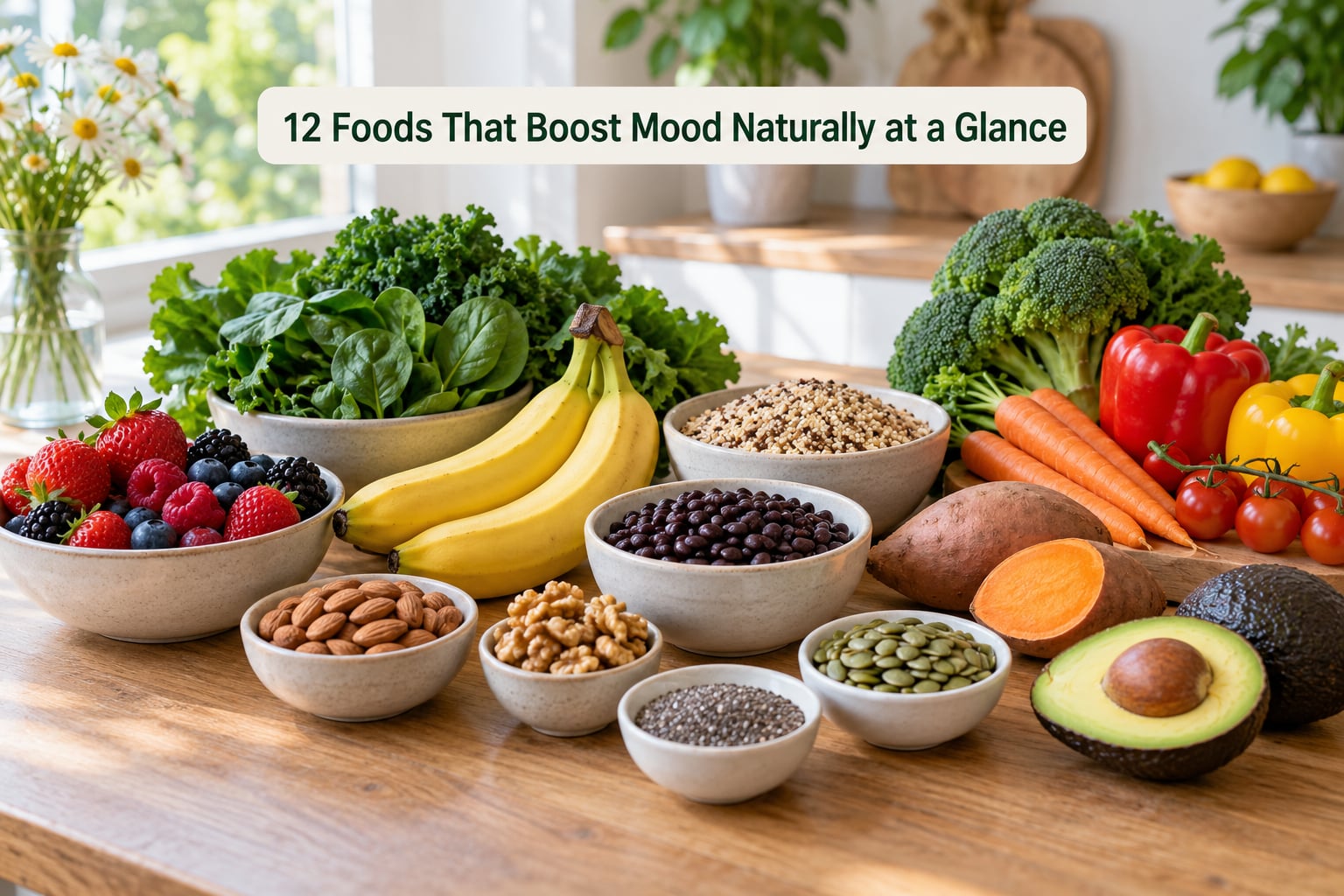
Here is the short version before the detail. Each food has a main strength, a plausible mood-related role and one easy way to work it into a normal week.
| Food | Main strength | Mood-related role | Easiest way to include it |
|---|---|---|---|
| Fatty fish | Omega-3 fats (EPA and DHA) | Supports brain cell membranes and helps keep inflammation low | Canned sardines or salmon on toast, twice a week |
| Bananas | Complex carbohydrates, potassium, vitamin B6 | Steadier energy than refined carbs during a slump | Frozen with nut butter as a snack |
| Berries | Fiber, vitamin C, anthocyanins | Adds color and polyphenols without a sugar spike | Thrown into oatmeal or yogurt |
| Leafy greens | Folate, vitamins K and C, fiber | Folate supports the synthesis of feel-good neurotransmitters | Sautéed with garlic as a side |
| Oats | Soluble fiber, complex carbohydrates | Slower digestion, gentler on energy | Overnight oats the night before |
| Lentils and beans | Plant protein, folate, magnesium | Cheap, filling, steady fuel for long afternoons | A pot of soup for the week |
| Nuts and seeds | Unsaturated fats, magnesium, zinc | Magnesium is involved in normal nerve function | A small handful as an afternoon snack |
| Avocado | Unsaturated fat, fiber, potassium | Fat and fiber together make meals more satisfying | Half an avocado on toast |
| Fermented foods | Live cultures | The gut-brain axis links digestion to mood | A spoonful of yogurt with breakfast |
| Dark chocolate | Flavanols, small amounts of fiber | Cocoa flavanols have been linked to blood flow | Two squares, eaten slowly |
| Whole grains | Complex carbohydrates, fiber, B vitamins | Keeps energy even through a long morning | Barley in a soup or salad |
| Colorful vegetables | Fiber, vitamins, plant compounds | Variety beats any single vegetable | A bag of frozen mixed vegetables |
Two more things worth naming. Certain patterns work against mood as reliably as these foods work with it: heavy sugar and refined carbs, ultra-processed snacks, excess alcohol, and too much caffeine. Most people notice the difference in how irritable or tired they feel an hour or two later.
And the food-mood link is not magic. If you want the mechanism in more detail, magnesium-rich foods and why they matter covers one of the most commonly missed nutrients.
1. Fatty Fish
Salmon, sardines, mackerel, herring and trout all supply long-chain omega-3 fats, which make up a large share of the brain cell membrane. Higher intake of omega-3s is associated in observational research with lower rates of depressive symptoms, though no single food has been shown to work on its own.
The practical part is easier than people expect. Canned sardines and mackerel cost little, keep for months and need no cooking, so if salmon is not in your budget the weekly habit does not have to die. Cook fish to an internal temperature of 145°F (63°C) and eat it with something high in fiber, such as a side of greens or a slice of whole-grain bread.
If you eat fish twice a week, favor smaller and younger options such as sardines, salmon and trout over high-mercury species, and check your local fish advisories if you eat a lot of it. Preferring not to eat fish? Walnuts, chia, flax and algae-based omega-3s cover part of the same ground from plants.
2. Bananas
Bananas are one of the few foods people will actually eat when they have no appetite. They bring complex carbohydrates, soluble fiber, potassium and a meaningful amount of vitamin B6, which is involved in making neurotransmitters.
The reason they get a bad reputation is the sugar content, and that criticism is half right. On their own, bananas are fine; the real dip comes from pairing them with something that spikes blood sugar faster. Slice one onto oatmeal, or half a banana into a bowl of yogurt with walnuts.
For a more filling snack, mash a banana with peanut butter before you leave the house. It travels well, keeps for a day in a cooler bag and beats the vending machine on a rough afternoon.
3. Berries
Blueberries, raspberries, strawberries and blackberries supply fiber along with vitamin C and anthocyanins, the plant pigments that give them their color. A cup of chopped berries typically runs around eight grams of fiber, which is more than most snacks offer.
Frozen berries are the easiest option and lose very little in the freezer. Thaw them overnight in oatmeal or blend them into a smoothie with Greek yogurt and spinach, which also softens their sharp taste.
3. Berries: Simple Ways to Eat Foods That Boost Mood Naturally
A workable routine takes about a minute a day. Keep a bag of frozen mixed berries in the freezer and a fresh punnet for the days you want texture, then use half a cup to a cup per serving.
Pair them with something with fat or fiber so they do not arrive alone: yogurt, oatmeal, cottage cheese, or a handful of walnuts. Blending them into a smoothie is the fastest route on a morning when you have not eaten yet.
If you want to go deeper on the fiber side, our guide to foods high in prebiotic fiber explains why variety matters more than any single fruit.
4. Leafy Greens
Spinach, kale, collards, Swiss chard and arugula are some of the best sources of folate in a normal diet, plus vitamins K and C, magnesium and fiber. Folate has a direct role in the production of neurotransmitters, which is one reason greens show up so often in mood and cognition research.
Four methods cover most people: a salad with olive oil and lemon, a quick sauté with garlic, a handful blended into a smoothie, or greens folded into a soup late in the cooking. Frozen chopped spinach works fine for smoothies and cooked dishes, and it keeps for months.
Watch the dressing. A salad buried in creamy dressing is mostly a fat delivery system; a tablespoon of olive oil with lemon and pepper tastes better and does the same job.
5. Oats
Oats are a whole grain with a high soluble fiber content, and that fiber slows digestion so glucose enters your bloodstream gradually. Steady energy is the mood-relevant part, and it matters most between meals rather than right after eating.
Rolled or steel-cut oats take a few minutes on the stove. For mornings when you are not cooking, mix half a cup of rolled oats with milk or yogurt, chia seeds and berries in a jar, then refrigerate overnight.
Instant oats have more processing but similar nutrition to rolled oats, so they are a reasonable choice on a busy morning. Watch for added sugar, and check the label since flavors like maple and honey can carry a fair amount.
6. Lentils and Other Legumes
Lentils, chickpeas, black beans and split peas are among the cheapest sources of plant protein, folate, magnesium and fiber available in a grocery store. That combination is unusual: fiber plus protein plus minerals in one can.
Cook a big pot of soup on a Sunday and you have lunch sorted. Lentil soup, black bean chili and a chickpea grain bowl with quinoa and roasted vegetables all hold well for three or four days in the refrigerator.
Beans on toast is the cheapest version of this and worth saying out loud. It is a genuinely balanced quick meal, not a compromise.
7. Nuts and Seeds
Walnuts, almonds, cashews, pumpkin seeds, sunflower seeds, chia and flax bring unsaturated fats, protein, magnesium, zinc and fiber to a meal. Pumpkin seeds are one of the more useful everyday options, since magnesium and zinc both show up in almost every nutrient list in this space.
Portion size matters more than anything else here, because nuts are easy to eat by the handful without noticing. A small serving, roughly 30 grams or a heaped tablespoon of seeds, is plenty for a snack.
Store them somewhere cool and dark, ideally in the fridge or freezer. Those oils go rancid at room temperature within a few months, and rancid nuts taste bad and lose their nutrients. If you want the whole story on this one, read about magnesium-rich foods and why they matter.
8. Avocado
Avocado is mostly monounsaturated fat with fiber and potassium tucked in around it. Fat and fiber traveling together is what makes a meal or snack satisfying for longer, which in practical terms means fewer between-meal crashes.
There are four easy uses: half an avocado on toast with a squeeze of lemon, cubes in a salad with chickpeas, mashed into a taco or burrito, or blended into a smoothie with banana and milk. Add lemon or lime so it stays green and fresh for a day or two.
Choose whichever ripeness suits the day: firm for later in the week, ready to eat for today. If the cost adds up, buying smaller ones more often works better than letting half of them go brown.
9. Fermented Foods
Yogurt, kefir, sauerkraut, kimchi, miso, tempeh and kombucha all contain live cultures, and the gut-brain axis describes the constant two-way conversation between gut bacteria and the nervous system. Gut bacteria also produce a substantial share of the body’s serotonin, which is why digestive health and mood are so often discussed together.
Read the label and look for “live and active cultures” and a count of colony-forming units. The listing needs a number and a date, and it needs to say live cultures after pasteurization, since many products are heated after fermenting.
Go slowly. If you normally eat very little fiber, introducing several fermented foods at once can cause real discomfort, and more is not better. Start with a few spoonfuls of yogurt or a spoonful of sauerkraut with a meal, and add one new item at a time. Our walkthrough on how to add fermented foods to your diet covers a sensible ramp-up.
10. Dark Chocolate
Cocoa flavanols have been linked in small trials to improved blood flow and mood measures, and a modest square or two is an easy thing to enjoy. It also contributes a little magnesium and fiber.
Two details decide whether a bar is worth eating. First, portion: a square or two, eaten slowly, is plenty and pairs well with a handful of walnuts. Second, the ingredient list. Bars marketed as dark chocolate sometimes lead with cocoa butter and sugar and use very little cocoa, so check the cocoa percentage and the order of ingredients.
Milk chocolate contains milk solids and considerably more added sugar. It is fine as a treat; it just does not carry the same argument.
11. Whole Grains
Oats, barley, brown rice, quinoa, whole wheat and farro all deliver complex carbohydrates, fiber and B vitamins. The advantage over white bread and white rice is the fiber, which slows absorption and softens the mid-morning dip that so many people complain about.
Read the ingredient list and look for “whole” as the first word. Some brown breads and seeded loaves are mostly refined flour with a few seeds on top.
These grains work best combined rather than alone: barley with beans and vegetables in a soup, brown rice with black beans and salsa, quinoa with roasted vegetables and chickpeas. That pairing gives you complex carbohydrates, protein and fiber in one bowl.
12. Colorful Vegetables
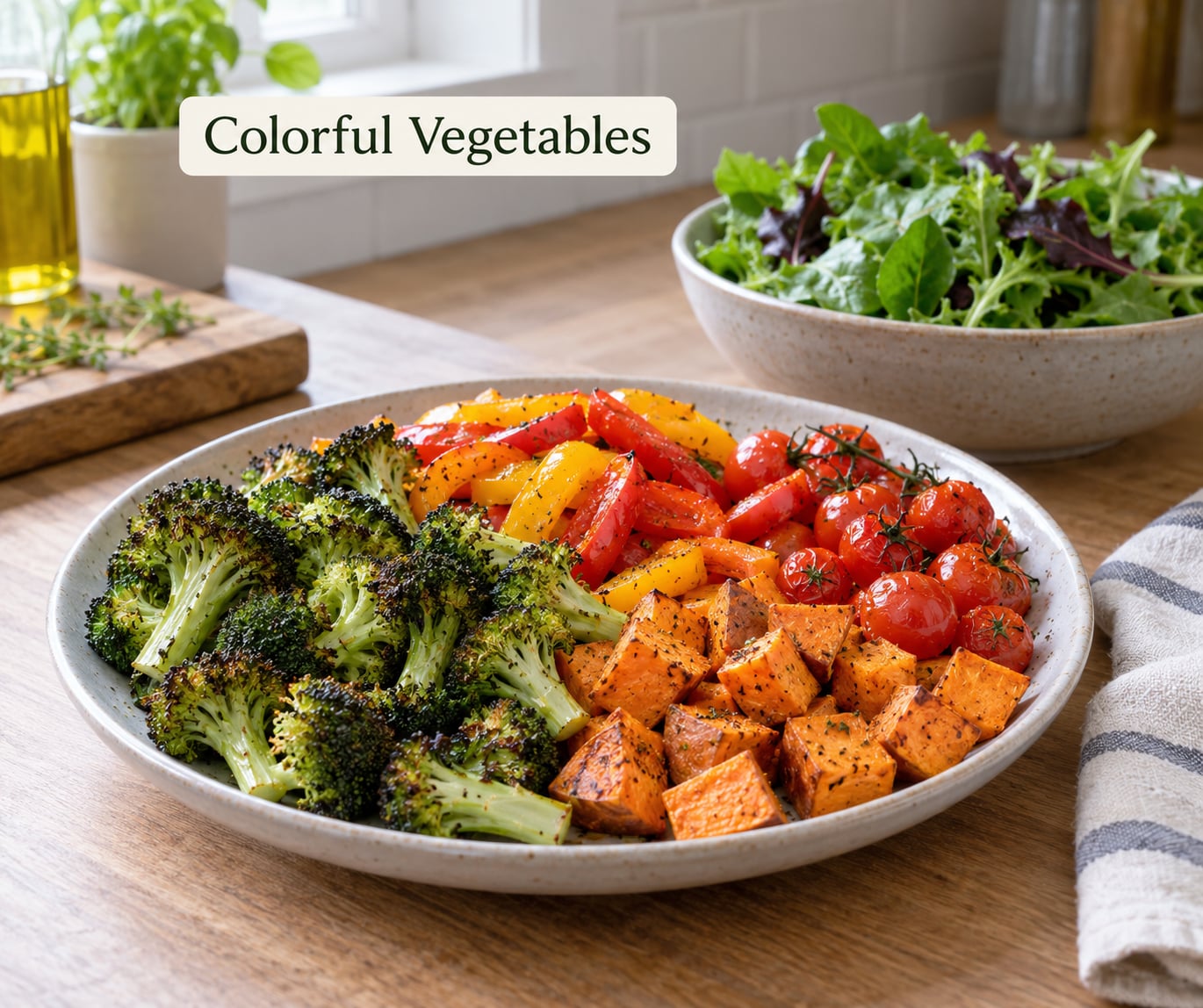
Broccoli, sweet potato, peppers, tomatoes, carrots, squash and leafy greens all contribute fiber, vitamins, minerals and plant compounds. Variety is the point here, because no single vegetable provides everything, and eating by color is a simple way to get breadth without a list to shop from.
Roasting is the fastest route: toss broccoli, peppers and sweet potato cubes with oil, salt and pepper, then roast at 425°F (220°C) until the edges brown. Soups, sheet-pan trays and stir-fries all take the same vegetables and very little work.
Frozen mixed vegetables are a legitimate shortcut, and the freezer is one of the best-equipped parts of most kitchens. Fresh for texture and color, frozen for the months when you are not shopping much.
Frequently Asked Questions
Does food actually affect your mood?
It does, though usually as one factor among many. What you eat affects blood sugar, gut bacteria and the raw materials for neurotransmitters, all of which influence how you feel within hours. Researchers also find that people eating more Mediterranean-style diets report better mental health. Food is a supporting habit, not a cure for depression or anxiety.
What improves mood quickly?
For a faster lift, pair complex carbohydrates with protein and fiber rather than reaching for sugar alone. Oats with berries and yogurt, banana with peanut butter, or whole-grain toast with avocado all take a few minutes and hold steady longer than a sweet snack. Caffeine helps some people within half an hour, but excess worsens anxiety and sleep.
What to eat for dopamine and serotonin?
Serotonin is made from tryptophan, found in eggs, dairy, poultry, fish, soy, beans, nuts and seeds. Dopamine is built from tyrosine, which is abundant in protein foods, and dopamine release is also tied to anticipation and reward, so enjoyable routines matter. Fiber-rich plants, omega-3 fats and fermented foods support both pathways indirectly through the gut-brain connection.
What to eat for mental fatigue and brain fog?
Long stretches of poor concentration often track with unstable blood sugar and skipped meals. A steady pattern helps more than any single food: protein and complex carbohydrates at breakfast, a handful of nuts or fruit mid-afternoon, water through the day, and enough sleep. If fog persists despite that, it is worth raising with a doctor, since thyroid, anemia and vitamin issues can look similar.
What is the recommended diet for people with depression?
No single diet treats depression, and guidelines generally point toward a Mediterranean-style pattern as the best-studied option: vegetables, fruit, legumes, whole grains, nuts, olive oil, fish, with limited refined sugar and ultra-processed food. Research links this pattern with fewer depressive symptoms, but it complements treatment rather than replacing therapy, medication or professional support.
Are mood boosting foods a replacement for medication?
No. Food supports your body and can improve how you feel day to day, but it is not a substitute for prescribed treatment of depression, anxiety or any other condition. Some foods and supplements also interact with medications, which is another reason to check with a doctor or pharmacist before making significant changes.
A Simple Place to Start
Pick two foods from this list that you already like and add them to meals you are already eating. Frozen berries in your morning yogurt and a pot of lentil soup on a Sunday are enough to start. Change one variable at a time, and give it a couple of weeks.
Keep a short food and mood diary while you do it: what you ate, when, how you slept and how you felt in the afternoon. Patterns show up quickly, and people often find their own triggers are personal rather than universal. Plenty of readers have reported that keeping a diary reveals which meals leave them crashing and which hold them steady through the afternoon.
If mood has been low most days for more than two weeks, if you have lost interest in things you used to enjoy, or if you are struggling with sleep, appetite or concentration, please talk to a doctor. A registered dietitian can also help you put together an eating pattern that fits your budget, your cooking time and any medical conditions you are managing. Food that supports your mood is worth having. It is not a substitute for care.