
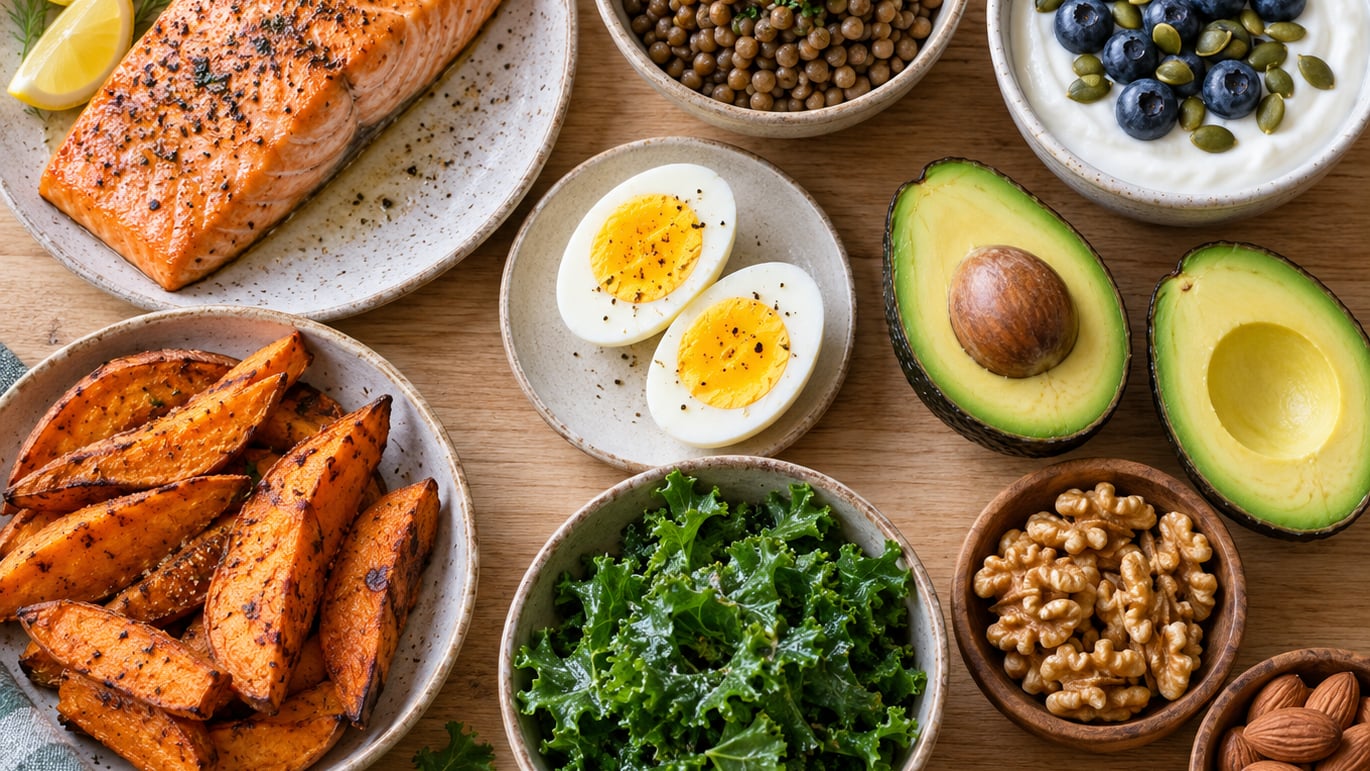
Hair grows from a protein called keratin, built inside follicles that cycle through growth, transition and rest. The foods that support healthy hair growth are the ones rich in protein, iron, zinc, omega-3 fats and vitamins A, C and D — the raw materials your follicles actually run on.
That is the short answer. The longer version is that diet matters most when something is running low. Follicles need amino acids to make keratin, iron to build the hemoglobin that carries oxygen to the root, and antioxidants to protect growing cells from oxidative stress. Miss one of those for months and shedding can pick up.
What food cannot do is override genetics, hormones, medication or an underlying condition. Androgenetic alopecia, thyroid problems and postpartum hormonal shifts are not food problems. Think of the list below as removing a floor under your hair, not as a treatment.
Table of Contents
- Foods That Support Healthy Hair Growth at a Glance
- 1. Salmon
- 2. Eggs
- 3. Lean Beef or Beef Liver
- 4. Lentils
- 5. Chickpeas
- 6. Greek Yogurt
- 7. Nuts and Seeds
- 8. Avocado
- 9. Sweet Potatoes
- 10. Leafy Greens
- 11. Blueberries
- 12. Fortified Dairy Alternatives With Key Nutrients
- 13. Shellfish
- 14. Beans and Tofu
- 15. Whole Grains
- Frequently Asked Questions
- How to Start a Hair-Supportive Eating Pattern
Foods That Support Healthy Hair Growth at a Glance
Here is the full list with the nutrient doing the work and one realistic way to serve each food. Scroll to the numbered sections below for the detail on each one.
| Food | Key nutrients for hair | One simple way to use it |
|---|---|---|
| Salmon | Protein, omega-3 EPA and DHA, vitamin D | Baked with broccoli and lemon |
| Eggs | Protein, biotin, zinc, selenium, choline | Boiled eggs with spinach |
| Lean beef or liver | Heme iron, zinc, vitamin B12, protein | Grilled sirloin with lentils |
| Lentils | Plant protein, iron, zinc, folate | Red lentil soup with tomato |
| Chickpeas | Protein, iron, zinc, folate | Hummus with carrot sticks |
| Greek yogurt | Protein, vitamin B12, live cultures | Plain yogurt with berries and seeds |
| Nuts and seeds | Omega-3 ALA, zinc, vitamin E, magnesium | Walnuts and pumpkin seeds in oatmeal |
| Avocado | Monounsaturated fat, vitamin E, folate, fiber | Sliced on wholegrain toast |
| Sweet potato | Beta-carotene (vitamin A), fiber, potassium | Roasted cubes with black beans |
| Leafy greens | Folate, iron, vitamin A, antioxidants | Kale and quinoa salad with lemon |
| Blueberries | Vitamin C, anthocyanins | Blended into overnight oats |
| Fortified plant milks | Vitamin D, B12, calcium, sometimes protein | Check the label before buying |
| Shellfish | Zinc, iron, B12, protein | Mussels with wholegrain pasta |
| Beans and tofu | Plant protein, iron, zinc, calcium | Black bean tacos with lime |
| Whole grains | Fiber, B vitamins, iron, magnesium | Quinoa with roasted vegetables |
Two clarifications before the list. First, no single food on this table causes hair to grow, and the effect of adding more of a nutrient to an already adequate diet is close to nil. Second, hair responds slowly: scalp hair grows roughly half an inch a month, so anything you change today takes a few months to become visible at the ends.
1. Salmon
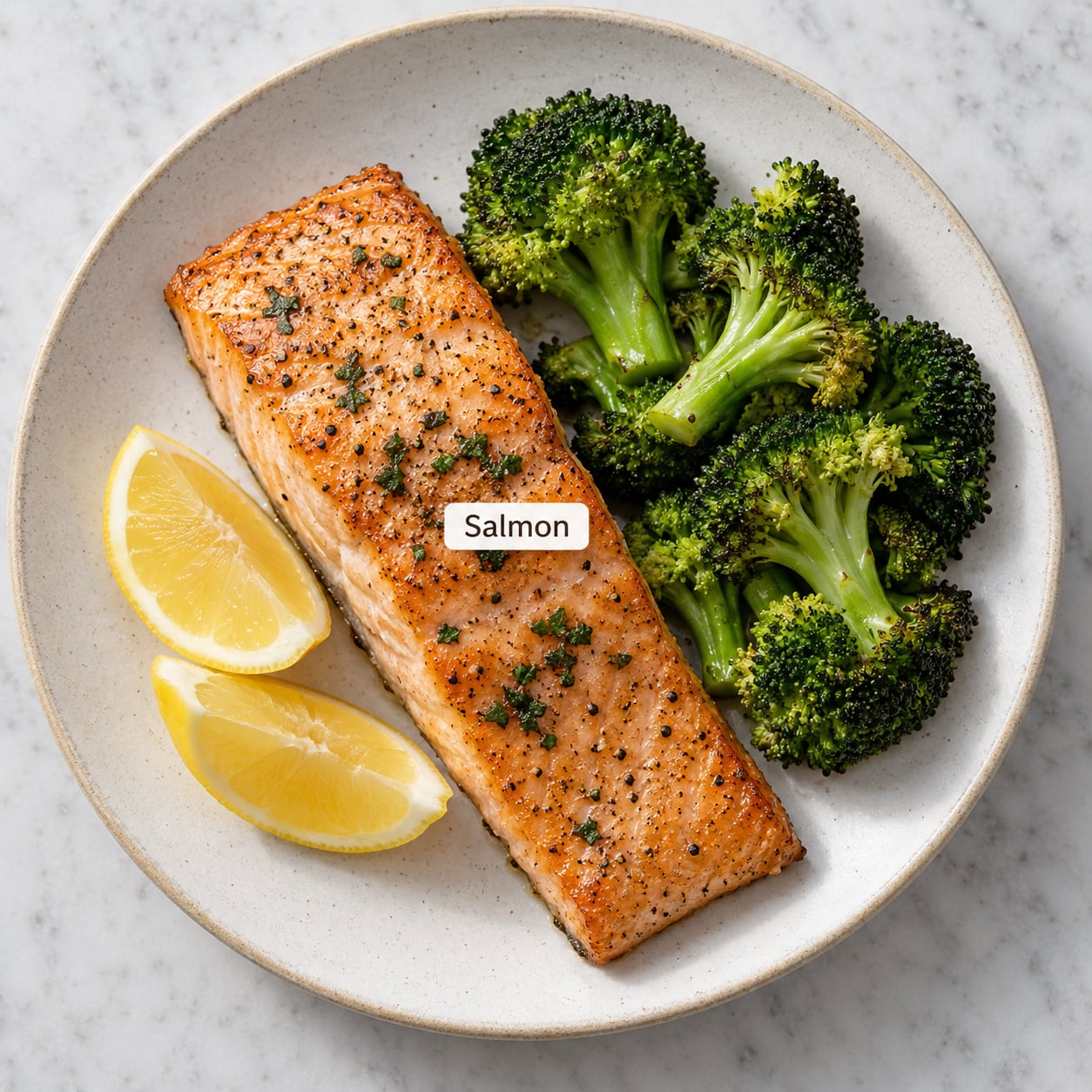
Salmon leads this list because it delivers three of the four things hair needs in one serving: complete protein for keratin, omega-3 fats for scalp and follicle lubrication, and vitamin D, which most diets fall short on. Fatty fish is also one of the few reliable food sources of EPA and DHA.
Those long-chain omega-3s matter more than the plant version. ALA from walnuts and flax has to be converted by the body before it does anything, and conversion is inefficient. EPA and DHA arrive ready to use, which is why fatty fish sits above the nut and seed options when hair and scalp are the goal.
Keep it simple. A 4-ounce fillet baked at 400°F until the flakes separate, next to broccoli and a lemon wedge, covers protein, omega-3s and a vitamin C source for iron absorption in the same plate. Canned salmon works too and is a lot easier on a Tuesday.
If you don’t eat fish, one to two tablespoons of ground flaxseed or a handful of walnuts gets you the plant version, just with lower omega-3 yield. Food is the sensible route here; high-dose fish oil supplements are worth discussing with a doctor rather than adding on your own.
2. Eggs
Eggs are the most efficient single food on this list. One large egg carries roughly 6 grams of complete protein, a meaningful share of the daily biotin requirement, plus zinc, selenium, choline and B12 in a package most other foods don’t assemble.
Biotin is vitamin B7, and it is genuinely involved in keratin synthesis. That’s the mechanism, and it’s also where the marketing runs ahead of the evidence. True biotin deficiency is rare, and when someone is already getting enough, more biotin does not grow more hair. Deficiency does produce hair changes, which is why eggs help and why they don’t work as a cure.
Two boiled eggs with a handful of spinach and olive oil is a five-minute breakfast with protein, biotin, iron and folate in it. Egg and avocado on wholegrain toast covers the same ground if mornings are rushed.
3. Lean Beef or Beef Liver
Beef is the most concentrated food source of heme iron, the form your body absorbs most easily, and it brings zinc, B12 and complete protein with it. That combination is why iron deficiency is the most common nutritional finding in people reporting unexplained shedding.
Ferritin is the protein that stores iron in your blood. Stores can run low for a long time before hemoglobin falls into anemia, and many people notice hair thinning during that earlier window without ever being formally deficient on a lab report. Dermatologists and trichologists often aim for a higher ferritin target than general health guidelines do, frequently somewhere in the 70 to 100 ng/mL range, precisely because hair responds to iron stores rather than to hemoglobin. That is a conversation to have with your own clinician, since target numbers vary and over-supplementing iron is not harmless.
Liver is the most concentrated version of the same idea, but portion size matters. A small serving once or twice a week is plenty; eating it daily is a route to too much preformed vitamin A, and excess vitamin A has been linked to hair loss rather than hair gain.
Grilled sirloin alongside a lentil dish works well, because pairing heme iron with vitamin C improves absorption. If you eat beef, keep it lean and moderate rather than making it the anchor of every meal.
4. Lentils
Lentils deliver plant protein, iron, zinc and folate in a package that costs little, cooks in twenty minutes and reheats well. They are the most practical way for a person eating plant-based to hit protein and iron targets on a normal weeknight budget.
Plant iron is non-heme, which absorbs less readily than the heme iron in meat. Vitamin C closes most of that gap: lemon juice, tomato, bell pepper or a side of berries alongside lentils meaningfully improves how much iron you take up. If iron is your specific concern, our guide to iron-rich plant foods and how to absorb more iron goes into the pairing and timing details.
A red lentil soup with tomatoes, cumin and a squeeze of lemon is the template. The lemon is not decoration, it is the absorption step. Lentil and sweet potato bowls with a lime dressing do the same job and travel well for lunch.
5. Chickpeas
Chickpeas bring protein, iron, zinc and folate, and they are more versatile than most people give them credit for. The honest framing matters here: adding chickpeas to a diet that already has enough protein and iron will not change hair growth. They earn their place by making a plant-based diet adequate, which is a real problem for a lot of people who cut out animal foods without replacing the nutrients.
Hummus with carrot and cucumber sticks is the fastest use. Roasted chickpeas make a portable snack that beats a bag of chips, and a chickpea salad with cucumber, tomato and lemon covers the vitamin C pairing in one bowl.
Garbanzo pasta is a weeknight shortcut, and it does count toward the day’s protein and fiber. Portion size still applies, since chickpeas are calorie-dense enough that a whole bag is a meal in itself.
6. Greek Yogurt
Plain Greek yogurt is one of the few foods that hits protein, B12 and live cultures at once. The protein content runs roughly double that of regular yogurt, and B12 is a nutrient that shows up in a lot of hair complaints, particularly among vegan and vegetarian eaters.
The live cultures are a bonus rather than the main event. There’s a reasonable case that a gut that handles protein and iron well helps absorption, though that’s a chain of inference rather than a proven hair effect. Our piece on adding fermented foods to your diet covers the wider pattern if that interests you.
Plain full-fat yogurt topped with blueberries, pumpkin seeds and a spoon of oats makes a breakfast with protein, iron, omega-3s and antioxidants covered. Check the label for added sugar, since flavored varieties routinely carry as much sugar as a dessert. If dairy bothers your stomach, fortified soy milk with added protein works comparably.
7. Nuts and Seeds
Seeds and nuts are the most concentrated snack available, and pumpkin seeds in particular have direct human trial data behind them. A 2016 randomized controlled trial in 76 men with male pattern hair loss gave 400 mg of pumpkin seed oil daily for 24 weeks and measured a 40 percent increase in hair count against 10 percent in the placebo group. That’s a real outcome, in a real population, and it belongs in a list that otherwise leans on nutrient logic.
For everything else, nuts and seeds supply omega-3 ALA, zinc, vitamin E, magnesium and a surprising amount of protein per calorie. Pumpkin seeds are among the better zinc sources in the plant world, and sunflower seeds carry vitamin E, which protects scalp tissue from oxidative damage.
Portion size is the whole game here, because these are calorie-dense and easy to overeat. A tablespoon of pumpkin seeds on oatmeal, or a small handful of walnuts and almonds as an afternoon snack, is plenty. If your hair is thinning from a pattern-loss diagnosis, a pumpkin seed oil supplement is a question for your doctor rather than a self-prescription. Avoid heavily roasted seeds where you can, and eat them raw or dry-roasted.
8. Avocado
Avocado supplies monounsaturated fat, vitamin E, folate, potassium and fiber, and its job in a hair-supportive diet is mostly about balance. The fat and fiber slow digestion and make a meal satisfying, which helps you keep eating consistently rather than crashing into the next snack.
It does not stimulate follicles. Anyone claiming avocado grows hair directly is overselling it, though it is a genuinely useful food that makes a plate of beans or whole grains into something you’d actually eat.
Sliced on wholegrain toast with a poached egg works. Blended into a smoothie with yogurt, berries and spinach, it covers four items from this list at once. Halved and topped with black beans and lime, it becomes the bean dish from item 14 without extra work.
9. Sweet Potatoes
Sweet potato is a dense source of beta-carotene, which the body converts to vitamin A as needed, along with fiber, potassium and vitamin C. Vitamin A supports normal sebum production and the skin around the follicle, so the orange-fleshed varieties are worth keeping in rotation.
The conversion is regulated, which matters for a reason. Getting vitamin A from food carries essentially no overdose risk because your body slows the conversion. High-dose vitamin A supplements are a different matter entirely, and excess has been associated with hair loss and liver injury. Food, not capsules, is the safe route for this nutrient.
Roasted sweet potato cubes with black beans, lime and cilantro is a complete plate. It also pairs a vitamin A source with a vitamin C source, which is the habit worth building. Sweet potato fries and baked wedges are the same food with different heat treatments.
10. Leafy Greens
Spinach, kale, collards and Swiss chard supply folate, iron, vitamin A precursors, vitamin K and a spread of antioxidants. They’re also low in calories and volume, which makes them easy to eat in quantities that actually move a nutrient number.
Two notes worth keeping. Spinach iron is non-heme and only moderately absorbed, so pair it with vitamin C rather than eating it in isolation, and be aware that very large vitamin K intakes can interfere with warfarin and similar blood thinners. If you take one of those, ask your prescriber before changing your vegetable intake substantially.
A kale and quinoa salad with lemon dressing, chickpeas and pumpkin seeds combines three items on this list. Wilted spinach with eggs covers the same nutrients in a five-minute pan. The lemon or any citrus in the dressing is doing real work on absorption.
11. Blueberries
Blueberries bring vitamin C and anthocyanins, the pigments that give them their color. Anthocyanins act as antioxidants in the body, and oxidative stress is one of the documented pressures on hair follicles, particularly in the scalp tissue of people with androgenetic alopecia.
That is the honest size of the claim. Blueberries do not cause hair growth, and no fruit does. What they do is contribute vitamin C to a pattern that also supports iron absorption, which is the practical reason to include them.
Blended into overnight oats with yogurt, they turn three items on this list into breakfast. Frozen berries work as well as fresh in most applications and don’t spoil. If you want more vitamin C per serving, guava, kiwi, papaya and citrus all deliver considerably more, and vitamin C also plays a direct role in collagen synthesis around the follicle.
12. Fortified Dairy Alternatives With Key Nutrients
Fortified plant milks and other dairy alternatives can hold the same nutrient line as dairy, but only if the label backs it up. Soy, oat, almond and pea milks differ substantially: some deliver 7 or 8 grams of protein per cup, others deliver 1, and only fortified versions contain added vitamin D, B12 and calcium.
Read the nutrition panel rather than the front of the carton. Look for vitamin D, B12, calcium and a protein figure, and check whether B12 comes from a fortified source rather than being listed at a meaningless trace amount. Unfortified almond and rice milks are often close to water with a handful of calories added.
For anyone avoiding dairy, a fortified soy milk with added protein is the closest nutritional match to cow’s milk, and soy also carries isoflavones studied for effects on hair. Cheeses, plant yogurts and fortified spreads follow the same rule: check the label, because “plant-based” on the front means nothing about what is inside. If you’re not replacing dairy at all, this section is mostly about the yogurt in item 6.
13. Shellfish
Oysters, clams, mussels and scallops are the most zinc-dense foods available, and zinc supports tissue repair and the oil glands around each follicle. A single serving of oysters can supply a large multiple of the daily zinc requirement, along with iron, B12 and complete protein.
Shellfish also carries a real warning. It is one of the most common seafood allergens, and people who react to it don’t always identify shellfish as the cause, so anyone with unexplained hives, swelling or digestive symptoms after eating should raise it with a doctor. Cooking doesn’t remove the allergen.
Steamed mussels with wholegrain pasta, garlic and a squeeze of lemon is a fifteen-minute meal covering zinc, iron, B vitamins and fiber. Canned smoked oysters on crackers are a zinc-dense snack. Don’t self-prescribe zinc supplements, though: high doses interfere with copper absorption and cause hair loss, which is the opposite of what you were aiming for.
14. Beans and Tofu
Beans and calcium-set tofu are the cheapest reliable protein in most kitchens, and they bring iron, zinc, magnesium and fiber alongside it. Tofu made with calcium sulfate is a meaningful calcium source, and both ingredients slot into meals that would otherwise be carbohydrate-heavy.
Same absorption caveat as lentils: non-heme iron is better used when a vitamin C source is on the plate. Black bean tacos with cabbage slaw, lime and avocado cover protein, iron, vitamin C, folate and healthy fat in one assembly, and it’s the kind of dinner that scales to four people without effort.
A tofu stir-fry with broccoli, bell pepper and brown rice does the same, and the pepper is there on purpose. Chickpeas, lentils, beans and tofu overlap on nutrients, so rotating between them across a week beats eating the same one daily, both for variety and for how the amino acids complement each other.
15. Whole Grains
Oats, quinoa, brown rice and whole-grain bread supply the carbohydrate base most balanced meals are built on, along with fiber, B vitamins, iron and magnesium. They matter here less as a hair nutrient and more as a stabiliser. Refined carbohydrates displace the protein, iron and zinc-rich foods that do the actual work, and a diet that swings high and low on blood sugar tends to displace them consistently.
Evidence for a Mediterranean-style or lower-glycemic pattern comes largely from observational work on hormonal and androgenetic hair thinning, where the pattern of eating correlated with outcomes even though it didn’t prove cause and effect. It is a reasonable default anyway, mostly because it points toward the foods earlier on this list.
Overnight oats with yogurt, berries and pumpkin seeds builds four items into breakfast. Quinoa with roasted vegetables and black beans makes a bowl that holds two of them. Gluten-free is not a hair strategy unless there’s a medical reason for it, and the gluten-free versions of these grains tend to be lower in fiber and micronutrients than what they replace.
Frequently Asked Questions
What foods are best for hair growth?
The most consistently useful foods are those covering protein, iron, zinc, omega-3 fats and vitamins A, C and D: eggs, fatty fish like salmon, lean beef or liver, lentils and beans, Greek yogurt, pumpkin seeds and nuts, sweet potato, leafy greens, shellfish and berries. The order matters less than coverage. Foods work best when they correct a shortfall, so bloodwork is more useful than guessing.
Can food stop hair thinning?
Food can help when thinning is driven by a deficiency in iron, zinc, vitamin D, B12, protein or biotin, and those cases often improve once the shortfall is corrected. Food cannot stop androgenetic alopecia, which is genetic and hormone-driven, and it does not address shedding from thyroid conditions, autoimmune disease or medication. If shedding is sudden, patchy or persistent, get a diagnosis before changing your diet.
How long does it take to see hair-growth results after changing my diet?
Hair grows about half an inch a month, and new growth takes time to become visible at the ends. Most people need three to six months of consistent eating before they can tell whether anything has changed, and shedding often takes a few months to slow after iron or protein levels correct. Set expectations at six months. If you see no change after a year of genuinely adequate eating, the cause is unlikely to be nutritional.
Are biotin-rich foods or supplements better for hair growth?
Food is the better first move. Biotin is involved in keratin synthesis, but true deficiency is uncommon, and when you already get enough from eggs, nuts and liver, extra biotin does not speed up growth. High-dose biotin supplements interfere with lab tests including thyroid and hormone assays, which has caused real diagnostic problems. Take biotin only if a deficiency is confirmed, and check with a doctor first.
What deficiencies can cause excessive hair shedding?
Iron is the most common one, often as low ferritin with normal hemoglobin, and many people notice thinning before any anemia diagnosis. Others include zinc, vitamin D, B12, protein and selenium, along with thyroid and autoimmune conditions that are not nutritional at all. Persistent shedding, visible widening at the part, smooth bald patches or scalp pain all warrant a doctor’s appointment rather than a diet change.
When should I see a doctor about hair loss?
See a doctor if shedding starts suddenly, lasts more than a few months, comes in distinct patches, or comes with scalp pain, itching, redness or scaling. Also get checked if you have heavy periods, rapid weight change, a new medication, recent surgery, or noticeable fatigue alongside the shedding. A dermatologist or clinician can run bloodwork for ferritin, thyroid function, B12, vitamin D and zinc and point you at the actual cause.
How to Start a Hair-Supportive Eating Pattern
The first step is a pattern, not a superfood. Build each meal around a protein source, pair plant iron with something high in vitamin C, and keep omega-3s, eggs or oily fish and a wide range of vegetables and fruit in the rotation rather than eating the same handful of foods every day.
Drink enough water and eat water-rich produce. Hair is partly water, and dehydration shows up in scalp dryness and breakage before it shows up anywhere you can measure it. Beyond food, a scalp that gets handled gently breaks less hair, which is a different intervention from nutrition entirely — our guide to using coconut oil for an overnight hair mask covers the overnight version for anyone who wants to try it.
Skip the supplement stack unless a blood test points at something specific. Excess vitamin A, excess zinc and high-dose biotin all have documented downsides, and some of them cost you hair rather than adding it.
If shedding is sudden, patchy, painful, or has run for more than a few months, book an appointment before you change anything on this list. A clinician can check ferritin, thyroid function, B12, vitamin D and zinc, and tell you whether food is even the right conversation. A registered dietitian is the right second stop for turning a bloodwork result into actual meals.
What to do first, concretely: pick one protein anchor for breakfast, one iron-rich food twice a week paired with a vitamin C source, and one fatty fish or seed source per week. Keep that up for six months before you judge it.