
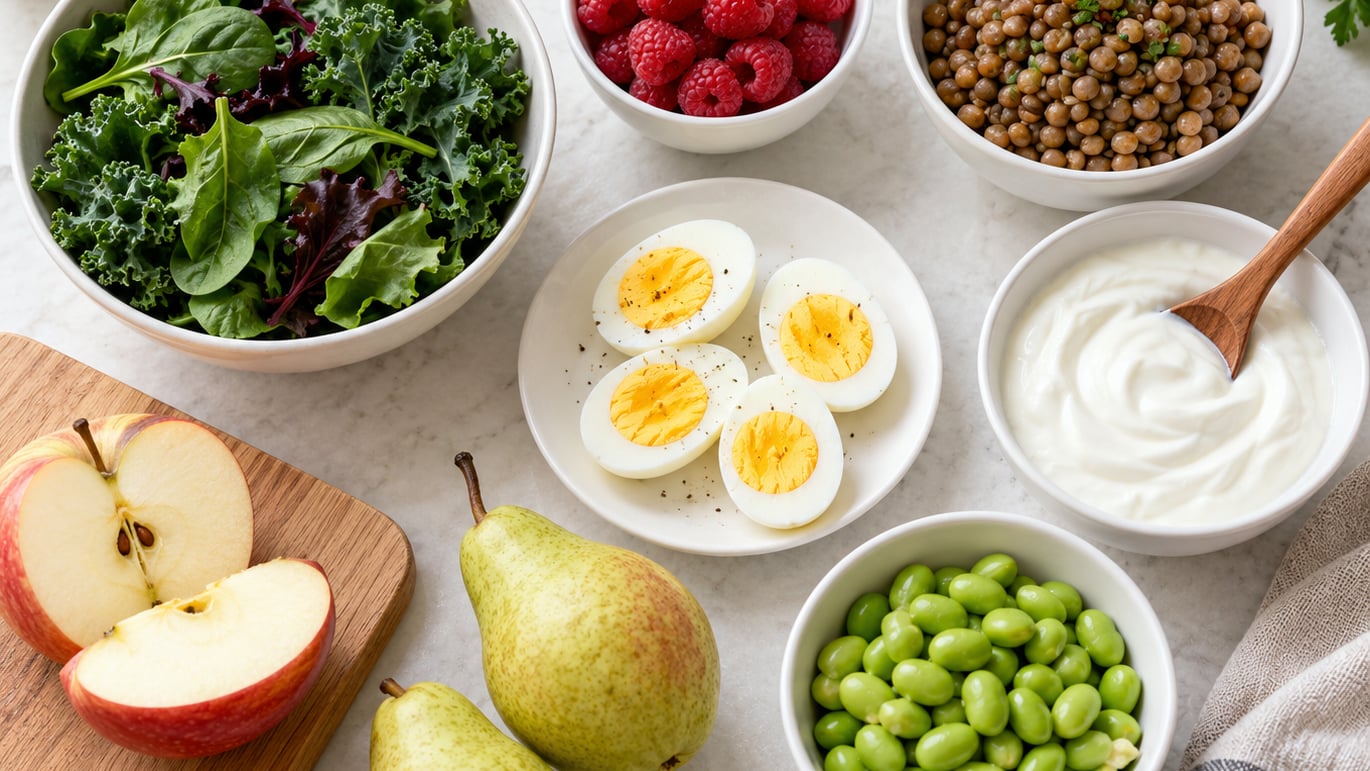
Low calorie foods that keep you full work because they are low in energy density but high in water, fiber or protein. Eat enough of them and your stomach physically stretches, digestion slows, and fullness hormones such as GLP-1 and PYY get released, all on very few calories. Egg whites, plain Greek yogurt, lentils, raspberries, apples with the skin on and leafy greens are the everyday examples that fit that description best.
Below are 12 foods I keep coming back to, with real calorie figures per practical portion, the nutrient doing the filling work, and one or two ways to actually eat them. If you are running a deficit, this is the shopping list that makes the plan survivable.
Table of Contents
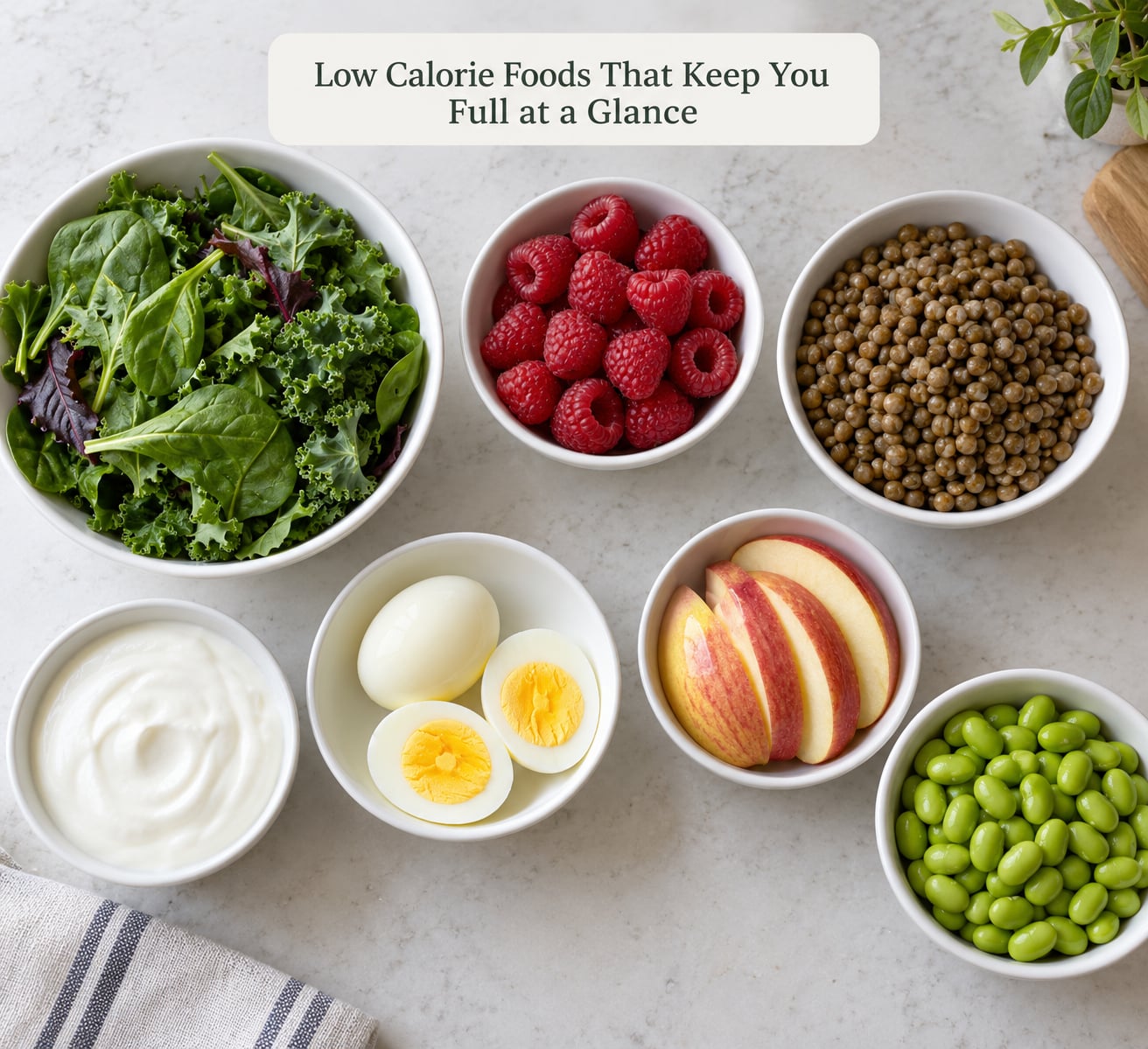
- Low Calorie Foods That Keep You Full at a Glance
- 1. Eggs for a Protein-Packed, Low Calorie Start
- 2. Greek Yogurt for Creamy Fullness Without a Large Serving
- 3. Cottage Cheese for a High-Protein, Low Calorie Snack
- 4. Edamame for Plant-Based Protein and Fiber
- 5. Lentils for Fiber-Rich Fullness in One-Pot Meals
- 6. Black Beans for a Budget-Friendly, Filling Food
- 7. Raspberries for a Low Calorie, High-Volume Snack
- 8. Apples With Skin for Fiber and Crunch
- 9. Pears for Juicy, High-Volume Fullness
- 10. Leafy Greens for Very Low Calorie, High-Volume Meals
- 11. Cauliflower Rice for a Light, Bulk-Adding Base
- 12. Vegetable Soup for a Warm, Satisfying Meal
- Frequently Asked Questions
- Conclusion
Low Calorie Foods That Keep You Full at a Glance
| Food | What makes it filling | Typical calories | Best for | Suggested portion |
|---|---|---|---|---|
| Eggs | Protein plus fat | 70 to 80 per large egg | Breakfast | 2 eggs plus vegetables |
| Plain Greek yogurt | Protein, thickness | 90 to 130 per 3/4 cup | Snack or breakfast | 3/4 cup with fruit |
| Cottage cheese | Protein, creamy texture | 90 to 100 per half cup | Afternoon snack | Half cup plus vegetables |
| Edamame | Plant protein and fiber | 120 to 190 per cup shelled | Lunch or snack | 1 cup shelled |
| Lentils | Protein, soluble fiber | 115 to 140 per half cup cooked | Soup, salad, bowls | 1 cup cooked |
| Black beans | Fiber, protein, volume | 115 to 130 per half cup | Bowls, tacos, soups | Half to 1 cup |
| Raspberries | Fiber, water, low density | 60 to 65 per cup | Sweet snack | 1 to 1.5 cups |
| Apples with skin | Fiber, water, chewing | 90 to 100 per medium apple | Snack or dessert | 1 medium apple |
| Pears | Water, fiber, juiciness | 100 to 110 per medium pear | Snack or dessert | 1 medium pear |
| Leafy greens | Water, very low density | 5 to 20 per cup raw | Meal base | 3 to 4 cups |
| Cauliflower rice | Bulk with few calories | 25 to 30 per cup | Base for stir-fries | 1 to 2 cups |
| Vegetable soup | Volume, hydration, warmth | 60 to 150 per bowl | Dinner or starter | 2 cups plus protein |
Energy density is the number that ties all of these together. It is simply calories per gram, and anything under about 1.5 calories per gram tends to let you eat a large portion for a small total. Compare that to nuts or crackers, which sit above 5, and you can see why a handful leaves you reaching for more while a bowl of soup does not.
1. Eggs for a Protein-Packed, Low Calorie Start
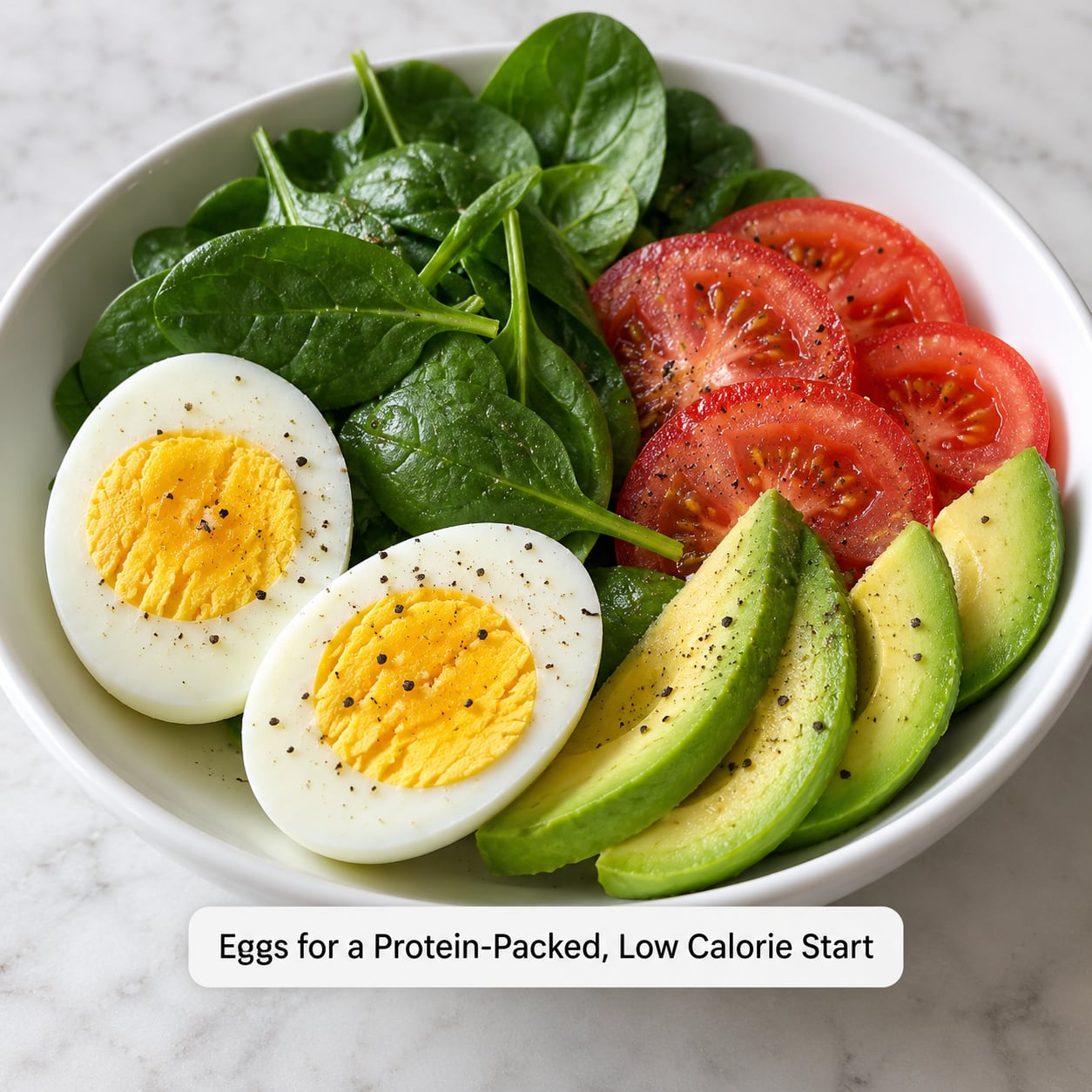
Eggs sit at the top of this list because protein plus a little fat is the most reliable fullness pair you can buy for a few calories. Six large eggs come in around 430 calories, and roughly 36 grams of that is protein.
Boiling them is the easiest route: two large eggs land near 140 to 160 calories and carry enough protein to blunt the mid-morning dip. Pair them with vegetables rather than toast and the meal gets even bigger for fewer calories, because the fiber and water add physical volume.
Cook poultry and eggs to a safe internal temperature of 165 degrees Fahrenheit, and let the whites set fully before eating. If you like texture more than a soft center, an omelet with spinach, tomato and a spoonful of salsa runs about 200 calories for two eggs.
2. Greek Yogurt for Creamy Fullness Without a Large Serving
Greek yogurt works because it is thick and protein-dense, so a small bowl feels like a real meal instead of a beverage. Plain 0 percent versions run roughly 90 to 130 calories for three quarters of a cup, with about 17 to 20 grams of protein.
Flavored varieties are usually the same yogurt with sugar added, which can double the calories for a few bites of sweetness. If you want flavor, do it yourself: stir in a cup of raspberries, a teaspoon of chia seeds and a little cinnamon, and you are around 160 calories with far more staying power.
Frozen fruit works well too. Thaw it in the yogurt overnight and you get a thick, almost ice-cream texture without added sugar.
3. Cottage Cheese for a High-Protein, Low Calorie Snack
Cottage cheese shows up again and again in forums as the go-to afternoon snack, and the numbers back it up. Half a cup of 2 percent is around 90 to 100 calories with roughly 14 grams of protein.
The creaminess matters as much as the protein. A thin drink goes down fast, but a thick, spoonable food takes time, and that time is what lets your brain register the meal.
Keep the add-ons sensible: a few cherry tomatoes and cucumber slices, or sliced strawberries with a tablespoon of chopped walnuts, add volume without turning a snack into a second dinner.
4. Edamame for Plant-Based Protein and Fiber
Edamame is the rare plant food that delivers real protein and fiber in a snackable form. One cup shelled runs about 120 calories with around 18 grams of protein and 8 grams of fiber, which makes it a satisfying addition to any bowl.
Toss a cup into a salad, spoon it over brown rice with sliced cucumber and a little rice vinegar, or steam the pods for three to four minutes and eat them with flaky salt and a squeeze of lime. Sea salt or tamari instead of a heavy sauce is what keeps this a low calorie food rather than a high one.
One caution for newcomers: like other legumes, edamame can cause gas at first. Starting with a half cup and increasing over a couple of weeks gives your gut time to adjust, and soaking or blanching the pods makes it easier on digestion.
5. Lentils for Fiber-Rich Fullness in One-Pot Meals
Lentils are the cheapest way to build a large, satisfying meal, and their soluble fiber holds water in the gut so the feeling outlasts the meal. Half a cup cooked is roughly 115 calories, or 140 for a fuller one-cup serving.
The easiest way to use them is a pot of soup. Simmer lentils with carrots, onions, tomatoes and broth for about 25 minutes, season generously with cumin, smoked paprika and lemon, and you have a dinner that eats like comfort food.
A warm lentil salad with chopped cucumber, cherry tomatoes and a mustard vinaigrette is a cold option that packs for lunch. If fiber is new to you, increase gradually and drink plenty of water, or the digestion will be uncomfortable.
6. Black Beans for a Budget-Friendly, Filling Food
Black beans bring fiber, protein and bulk together at a price that keeps a tight food budget intact. Half a cup is about 115 to 130 calories, and the protein and fiber combination slows digestion far more than the calorie count suggests.
Canned beans are fine, just watch the sodium. Rinse them under cold water and use them in tacos with lettuce, salsa and avocado, in a burrito bowl with brown rice and corn, or in soup where they thicken the broth and add body.
A well-known pattern among people eating around 1200 calories is a can of black beans as a stand-alone meal with salsa, lime and shredded cabbage on top. It fills the plate, costs almost nothing and travels well. Expect some gas in the first couple of weeks, then it usually settles.
7. Raspberries for a Low Calorie, High-Volume Snack
Raspberries are the rare fruit where the volume is the point. A cup is about 60 to 65 calories, and the air-filled structure of the berries plus their fiber makes them feel bigger than the number suggests.
Serve them with a half cup of Greek yogurt for around 130 calories total, or fold them into overnight oats with a tablespoon of chia seeds. Frozen raspberries are just as useful and keep for months in the freezer, which solves the seasonal problem.
The same trick works with watermelon, cantaloupe and grapes eaten off the stem, though berries give you the best ratio of volume to calories.
8. Apples With Skin for Fiber and Crunch
An apple is one of the easiest low calorie foods that keep you full to carry around, and keeping the peel on matters. Most of the fiber lives right under that skin, and the skin is what gives the apple its resistance to chewing.
A medium apple is about 90 to 100 calories. Eating it slowly, in pieces rather than bites out of the whole fruit, adds 10 or 15 minutes of chewing time and takes a meaningful edge off afternoon hunger.
If a plain apple will not hold you past the next meal, slice it and add a tablespoon of peanut butter or a small pour of Greek yogurt for a few more calories and a lot more staying power. Cinnamon on top costs nothing.
9. Pears for Juicy, High-Volume Fullness
Pears are even juicier than apples, and water plus fiber plus a soft texture is the combination people describe as filling without feeling heavy. A medium pear lands around 100 to 110 calories.
Eat them with the skin, core and all if you can handle it. The skin contributes a good share of the fiber and slows the eating down nicely.
A sliced pear with a tablespoon of pumpkin seeds or a few walnuts turns a snack into something closer to a small dessert. A slice of cheese works the same way, adding protein and fat so the fruit holds you longer.
10. Leafy Greens for Very Low Calorie, High-Volume Meals
Leafy greens are the cheapest volume in any kitchen. A cup of raw romaine or spinach holds roughly 5 to 10 calories, and cooked kale or spinach sits in a similar range per cup. Nothing else on this list stretches a plate this far for this few calories.
That means a salad has to be built, not just tossed. Start with two or three cups of greens, then add a genuine protein source such as grilled chicken, tuna, eggs, beans or edamame, and a fat source like olive oil, avocado or seeds. Without those two, a plain salad will not carry a meal.
Seasoning is what makes low-calorie vegetables tolerable. Smoked paprika, garlic, lemon, vinegar, fresh herbs and a spoon of salsa or hummus turn a plate of greens into food you actually want again tomorrow. Warm spinach with a poached egg is the same idea in a skillet.
11. Cauliflower Rice for a Light, Bulk-Adding Base
Cauliflower rice is mostly water and fiber, and one cup contains only about 25 to 30 calories. That makes it the easiest way to stretch a stir-fry or a taco filling so it actually fills the plate.
It works best as a base rather than a stand-alone dish. Cook it in a hot pan with a little olive oil for six to eight minutes until it browns, then fold in shelled edamame, diced bell pepper and a soy-ginger sauce. Add a fried egg on top and you have a complete bowl for roughly 300 calories.
The same logic applies to roasted cauliflower as a side dish. Texture is the deciding factor, and a hot pan makes a much bigger difference than the seasoning that goes on afterward.
12. Vegetable Soup for a Warm, Satisfying Meal
Broth-based vegetable soup is the most underrated filling food in this list, largely because hot liquid occupies volume without adding calories. A plain bowl is usually 60 to 150 calories depending on how much oil went into the pot.
Make it a meal rather than a starter by adding protein and fiber to the pot itself: a cup of black beans or lentils, cubed tofu, shredded chicken, chopped egg or a handful of whole grains. A two-cup bowl with beans and a side salad eats like a full dinner for a couple of hundred calories.
One practical note if you are tracking your weight: broth is often salty, and salt causes water retention that shows up on the scale for a day or two before it clears. Low-sodium broth keeps the numbers boring, which is what you want when you are watching them.
Frequently Asked Questions
What foods are low in calories but make you feel full?
Foods that are low in calories but filling are usually built from water, fiber or protein. Good examples include plain Greek yogurt, eggs, lentils, black beans, edamame, raspberries, apples with the skin on, pears, leafy greens, cauliflower rice and broth-based vegetable soup. Each of these adds physical volume or slows digestion, so you can eat a generous portion and still land on a small calorie total.
How do I eat 1200 or 1500 calories a day and stay full?
Split the day into three meals and three snacks instead of two or three large meals, and let protein anchor every one of them. Build each meal around a low-calorie high-volume base such as soup, salad or cauliflower rice, then add eggs, yogurt, beans, lentils or fish for staying power. People who spread calories this way report fewer evening cravings than those who front-load and restrict.
How many calories should a filling snack have?
Most people do well with snacks in the 100 to 200 calorie range when they combine protein or fiber. A cup of raspberries is about 60 calories, half a cup of cottage cheese is about 90, and a boiled egg with vegetables lands near 150. What matters more than the total is the ratio: a snack with protein and fiber keeps you full far longer than a snack of the same calories made mostly from refined carbohydrate.
Do I still get hungry on low calorie foods?
Yes, if the meal is mostly volume with no protein or fat in it. A plain salad of raw vegetables can leave you hungry an hour later because there is little to slow digestion. The same greens become a filling meal once you add chicken, beans, eggs, avocado or olive oil. Extreme restriction is also its own risk, and a registered dietitian can help if hunger is a persistent problem.
Which low-calorie foods fill you up the longest?
Protein-rich foods tend to last the longest because they slow gastric emptying and trigger satiety hormones such as GLP-1 and PYY. Eggs, plain Greek yogurt, cottage cheese, edamame, lentils and black beans are the practical examples, with lentils and beans also adding fiber. Boiled potatoes have scored near the top of published satiety rankings relative to white bread, though they are more moderate in calories.
Conclusion
Start with the next meal rather than the whole week. Pick one protein-rich food from this list, one high-fiber plant food and one colorful low-calorie vegetable, and build one meal around those three.
Treat low calorie foods that keep you full as a default rotation, not a short-term diet trick. Most people find the list works best as a shopping list: pick five of these on a normal grocery run rather than all twelve at once. If a registered dietitian is available to you, they can adapt this to your own health needs, which matters more than any generic list.