
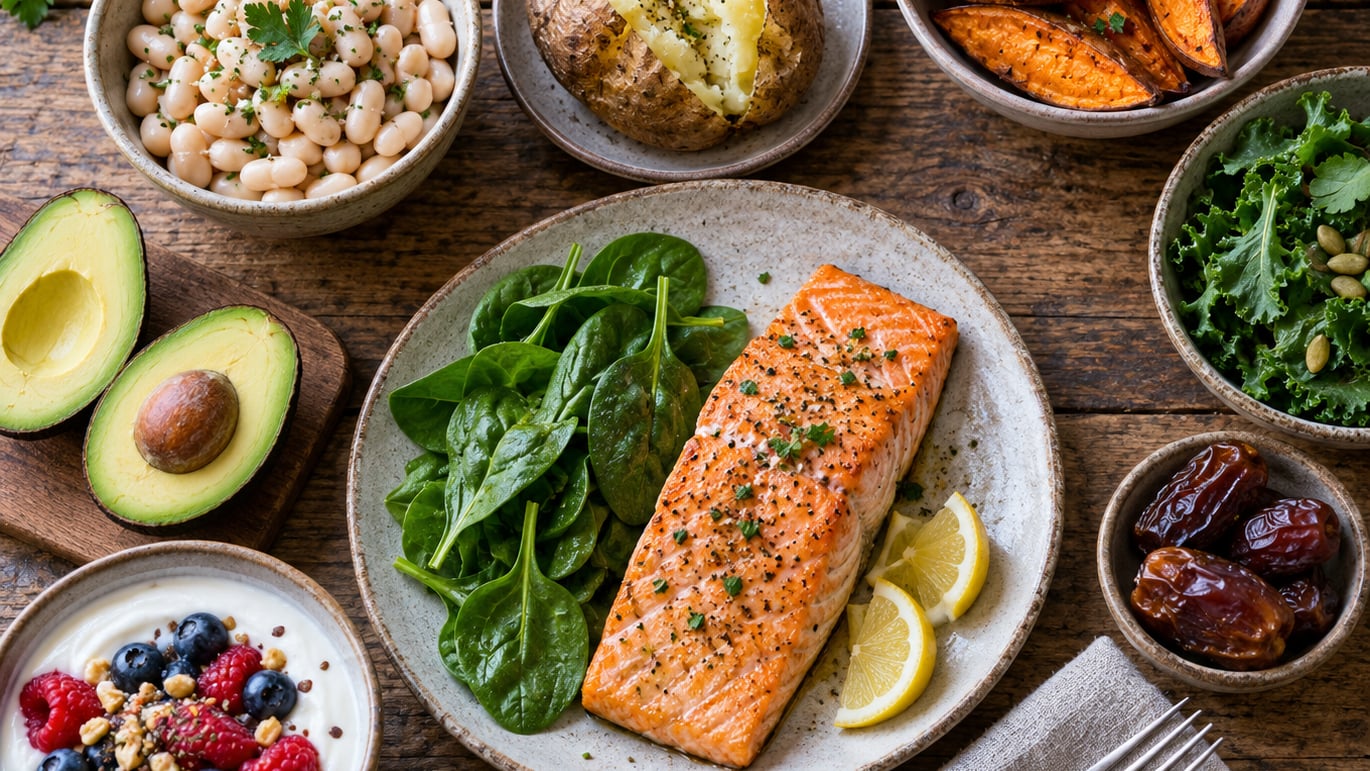
Most people reach for a banana when they want more potassium, but it is far from the strongest option. A medium banana gives you about 422 mg, and plenty of everyday foods deliver 500 mg to more than 1,000 mg per serving. Beans, lentils, potatoes with the skin, leafy greens, yogurt and salmon all beat the banana once you look at the numbers.
Below is a practical list of foods high in potassium besides bananas, with serving sizes and approximate milligram counts drawn from USDA FoodData Central. Potassium works as an electrolyte inside every cell, regulating fluid balance, nerve signals and muscle contraction, and it helps offset the blood-pressure effects of sodium.
A couple of notes before the list. Values shift a little with variety, brand and preparation, so treat every figure as a ballpark rather than a precise prescription. And if you have kidney disease or take medication that affects potassium levels, talk with your doctor before changing what you eat.
Table of Contents
- Foods High in Potassium Besides Bananas at a Glance
- 1. White Beans
- 2. Lentils
- 3. Baked Potatoes with the Skin
- 4. Sweet Potatoes
- 5. Spinach
- 6. Swiss Chard
- 7. Avocado
- 8. Cantaloupe
- 9. Tomato Products
- 10. Plain Yogurt
- 11. Fish Such as Salmon
- 12. Dates and Other Fruit
- Frequently Asked Questions
- What are the best foods high in potassium besides bananas?
- How much potassium should adults get each day?
- Are beans and lentils better sources of potassium than fruit?
- Does cooking vegetables change their potassium content?
- Can people with kidney disease eat potassium-rich foods?
- How can I add more potassium to meals without supplements?
- A Simple First Step
Foods High in Potassium Besides Bananas at a Glance
The table below compares the twelve foods in this guide by typical serving, approximate potassium, flavor profile and easiest use.
| Food | Typical serving | Approx. potassium | Flavor profile | Easiest use |
|---|---|---|---|---|
| White beans | 1/2 cup cooked | about 560-600 mg | Mild, creamy | Soup, chili, bean spread |
| Lentils | 1/2 cup cooked | about 365 mg | Earthy, soft | Curry, stew, salad bowl |
| Baked potato with skin | 1 medium | about 900-950 mg | Earthy, starchy | Baked with toppings |
| Sweet potato | 1 medium cooked | about 540-570 mg | Sweet, roasty | Wedges, mash, soup |
| Spinach | 1/2 cup cooked | about 420-560 mg | Green, mineral | Sauté, omelet, sauce |
| Swiss chard | 1/2 cup cooked | about 470-670 mg | Mild, earthy | Sauté, soup, blended sauce |
| Avocado | 1 whole medium | about 680-975 mg | Rich, buttery | Toast, salad, guacamole |
| Cantaloupe | 1/2 cup diced | about 200-215 mg | Sweet, juicy | Fruit salad, yogurt bowl |
| Tomato paste | 1/4 cup | about 450-500 mg | Deep, tangy | Sauce, chili, soup |
| Plain yogurt | 1 cup | about 350-550 mg | Tangy, creamy | Breakfast bowl, snack |
| Salmon | 3 oz cooked | about 530-570 mg | Rich, fatty | Baked, grilled, pan-seared |
| Dates | 2-3 medjool | about 250-300 mg | Very sweet, sticky | Oatmeal, smoothies, nut butter |
Exact values vary by product, preparation method and portion size, so use these as a guide and check the nutrition label when a number matters to you.
1. White Beans
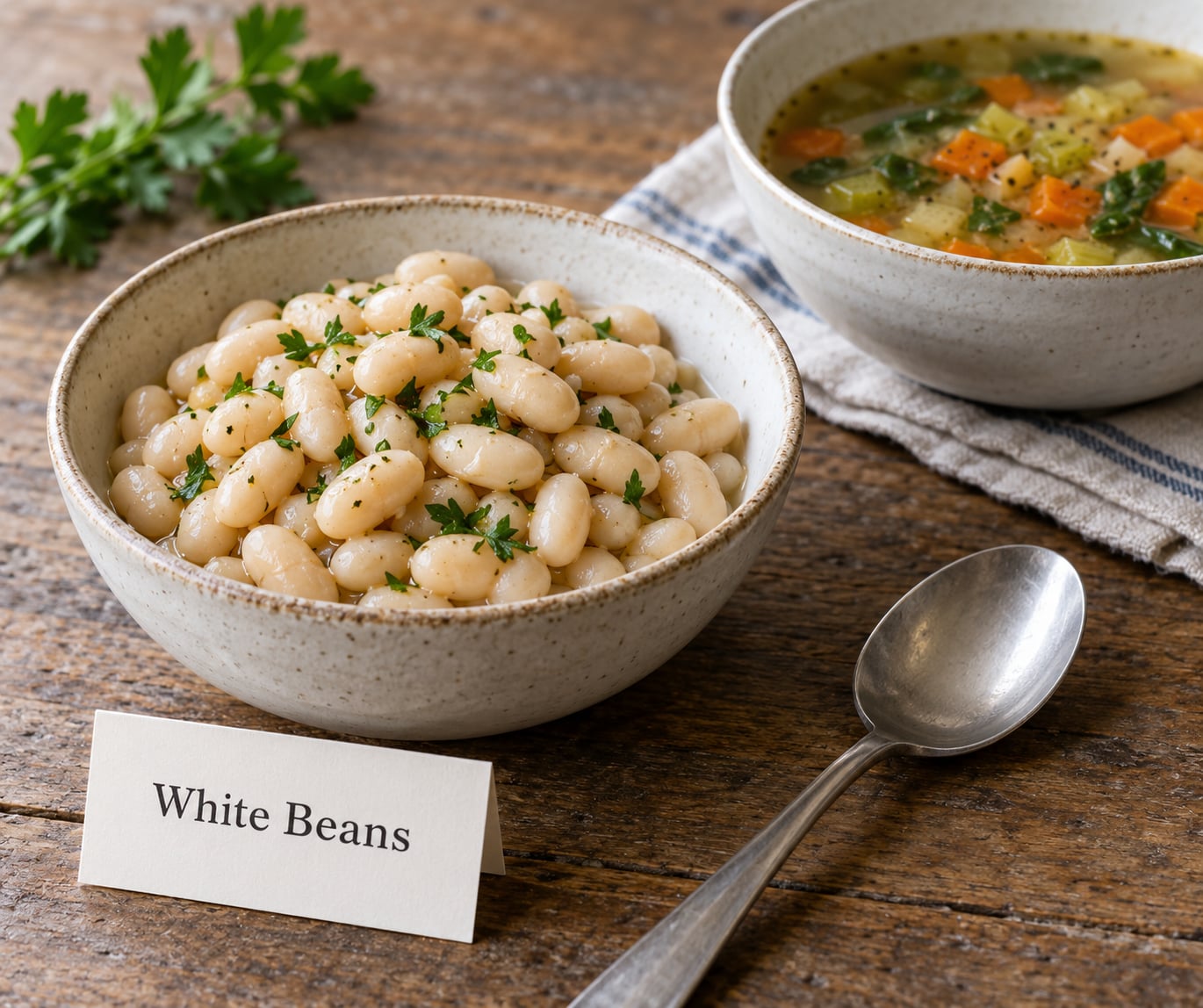
White beans are the strongest everyday answer to the banana, and most people already have them somewhere in the kitchen. A half cup of cooked cannellini or navy beans lands around 560 to 600 mg of potassium, which clears a banana by a comfortable margin.
The texture is creamy and the flavor is mild, which makes them easy to work into food you already eat. Half a cup stirred into a pot of soup is the easiest move, and a bowl of chili gets noticeably better for it. I also like whiting them into a spread with olive oil, garlic and lemon to put on toast.
Rinse canned beans before you use them, which cuts sodium considerably. Kidney beans work just as well and behave the same way in a chili.
2. Lentils
Cooked lentils bring about 365 mg of potassium per half cup, and they are one of the most useful plant proteins you can keep in the house. They hold their shape, take on whatever spice you use and thicken a stew without extra cream.
One serving example: a half cup of cooked green or brown lentils folded into a curry at the end, or spooned over rice with a spoonful of yogurt. Dry lentils need soaking and a longer cook, usually 20 to 25 minutes, while canned lentils are ready after a rinse.
If you are also trying to raise your fiber, lentils cover that ground too. Our guide to foods high in prebiotic fiber for gut health covers more options in the same family.
3. Baked Potatoes with the Skin
One medium baked potato eaten with the skin on delivers roughly 900 to 950 mg of potassium, more than double a banana. Peeling it throws away a meaningful share of that, so the skin is where a good chunk of the value sits.
Think of it as a whole meal component rather than a side. A baked potato with beans, yogurt or scrambled eggs on top covers protein and potassium in one dish. Toppings like sour cream, butter and shredded cheese add flavor, though they also add sodium and saturated fat, so keep the pile sensible.
Portion size matters more than people expect here, since a large potato is a large potato. One medium is the standard figure most nutrition labels use.
4. Sweet Potatoes
A medium cooked sweet potato gives you about 540 to 570 mg, which beats a banana without much effort. It is also a useful swap because it plays well in dishes a regular potato would dominate.
Roasted wedges, cubed pieces for a sheet pan, or mashed sweet potato alongside roast chicken all work. Cubes also go into soups and salads, where they hold their shape and add sweetness without extra sugar.
Readers often ask whether sweet potatoes suit a high-blood-pressure eating pattern. They fit well in general terms because they are high in potassium and fiber and low in sodium, but blood pressure is affected by the whole diet, and personal guidance is worth getting from a doctor.
5. Spinach
Spinach carries roughly 420 to 560 mg of potassium per half cup cooked, and leafy greens are quietly the most reliable everyday source on this list. The raw number looks smaller because a cup of raw leaves is mostly water and air.
A cooked serving is much denser, which is the comparison that matters. Sautéed spinach with garlic works with almost anything, and a handful thrown into an omelet or a bowl of pasta changes the whole plate. Blended into a tomato or cream sauce, it disappears completely for anyone who is not a fan of texture.
Smoothies are the other easy route, and spinach pairs with fruit without tasting like much at all.
6. Swiss Chard
Swiss chard comes in around 470 to 670 mg of potassium per half cup cooked, and it also brings magnesium and vitamin K. The flavor is milder and earthier than spinach, with thick stems that soften when cooked.
The simplest preparation is a quick sauté: strips of chard in olive oil with garlic and a pinch of salt for four or five minutes. It goes into soups, lasagna and curries, and blending a cooked handful into a sauce makes the color pop without much effort.
Stems can be chopped and started a minute or two ahead of the leaves, since they take longer to soften. That is the only technique it really needs.
7. Avocado
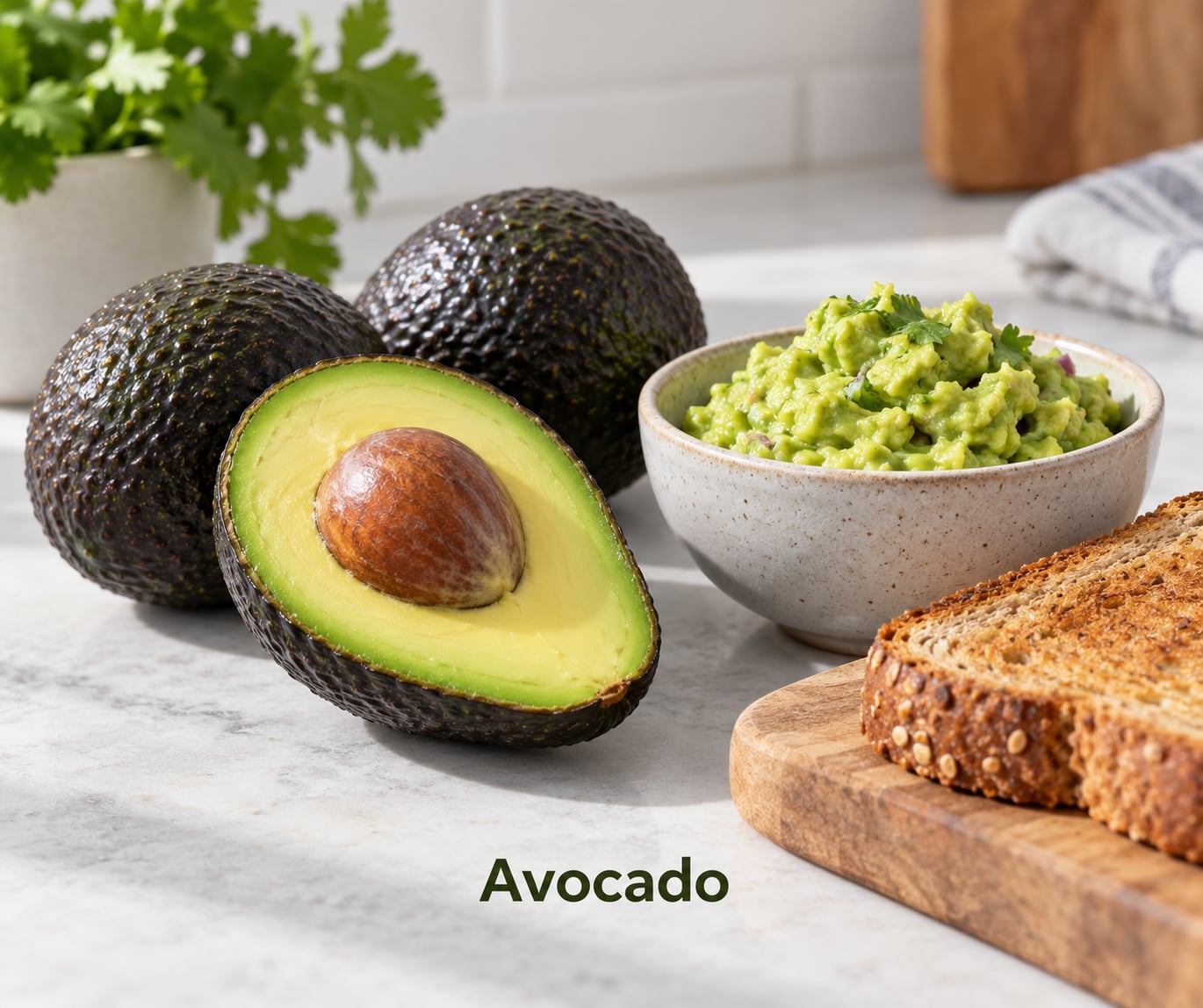
A whole medium avocado runs about 680 to 975 mg of potassium, more than any fruit on this list. That is the number people miss, because most avocado portions are slices and slices are a fraction of the fruit.
Avocado is also a plant-based fat source, so it does more than add potassium. Mashed onto toast with a pinch of salt and chili flakes, sliced into a tomato salad, blended into a smoothie, or served as a simple dip, it fits breakfast and lunch equally well.
One practical tip: ripen on the counter, then refrigerate to slow things down. A whole avocado you will not eat for four days is a common kitchen casualty.
8. Cantaloupe
Cantaloupe offers about 200 to 215 mg per half cup diced, which puts it in the same general range as banana. Its value is as much about hydration and volume as the milligrams, since it is juicy enough to count as a refreshing food rather than a side.
Dice it into a fruit salad, blend it into a smoothie with yogurt, or spoon it over breakfast bowls with oats and a few seeds. A half cup is a small portion in volume terms, so a bowl goes fast.
Since the total scales with serving size, doubling the bowl roughly doubles the potassium. That is worth remembering before assuming a piece of melon is meaningful either way.
9. Tomato Products
Tomato products are an underrated category, and the concentrated forms lead the pack. A quarter cup of tomato paste gives roughly 450 to 500 mg, while a cup of tomato juice sits near 700 mg and canned tomatoes run about 350 to 400 mg per half cup.
Concentration is the whole story here. A can of tomatoes spread through a pot of chili contributes less per spoonful than a spoon of paste stirred into the same pot, because paste has had the water cooked away.
Use tomato sauce on pasta, add canned tomatoes to soups and curries, and keep a small can of paste for finishing stews and chili. Pairing it with white beans makes one of the most potassium-dense meals you can make in ten minutes.
10. Plain Yogurt
Plain yogurt contributes potassium alongside protein, landing anywhere from about 350 to 550 mg per cup depending on the variety. That spread is wide enough that the label matters, so check the nutrition panel rather than assuming.
Pair a cup with fruit, oats, nuts or seeds and it becomes a real meal rather than a snack. Greek yogurt tends to carry more protein and more potassium, which is why it is my pick for a fuller breakfast.
Pick plain and add your own fruit to keep added sugar low, and check for hidden sugar in the ingredient list when you shop. Flavored versions can carry more sugar than a piece of fruit ever would.
11. Fish Such as Salmon
Salmon is the standout protein choice here, with about 530 to 570 mg of potassium in a cooked 3-ounce portion. Most people under-eat fish because it feels like an occasion meal, and that is a shame, because it is one of the few foods that delivers protein and potassium in the same bite.
Cooked salmon is the common serving format, and baking at around 400 F for 12 to 15 minutes is the least fussy approach. Sear it skin-side down, then finish it in the pan.
Pair it with a baked potato, roasted vegetables, rice or beans and the plate covers potassium, protein and fiber together. Anyone eating fish regularly should keep an eye on mercury guidance from their doctor, especially during pregnancy.
12. Dates and Other Fruit
Dates are the concentrated fruit option, delivering about 250 to 300 mg for two or three medjool dates. Because the fruit is dried, the potassium is packed into a much smaller serving than fresh fruit would need.
Two or three chopped into oatmeal, blended into smoothies, or stirred into nut butter add sweetness without any added sugar. They are also the base of most no-bake energy balls, where the stickiness does the binding.
Other dried fruit follows the same pattern, though dried apricots run higher per serving because they are smaller and denser. Portions are naturally small, and a handful is easy to overdo when the flavor is that sweet.
Frequently Asked Questions
What are the best foods high in potassium besides bananas?
The strongest everyday options are white beans, a baked potato eaten with the skin, avocado, Swiss chard, salmon and tomato paste. A half cup of cooked white beans or a medium baked potato with the skin delivers roughly 560 to 950 mg, compared with about 422 mg in a medium banana. Sweet potatoes, lentils, spinach, yogurt and cantaloupe follow behind.
How much potassium should adults get each day?
The National Academy of Medicine sets adult needs at 2,300 mg per day for women and 3,400 mg for men, and higher figures for teenagers. The FDA daily value used on nutrition labels is 4,700 mg for adults. Food sources are more than sufficient on their own for most people, and supplements are rarely necessary unless a clinician recommends them.
Are beans and lentils better sources of potassium than fruit?
Per serving, usually yes. A half cup of cooked white beans gives about 560 to 600 mg, while a whole avocado gives 680 to 975 mg, and a medium banana gives about 422 mg. Most fruits land between 150 and 300 mg per serving. Beans also bring fiber and plant protein, which most fruit servings do not.
Does cooking vegetables change their potassium content?
It does, and boiling is the method that loses the most. Potassium is water-soluble, so it leaches into cooking water, which is discarded. Steaming, roasting and microwaving retain more. Cooked portions also weigh less than raw ones, so a half cup of cooked spinach looks like a small serving but is much denser than a large handful of raw leaves.
Can people with kidney disease eat potassium-rich foods?
Often not without guidance, because damaged kidneys struggle to clear excess potassium from the blood. People with chronic kidney disease are commonly put on a potassium-restricted diet, and certain blood pressure medications including ACE inhibitors, ARBs and spironolactone raise levels further. Potassium chloride salt substitutes are another common source. Work with a doctor or registered dietitian before changing your intake.
How can I add more potassium to meals without supplements?
Start by adding one potassium-dense item to a meal you already eat: a baked potato with beans and yogurt, white beans in soup, tomato paste in chili, a baked sweet potato, or a cup of yogurt with fruit and oats. Because potassium is water-soluble, steaming and roasting keep more in the food than boiling, and eating potato skins on adds a noticeable amount.
A Simple First Step
Pick one meal this week and change a single component: half a cup of white beans in the soup, a baked potato with the skin on, a baked sweet potato instead of rice, or a cup of plain yogurt with fruit. Any one of those moves the day several hundred milligrams closer to the target, and none of them requires a supplement or a big change in how you cook.
Read the nutrition label for the items that matter to you, since varieties differ, and keep portions in line with your own needs. If you have kidney disease, are pregnant, or take medication that affects potassium, get personalized guidance from a doctor or registered dietitian first.
For the mineral that often travels alongside potassium, our guide to magnesium-rich foods and why they matter is a useful companion read.