
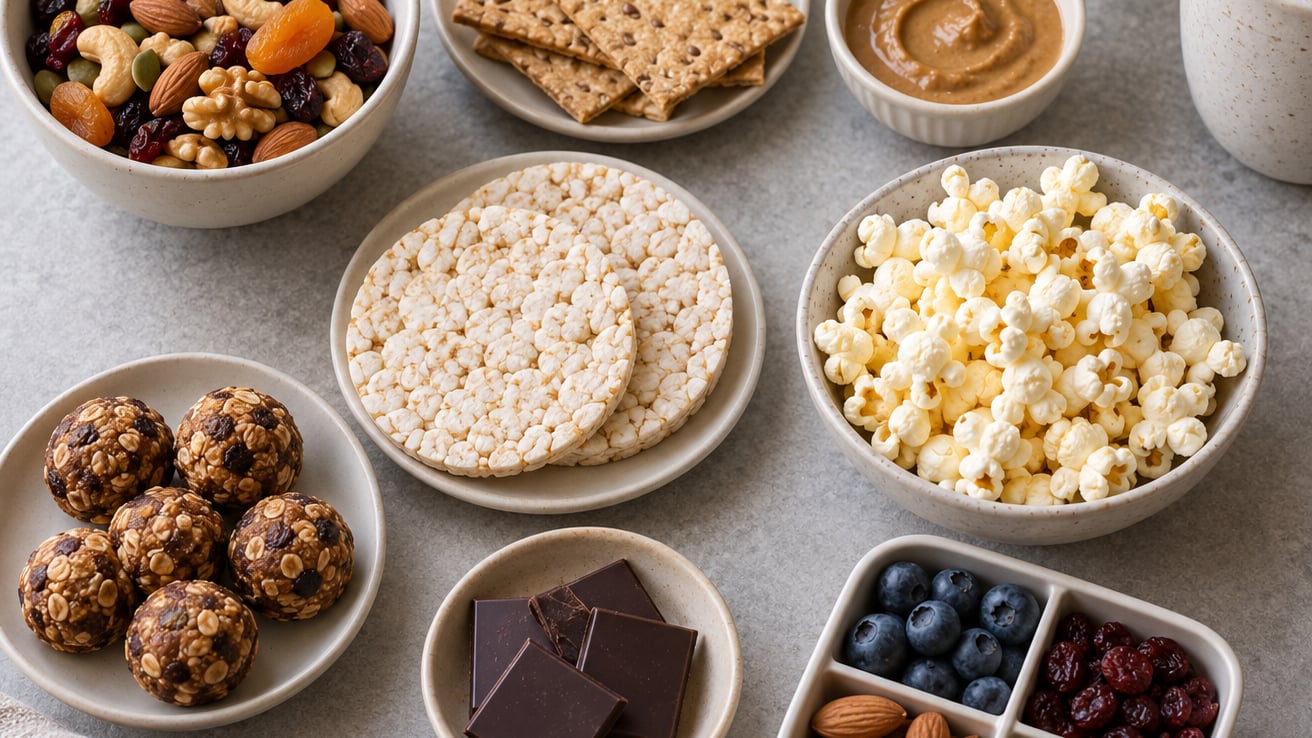
Healthy snacks for work that need no fridge are simply foods that stay safe and good at room temperature for weeks: nuts, seeds, dried fruit, whole uncut fruit, jerky, crackers, nut butter packets, tuna and salmon pouches, roasted chickpeas, popcorn and bars made without perishable fillings. If it needs a microwave, an ice pack or a fork, it will not survive a workday. Below is a practical list with portion sizes, freshness timelines and the situations each one suits best.
I built this around a simple test I apply to anything that lives in my desk drawer: does it survive a hot car, does it leave crumbs or oil, and does it still taste decent on day five? Those three questions kill more bad office snacks than any nutrition label does.
Most offices make fridge-free snacking the default anyway. Shared fridges turn into a slow-motion free-for-all, plenty of workplaces have no fridge at all, and microwaves are usually on a different floor. Popular workplace forums keep circling the same conclusion: if you can eat it with one hand, at a desk, without a fork, it is the snack that actually gets eaten.
A word on safety, since this is where the rules are real rather than negotiable. Food that cannot support bacterial growth stays safe without chilling because it is low in moisture or high in sugar or salt. Anything that is perishable follows the USDA two-hour rule: no more than two hours unrefrigerated, or one hour when the air is above 90F, which includes a parked car in summer. If you are managing a medical condition or a strict intake plan, ask your doctor or a registered dietitian rather than copying a generic list.
Table of Contents
- Healthy Snacks for Work That Need No Fridge at a Glance
- 1. Mixed Nuts with Fruit and Seeds
- 2. Whole-Grain Crackers with Nut Butter Packets
- 3. Apple Chips with Seeds
- 4. Protein-Packed Energy Bites
- 5. Trail Mix with Dark Chocolate
- 6. Whole-Grain Granola Bars
- 7. Banana Chips with Peanut Butter
- 8. Rice Cakes with Hummus
- 9. Popcorn with Nutritional Yeast
- 10. No-Bake Oat and Date Bites
- Frequently Asked Questions
- What are the best shelf-stable snacks for work?
- How long can no-refrigeration snacks sit in a work bag?
- Which healthy snacks will not make crumbs or leaks?
- Are nuts and seeds a good snack before an afternoon meeting?
- How can I keep work snacks from becoming too expensive?
- What should I pack if I am sensitive to peanuts or gluten?
- Start With One Tin and One Packet
Healthy Snacks for Work That Need No Fridge at a Glance
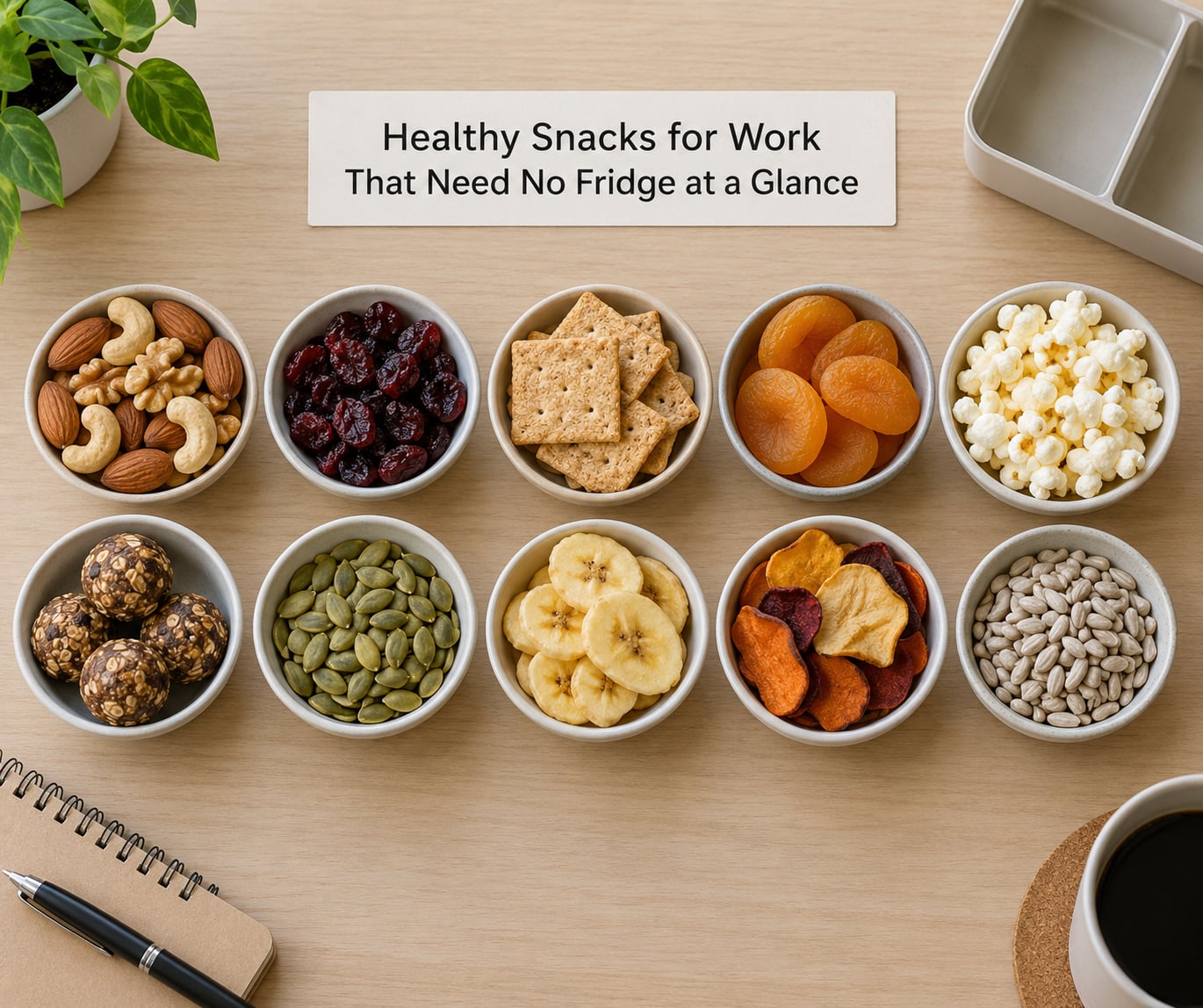
The table below is the short version. Portability means how well it survives a bag, a hot car and a shared desk. Prep time is how long it takes you to get it into a drawer, not how long to eat it.
| Snack | Best flavour | Portability | Prep | Main advantage | Best use case |
|---|---|---|---|---|---|
| Mixed nuts, seeds and dried fruit | Nutty with a sweet edge | High in an airtight tin | 5 min | Healthy fats and fibre, roughly 170-200 kcal per 30 g handful | The 3 pm slump |
| Whole-grain crackers and nut butter packets | Salty and savoury | High, packets keep it clean | 1 min | Carbohydrate plus fat, about 180-200 kcal per serving | Back-to-back meetings |
| Apple chips with seeds | Sweet and crisp | High, reseal the bag | 1 min | Sweet crunch, roughly 150 kcal per 28 g serving | Craving something sugary |
| No-bake energy bites | Chocolate and date | Medium, soft in heat | 15 min | Oats, fat and fibre, about 100-130 kcal for two | A long, meeting-free afternoon |
| Trail mix with dark chocolate | Sweet and savoury together | High | 5 min | Easy to overeat, so portion it up front | Commutes and travel days |
| Whole-grain granola bars | Depends on the bar | Very high | 0 min | Fibre and protein when the label is short | The only snack with zero prep |
| Banana chips with nut butter | Sweet and salty | Medium, keep the dip sealed | 2 min | Pairing slows the snack down | Post-lunch sugar dip |
| Rice cakes with hummus | Neutral and savoury | Medium, see the note on opened hummus | 1 min | Light carbohydrate with plant protein | Ate too much at lunch |
| Air-popped popcorn with nutritional yeast | Savoury and cheesy | Very high | 3 min | High volume, about 30 kcal per cup popped | Long stretches of desk work |
| Oat and date bites | Natural sweetness | Medium | 10 min | Fibre-heavy, about 100-130 kcal for two | Afternoon hunger, low energy |
Two things in that table deserve a warning label. Trail mix and nut mixes are the easiest entries to overeat, because nobody stops at a handful of trail mix. And anything that needs to stay cold after opening, including hummus cups and opened tuna pouches, belongs in the “eat it before you leave” column, not the drawer.
1. Mixed Nuts with Fruit and Seeds
A portioned nut and seed mix is the most reliable desk snack there is, because fat and fibre keep you full for longer than a biscuit and nothing about it melts. Aim for roughly 30 g, which is a small closed handful and lands somewhere around 170-200 calories. Beyond a handful, nuts are one of the easiest things to eat without noticing, so pre-portion into small containers rather than keeping a bag at your elbow.
A mix I keep coming back to is two parts nuts, one part seeds, one part dried fruit by volume. Fill it with almonds and walnuts for the bulk, pumpkin seeds for bulk without the price tag or the saturated fat load, plus raisins and dried mango for sweetness. Pumpkin seeds also solve the nut-allergy problem for most people, since they come from a plant but not a nut.
Storage is the whole game. Nuts go rancid when they meet oxygen and light, so use an airtight tin or a glass jar with a rubber seal and keep it out of a window. Shelled pistachios have a useful trick going for them: the shells slow you down, so a small bowl of them behaves like a built-in portion control.
2. Whole-Grain Crackers with Nut Butter Packets
Crackers give you fast carbohydrate, nut butter supplies the fat that keeps the pairing satisfying for more than a few minutes. Four crackers with a single-serve tablespoon of nut butter lands around 180-200 calories depending on the cracker, which is a reasonable afternoon snack. It is also one of the least messy options, because you can eat it one-handed over a laptop without a napkin.
For anyone avoiding peanuts, sunflower seed butter packets behave the same way and taste less sweet. Pumpkin-seed and pumpkin-seed-plus-sunflower packets also exist, which matters if a workplace is nut-free rather than merely peanut-free.
Check the cracker box before you buy. You want whole grain or brown rice flour as the first ingredient and at least 3 g of fibre per serving, plus no hydrogenated oils in the ingredient list. The practical failure here is texture: crackers that come loose from a resealable bag turn soft within days. Fold the top of the bag down with a clip and they stay crisp for the week.
3. Apple Chips with Seeds
Apple chips deliver a genuinely sweet crunch in a form that fits in a laptop bag, which is what most people are actually looking for at 4 pm. A 28 g serving is roughly 150 calories, so it is not a huge snack on its own, and the slices are thin enough that a small handful feels like a portion. Read the bag, though, because a lot of them are sweetened like candy, and some are salted heavily enough to matter.
Two checks do most of the work. Look for no added sugars on the nutrition panel, and compare sodium between brands, since the range runs from under 100 mg to over 300 mg a serving for a snack that weighs less than an ounce. If a bag lists added sugar in the ingredients, skip it and buy plain apple chips instead.
Balance it so it counts. A small serving of apple chips plus a tablespoon of pumpkin seeds or a few almonds turns pure sugar into sugar with fat and protein, and the combination stops the 4 pm crash that a sweet chip on its own can set up.
4. Protein-Packed Energy Bites
Energy bites solve two problems at once: they are made once on a Sunday, and they are portioned by construction. A workable base is one cup of rolled oats, half a cup of peanut butter, three tablespoons of chia seeds, a third of a cup of honey or maple syrup, and either two tablespoons of cocoa powder or a cup of chopped dates. Pulse or stir, rest the mix for ten minutes so the oats drink up the liquid, then roll into balls.
Two of these run roughly 100-130 calories, which makes them a genuine between-meal snack rather than a small dessert. If you want to know whether the protein is doing enough work, it helps to have a rough target in mind first, and we covered that in how much protein you actually need per day.
Two storage notes. Rolled-in coconut or chopped nuts keeps the outside from sticking to your fingers, which matters more than it sounds at a desk. And they do soften in a warm car or a sunlit office, so treat a week as the room-temperature limit and freeze the rest rather than keeping a soft tray of them all week.
5. Trail Mix with Dark Chocolate
Trail mix is the best snack on this list for a commute, because it is already portioned by the handful and nothing about it needs a container that can leak. A decent formula is nuts and seeds for the bulk, unsweetened dried fruit for volume, and dark chocolate at no more than a third of the mix. Seventy percent cocoa or darker, chopped rather than chocolate chips, because the chips are usually a sugary coating rather than chocolate.
The reason to mix it yourself is sweetness. Shop-bought trail mix with chocolate tends to pile dried cranberries or sweetened raisins into the middle, and the combination is easy to eat by the handful until you realise you have had four. Mixing your own lets you keep the ratio honest, and it costs about the same as the bag you were going to buy anyway.
One thing to avoid: yogurt coatings and anything with a dairy or cream layer. They are sugary, and in a hot bag they are the one component that wants a fridge. A dark chocolate square broken into the mix gives the same satisfaction with none of that.
6. Whole-Grain Granola Bars
A granola bar is the only snack here with genuinely zero preparation, which is why it belongs in the drawer even if it is not the most exciting choice. What you are shopping for is a short ingredient list: oats, nuts or seeds, dried fruit and something to bind them, ideally under eight items. Look for at least 3 g of fibre and 5 g of protein, and treat anything above roughly 8 g of added sugar as a candy bar wearing a health label.
Read the first three ingredients. A bar that leads with corn syrup, sugar syrup, maltodextrin or vegetable oil is going to behave like a sweet snack no matter what the front of the pack claims. A bar that leads with whole grain oats, brown rice syrup and almonds is doing what you want. If you want the label-reading method itself, our guide to telling whether a granola bar is actually healthy goes into it in detail.
Storing them matters more than it sounds. Heat is the enemy of crispness, so keep bars in a desk drawer rather than on top of the desk or in a car. They are also the one item on this list worth stocking in a small bulk, since they do not go stale the way crackers do and they cost less per serving than a snack bar at a shop.
7. Banana Chips with Peanut Butter
Banana chips with nut butter is a sweet and salty pairing that actually slows you down, because the combination takes longer to eat than either part alone. Use thin, unsweetened chips; a small serving is around 100-120 calories, and the nut butter adds about 90 per tablespoon. Nutritionally this is the weakest of the ten, since frying removes some of the banana and there is not much fibre left, so pair it with something else rather than treating it as your only afternoon snack.
Portability is the part people get wrong. Loose peanut butter in a little tub will leak into a bag, so use single-serve packets and carry two. The same sealed dip cups that come with a supermarket nut butter are fine, as long as you have eaten the dip on the same trip it was opened, since opened nut butter wants refrigeration.
The label check is short. Banana chips are often sweetened, and coconut-oil fried varieties are the worst of both, so look for a bag with no added sugar and a short ingredient list. If the packet count on a bag is small, that is often a clue the chips are thicker and heavier, which is the version that leaves you hungry again in twenty minutes.
8. Rice Cakes with Hummus
Two plain rice cakes with two tablespoons of hummus is a light snack of roughly 150 calories, and it works best for the day you ate a big lunch. The rice cakes contribute slow, low-sugar carbohydrate, and the hummus adds some plant protein and fat, which is a lot more sustaining than plain rice cakes on their own.
Here is the honest caveat: most supermarket hummus cups say refrigerate after opening. A cup that has been open in a warm office for two hours falls under the USDA two-hour rule, so hummus is a snack for the beginning of the shift, not something to leave in the drawer all day. Single-serve hummus cups that are shelf-stable until opened are the ones to buy, and the label is where you confirm it. Some people pack a small insulated pouch with an ice pack for the days that perishable items matter to them, which is a reasonable compromise.
For a version that genuinely is shelf-stable all day, roasted chickpeas or a dry-roasted edamame pack do the same job with a similar texture and no temperature caveat at all. Those are increasingly easy to find in the snack aisle.
9. Popcorn with Nutritional Yeast
Popcorn is the highest-volume snack on this list, and volume is what makes it work. One cup of air-popped popcorn is about 30 calories, so you can eat a large bowl of it and still be under 100, which no other option here lets you do. It is also naturally gluten-free and nut-free, which makes it the safest thing to bring into a shared office.
Nutritional yeast is what makes it feel like a deliberate snack rather than nothing. The practical office combination is about three tablespoons of nutritional yeast over three to four cups of air-popped popcorn, plus a small measured amount of salt, ideally from a shaker rather than a grinder, so you can taste it before you add more. Garlic powder or a pinch of smoked paprika work well too.
Two practicalities. A small amount of melted butter in a hot car is a bad combination, so use the plain or lightly seasoned bags, not buttered ones. And if your office has a microwave, the single-serve popcorn bags that pop in about three minutes turn this from a purchased snack into something freshly made, which is also the least crumbly option in a shared workspace.
10. No-Bake Oat and Date Bites
Date and oat bites are the sweetest-tasting option here without being a sweet option, because the sugar comes from the fruit rather than from added syrup. A cup of oats, a cup of pitted dates, half a cup of nuts or seeds, two tablespoons of maple syrup and a pinch of cinnamon will make around a dozen bites. Chop the dates first, or the mixture will stay in clumps.
The two failure modes are both easy to fix. Too sticky usually means the mixture needs ten minutes in the fridge to firm up, then rolling in coconut or ground oats. Too crumbly means you need another handful of dates or a spoon more syrup. Press the finished bites into a silicone mould or flatten them in a small pan and cut squares, because loose rolled balls tend to break apart in a bag.
Two bites is a normal portion at roughly 100-130 calories, and they are more filling than that number suggests because of the oat fibre. They keep about four to five days at room temperature in an airtight container, so make them mid-week rather than on Sunday if you want them at their best on Friday.
Frequently Asked Questions
What are the best shelf-stable snacks for work?
The strongest fridge-free work snacks combine fat, fibre or protein with something that is satisfying to chew. Portioned nuts and seeds, whole-grain crackers with nut butter packets, dark chocolate trail mix, roasted chickpeas, air-popped popcorn, shelf-stable bars with short labels, tuna and salmon pouches, nut butter packets, roasted edamame, dried fruit in small amounts, and whole uncut fruit like apples, bananas or clementines all travel well. Avoid anything that needs a microwave or a cold pack.
How long can no-refrigeration snacks sit in a work bag?
Most shelf-stable snacks keep for weeks, but bag conditions change the timeline. Nuts, seeds, jerky and unopened packets are fine for a month or more. Once opened, expect roughly a week for nuts if they are in an airtight container, five to seven days for homemade energy bites, and about a week for crackers if the bag is resealable. A hot car is the real deadline. Perishable items such as opened hummus or opened tuna pouches follow the two-hour rule, and one hour above 90F.
Which healthy snacks will not make crumbs or leaks?
The cleanest options are single-serve nut butter packets eaten over a wrapper, whole uncut fruit such as bananas, apples or clementines, edamame or roasted chickpeas eaten from a sealed bag, and popcorn eaten from a bowl. Bars, trail mix and nuts are low-mess but not zero-mess, so use a container with a lid rather than tipping them onto the desk. Skip anything crumbly like crackers over a keyboard, and skip anything that sweats oil in a hot bag.
Are nuts and seeds a good snack before an afternoon meeting?
Yes, and they are one of the better choices for a meeting where you cannot leave. A 30 g handful of nuts is roughly 170-200 calories with healthy fats and some protein, so it will not leave you hungry or fiddly about an hour later. The practical problems are noise, smell and volume, not nutrition, so pick unsalted raw or dry-roasted nuts, eat them slowly, and choose shelled pistachios if you tend to eat a whole bag without noticing.
How can I keep work snacks from becoming too expensive?
Buy the base ingredients in bulk and portion them yourself, since a jar of mixed nuts and a bag of rolled oats cost less per serving than a shop portion pack. Keep an emergency stash of shelf-stable bars in a desk drawer and restock it monthly rather than buying small amounts often. Freeze homemade energy bites and date bites in batches you thaw one at a time, and choose seasonal whole fruit instead of the snack aisle for the everyday pieces.
What should I pack if I am sensitive to peanuts or gluten?
For nut allergies, seeds are the workhorse: pumpkin seeds, sunflower seeds and roasted chickpeas give you the same fat and crunch, and sunflower seed butter packets replace peanut butter one for one. Check labels carefully, because cross-contact statements are common on shared lines. For gluten, choose rice cakes, popcorn, roasted chickpeas, nut butter packets and dried fruit. Oats are only gluten-free if labelled as such, so look for certified gluten-free oats if this matters to you.
Start With One Tin and One Packet
If you do one thing, buy a large jar of mixed nuts and a box of single-serve nut butter packets. Both keep for weeks, both travel, and between them they cover a savoury snack and a sweet one without any prep on a Monday. Add a jar of air-popped popcorn or a box of short-label bars once that habit sticks, and make a batch of energy bites at the weekend if you want something that feels like a treat.
Setting up snacks that you will actually keep is easier when it attaches to something you are already tracking, and our guide to setting realistic nutrition goals that stick is a reasonable place to start that. Ten options for healthy snacks for work that need no fridge will sit in your drawer, but one you have portioned and one you like is what ends up lasting the week.