
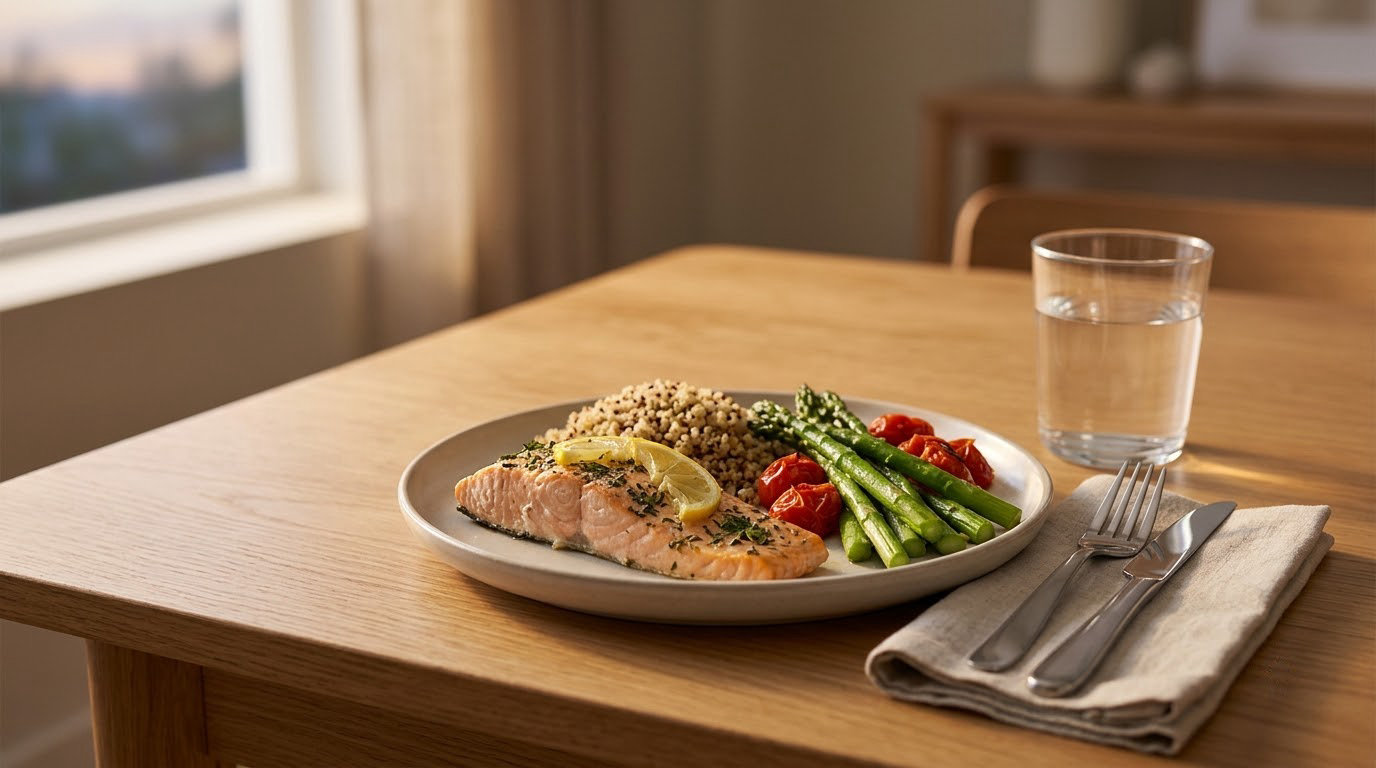
Most people treat dinner as the last meal of the day and nothing more. If you go to bed on time and still lie awake for an hour, dinner is a good place to look, because it is the last thing you control before the lights go off. How to sleep better by changing dinner habits comes down to three levers: when you finish eating, how much you eat, and what you eat and drink with it.
The honest version of this is that no dinner fixes chronic insomnia on its own. What dinner can do is remove three common obstacles — a body still digesting, a bloodstream full of caffeine, and a stomach pushed against your diaphragm — and those three are worth fixing because they are free.
This guide is a two-week experiment rather than a lifestyle overhaul. Eight steps, tested one at a time, with a notebook so you can tell what worked instead of guessing.
Table of Contents
- What You Need
- Step-by-Step: How to Sleep Better by Changing Dinner Habits
- 1. Set a Consistent Dinner Time
- 2. Finish Dinner Two to Three Hours Before Bed
- 3. Keep Evening Portions Comfortable, Not Heavy
- 4. Choose Sleep-Friendly Foods
- 5. Limit Alcohol and Evening Caffeine
- 6. Create a Lighter Bedtime Snack if Needed
- 7. Slow Down During the Last Hour of the Evening
- 8. Test Changes and Keep What Works
- Common Mistakes
- Frequently Asked Questions
- Conclusion
What You Need
You do not need special foods, a gadget, or a supplement. The only real prerequisite is a record, and the easiest one is a notes app where each line says: dinner time, what you ate, what time you got into bed, roughly how long you were awake, and how you felt in the morning.
Two other things help. Pick a dinner time you can actually repeat most nights, and treat the two to three hours after it as non-negotiable quiet time before bed. That gap is where most of the benefit lives, and it is also the part people skip when a work dinner runs long or the kids’ bedtime collides with theirs.
If reflux is part of your evening, add a simple test: eat earlier for a week and note whether the heartburn and the waking both improve. Food does not cause reflux for everyone, but a full stomach lying flat at night is a common trigger.
Step-by-Step: How to Sleep Better by Changing Dinner Habits
Run these over ten to fourteen days. Change one thing at a time, and if a step makes your nights worse, drop it and move on — a habit that consistently ruins your sleep does not belong in your routine, whatever the research says in general.
1. Set a Consistent Dinner Time
Choose one window, such as 6:30 to 7:30 pm, and hold it most nights. A predictable evening meal gives your digestive system a rhythm that lines up with the rest of the day, rather than leaving it on standby while the rest of your body winds down.
You will know it worked when the gap between finishing dinner and getting into bed stops changing from night to night. Researchers have linked the interval between dinner and the midpoint of sleep to metabolic health markers, and dinner-to-sleep timing is one of the few dinner variables that tracks with sleep quality in observational work.
2. Finish Dinner Two to Three Hours Before Bed
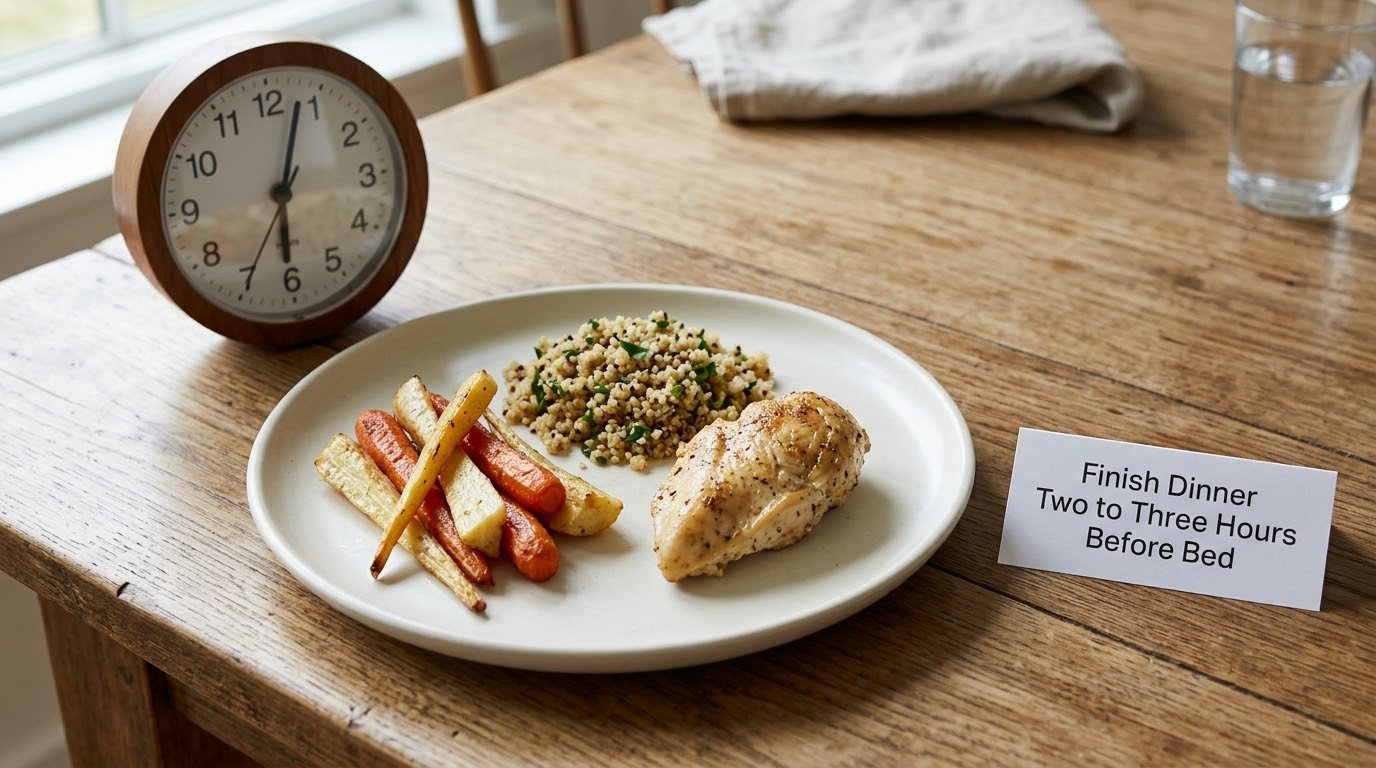
Finish your last real meal two to three hours before you lie down, which is the guidance the Sleep Foundation gives and the range most sleep clinicians repeat. The reason is mechanical: digestion is still active during that window, and lying down while food is being processed makes reflux, heartburn, and restlessness much more likely.
That answer has a range, though. People on r/Biohackers report eating a low-carb, high-protein meal 30 minutes before bed and sleeping fine, and the adults in StrongFirst community forums generally recommend larger meals at least three hours out plus some fruit, mostly banana, before bed. So treat three hours as a strong default, then adjust by your own digestion.
Work backwards from your bedtime to set the clock. A few examples:
- Bedtime at 10:00 pm — finish dinner between 6:00 and 7:00 pm, and treat 2:00 pm as your last caffeine.
- Bedtime at 11:00 pm — finish dinner between 7:00 and 8:00 pm, last caffeine around 3:00 pm.
- Bedtime at midnight — finish dinner between 8:00 and 9:00 pm, last caffeine around 5:00 pm.
3. Keep Evening Portions Comfortable, Not Heavy
Aim for a portion that leaves you satisfied rather than stuffed, and judge it by how you feel an hour later, not by a calorie target. Dinner that sits heavy in the stomach raises core body temperature just as your body needs to cool for sleep, and it delays the drop that pulls you under.
Do not skip dinner to make up for eating late. Going to bed genuinely hungry produces 3am wake-ups, which is a harder habit to break than the late dinner you were trying to fix. A slightly smaller plate at 7 pm beats an empty evening every time.
4. Choose Sleep-Friendly Foods
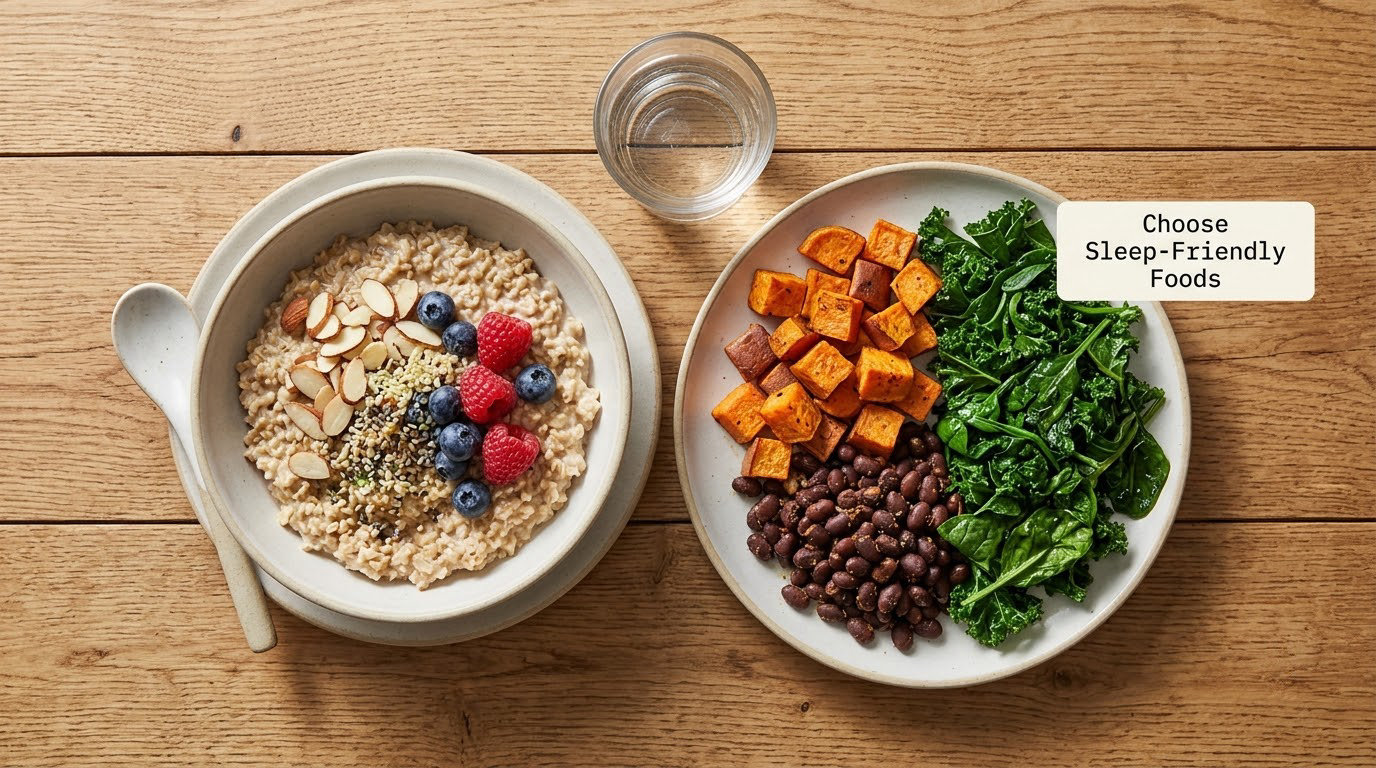
Build dinner around a carbohydrate, a modest serving of protein, and something green. Carbohydrates matter here because they help bring the amino acid tryptophan into the brain, where it feeds the serotonin and melatonin pathway — the mechanism behind the old idea that a carbohydrate-rich evening meal makes you drowsy.
Skip the turkey myth, though. Turkey is not so unusually rich in tryptophan that a Thanksgiving dinner knocks anyone out; several ordinary foods carry as much or more per serving. Practical choices include oats, brown rice, sweet potato, chickpeas, lentils, eggs, fish, plain yogurt, edamame, pumpkin seeds, almonds, spinach, and avocado for magnesium and folate.
Two foods have small controlled trials behind them. Tart cherry juice before bed was linked to about 84 minutes more total sleep time over two weeks, and eating kiwi an hour before bed improved both sleep quality and how quickly people dropped off, in a study with only a handful of participants. Both are worth trying and neither is a treatment for insomnia.
A dinner plate that works: salmon with quinoa and spinach, or a chickpea and lentil curry over brown rice, or a baked sweet potato with black beans and a yogurt-herb sauce. Most people in r/insomnia threads describe some version of the same pattern — warm milk, a banana, a bowl of cereal, chamomile tea — as their pre-bed ritual, and the mechanism is mostly carbohydrate plus comfort.
5. Limit Alcohol and Evening Caffeine
Caffeine has a half-life of roughly four to six hours in adults, so a 4 pm coffee can still be working on you at 10 pm. That includes tea, energy drinks, dark chocolate, and most protein bars. Decaf is not a workaround; it still carries caffeine.
Alcohol is the trap because it feels like it works. It shortens the time to fall asleep, then suppresses REM sleep later in the night, so you get fewer restorative cycles and often wake feeling worse. Cutting it is worth more than any superfood you add.
Also worth cutting after 8 pm: large sugary desserts, very spicy food, and rich fried meals. Each of those tends to keep you awake in a different way — reflux, blood sugar swings, or simply a heavy stomach.
6. Create a Lighter Bedtime Snack if Needed
Some people need something at 9:30 pm and that is fine. Keep it small and easy to digest: a banana with a spoonful of almond butter, a small bowl of plain yogurt with oats, a piece of whole-grain toast with nut butter, or a short glass of warm milk.
Avoid the snacks that backfire. Anything spicy, very fatty, chocolate-heavy, or mint-based is a common reflux trigger, and a large snack within the hour before bed undoes the earlier steps.
7. Slow Down During the Last Hour of the Evening
The hour after dinner matters as much as the meal. Keep lights low, screens down, conversation easy, and chores for tomorrow. Your body is dropping toward its lowest temperature during wind-down, and eating while stimulated or rushing keeps it switched on.
This step is not about food at all, but it is where most evening routines break. A calm run of the last hour is usually worth more than any single ingredient on the plate.
8. Test Changes and Keep What Works
Pick one step, hold it for four or five nights, and note your sleep onset latency — the time between lying down and falling asleep — along with how many times you woke. Then change another variable.
What you are watching for is a small repeatable shift: falling asleep a little faster, waking less at 3am, or feeling more settled on waking up. If a change does nothing after a week, drop it and stop paying attention to it. The habit that survives a busy week is the one worth keeping, and that is usually two or three changes rather than eight.
Common Mistakes
Eating right before bed and blaming your pillow. The gap between dinner and lying down is the cheapest variable to fix and the one most often ignored. Move dinner earlier for a week before changing anything else.
Changing five habits at once. If you shift dinner, cut alcohol, add tart cherry juice, and start a new wind-down routine on the same Monday, you will not know which one helped or which one wrecked your week. One variable at a time is slower and far more informative.
Expecting a superfood to cure insomnia. People on HungryOnion forums are openly sceptical of supplement stacking, and they are right to be. No food or powder treats insomnia, and anyone selling one as a cure is selling something. Ask a pharmacist or doctor before adding supplements.
Tracking only hours in bed. Nine hours of broken sleep is not the same as seven and a half of solid sleep, and sleep trackers are rough instruments. Note awakenings and morning energy alongside the hours.
Believing dietary changes can fix snoring or apnea. Late eating has been associated with more severe sleep apnea in some studies, which is a reason to eat earlier. It is not a treatment. Snoring, witnessed breathing pauses, or daytime sleepiness need a clinician.
Use how to sleep better by changing dinner habits as a gradual experiment
Set a dinner window, change one variable, and keep the record. People on r/Habits ask for doable hacks rather than rules, and they are right about why: an early dinner is not a moral position, it is an experiment you run for a fortnight.
If a change consistently makes you sleep worse, stop it. That is real data too, and it beats following advice that does not fit your digestion, your schedule, or your chronotype.
Frequently Asked Questions
Is dinner too close to bedtime to affect sleep?
Often, yes. Eating within an hour or two of lying down means your body is still digesting while it should be cooling down for sleep, which raises the odds of reflux, heartburn, and restless waking. The usual guidance is to finish dinner two to three hours before bed. Individual tolerance varies, and some people eat later without trouble, so test the change for a week and compare your notes.
What should I eat if I am hungry right before bed?
Keep it small and easy to digest. A banana with almond butter, plain yogurt with oats, whole-grain toast with nut butter, or a short glass of warm milk all work without weighing you down. A modest carbohydrate portion plus a little protein is enough to take the edge off hunger. Skip chocolate, very spicy food, and anything mint-based if you get reflux, and avoid a full meal inside the final hour.
Can changing dinner habits cure insomnia?
No. Dinner habits can remove obstacles like reflux, caffeine carryover, and heavy digestion, and for some people that is enough to notice a real difference in sleep onset latency. Chronic insomnia has many causes, including stress, sleep apnea, and medication effects, and food changes rarely resolve those on their own. If sleep problems persist beyond a month or interfere with daytime functioning, speak with a healthcare professional.
Are superfoods or supplements better for sleep than a balanced meal?
A balanced meal is the better starting point, because it costs less, carries no interaction risk, and works for most people without adjustment. Tart cherry juice and kiwi have small controlled trials behind them, with one tart cherry study reporting about 84 minutes more total sleep time over two weeks. Supplements interact with medications, and anyone on prescriptions should ask a pharmacist or doctor before adding magnesium, melatonin, or anything else.
Should I skip dinner to sleep better?
Usually not. Going to bed hungry is one of the most reliable ways to wake up at 3am, and a broken night is harder to fix than a late dinner. If dinner ran late, eat a smaller, lighter version of it earlier rather than skipping the meal entirely. Consistent, adequate daytime and evening eating also makes it easier to keep a steady weight and a stable sleep-wake cycle.
When should I see a doctor about sleep problems?
Book an appointment if trouble falling or staying asleep happens three nights a week or more for a month, or if it is affecting your work, mood, or safety. Go sooner if you snore loudly, gasp or stop breathing during sleep, wake with headaches, or feel severely sleepy while driving. Adults generally need seven to nine hours, so persistent short sleep warrants a professional look as well.
Conclusion
Start with two changes this week: pick a dinner time you can repeat and finish eating two to three hours before bed, with a lighter plate than you are used to. Log dinner time, time to fall asleep, and awakenings for seven nights before adjusting anything else.
If you are still stuck after a fortnight of steady effort, or if snoring, breathing pauses, or heavy daytime sleepiness are part of the picture, talk to a doctor. Dinner habits are worth changing, but they are not a substitute for an assessment of what is keeping you awake.