
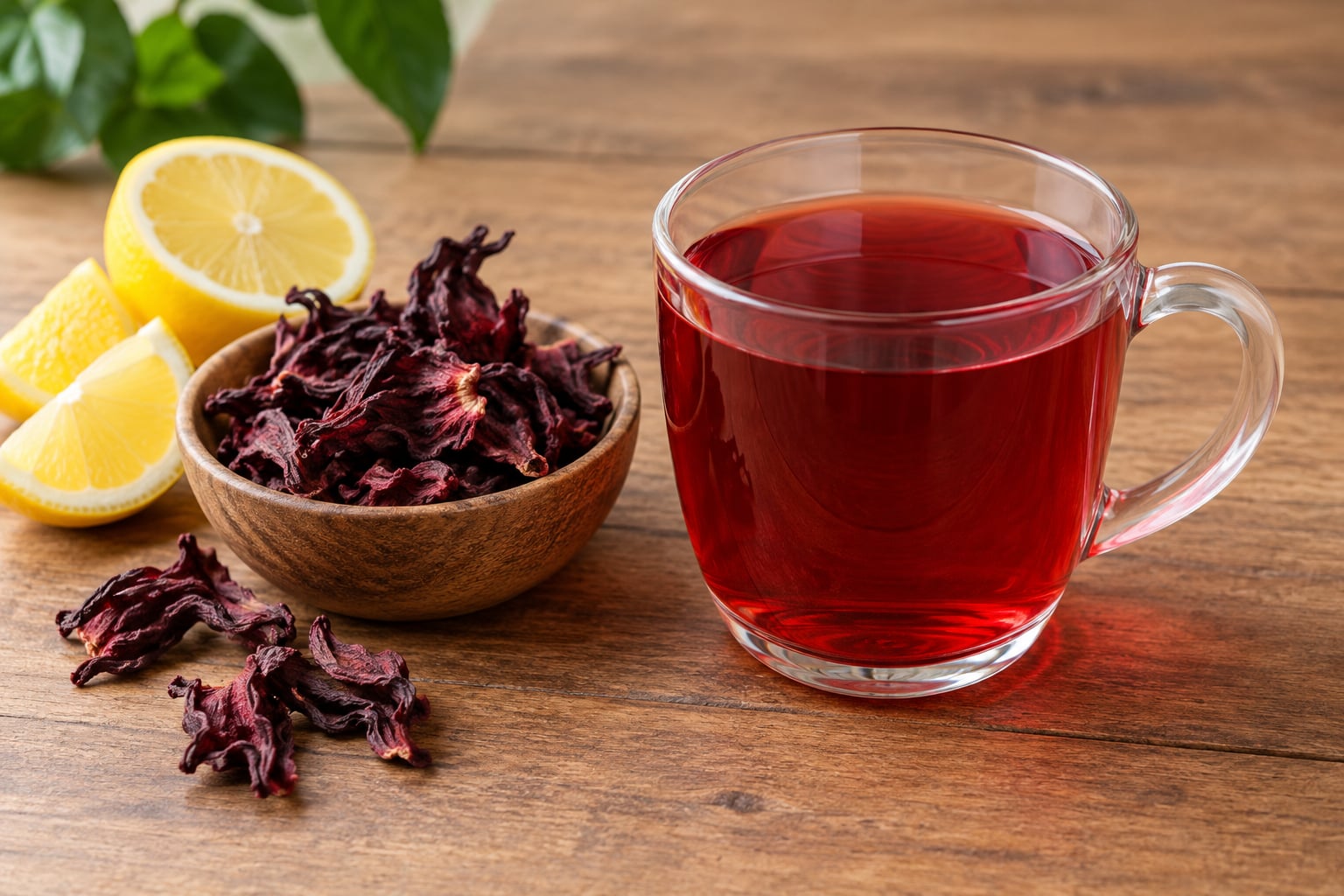
Hibiscus tea tastes tart, bright and lightly floral, closer to cranberry juice or pomegranate than to any black or green tea. Making it well is simple: pour hot water over dried hibiscus flowers, steep 5 to 7 minutes, strain, then taste before you add anything else. It takes five minutes and costs almost nothing to redo if the first cup is too sharp.
I drink it most mornings when I want something warm that isn’t coffee, and what trips up newcomers is never the boiling water. It’s the ratio, and the assumption that a tart cup is a failed cup. Once you expect the tartness, you start adjusting it instead of trying to erase it.
Table of Contents
- What You Need
- Step-by-Step
- What Does Hibiscus Tea Taste Like?
- Common Mistakes
- Frequently Asked Questions
- How much hibiscus should I use per cup?
- Should I boil hibiscus flowers or just pour hot water over them?
- Why does my hibiscus tea taste bitter?
- Can I add milk, honey, or lemon to hibiscus tea?
- How long does homemade hibiscus tea keep in the refrigerator?
- Is hibiscus tea naturally tart, and can I make it sweeter?
- How to Make Hibiscus Tea and What It Tastes Like: Start With the Basic Recipe
What You Need
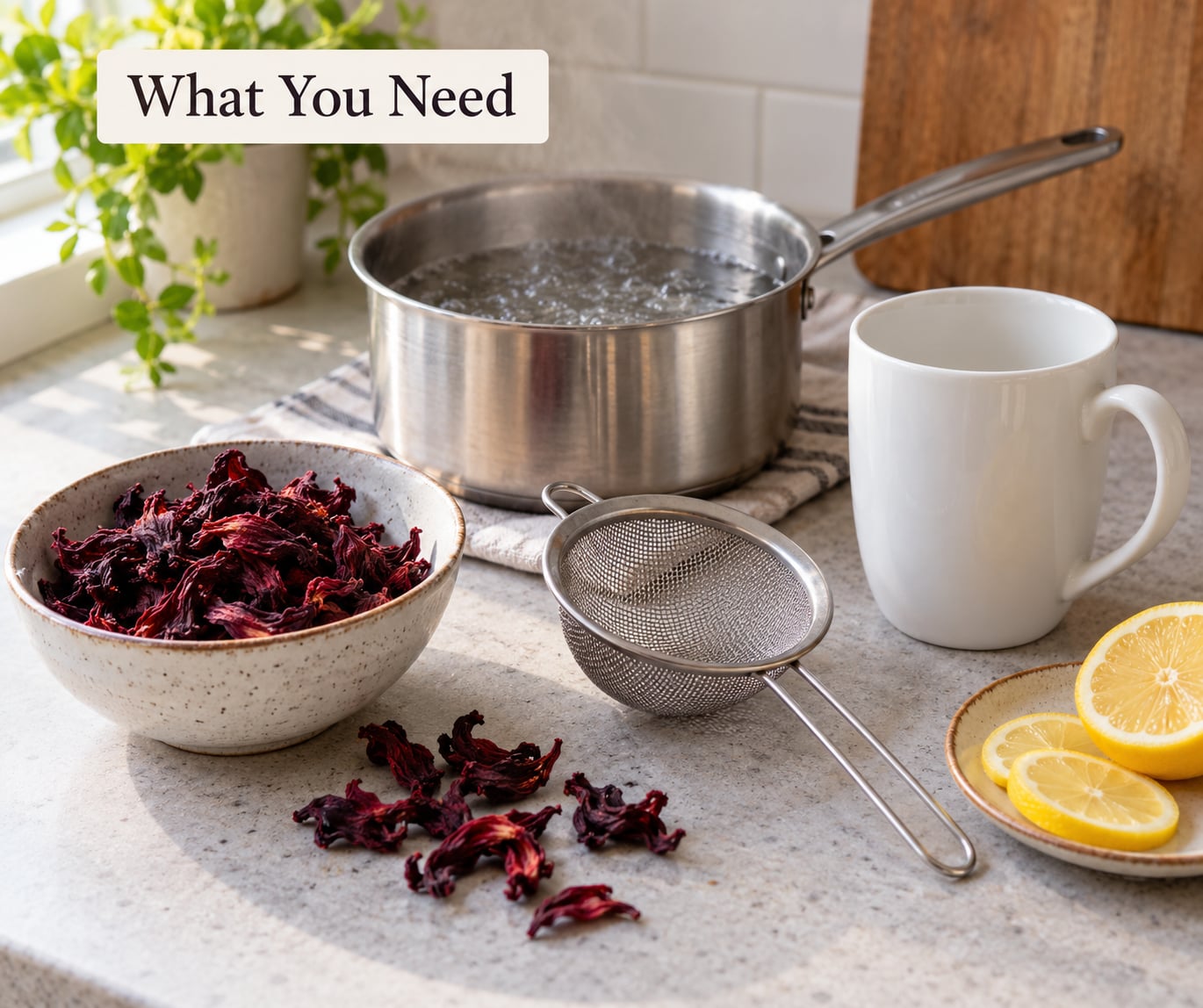
The core list is short: dried hibiscus flowers or one tea bag, fresh water, a kettle or small saucepan, and something to strain into if you’re using loose flowers.
- 1 to 1.5 teaspoons dried hibiscus flowers per 12 oz cup, or one tea bag
- Fresh water, filtered if your tap water tastes flat or heavily chlorinated
- A kettle, or a saucepan if you want to simmer the flowers directly
- A fine-mesh strainer, small tea infuser, or a mug with a built-in filter
- Optional: lemon or lime juice, fresh ginger, mint, cinnamon, and a sweetener such as honey, agave, or simple syrup
Loose flowers give you control over strength, which matters more with hibiscus than with most teas because the flavor keeps developing while it sits. A tea bag is faster and neater, and most bags are sized for about a cup of water, which is a reasonable starting point.
One thing worth getting right: buy Hibiscus sabdariffa, the tea species, not an ornamental hibiscus from a garden center. Look for the words roselle, sorrel, flor de Jamaica, or Jamaican flowers on the bag.
Step-by-Step
Choose Your Hibiscus
For your first cup, start with one tea bag or a rounded teaspoon of loose flowers in a mug you can leave alone for six minutes. Loose flowers brew a little fuller and a little darker, and you can pull them out early. Tea bags are hard to overdo, which makes them the safer pick if you are still learning what you like.
Heat the Water and Choose the Strength
Bring water to a boil, then let it sit for about a minute, to roughly 205 to 212°F. That small rest keeps the aroma from turning flat while still hot enough to pull flavor out of the flowers quickly.
For a mild cup, use 1 teaspoon per cup and pull it at five minutes. A standard cup is 1 to 1.5 teaspoons and seven minutes. If you want it strong, go to 2 teaspoons and ten minutes rather than cramming in more flowers at a short steep, which is where bitterness usually starts.
Steep Until the Flavor Develops
Pour the water over the flowers, cover the mug or pot with a lid or a small plate, and set a timer. Covered steeping holds heat and aroma in. You are looking for a deep ruby red color and a sour, berry-like smell; when the liquid turns a dark brick brown, it has gone past where you want it.
Tap the mug or lift the infuser at five minutes and check. The color is the fastest signal you have, more reliable than any clock.
Strain and Flavor the Tea
Pour through a fine-mesh sieve or lift the infuser out. If you skip this with loose flowers, you drink grit, and that is the single most common complaint about homemade hibiscus.
Taste it as it is first, before anything goes in. Then add lemon a squeeze at a time, or a thin slice of fresh ginger, or a few mint leaves. Sweeteners work best stirred in while the tea is still hot, because honey and agave will not dissolve properly in cold liquid.
If you have time, cold brewing is the easier route. Put a handful of flowers in a jar of cold filtered water, refrigerate 6 to 12 hours, and strain. The result is smoother and less astringent, with no bitterness to chase. It is also the closest thing to agua de Jamaica, the iced hibiscus drink served across Mexico, the Caribbean and West Africa, usually sweetened generously and poured over ice. If you keep a second culture going at home, how to make water kefir at home covers a similar jar-and-wait rhythm.
What Does Hibiscus Tea Taste Like?
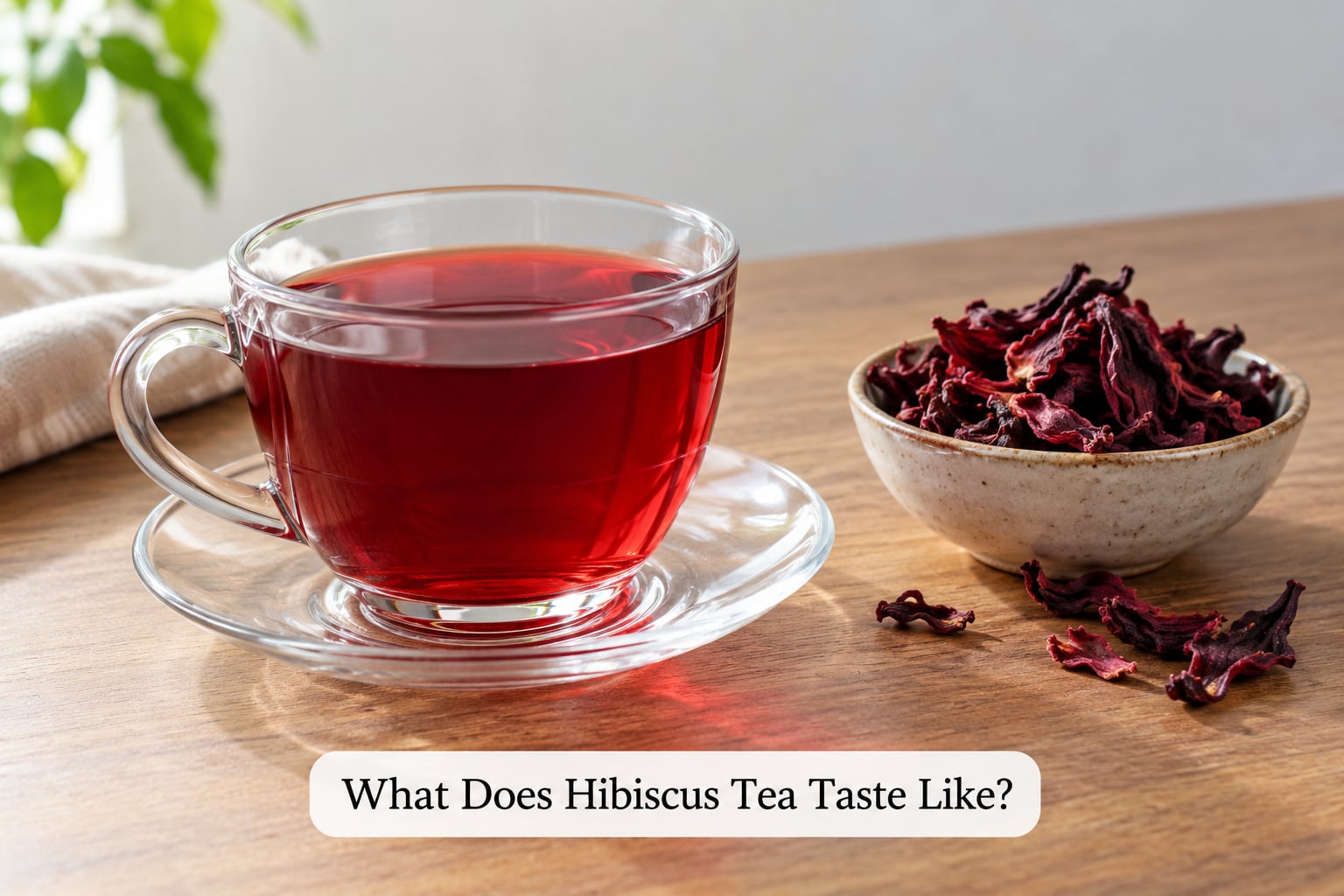
Hibiscus tea tastes tart first, then fruity, with a light floral note and a faint astringent finish. Most people who try it for the first time say it reminds them of cranberry juice without the sweetness, with an earthy edge underneath that reads as mild tea.
It is tart because of the natural acids in the calyx, the red cup-shaped part of the flower that is dried and sold. Nothing about that sourness is a brewing mistake. It is the flavor, and sugar, citrus and ginger are how you balance it rather than remove it.
| Drink | Sweet or sour | Fruit note | Closest thing to it |
|---|---|---|---|
| Hibiscus tea | Sour | Red berry, light floral | Astringent, tannin-like finish that cranberry juice lacks |
| Cranberry juice | Sour | Sharp red berry | Hibiscus without the earthy tea note |
| Pomegranate juice | Sour | Sweet-tart red fruit | Rounder and sweeter than hibiscus |
| Red zinger | Slightly sweet | Berry and citrus | Milder and fruitier, closer to a light herbal iced tea |
| Black tea | Bitter | None | Different family entirely: astringency without fruit |
Two other drinks get compared to it constantly. Rooibos is the other caffeine-free herbal cup worth keeping in the cupboard, and if your issue is flavor rather than caffeine, how to make rooibos tea taste better covers the same adjustment game in a milder direction.
How you brew changes the cup more than the flower itself does. A short hot steep is brighter and sharper. A long hot steep goes flat and tannic. Cold brew is the smoothest and most fragrant option, with a rounded berry character and almost no bitterness. Sweetened heavily and served cold, hibiscus reads as a fruit punch rather than a tea at all.
Common Mistakes
Too many flowers. If the cup is punishingly sour rather than pleasantly tart, you probably used 2 or 3 teaspoons for a short steep. Cut back to 1 teaspoon and extend the steep instead.
Steeping too long. Past about 10 minutes, the color turns from ruby to dark brown and the tannins take over. That is the astringent, dusty aftertaste people describe as bad tea. Pull it earlier next time.
Pouring cold water over the flowers. You end up with pale, weakly flavored tea. Boil, then rest the water a minute.
Skipping the lid. Uncovered, the aroma escapes and the brew tastes flatter. A plate over a mug works fine.
Leaving grit in. Always strain. A fine sieve catches the small broken pieces that a slotted spoon misses.
Cloudy liquid. This is usually over-boiling the flowers directly in the saucepan for long stretches, or forcing the strained liquid through a cloth. Pour, don’t press, and keep the pot method to about 15 minutes on a simmer.
A couple of small habits make a noticeable difference. Use filtered water if your tap water is heavily chlorinated or very hard, because the flavor of the water carries straight into the cup. And yes, you can steep the same flowers a second time: use the same flowers with fresh hot water, cut the steep to 4 minutes, and expect a lighter, less colorful cup that’s still perfectly drinkable.
Frequently Asked Questions
How much hibiscus should I use per cup?
Start with 1 to 1.5 teaspoons of dried flowers for a 12 ounce cup of water, or one tea bag. For a milder cup use 1 teaspoon and steep five minutes; for a stronger one use 2 teaspoons and give it ten. Going heavier on the flowers while shortening the steep is the usual cause of a bitter cup.
Should I boil hibiscus flowers or just pour hot water over them?
Both work. Pouring boiling water over flowers in a mug is faster and gives a brighter, cleaner cup. Simmering the flowers in a saucepan for about 15 minutes is the traditional method and pulls a deeper, more rounded flavor, similar to agua de Jamaica. Just avoid a hard rolling boil for long periods, which clouds the liquid and turns it bitter.
Why does my hibiscus tea taste bitter?
Bitterness almost always means one of three things: too many flowers, too long a steep, or too much heat. Pull the infuser at five to seven minutes, drop to 1 to 1.5 teaspoons per cup, and let boiled water rest a minute before pouring. Cold brewing in the refrigerator overnight fixes the problem almost every time.
Can I add milk, honey, or lemon to hibiscus tea?
All three are common. A squeeze of lemon or lime sharpens the fruitiness and is the classic pairing. Honey and agave balance the tartness, and honey dissolves best stirred into hot tea. Milk is a real option if you want something closer to a spiced iced tea, though it softens the fruit notes considerably.
How long does homemade hibiscus tea keep in the refrigerator?
Keep brewed tea in a covered container in the fridge and drink it within three to four days. If you made agua de jamaica-style batches, they hold closer to five days but lose fizz and brightness as they sit. Dried flowers keep far longer in an airtight jar away from light and humidity, usually a year or more.
Is hibiscus tea naturally tart, and can I make it sweeter?
Yes, the tartness is entirely natural and comes from acids in the dried calyx, the red cup-shaped part of the flower. To soften it, add sweetener gradually rather than all at once, starting with a teaspoon of honey or agave per cup. Citrus and ginger also balance the sourness without adding sugar.
How to Make Hibiscus Tea and What It Tastes Like: Start With the Basic Recipe
Measure 1 to 1.5 teaspoons of dried flowers into a mug, pour over water you boiled and rested for a minute, cover, and steep five to seven minutes. Strain it and taste it before adding anything. That first sip is the whole lesson: the tartness is the tea, not a flaw in it.
Then adjust a little at a time. A squeeze of lemon, a thin slice of ginger, or a teaspoon of honey stirred in while it’s hot will move the cup toward sweet or bright without flattening it. Once you’ve dialed in a ratio you like, write it down, because it will not survive the week otherwise.
One note on frequency. Hibiscus tea is commonly consumed as part of a daily routine, and it’s sometimes discussed for blood pressure support. If you’re pregnant, taking blood pressure medication, or on any regular prescription, talk with your doctor or a pharmacist before making it a habit. General wellness information isn’t a substitute for advice tailored to you.