
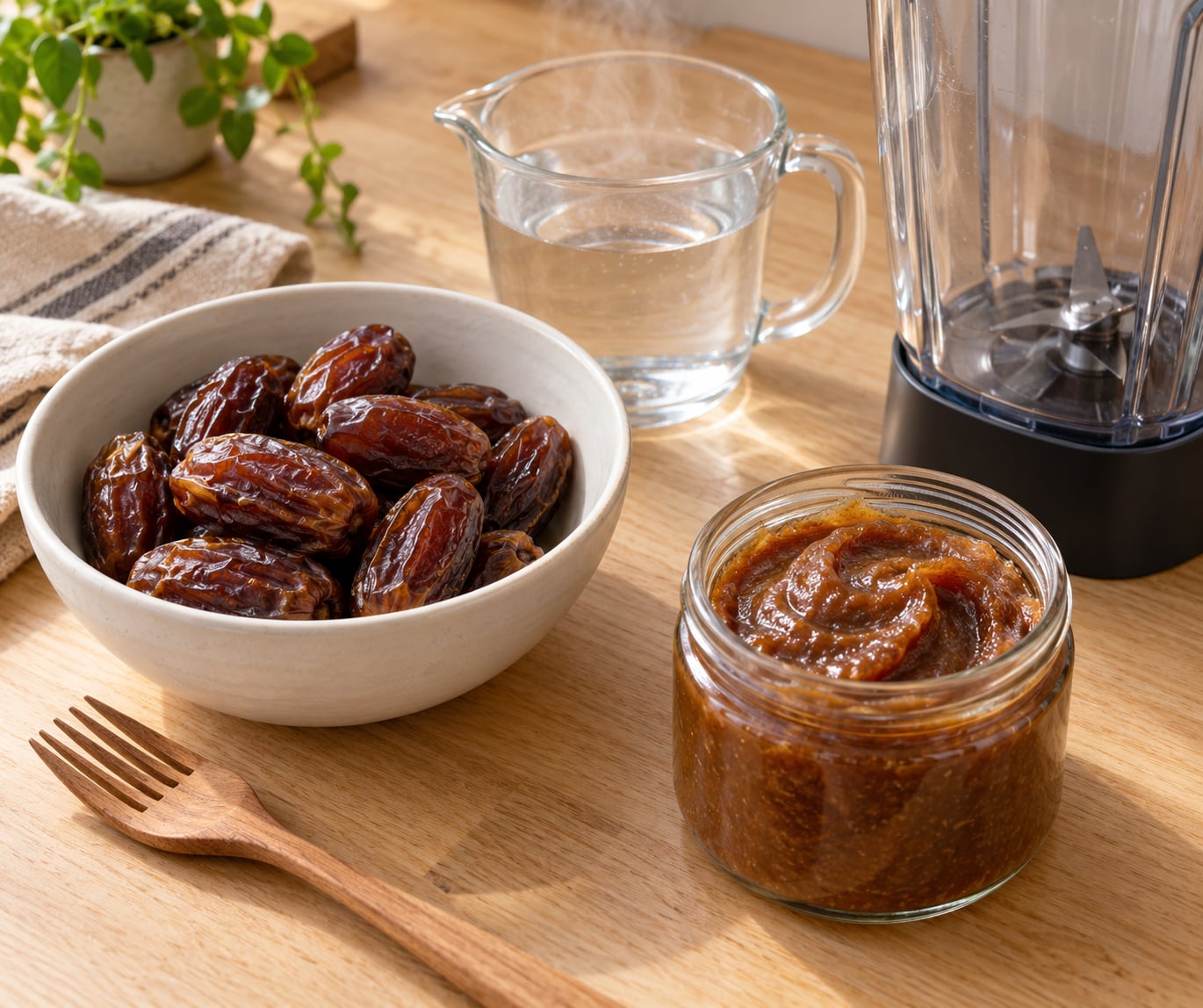
Date paste is a two-ingredient natural sweetener: pitted dates soaked in hot water, then blended until smooth. Soften 2 cups (about 12 oz / 340 g) of dates in 1 to 1.5 cups of hot water for 10 to 15 minutes, blend, and you have roughly 2 cups of paste ready for cookies, brownies, quick bread and oatmeal. It takes about 25 minutes start to finish.
I keep a jar of this in the fridge permanently. It replaces the brown sugar in my cookie dough, sweetens oatmeal in the morning, and turns leftover bread into something worth eating. Once you know the base ratio, you can adjust the water for whatever you are baking.
Dates are fruit, so the paste brings fiber and potassium along with the sweetness. If you have been weighing maple syrup vs honey for baking, this is a third lane that costs you nothing at the grocery store and needs no cooking.
Table of Contents
What You Need
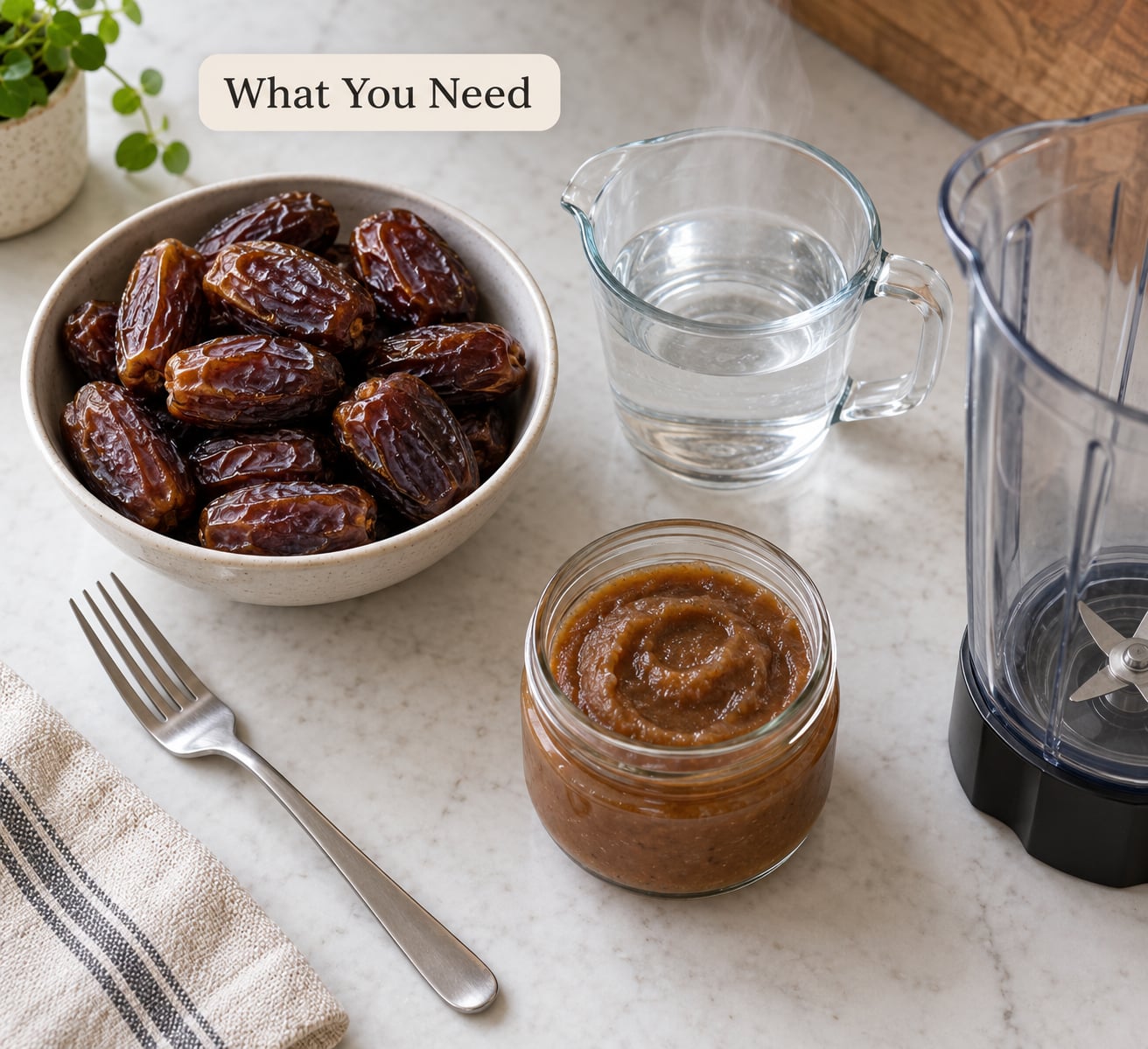
That is the whole shopping list. Two ingredients, one piece of equipment.
- 2 cups pitted dates (about 12 oz / 340 g), Medjool if you can find them
- 1 to 1.5 cups hot water, divided. Start with 1 cup and add more only if the paste needs it
- A high-speed blender, food processor, or immersion blender. A fork and a bowl also work if you do not mind texture
Medjool dates are soft, very sweet and dense, so they need the least water. Deglet Noor dates and cheaper bulk bags are drier and less sweet, so plan on the full 1.5 cups and expect to add a little more liquid later. Mixing both kinds in one batch works fine, it just lands in the middle.
For flavor, a spoonful of vanilla, a pinch of cinnamon, or the juice of half a lemon all blend in well. Lemon zest with fresh ginger is a good move if you plan to use the paste in a savory dish later.
Step-by-Step: How to Make Date Paste for Baking
Soak the Dates Until Soft
Put the pitted dates in a bowl, pour over the hot water, and leave them until they bend without resistance. Ten minutes for Medjools, closer to 20 for dried Deglet Noors. The test is simple: press one between your fingers. If it squishes flat with no hard core left, it is ready.
| Method | Time | Result |
|---|---|---|
| Hot water soak | 10 to 20 min | Soft dates, cleanest flavor |
| Boiling water pour-over | 10 min | Fastest, slightly softer dates |
| Simmer in a saucepan | 15 to 20 min | Gooey paste, good for pies |
| Microwave in water | 2 to 3 min | Quick, uneven on the edges |
Pouring freshly boiled water over the dates and letting them sit does nearly as well as simmering and saves you a pan to wash. Keep the soaking water, you will need it.
Blend Until Smooth
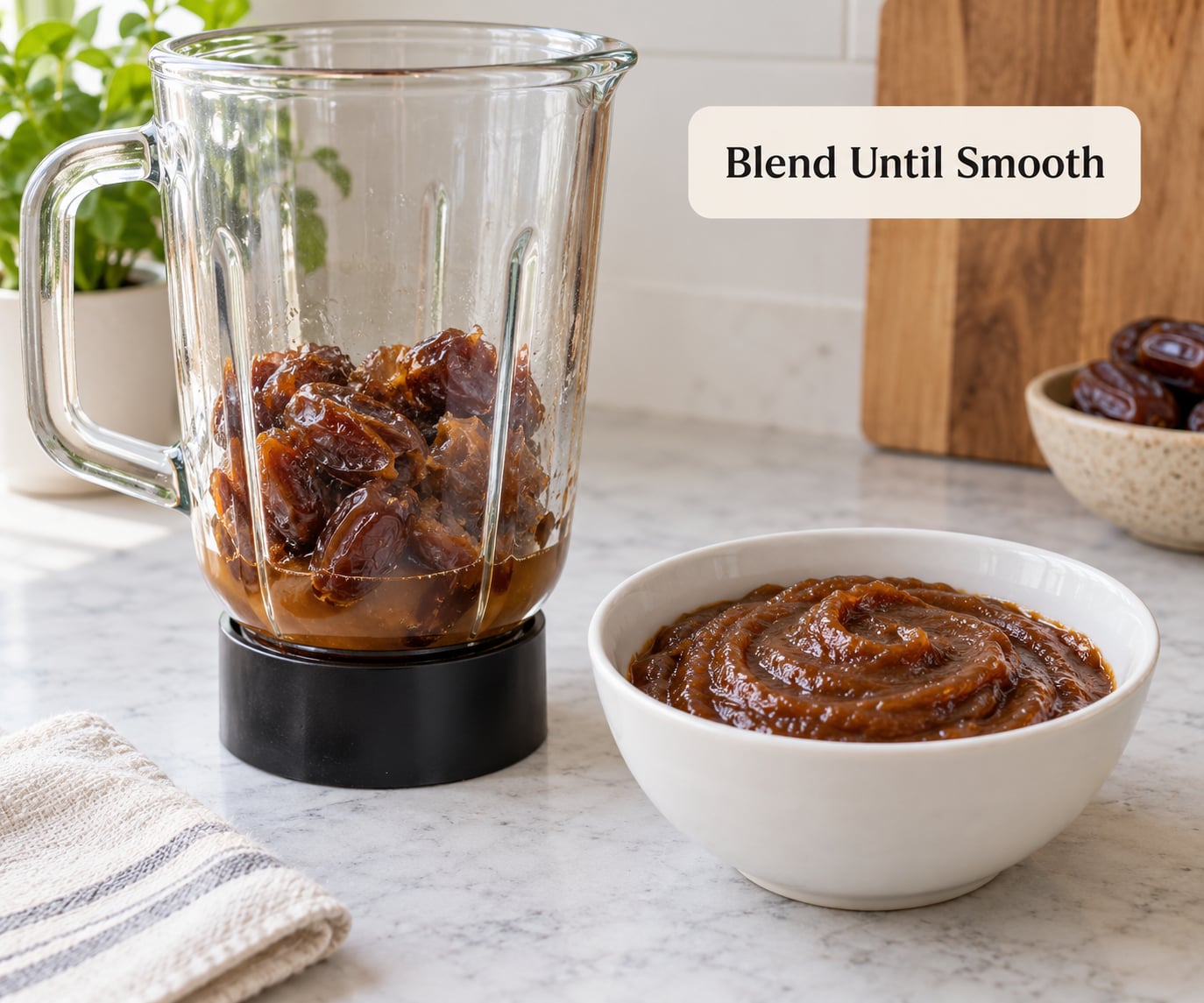
Drain the dates and put them in the blender with about half of the reserved water. Pulse a few times to break up the chunks, then blend on high, scraping the sides down once or twice, until no stringy bits remain.
Add the rest of the water a tablespoon at a time. You want the paste to hold a soft peak when you lift the lid, then slowly slide off. Stop pouring while it still looks slightly thick, because the paste thickens again as it cools.
A food processor with an S-blade needs the same treatment and takes a little longer. An immersion blender in a deep cup is the mess-free option if you have one.
One safety note worth knowing: blender manufacturers disagree about hot liquids. Vitamix allows blending hot mixtures, while Nutribullet and most standard blenders tell you not to. If your dates are hot, let them cool a few minutes or use an immersion blender in a tall cup, away from the lid seam.
Before you blend, feel each date for a pit. A stray stone will show up as a gritty fleck later, and a high-speed blender can drive that grit all the way through the paste.
Adjust the Consistency for Your Recipe
For cookies and brownies, aim for thick. The paste should mound in the spoon and hold its shape when you drop it. For quick breads, oatmeal, smoothies and salad dressings, loosen it until it pours like honey.
If the paste is too stiff for the bowl you are using, warm it for 10 seconds in the microwave. If it is slack, simmer it with the lid off for a few minutes until it pulls back from the edge of the pan.
Here is how the swap works when you are trading sugar or syrup out of a recipe. The moisture column matters more than most people expect, since that extra liquid is what makes date cookies thick and muffin-like.
| Instead of | Use date paste | Then adjust |
|---|---|---|
| 1 cup sugar | 1 to 1.25 cups paste | Cut flour by 1 to 2 tbsp per cup swapped |
| 3/4 cup sugar | 1 cup paste | Reduce other liquids if the batter looks loose |
| 1 cup maple syrup | about 2 cups paste | Reduce added water or milk by half a cup |
| 1 cup chopped dates | 3/4 cup paste | Add 2 tbsp flour, the paste holds less water |
Cookies made with date paste will not spread the way a sugar cookie does, and they will not crisp at the edges. Press the dough balls flat before baking, leave a little more room between them, and expect a denser, chewier crumb.
Store the Finished Date Paste
Transfer the paste to a clean jar or container while it is still warm, press the surface flat, and seal it. Refrigerated in an airtight container it keeps about a month; frozen in portions it keeps three to six months. There is no safe room-temp storage for homemade paste, since the water content is far too high.
| Method | Keeps | Best for |
|---|---|---|
| Airtight jar, refrigerator | 3 to 4 weeks | Weekly baking |
| Portioned and frozen | 3 to 6 months | Baking twice a month or less |
| Counter, uncovered | Not recommended | None |
Freezing in an ice-cube tray is the easiest way to portion it. One cube is roughly 2 tablespoons, which is a useful measure for a single loaf or a dozen cookies. Move the frozen cubes to a sealed bag so they do not pick up freezer smells, then thaw one at room temperature or in the pan you are about to grease.
Thaw in the refrigerator overnight rather than on the counter, and use the paste within a few days after it thaws. Pouring a thin layer of oil over the surface cuts down on condensation, which is the thing that makes paste go sour fastest. It also travels well if you are bringing paste to a bake, along with a frozen jar of banana ice cream made without an ice cream maker, since both keep for months in a cold bag.
Common Mistakes
- The paste is gritty. The dates were not soft enough, or a pit survived the blend. Soak longer, check every date for stones, and blend a full minute past the point where it looks done.
- The paste is watery. You added all the water at once. Simmer it open until it pulls away from the pan, or bake it in a thin layer to drive off moisture.
- The paste is stiff and refuses to blend. Too little liquid, or dates that were very dry. Deglet Noors and bulk bags need the full 1.5 cups of water and a longer soak.
- The baked goods turn out too sweet. Dates concentrate as moisture bakes off. Reduce the paste by a quarter cup per cup of sugar swapped, or add a little more flour to balance it.
- The paste darkens in the jar. It is normal oxidation, the color shifts from amber to brown over a few days and the flavor stays fine. Press the surface flat and refrigerate it promptly.
- Cookies come out muffin-like and thick. That is the paste holding moisture, not a mistake in your mixing. Flatten the dough balls before baking; the chew is the trade.
Frequently Asked Questions
What is the best type of dates for making baking paste?
Medjool dates give the smoothest paste and need the least water, usually 1 cup per 2 cups of dates. Deglet Noor dates and cheaper bulk bags work well too, but they are drier and less sweet, so use 1.5 cups of water and expect to add more later. Mixing the two in one batch is fine.
Can I make date paste without a blender?
Yes. Soak the dates until soft, then mash them with a fork in a bowl for a rustic texture, or use a potato masher for a smoother one. An immersion blender in a tall cup gives you a proper puree without any machine parts to wash. Expect a few small lumps, which is harmless in cookies and bread.
How much date paste should I use in cookies or brownies?
Replace a cup of sugar with 1 to 1.25 cups of paste, then cut the flour by 1 to 2 tablespoons because of the extra moisture. Many bakers start at 3/4 cup sugar to 1 cup paste and add more if the dough tastes flat. Press the dough balls flat before baking since date cookies do not spread on their own.
Why is my date paste gritty or stringy?
Grit usually means a pit that survived, or dates that were not soft enough before blending. Stringiness means the blades never fully broke the fibers down. Soak the dates for the full 15 minutes, check each one for stones, pulse first to break up the chunks, then blend for a full minute past when it looks done.
How long does homemade date paste last in the refrigerator?
In an airtight jar it keeps about 3 to 4 weeks, and 4 weeks is a reasonable ceiling for a batch you make regularly. Portion it into an ice-cube tray and freeze it for 3 to 6 months if you bake less often. There is no safe room-temp storage for homemade paste because of the water content.
Can I use date paste instead of sugar in baking?
You can, but it is not a straight one-for-one swap. Dates are sweeter than sugar and hold far more moisture, so use slightly more paste and reduce the flour. One cup of sugar takes about 1 to 1.25 cups of paste. Cakes, quick breads and cookies all work; thin pastries and custards do not, since they need a dry crumb.
Conclusion
That is the whole of how to make date paste for baking: 2 cups of pitted dates, 1 cup of hot water, a soak until the dates give under your fingers, and the reserved soaking water added slowly while you blend. That base ratio gives you about 2 cups of paste.
Keep a jar in the fridge and adjust the thickness for whatever comes next, cookies, quick bread or morning oatmeal.