
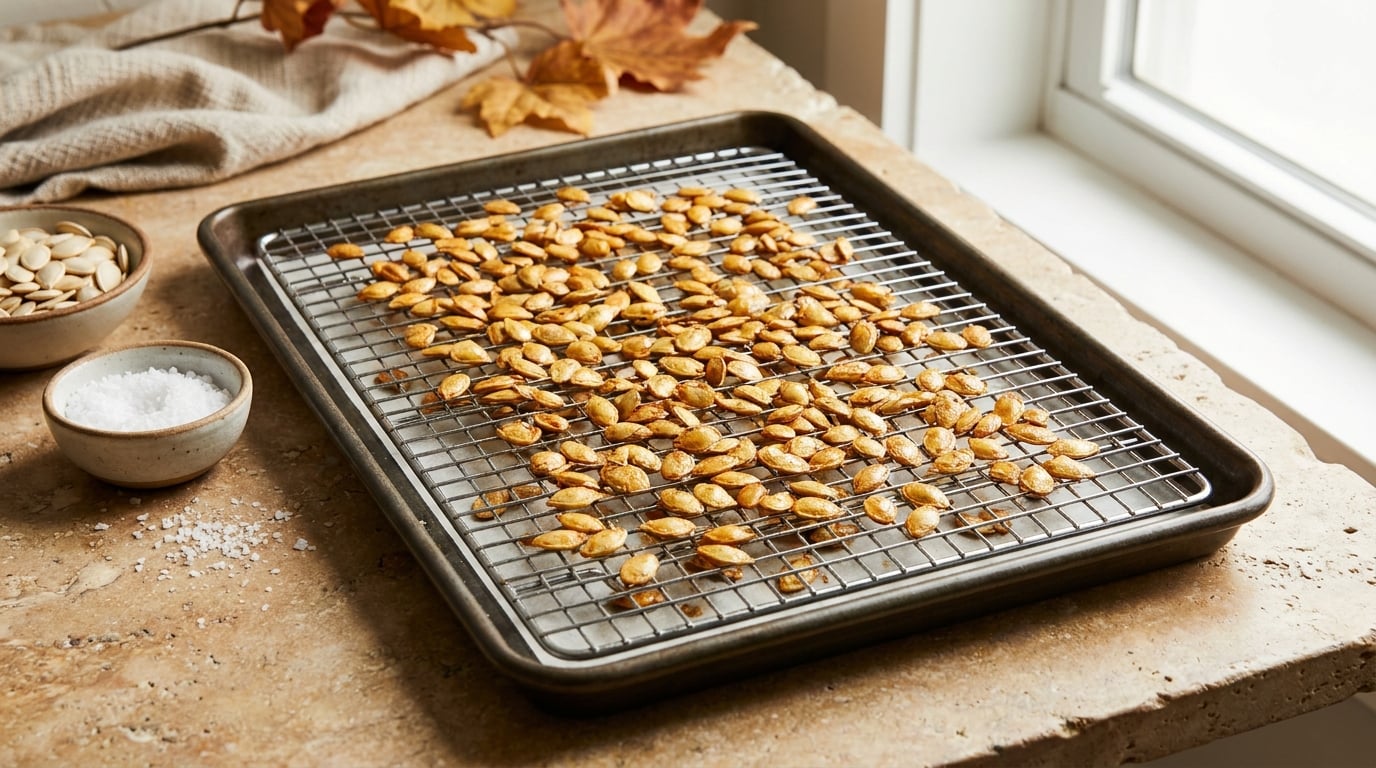
Roast pumpkin seeds at 350F for 10 to 15 minutes, spread in a single uncrowded layer, stir once at the halfway mark, and let them cool uncovered on the pan. That is the whole crunch formula, and it takes about 25 minutes from scraping the seeds to eating one.
The reason seeds bend instead of snap is moisture. A seed that still holds surface water when it goes into the oven steams in its own trapped vapor, and the outside sets soft and leathery rather than brittle. Dry the seeds, give them room, use moderate heat, and finish them off the heat.
Whether you are scraping seeds out of a jack-o’-lantern in 2026 or opening a bag of raw pepitas in June, the same rules apply. Fresh carving seeds run wetter and take a little longer than the dry pepitas from a store shelf, which is the single biggest reason two people follow the same recipe and get different results.
Table of Contents
What You Need
For a small batch, about 1 to 2 cups of seeds, you need very little:
- Seeds: 1 to 2 cups hulled raw pepitas, or the seeds from one pie or carving pumpkin still in their shells.
- One rimmed half-sheet baking sheet. The rim is not decoration. Seeds pushed to a bare flat sheet slide off when you shake the pan.
- Fine sea salt, about 1 teaspoon for 2 cups of seeds.
- A teaspoon of oil, olive or avocado, purely so seasoning sticks. Skipping it is fine and gives you a cleaner nuttier seed.
- A wire cooling rack or a flat plate, plus a thin spatula for moving the seeds.
- A clean kitchen towel, for drying. This is the tool that matters most.
Optional seasonings: garlic powder, smoked paprika, cayenne, cumin, curry powder, coconut sugar, cinnamon, pumpkin spice, or a teaspoon of maple syrup mixed with salt. Add anything with sugar or powdered spice at the end of the roast, since those scorch long before the seeds brown.
Parchment paper is not required. For very moist seeds an unlined metal sheet dries faster, because parchment can hold a film of steam underneath.
Step-by-Step
How to Prepare Pumpkin Seeds for Roasting
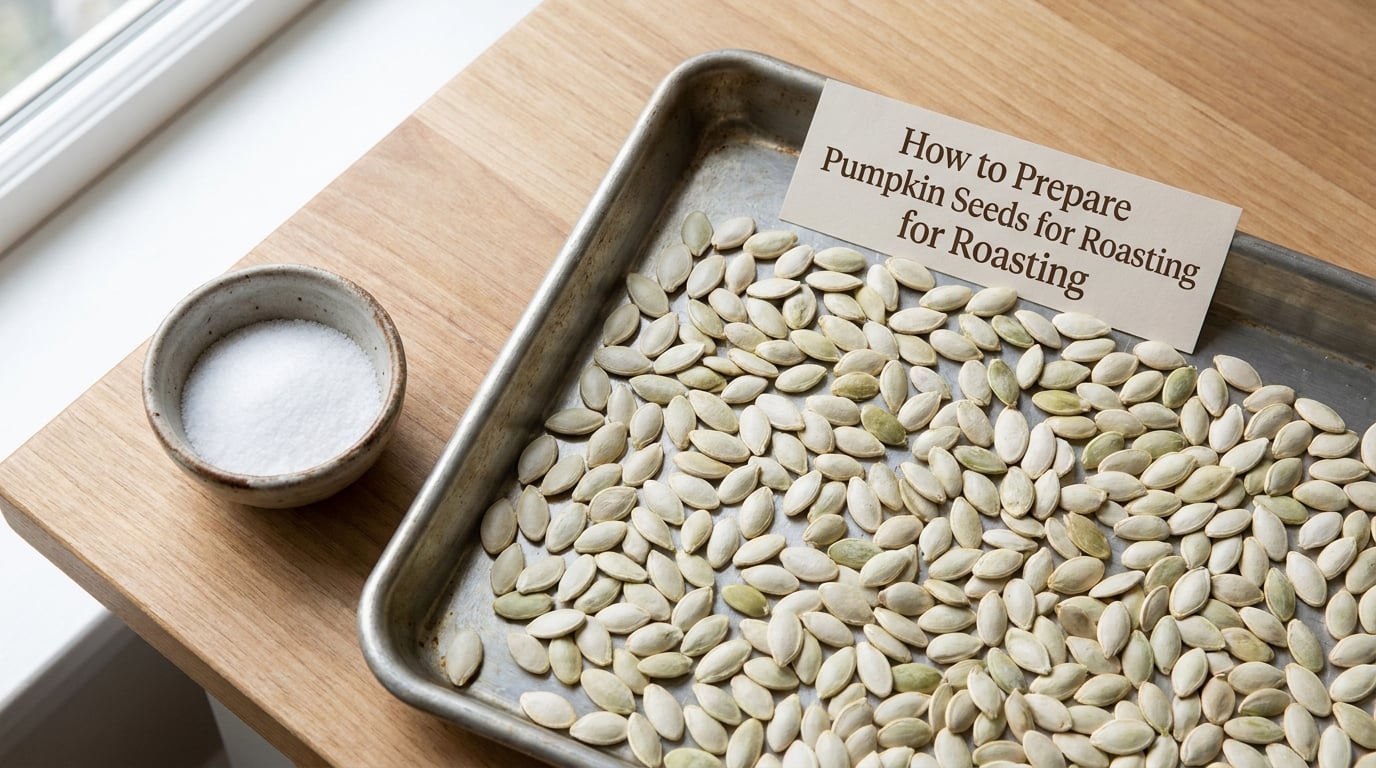
Start with clean, hulled seeds and pick off any stringy bits of pulp. Do not rinse them. Water you add has to come back off, and pulp you leave behind is moisture you did not ask for.
If the seeds came straight from a wet pumpkin, blot them firmly with a towel, then spread them on a second towel for 20 to 30 minutes. Freshly dug seeds give up a surprising amount of water in that window.
You can simmer seeds in salted water for about 10 minutes, drain, and dry them on a towel before roasting. It seasons the center and softens the shell, which some people like. It is optional, and it works against maximum crunch.
For seeds that still feel damp, use a two-stage start: 10 to 15 minutes in a 200F oven on the unlined sheet, then raise the heat. The seeds are crisp when they rattle, not when they look dry.
How to Roast Pumpkin Seeds at Home
Heat the oven to 350F and give it a full 10 minutes before the pan goes in. A sheet added to a still-cooling oven loses the time you thought you were saving.
Toss the dry seeds with the oil and salt, then spread them on the sheet so no seed sits on top of another. A half-sheet holds roughly 2 cups of hulled seeds with real space between them. If your seeds are touching in patches, use a second pan rather than piling up the first one.
Roast 10 to 15 minutes for hulled pepitas, and closer to 15 to 20 minutes for seeds still in shell. Stir or shake the pan at the 5-minute mark so the underside does not darken and stick.
Pull the pan when the seeds are pale gold and the kitchen smells like popcorn or toasted nuts. Do not wait for a hard crunch in the oven, because the seeds keep crisping as they cool and waiting is how batches turn bitter.
This table covers the temperatures you will see recommended across recipe sites. All times assume a conventional oven and one uncrowded layer.
| Oven temperature | Time for hulled pepitas | What you get | Best for |
|---|---|---|---|
| 250F | 25 to 30 minutes | Even color, no scorch risk, very tender center | Very moist seeds and first attempts |
| 300F | 20 to 25 minutes | Mild browning, forgiving, excellent crunch | Large batches and cool ovens |
| 325F | 15 to 20 minutes | Light gold, balanced, good seasoning adhesion | A dependable everyday middle |
| 350F | 10 to 15 minutes | Golden, strong nutty aroma, fastest route | Dry store-bought pepitas |
| 375F | 8 to 12 minutes | Deep gold, needs constant attention | Small batches on a cool-running oven |
Convection ovens run hotter than the numbers above. Drop the temperature by about 25F and pull the seeds two minutes early.
How to Cool Pumpkin Seeds Without Making Them Soft
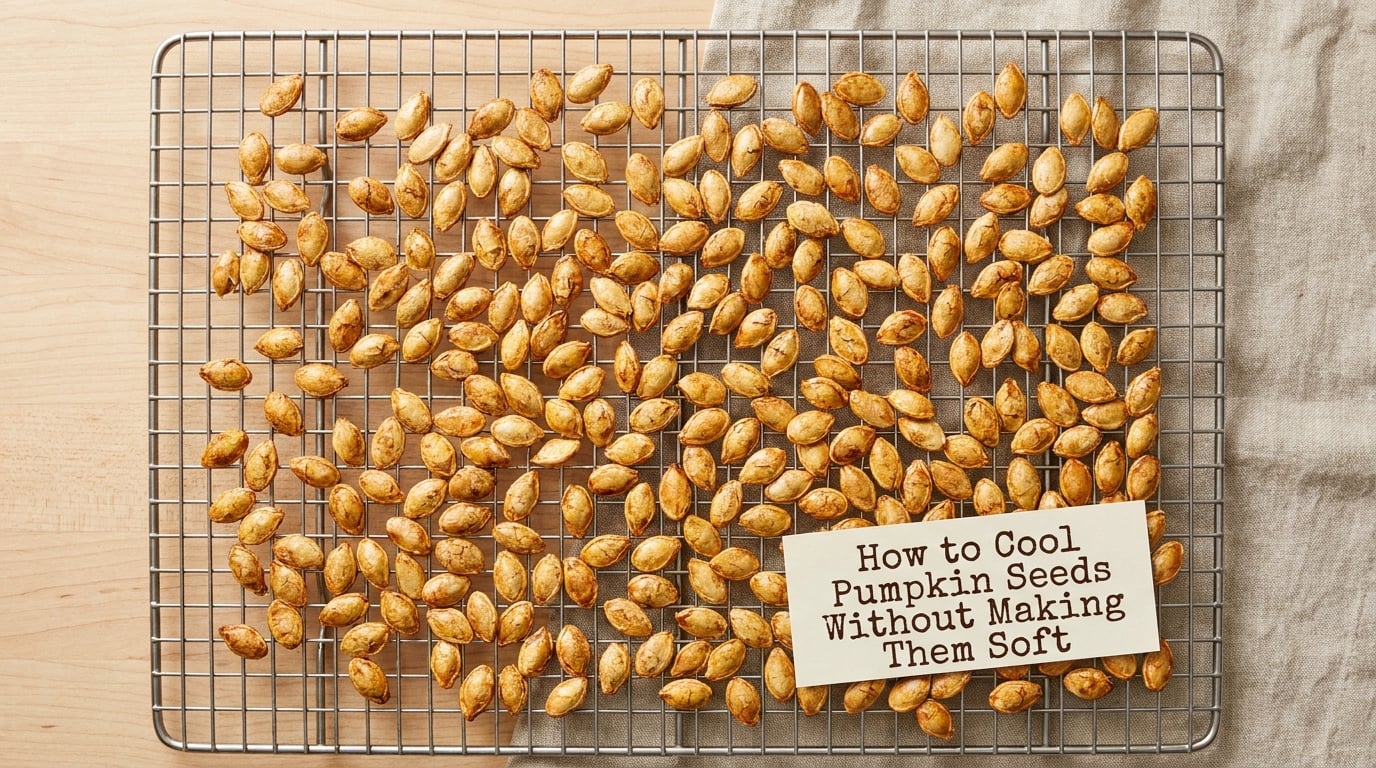
Leave the seeds on the baking sheet for 3 to 5 minutes, then tip them onto a wire rack or a flat plate in a single layer. Air moves under them, and any steam escapes instead of soaking back into the shells.
A plate works in a pinch. A bowl, a sealed container, or a pile on the pan does not, because the seeds at the bottom sit in warm vapor for as long as they sit there.
Give them 15 to 20 minutes before you taste, judge, or pack them. This is where the actual crunch arrives, which is why a crunch test straight from the oven sends people to the other extreme and over-roasts the batch.
Common Mistakes
Chewy or leathery seeds almost always come down to moisture. Here is what to check, in the order it actually causes trouble:
- Rinsed or damp seeds. The fix is prevention: no washing, a hard towel blot, and 20 to 30 minutes on a towel if they came from a wet pumpkin.
- A crowded pan. Seeds in contact steam each other and never dry. Split the batch across two sheets rather than doubling the pile on one.
- Too high a temperature. Above 375F the outside colors before the water inside leaves, so the seed sets hard outside and stays damp within.
- Not enough time. Pale seeds pulled at 5 minutes will never finish crisping, because there is no dry heat left in the shell. Give the full 10 to 15 minutes.
- No mid-roast stir. The ones on the pan brown and the ones underneath stay pale and damp.
- Cooling in a pile or sealing them warm. Trapped steam does in an hour what a whole roast could not.
Bitter seeds are a different failure. Sugar, maple syrup, and powdered spices like garlic powder hit their burning point long before the seed does, so flavored batches go bitter at the tail end while the seeds themselves are still pale.
To rescue a batch that already came out chewy, spread it back on a hot sheet and return it to a 300F oven for 5 to 10 minutes, stirring once, then cool it uncovered. Two or three short passes recover most batches. If the seeds are already deep brown, there is no rescue, so start a new batch.
Tips for Extra-Crisp Seasoned Seeds
Salt early, spice late. Salt and oil go on before roasting. Garlic powder, paprika, cayenne, or curry powder taste better stirred in for the last 4 minutes, because they toast without burning.
Build sweet coatings in two steps. Toss with a teaspoon of maple syrup or coconut sugar and a pinch of cinnamon, but add it halfway through the roast rather than at the start, so it caramelizes instead of blackening.
Keep the oil to about 1 teaspoon per cup. A heavy coat insulates the seed and slows the moisture escaping, which is how you get shiny seeds that stay soft.
Match the time to the seed. In-shell carving seeds take 15 to 20 minutes and snap audibly. Store-bought hulled pepitas are drier and finish in 10 to 15. Store-bought in-shell pepitas sit somewhere between the two.
Use a convection setting or an air fryer. An air fryer at 320F for 8 to 12 minutes, shaking the basket twice, gives the most even result of any method because the seeds are constantly moving.
Stagger the racks for a whole pumpkin. One carving pumpkin can yield enough seeds for two sheets. Put one on each rack and swap them halfway, because a single rack cannot dry two full pans.
Store them airtight only when they are cold. Cooled seeds keep about a week at room temperature, roughly two weeks in the fridge, and around three months in the freezer. If a batch softens, spread it on a sheet at 300F for 5 minutes and let it cool uncovered again.
Frequently Asked Questions
How long should pumpkin seeds be roasted to become crunchy?
At 350F, hulled seeds usually need 10 to 15 minutes, and in-shell carving seeds closer to 15 to 20. Start checking at 8 minutes and stir every 5 so the underside does not darken. Pull them when they look pale gold and smell like popcorn, because they keep crisping as they cool on the pan. If you wait for a hard crunch in the oven, most batches go bitter.
Should I soak or simmer pumpkin seeds before roasting?
Not for crunch. A salt-water soak or brief simmer is a style choice, not a technique requirement. Soaking plumps the seed and softens the shell, which is the opposite of what you want, and it leaves the surface wet right before it hits the oven. The dry method gets a similar result with less work. If you do simmer them, use about 10 minutes, then dry them completely on a towel first.
Why are my roasted pumpkin seeds chewy instead of crunchy?
Surface moisture is almost always the cause. Seeds that were rinsed, scraped, or boiled still hold water when they go in the oven, and that trapped steam softens the outside until it sets like leather instead of snapping. Crowding the pan makes it worse, because the seeds steam each other. Spread them in one uncrowded layer on a rimmed sheet and let the oven finish them at 350F.
Do pumpkin seeds need to be peeled before roasting?
No, and peeling them is extra work with no crunch benefit. Roast hulled pepitas and in-shell carving seeds as they are, because the shell is part of what gives a seed its snap. If you buy raw pepitas and they arrive with the thin green hull still attached, leave it on, since it darkens slightly in the oven. Peeling is only worth it for a smooth blended texture.
How do I keep seasoned pumpkin seeds crisp after storage?
Cool them completely before sealing, because trapped steam softens a batch overnight. Store in an airtight container at room temperature for up to a week, in the fridge for about two weeks, or in the freezer for around three months. If they soften, bake them on a sheet at 300F for 5 minutes and let them cool uncovered again before resealing.
Conclusion
Start here: preheat the oven to 350F, spread your dry seeds on one rimmed sheet in a single layer, and roast 10 to 15 minutes with a stir at the 5-minute mark. Pull them when they are pale gold and smell like popcorn, then let them cool uncovered on a wire rack for 15 to 20 minutes.
The crunch shows up off the heat, not in the oven. Skip the rinse, keep the pan uncrowded, and store the batch only once it is completely cold, and your seeds will snap instead of bend.