
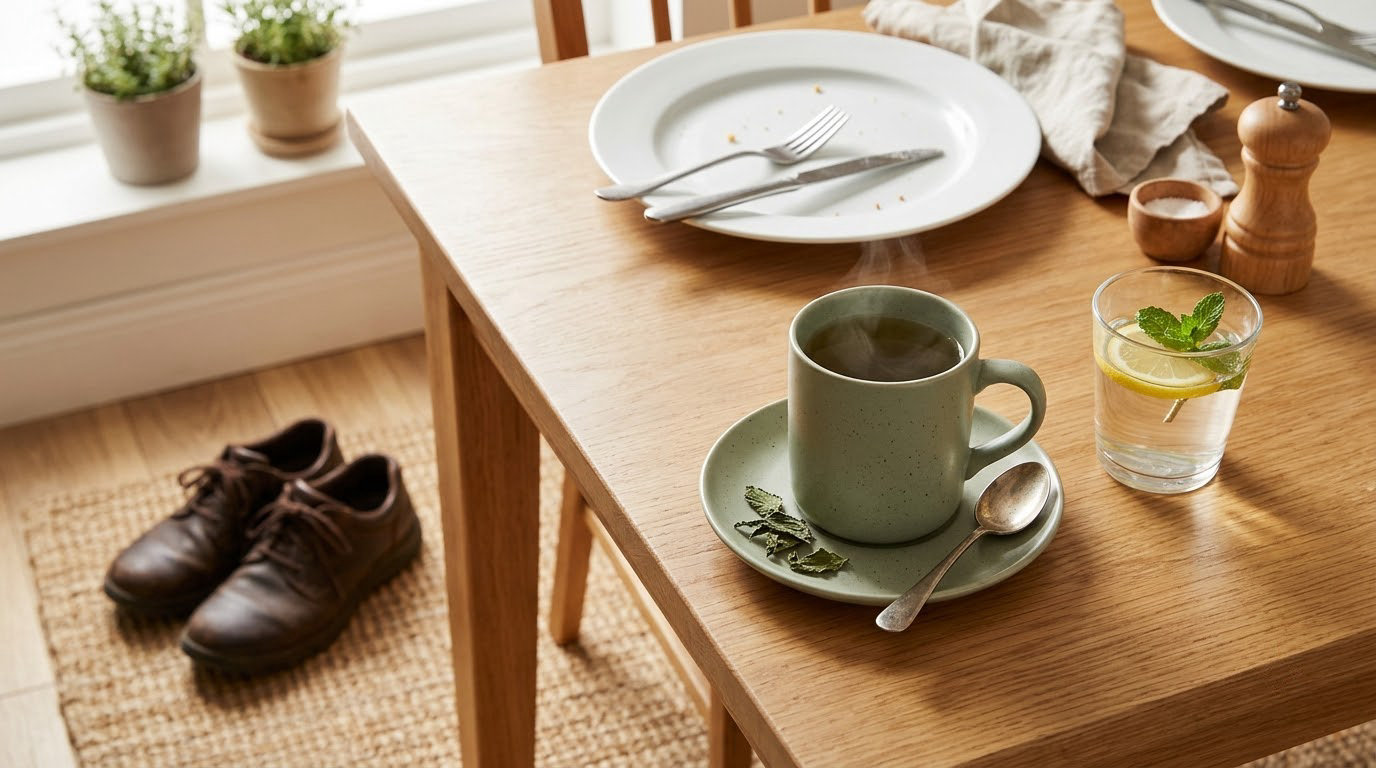
Bloating after a big meal usually settles on its own within a few hours, and you can speed it up with a handful of low-effort habits: eat the first few bites slowly, stay on your feet, walk for 10 to 15 minutes, and sip warm water in small amounts instead of gulping a large glass. That is the short answer. The rest of this guide explains what is actually happening in your gut, how to tell whether it is gas, water weight, or something worth a doctor’s appointment, and what to change at the next meal so it happens less often.
Most people describe the same thing. You finish dinner, sit down, and within twenty minutes your waistband feels wrong. It is not sharp pain, just a tight, overfull pressure across the middle. Understanding the mechanism matters, because the fix changes depending on what is causing the pressure, and not every “bloating cure” you will read online targets the right thing.
This is general information about digestion, not medical advice. If bloating is persistent, severe, or comes with other symptoms, a doctor or registered dietitian is the right person to talk it through with.
Table of Contents
What You Need
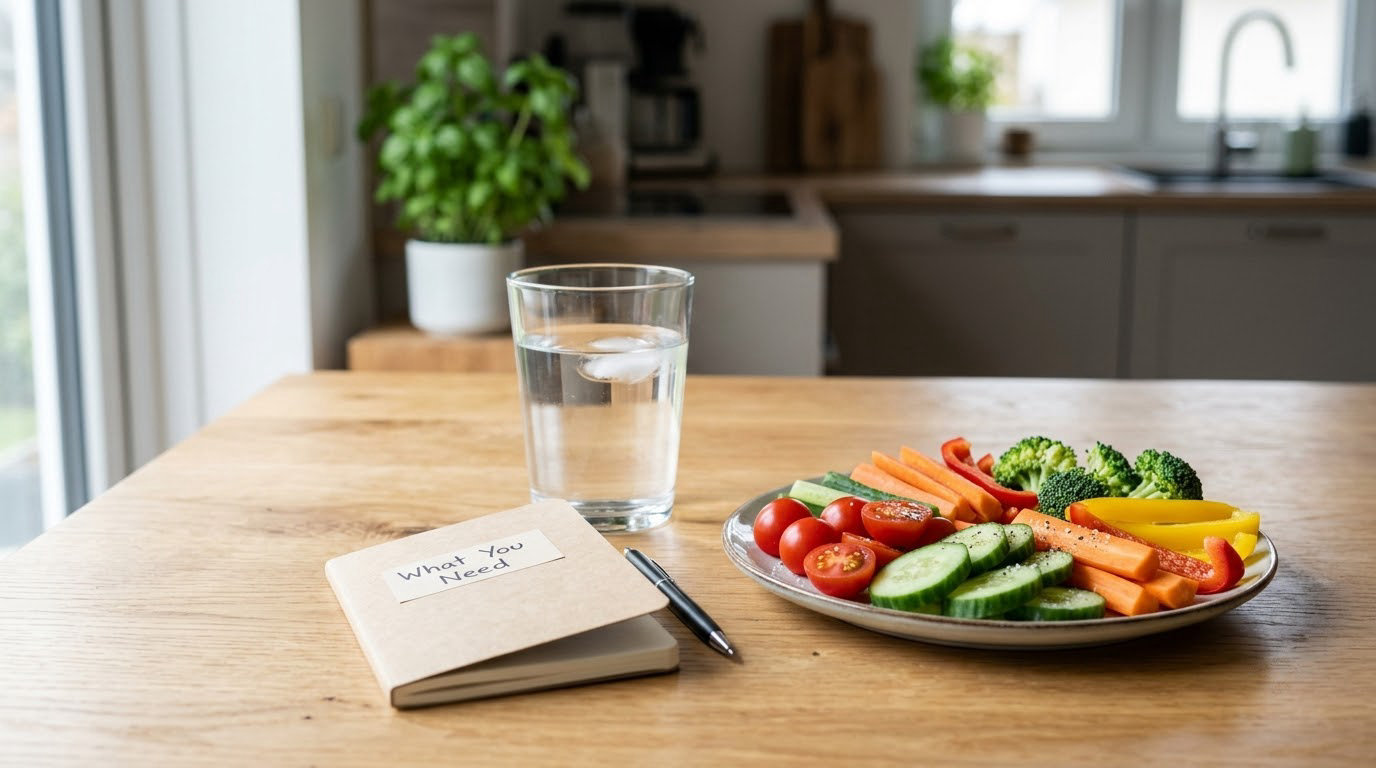
You do not need anything exotic. A glass of water, somewhere comfortable to sit or pace, and five minutes of attention after a large meal will cover most of it.
A notebook or your phone notes are worth having too. People who track what they ate tend to spot their own repeat triggers within a couple of weeks, which is far more useful than any generic food list. Right now, most people only notice the meals that caused the worst discomfort and forget the ones that were fine.
A quiet minute also helps. Bloating is uncomfortable partly because you are tense about being uncomfortable, and that loop is hard to notice in the moment but easy to break once you name it.
Step-by-Step: How to Ease Bloating After Big Meals
Start With a Smaller First Bite
Spend three or four minutes on your first few bites of a heavy meal. That sounds trivial, but the first bites tend to be the fastest, and speed is the part that gets you into trouble: quick bites mean more air swallowed, more food arriving at once, and a stomach that stretches past the point where it signals fullness clearly.
Take smaller bites, put the fork down between them, and start with the vegetables or salad if there is one. It slows the whole meal without feeling like a rule you are obeying, because the pace change is invisible to everyone at the table.
You will know it worked if the meal takes 20 or 25 minutes instead of 10. You may also notice you feel full sooner, which is the point.
Take a Gentle Walk After Eating
A 10 to 15 minute walk at a comfortable pace is the single most useful thing most people can do. Movement nudges the intestines along, and eating itself triggers the gastrocolic reflex, the natural signal that tells the colon to move. A short walk supports both.
Skip anything strenuous right after a large meal. Intense exercise diverts blood toward your muscles and can leave you feeling worse, and for some people it brings on nausea. An easy loop around the block or a few minutes of standing and stretching is plenty.
Gentle movement over the next couple of hours helps too, though it works more slowly than the walk right after the meal.
Use Slow Breathing to Relax Your Abdomen
Breathing exercises will not flatten your stomach, but they can stop you from bracing, which tightens the abdominal muscles and makes any distension feel worse. Breathe in slowly through your nose for a count of four, hold for four, and exhale through your mouth for six. Repeat about six times.
The longer exhale is the useful part. It nudges your body toward a calmer state, and calm helps the gut settle.
Stop if the breathing makes you lightheaded, uncomfortable, or more focused on your stomach. This is a relaxation tool, not a treatment, and it should never make symptoms worse.
Choose Foods That Settle Easy Next Time to Ease Bloating After Big Meals
The next meal matters as much as the current one. Reach for cooked vegetables rather than a large raw salad, and go easy on the heaviest, richest dishes for a few hours. Portion size matters more than any single ingredient.
It also helps to know which foods tend to cause gas for most people. Legumes, some cruciferous vegetables like broccoli and cabbage, and wheat are common triggers, as are carbonated drinks. If a food reliably makes you bloated every time, that is your answer, regardless of what general lists say.
Sodium is the other half of the picture. A salty meal can leave you holding water in your abdomen for the next day, which feels identical to gas but behaves differently. Foods with potassium, such as bananas, offset some of that.
Whole grains like quinoa or brown rice are an easy pick when you want something filling that is less likely to cause trouble, and this site has a fair comparison of quinoa and brown rice for everyday meals if you are deciding.
Track Symptoms Instead of Assuming the Cause
Write down four things after an episode: roughly how much you ate, what the foods were, when the discomfort started, and whether it passed with gas or a bowel movement. Add anything unusual, like alcohol or a large amount of water with the meal.
People often assume food is sitting undigested in the stomach for hours. That is rarely what is happening. Digestion of a normal meal mostly finishes within a few hours, and ongoing discomfort is more often about gas volume and how sensitive the gut is to it, not food stuck in place.
After a month of notes, patterns tend to surface. So does the difference between occasional bloating after a big meal and bloating after every meal, which is a separate situation worth raising with a clinician. If you are looking for ways to settle an upset stomach in the meantime, how to use ginger for nausea after meals covers that side.
Common Mistakes
Drinking a large glass of water at once. A big volume of liquid on a full stomach adds pressure and can worsen the feeling. Small, frequent sips work better, and there is no rule about how much water you should drink during a meal.
Chewing gum or drinking through a straw. Both add swallowed air, which has to come out somewhere. Carbonated drinks do the same thing by design.
Eating at speed. Fast eating is the single most common cause of preventable post-meal bloating, and it is the easiest habit to change.
Going straight to bed or lying down. Lying down too soon after eating gives gravity nothing to work with. Stay upright for an hour or so.
Skipping food the next day to compensate. Restricting after overeating tends to lead straight back to the same pattern. Normal, moderate meals keep digestion moving.
Assuming every symptom is gas. Bloating, water retention, and actual fat gain feel similar but behave differently. Gas-driven fullness usually eases within one to two hours, swelling from salt can linger 12 to 24 hours, and fat gain from a single meal is negligible. If your belly looks different for days rather than hours, it is probably not gas.
A few habits prevent most of this. Eat slowly, chew properly, keep portions moderate, stay upright after eating, walk a little, and limit the foods that reliably cause trouble for you personally rather than everything on any internet list.
When Bloating Needs Medical Advice
Occasional bloating after an unusually large or rich meal is common and usually settles without investigation. Some patterns are different and deserve a doctor’s appointment rather than home remedies.
Book a visit if the bloating is persistent, happens after most meals rather than only big ones, or keeps recurring over weeks. Also seek advice if it comes with pain that does not ease, vomiting, difficulty swallowing, blood in your stool, unexplained weight loss, a fever, or a noticeable change in your bowel habits.
Food intolerance, an intolerance to fermentable carbohydrates such as FODMAPs, constipation, and conditions affecting gut motility can all cause ongoing bloating. A doctor or registered dietitian can help work out which applies to you, and a short-term low-FODMAP trial with reintroduction is sometimes used to identify triggers. Please do not cut out whole food groups on your own without guidance.
Sudden or severe abdominal pain, a rigid or tender abdomen, or pain that keeps getting worse needs urgent medical attention rather than a home remedy.
Frequently Asked Questions
How fast can I ease bloating after a big meal?
Most people notice improvement within 30 to 60 minutes using a combination of gentle movement and staying upright. A 10 to 15 minute walk, small sips of warm water, and avoiding carbonation give you the best chance of moving gas along quickly. Relief from gas-driven bloating usually arrives within one to two hours. If you still feel full after that, the cause is more likely water retention or a heavier meal than gas.
Does drinking water help with bloating after eating?
Water supports digestion and helps soften stool, which can matter if constipation is contributing to the pressure. The key is how you drink it. Small, frequent sips after a meal are more comfortable than a large glass at once, and drinking a big volume during the meal can make fullness worse. Warm water is often easier on a full stomach than very cold water.
Which foods cause the most gas and bloating?
Common triggers include beans and lentils, some cruciferous vegetables such as broccoli and cabbage, wheat, onions, and certain fruit. Carbonated drinks add gas directly, and sugar-free products containing sorbitol or mannitol can cause both gas and loose stools. Dairy causes trouble mainly if you are lactose intolerant, and the effect is often a bloating and fullness feeling rather than pain. Individual tolerance varies more than any published list suggests.
How long does bloating last after a big meal?
Gas-driven fullness after a large meal usually eases within one to two hours, especially with gentle movement. Bloating that comes from sodium-driven water retention can last 12 to 24 hours, which is why some people wake up feeling puffy after a salty dinner. Actual fat gain from one meal is very small. Bloating that lasts several days, or that appears after every meal, is a reason to speak with a doctor.
Why am I bloated after every meal, not just big ones?
When bloating follows every meal regardless of portion size, small overeating is unlikely to be the explanation. Possible causes include fermentable carbohydrates such as FODMAPs, lactose intolerance, constipation, food allergies, or an underlying gut condition. Some people also have a more sensitive gut, meaning normal amounts of gas feel like more. Because this pattern recurs, a doctor or registered dietitian is a better first stop than home remedies.
How can I prevent bloating after large meals?
Prevention happens mostly during the meal rather than after it. Eat slowly, chew well, start with vegetables, keep portions moderate, and avoid drinking a large volume of liquid with food. Skip carbonation, chewing gum, and straws, and stay upright for about an hour afterwards. Limiting sodium on heavy days also helps, because salt-driven water retention is what leaves you puffy the next morning.
Conclusion
If you are bloated right now, do these three things: eat nothing more for a while, take a 10 to 15 minute walk at an easy pace, and stay upright while you sip water in small amounts rather than gulping a glass.
To make the next big meal easier, slow down the first few bites, keep portions moderate, and notice which foods or circumstances reliably leave you puffy. A few weeks of notes gives you a personal answer no generic list can match.
And if bloating keeps happening after every meal, or comes with pain, vomiting, blood in your stool, or unexplained weight loss, talk to a doctor or registered dietitian rather than treating it at home.