
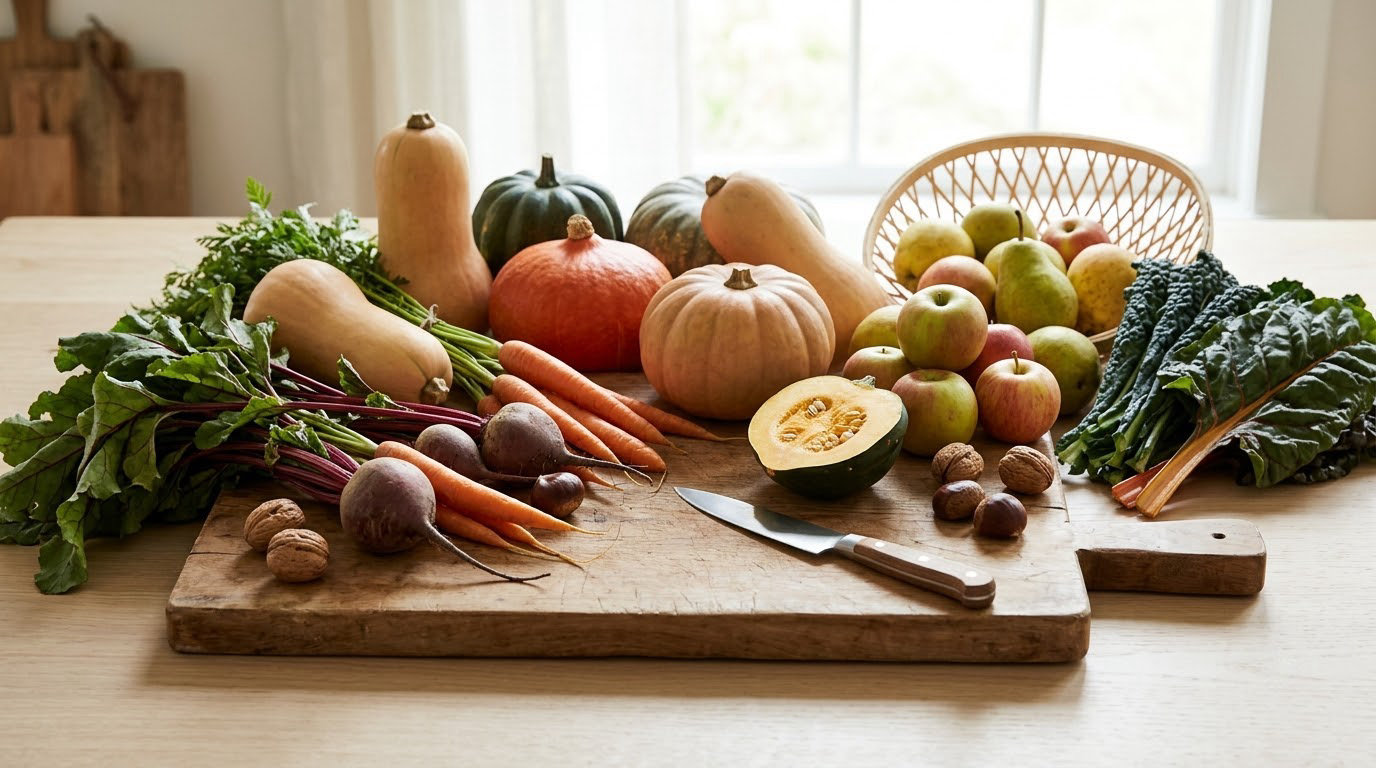
To eat seasonally in the fall, start by noticing what is actually being harvested near you, then build meals around one abundant ingredient at a time instead of following a fixed list. Most people get going in under an hour a week, with no special equipment and no rulebook.
Fall is a good season to start because the choices are forgiving. Squash, apples, pears, sweet potatoes, and greens keep for days or weeks, so a single purchase feeds several meals and a mistake rarely ruins a week of eating.
Table of Contents
- What You Need
- Step-by-Step: How to Eat Seasonally in the Fall
- Common Mistakes
- Frequently Asked Questions
- What foods are usually in season in the fall?
- Is seasonal eating always cheaper than buying nonseasonal produce?
- How can I eat seasonally in the fall on a budget?
- What should I do if I buy too many fall vegetables?
- Are frozen or canned seasonal foods good choices?
- Do I have to eat only local and organic foods to eat seasonally?
- Conclusion
What You Need
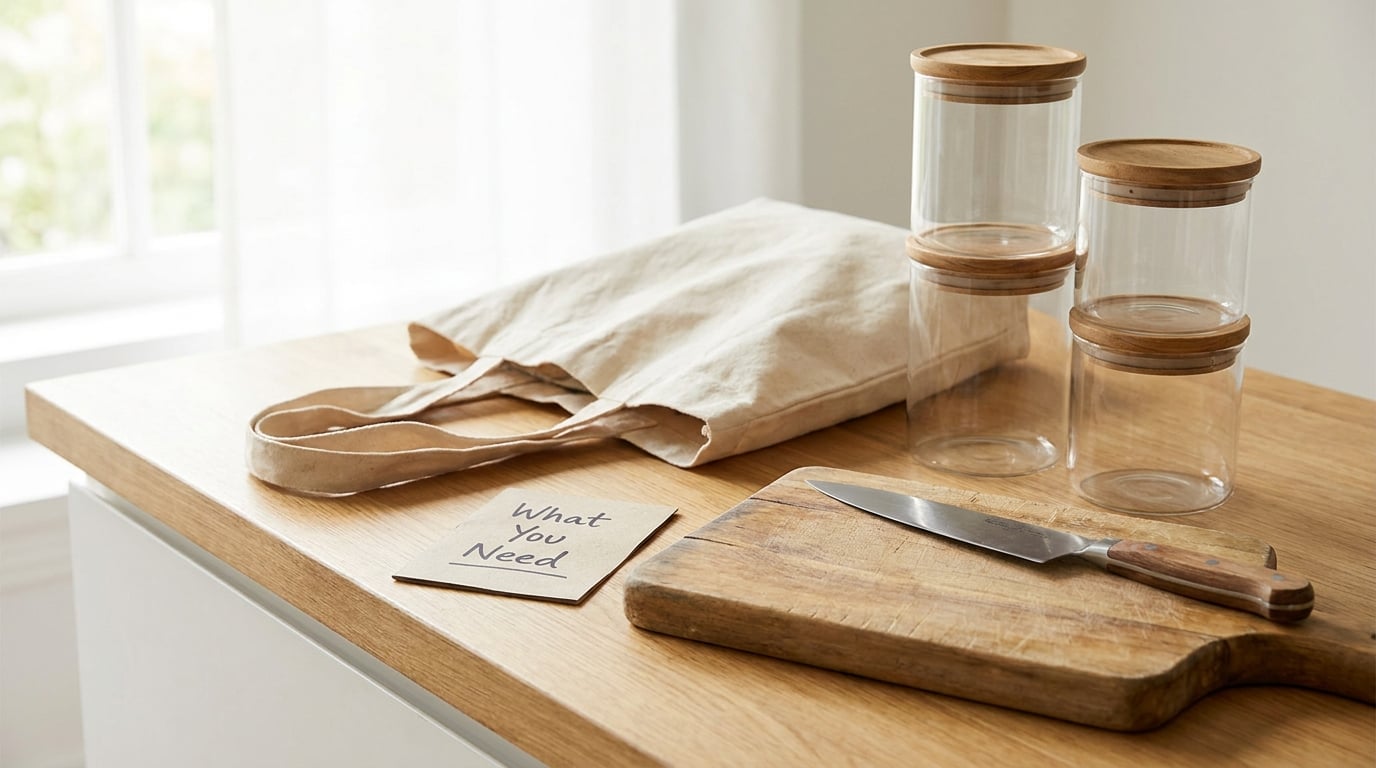
Four things are genuinely useful, and honestly, most households already have three of them.
- A place to shop. A farmers market, a roadside stand, a community-supported agriculture share, or simply the produce department of your regular grocery store.
- A canvas bag and a list. A phone note works fine. The bag matters more than the notebook, because it reminds you to buy the small amount of kale instead of skipping it.
- Basic tools. A chef’s knife, a cutting board, a sheet pan, one pot that holds at least a quart, and a couple of containers that seal.
- Fridge and freezer space. This is the real constraint for most people. If your freezer holds eight bags of vegetables, your fall eating is sorted for weeks.
What you do not need: a subscription box, a membership, or the will to eat only local and organic food. Seasonal eating is about timing, not purity. A conventionally grown apple picked in October still counts as a fall food.
Step-by-Step: How to Eat Seasonally in the Fall
Step 1: Learn What Is Harvesting Nearby
Seasonal eating starts with awareness, not with a national calendar printed on a poster. That calendar is a useful guide, but it is wrong for your specific week if you live somewhere with a long growing season or a very short one.
Local signals beat any list. Stand at a market stall and ask one question: what came in this week? Vendors answer honestly, because they know what just arrived. Grocery produce departments usually label the state or region of origin, and squash grown in your own state in October tells you something a website cannot.
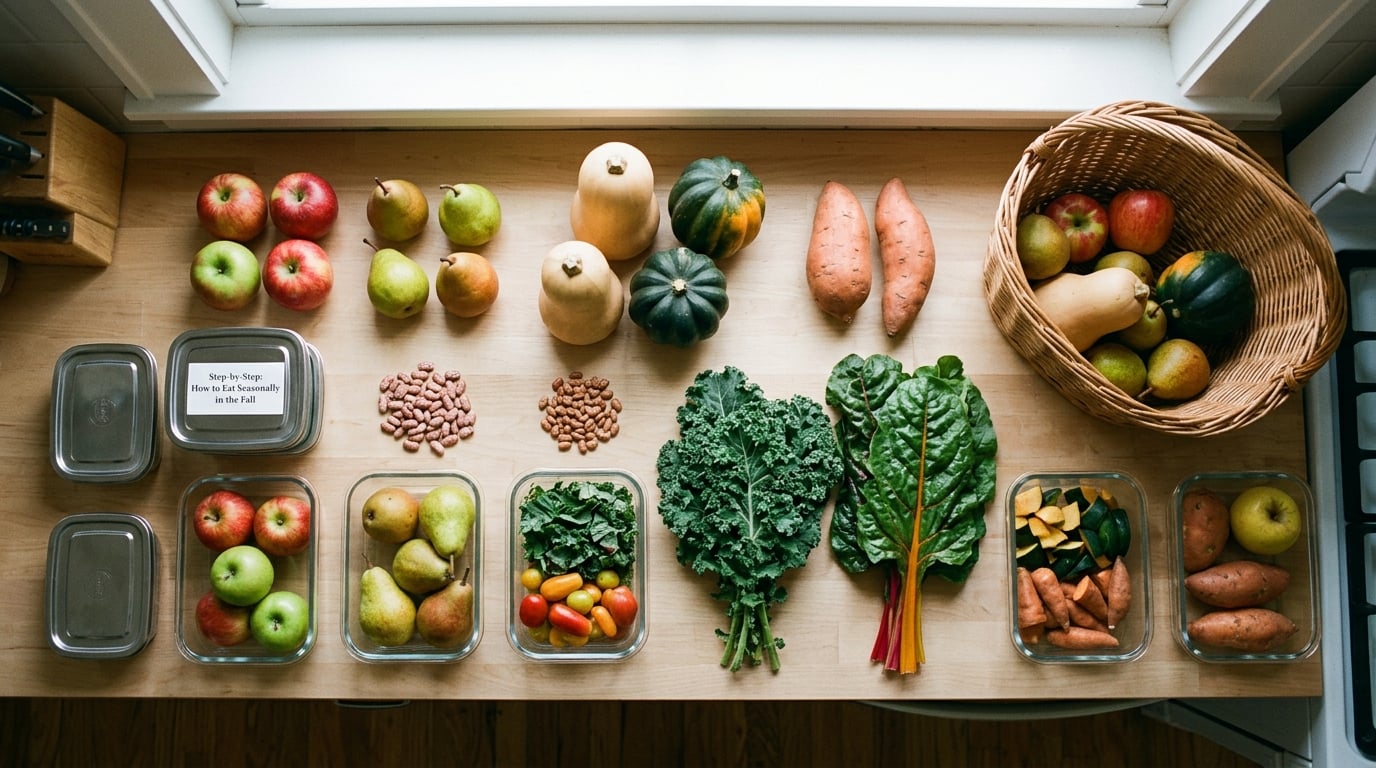
A rough pattern helps once you start paying attention. Early fall leans on late-summer holdovers, including tomatoes, peppers, eggplants, grapes, and late berries. Mid-fall is the big one, with apples, pears, squash, pumpkins, sweet potatoes, beets, and the first hard brassicas. Late fall shifts toward storage crops, onions, garlic, nuts, and stored grains, while fresh greens depend almost entirely on your climate.
How you know it worked: you can name at least three things that are peaking near you right now without checking an app.
Step 2: Build Meals Around One Seasonal Star
Pick one abundant ingredient and use it three ways across the week. This is the single habit that makes seasonal eating stick, because it removes the daily question of what to cook.
Roasted squash with chickpeas and pan juices, then the same squash blended into soup, then folded into a frittata. Pear and kale salad with toasted walnuts, then pears baked with butter and brown sugar, then sliced raw over yogurt. Sweet potato soup, then roasted cubes with cumin, then mashed onto toast. An apple oat breakfast bake, sliced apples in a sauce, apples caramelized beside pork. Cider-spiced beans with onion, then beans folded into a quesadilla, then bean soup the next day.
None of these require a recipe you found online first. Roast, salt, and taste is a complete technique for most of the fall harvest.
Step 3: Plan a Flexible Weekly Menu
Plan loosely, because the best-looking basket at the market will be gone by the time you shop. Three to five meals is enough, and each one follows the same simple formula: one grain, one seasonal vegetable, one protein, one sauce or dressing.
Write the sauce once and reuse it. A tahini and lemon dressing or a mustard and vinegar dressing covers roasted squash, roasted carrots, grain bowls, and green beans without a second recipe. Leftovers are part of the plan, not a failure of it, so cook one extra portion on purpose.
Check your pantry before you shop. Half of the reason people overbuy produce is that the fridge already held onions, garlic, and canned beans they forgot about.
How you know it worked: every ingredient in your cart is used in at least one planned meal.
Step 4: Shop in Season and Store Wisely
In season, produce is at its most flavorful, so buy ripe items for eating this week and firmer ones for later in the week. Then store them differently depending on what they are.
- Apples and pears: keep in the fridge crisper and eat within two weeks. Pears ripen fastest at room temperature in a paper bag; check them every couple of days rather than guessing.
- Winter and summer squash: whole, unwashed, and uncut at cool room temperature, a good four to six weeks for most varieties.
- Sweet potatoes, beets, carrots, onions: somewhere cool, dark, and dry, away from the top of the fridge where ethylene speeds things up.
- Leafy greens: dry them thoroughly before storing, wrap loosely, and use them within about a week. Wet leaves rot in days.
- Fresh herbs: stand cut stems in a glass of water in the fridge, change the water every few days, or chop and freeze in olive oil.
- Berries: refrigerate unwashed in a single layer, and do not wash them until you are about to eat them.
Rinse produce under running water before cutting or eating, and keep raw meat separate from ready-to-eat produce. When you cook, follow the USDA minimum internal temperatures: 165°F for poultry, 160°F for ground meat, and 145°F for whole cuts and fish, with a rest time before slicing.
Step 5: Prepare a Small Batch of Fall Basics
Two hours of Sunday work buys you most of the week. Roast a tray of squash. Cook a pot of grains. Chop a salad base and keep the dressing separate. Simmer a pot of beans with cider or aromatics. Wash and dry the greens, then store them in a towel.
From those components you can assemble bowls, salads, soups, wraps, and quick breakfasts without cooking anything more than a fresh egg or a piece of toast. This is the part that makes fall eating realistic on a weeknight, because the decision was made earlier and cheaper.
Step 6: Adjust as the Season Changes
Late-summer tomatoes and peppers give way to apples, squash, roots, brassicas, mushrooms, nuts, and stored grains over the course of a couple of months. Nobody’s calendar runs on the same clock, because harvest timing shifts with climate, elevation, and the weather of a given year.
Stay flexible by cooking what is available rather than what a list says. Preserving the surplus keeps the payoff going: blanch and freeze greens and beans, freeze berries on a tray first then bag them, can apples or tomatoes only if you have tested the recipe and follow a tested method. If you are unsure about canning safety, your county extension office runs classes and will point you to a current guide.
How you know it worked: you are still cooking fall food in December because you stored or froze part of it, not because the market had it.
Common Mistakes
Buying too many specialty ingredients at once. Delicata squash, kohlrabi, rutabaga, and fennel are all excellent, and all of them turn into a compost failure if bought without a plan. Pick one unfamiliar item, not four, and learn it.
Treating it as all or nothing. Eating seasonally for two weeks and then stopping because a trip went sideways is more common than anyone admits. The people who keep doing it cook one seasonal meal a week and stop measuring the rest.
Thinking out-of-season produce is forbidden. It is not. A shipped peach in February is a treat. The rule worth keeping is that seasonal items should be your default, not your only option.
Letting greens and herbs go to waste. Dry them, use the limp ones in soup rather than in salad, and buy herbs in quantities you will finish. Most spinach is lost to a fridge drawer, not to a bad meal.
Ignoring the freezer. Frozen produce is picked and frozen at peak. Peas, corn, green beans, berries, and chopped squash all freeze well, and frozen food is a seasonal food.
Assuming it has to be expensive. Farmers market prices are higher for small, specialty items and lower for bulk staples like potatoes, onions, and winter squash, where sellers compete on price. Grocery store produce picked from distant regions often costs more, and the off-season versions of the same crop usually cost the most.
Believing food-combining rules. You will see claims online that two specific vegetables must never be eaten in the same meal. There is no scientific basis for it. Standard food safety rules, allergies, and individual conditions are worth taking seriously; those pairing charts are not.
Frequently Asked Questions
What foods are usually in season in the fall?
Across most of the US, fall brings squash, pumpkins, sweet potatoes, carrots, beets, onions, garlic, and hard greens like kale, chard, cabbage, brussels sprouts, and collards. Fruits typically include apples, pears, grapes, persimmons, cranberries, pomegranates, and figs. Timing shifts by region, so a coastal California apple season and a Minnesota one never look alike.
Is seasonal eating always cheaper than buying nonseasonal produce?
Often, but not always. Farmers market prices run higher for small specialty items and lower for bulk staples like potatoes, onions, and winter squash, where vendors compete directly. Grocery store produce shipped from another hemisphere, or grown in a heated greenhouse, is often the most expensive option on the shelf.
How can I eat seasonally in the fall on a budget?
Start with the cheapest things peaking in your area: winter squash, potatoes, onions, sweet potatoes, apples, cabbage, and carrots. Buy them in quantities you can freeze or store, skip specialty produce until you know what to do with it, and use beans, rice, and eggs to stretch a small basket into several meals.
What should I do if I buy too many fall vegetables?
Freeze most of them. Blanch green beans, peas, greens, and winter squash, then freeze; freeze berries on a flat tray first, then bag them. Chill and refrigerate what you will eat, turn limp greens into soup rather than salad, and check your county extension office before canning anything you have not tested.
Are frozen or canned seasonal foods good choices?
Yes, and they often count more than you would think. Produce destined for freezing is picked ripe and frozen quickly, so it holds flavor and nutrients well. Canned beans, tomatoes, and apples are convenient and safe when properly processed, and both formats let you eat a fall crop long after the season ends.
Do I have to eat only local and organic foods to eat seasonally?
No. Seasonal eating is about when a food is harvested, not about how it is grown or how far it traveled. Grocery store produce with a regional origin label, conventionally grown squash, and frozen berries all count. Buying local when it is convenient and affordable is a reasonable choice, not a requirement.
Conclusion
Do one thing this week: find out what is peaking near you. Ask at the market, read the origin labels, or simply look at what is stacked highest on the display.
Then pick one ingredient you already like and build one meal around it, using what you have and cooking something simple. Roast it, soup it, or bake it. Once that one meal becomes three meals, you already know how to eat seasonally in the fall, and the rest is just adjusting to what the harvest is doing this year.