
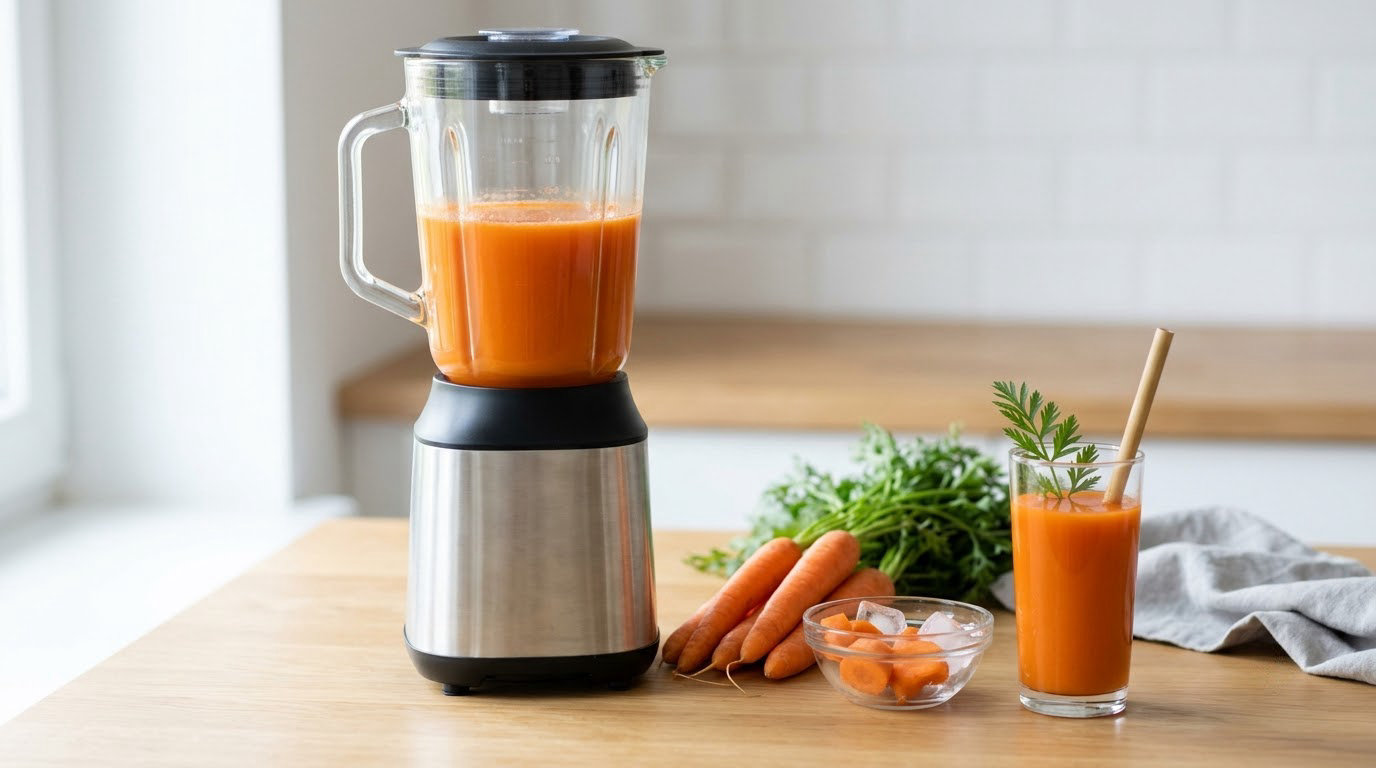
To make carrot juice with a blender, chop fresh carrots into small pieces, blend them with a little water or coconut water until completely smooth, then press the puree through a fine-mesh sieve or nut bag to separate the juice from the pulp. Ten minutes start to finish, and no juicer required.
One thing to clear up first: a blender will not separate juice from pulp on its own. It liquefies the carrots, and you do the separating with a strainer. Skipping that step is why so many first attempts come out like thick orange paint.
It also helps to know what you are getting. Three medium carrots, roughly 250 to 300 g, give you about one cup of strained juice. That is more carrots than most people expect for a single glass, and it is the number that surprises nearly everyone on their first try.
Table of Contents
What You Need
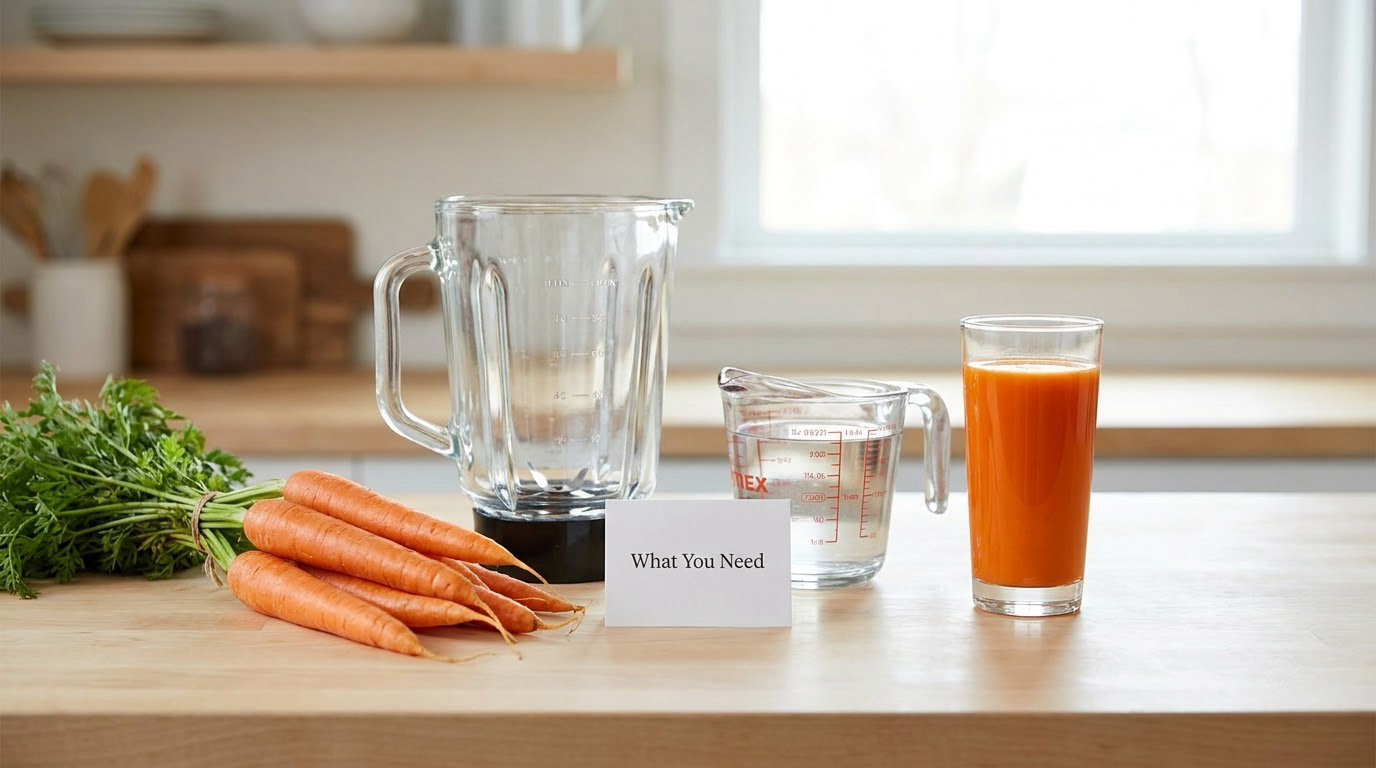
The blender matters less than most recipe pages admit, but the strainer matters enormously. Here is the honest shortlist.
- A blender with a decent blade. A high-speed blender, a Vitamix, a Ninja, or a Nutribullet-style smoothie maker all work well. A standard kitchen blender works too, as long as it has a real blade rather than two flat plastic paddles, and you give it more time. The blades have to shear the fibre apart, and that takes torque.
- A strainer, and this is not optional. A nut milk bag is the fastest option and gives the clearest juice. A fine-mesh sieve lined with cheesecloth is the classic choice. A plain fine-mesh sieve alone will let grit through, so line it.
- Fresh carrots. Four to five medium ones, about 250 to 300 g, makes roughly one cup of strained juice. Baby carrots work and need no peeling, but they are pricier per kilo and taste sweeter.
- Liquid. Half to three-quarters of a cup of water, coconut water, or orange juice. This is not dilution, it is what lets the blades move.
- Optional add-ins: a thumb of fresh ginger, a squeeze of lemon, a small apple, a wedge of orange, a pinch of turmeric, or a few ice cubes.
If you are batching greens instead of just carrots, our guide to how to make a wheatgrass shot without a juicer uses the same blender logic.
One note on strainers, because this is where people get disappointed. A nut bag and cheesecloth do the same job at different speeds. The bag is reusable and gives you a thinner, cleaner juice in one pass. Cheesecloth is cheaper and needs a second sieve underneath to catch what escapes.
You also want somewhere to press. The back of a cup, the bottom of a measuring jug, or the palm of your hand works fine. Press hard, because most of the yield is still locked inside that pulp when it first hits the sieve.
How Many Carrots Make 1 Cup of Juice?
About three medium carrots, or 250 to 300 g, give you roughly one cup of strained juice. Plan on two carrots per half cup if you are making smaller servings.
| Carrots | Weight | Strained juice | Servings |
|---|---|---|---|
| 2 medium | About 150 g | Half a cup | 1 small glass |
| 3 medium | About 250 to 300 g | 1 cup | 1 large glass |
| 5 medium | About 450 g | 1.5 to 2 cups | 2 glasses |
| 8 medium | About 700 g | 2.5 to 3 cups | 3 to 4 glasses |
These numbers assume full straining. If you leave the pulp in, you get roughly a third more volume, but the result is a smoothie rather than juice.
How to Make Carrot Juice with a Blender: Step-by-Step
1. Wash and peel the carrots
Scrub the carrots under cold running water and cut away any soft or bruised spots. Peel them if the skins are thick, woody, or came from a large garden carrot, which is what makes juice gritty. Skip peeling for baby carrots and thin supermarket ones.
Scrubbing matters more than most recipes admit. Any soil left on the surface ends up suspended in the final glass.
2. Cut the carrots into blender-ready pieces
Trim off the green tops and cut the carrots into coins about half a centimetre thick, or into cubes roughly two centimetres across. Even pieces are the point. The blades shear whatever they can reach, so the smallest bits get pureed while the big ones sit there as fibre.
If you have a food processor, pulse the carrots first. It shaves seconds off the blending and takes some of the strain off the blender.
3. Add the carrots and enough liquid
Carrots are low-moisture and dense. Unlike watermelon or cucumber, they will not liquefy on their own, which is why dry blending in a blender tends to stall or burn the motor. Add half to three-quarters of a cup of cold water, coconut water, or orange juice, and a handful of ice cubes if you want it colder and thicker at the same time.
The ratio is roughly four parts carrot to one part liquid by weight. Push past that and you have made carrot water.
4. Blend until completely smooth
Start on low for about ten seconds to break the carrots down without flinging them at the lid, then work up to high. Give it a full one to two minutes on high for a normal blender, closer to three or four for a weaker one.
Stop and look. If you can see pale fibrous flecks or chunks, keep going, scraping the sides down once. The puree should move like thick paint with no visible pieces in it.
Do not skip the ice. Blending generates heat, and warm juice tastes dull and separates faster.
5. Adjust the texture and flavor
Taste it now, before straining, because straining removes both pulp and some of the body. Add a small splash of water or ice if it is too stiff to pour, a thumb-sized piece of ginger for heat, a squeeze of lemon for brightness, or a small apple for sweetness without added sugar.
Sweetener is a last resort. A quarter of a banana or a teaspoon of honey dissolves fine, but you are masking the carrot rather than fixing it.
6. Strain and serve the carrot juice
Set your nut bag, or your cheesecloth-lined sieve, over a bowl or jug. Pour the puree in a little at a time. Let it drip for a few seconds, then press with the back of a cup or your palm, working from the outside in.
When the flow slows to a trickle, stop. That last bit of thin liquid is where most of the remaining sugar sits, and squeezing harder mostly pushes fibre through.
Serve it straight away, over ice or in a chilled glass. Freshly pressed carrot juice separates within about an hour, so pour small amounts rather than making a big jug and letting it sit.
Common Mistakes and How to Fix Them
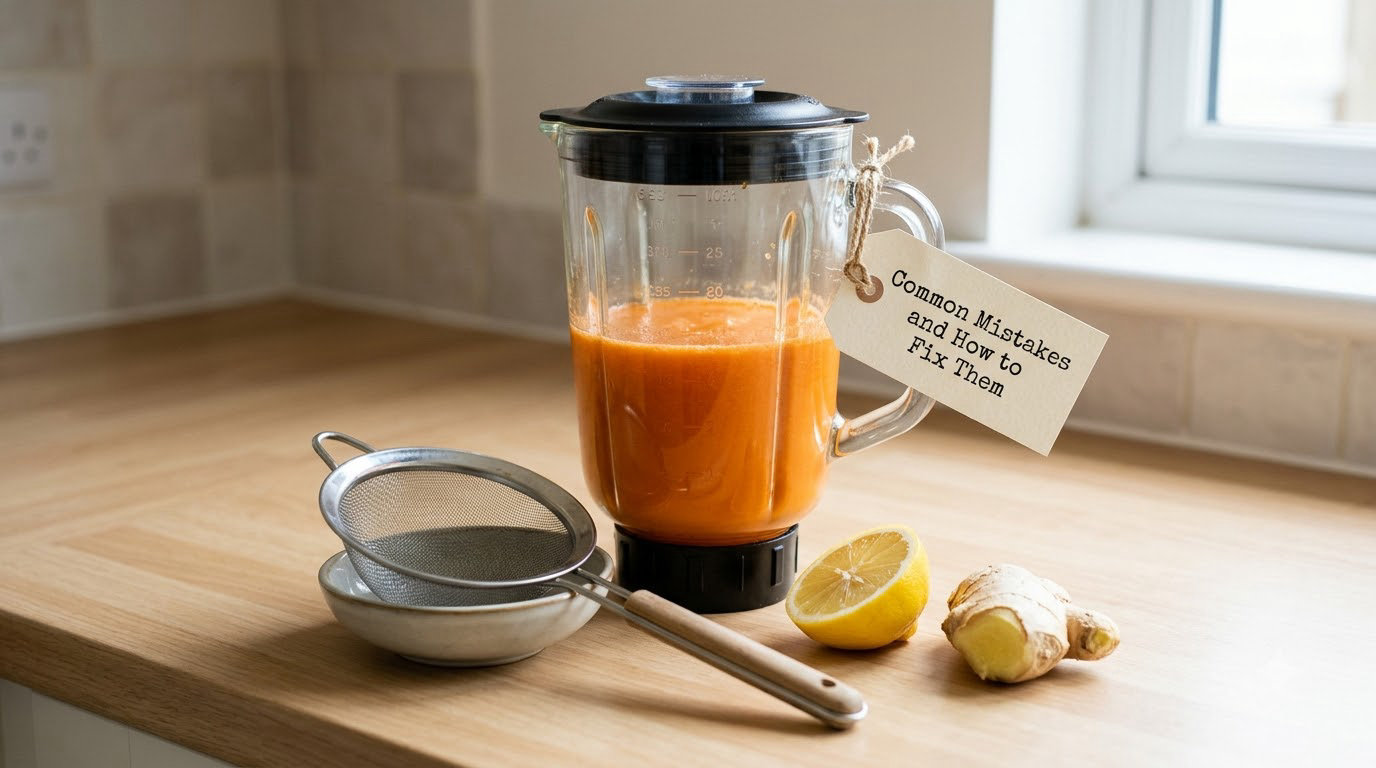
Nearly every disappointing glass of carrot juice comes down to one of these five things.
The juice is gritty
Grit is unblended fibre, and it has three causes: pieces too big, not enough blending time, or a blender without the power to shear carrots. Chop smaller than feels necessary, run high for the full two minutes, and stop to scrape down once. If your machine still struggles, add 30 to 60 seconds of soaking time in cold water before you start, which softens the fibre.
The puree is too thick to strain
This happens when you skip the liquid. Nothing flows, the sieve clogs instantly, and it looks like the method failed. Add ice or cold water a quarter cup at a time and blend again until it pours off the side of the spoon. Straining in small batches helps too.
The juice is watery and thin
You went past about one part liquid to four parts carrot. Fix it by blending two more carrots into the same jar, or by reducing with a splash of carrot pulp from the sieve if you pressed well.
There is a thick white foam on top
That foam is blended pulp and air, not fat. It comes from blending at high speed for too long with the liquid already broken down. Blend on high only until the pieces disappear, then drop to low for a few seconds. Skim the foam off before serving, or stir it back in if you do not mind the texture.
The juice is bitter or dull
Both usually mean heat. Overloaded blades, too long a blend, or a jar that was not cold enough will cook the sugars. Chill your carrots and liquid in the fridge first, add ice, and blend in two shorter pulses rather than one long one.
For the cleanup afterwards, carrots stain plastic jars and the orange gets into the seal and the blade base. Soak the jar in warm soapy water right after you pour the last glass. Our guide to cleaning a blender without taking it apart has the detail, including how to get to the blade base without dismantling the whole thing.
If you like the drink thinner, a spoonful of homemade oat milk works, and the fix for slimy oat milk is worth reading before you make a big batch.
Frequently Asked Questions
What type of blender is best for making carrot juice?
A high-speed blender with a real steel blade works best, because carrots are dense and fibrous and the blades need torque to shear them into puree. A Vitamix, Ninja or Nutribullet-style smoothie maker handles them without trouble. A standard kitchen blender also works, but expect to give it three or four minutes on high instead of one, and chop the carrots smaller than feels necessary. Avoid machines with flat plastic paddles, which will not break down carrot fibre.
Do I need to strain carrot juice made in a blender?
Yes, if you want juice. A blender liquefies carrots but leaves the fibrous pulp suspended in the liquid, and it will not separate on its own the way a juicer does. Press the puree through a nut milk bag, a cheesecloth-lined sieve, or a fine-mesh sieve to get a clean drinkable juice. If you skip straining you get a thicker, higher-fiber drink that is closer to a smoothie, which some people prefer.
How do I make blender carrot juice thicker?
Use less liquid and add ice. Aim for roughly four parts carrot to one part water by weight, then drop a handful of ice cubes in with the carrots before blending. Blending longer also thickens it slightly because it breaks down more of the cell structure. To thicken it after blending, pulse in another carrot or a small handful of carrot pulp scraped back from the sieve.
Can I add other ingredients to carrot juice?
Ginger, lemon juice, orange juice, a small apple, cucumber, pineapple, mint, a pinch of turmeric, and a little black pepper all work well. Ginger gives warmth and cuts the earthiness, lemon lifts a flat-tasting batch, and apple adds sweetness without sugar. Avoid adding too much at once, because strong flavors are harder to balance than mild ones, and citrus makes the juice separate faster.
How long does homemade carrot juice last?
In a sealed container in the fridge, homemade carrot juice keeps for about two days and is at its best within the first day. For longer storage, pour it into ice cube trays and freeze, then move the frozen cubes to a bag or box, where they will hold for up to three months. Blend the cubes straight into smoothies, or let them thaw in the fridge overnight and shake the jar before pouring.
Why is my carrot juice gritty or foamy?
Gritty juice means unblended fiber: the carrot pieces were too large, the blend was too short, or the blender lacked the power to shear them. Chop smaller, blend on high for two full minutes, and scrape the sides down once mid-blend. Foam is a different problem. It is blended pulp and trapped air from running at high speed after the pieces are already gone, so stop high blending as soon as the puree is smooth and skim the foam off the top.
Conclusion
How to make carrot juice with a blender comes down to three things: chop the carrots small, give them enough cold liquid to move, and blend until nothing fibrous is left. Then press the puree through a nut bag or cheesecloth-lined sieve, because that step is the difference between juice and orange sludge.
Start with three medium carrots, half a cup of cold water, a handful of ice, and two full minutes on high. Press it well, taste it, and adjust next time. Most people find their ratio after a batch or two.
One honest note on nutrition. Straining throws away most of the fiber along with the pulp, and it concentrates the natural sugars, so a glass of strained carrot juice is not the same as eating whole carrots. If fiber matters to you, blend a second smaller batch and drink it unstrained instead.