
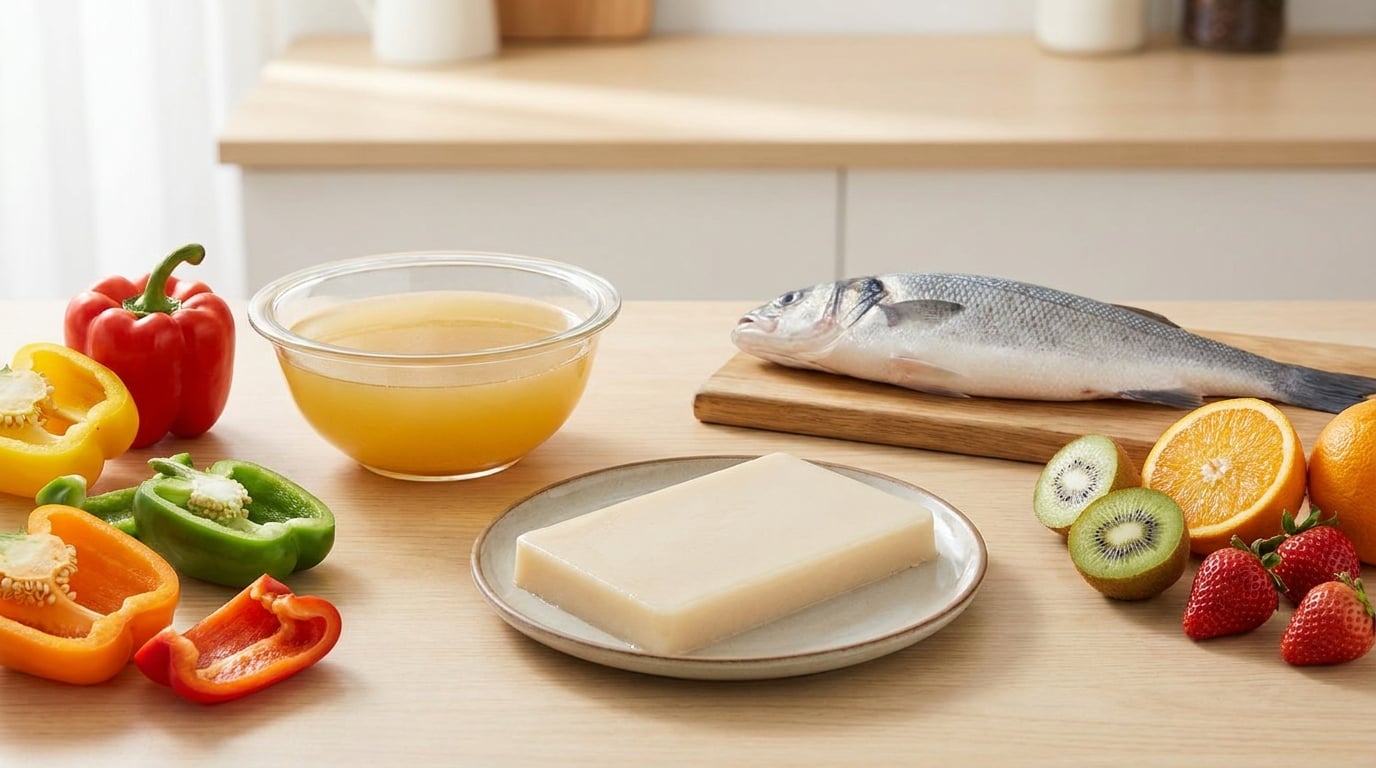
To get more collagen from food, eat animal tissues that contain it: bone broth, plain gelatin, fish skin, poultry skin, tendon-rich cuts and small whole fish eaten with their bones. Collagen is a protein your body only builds from animal sources, and it arrives at your table broken into amino acids before your cells reassemble it. Most people do fine by adding two or three of these foods across a normal week and pairing them with vitamin C and enough total protein.
There is no single magic food, and no pill-free shortcut. What works is a rotation you will actually keep eating. That takes about fifteen minutes a day for prep and a bit of planning on a Sunday.
Table of Contents
What You Need to Get More Collagen From Food
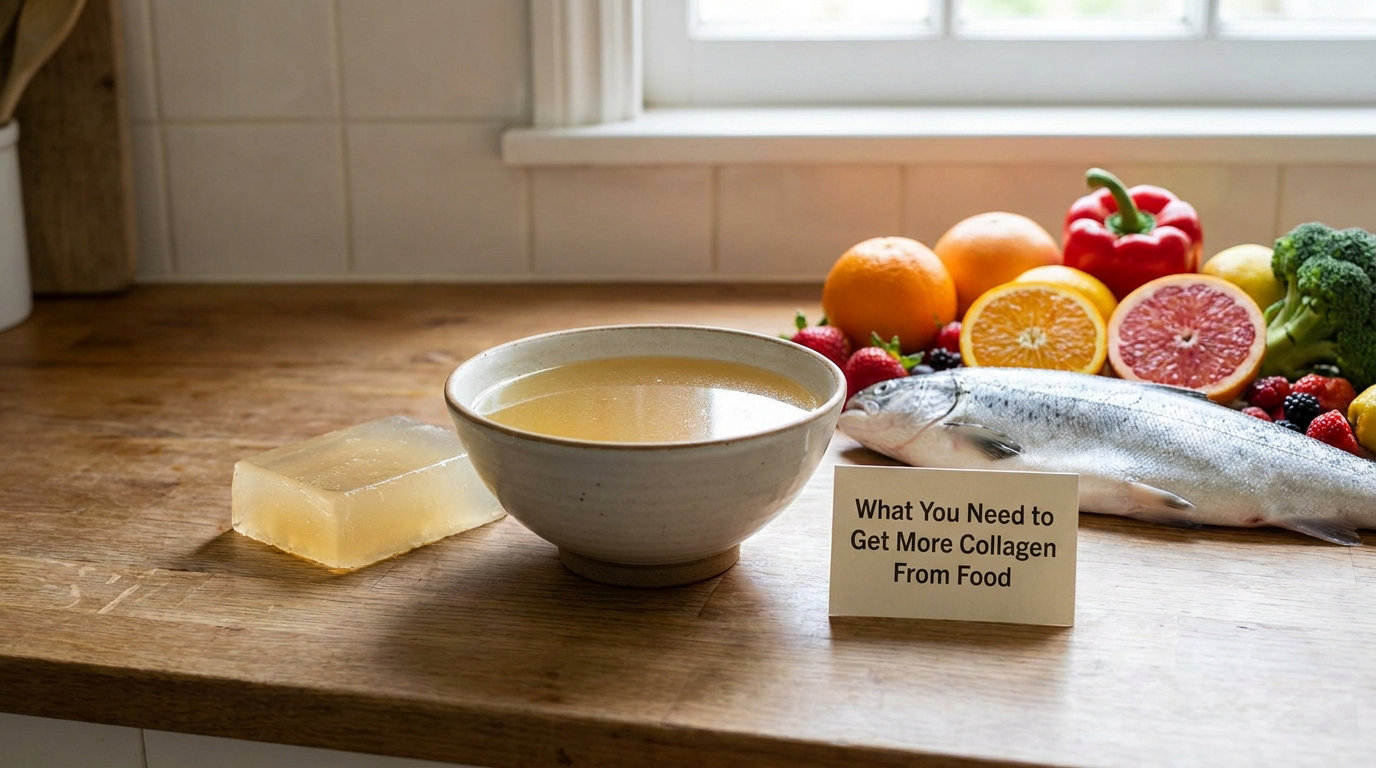
Start here: collagen is a structural protein found in skin, bone, tendon, cartilage and the connective tissue wrapping your organs. It is abundant in mammals, birds and fish, and it does not exist in plants in any form your body can use.
The complete sources worth knowing about are bone broth, plain gelatin, fish skin, chicken or turkey skin, and cuts of meat with plenty of connective tissue such as shank, brisket, short ribs and oxtail. Small fish eaten whole, sardines and anchovies, bring collagen plus calcium and vitamin D in the same bite.
Then there are the foods that do not contain collagen but help your body build it. Those are protein sources for the amino acids, vitamin C foods, and foods carrying zinc and copper. More on those in the steps below.
What you need in the kitchen is modest. A stockpot or Dutch oven, a strainer, a container that holds broth safely, a knife and a board. If you eat gelatin regularly, a shallow dish so it sets into slices you can portion out. Nothing else, and no specialty equipment.
Step-by-Step
How to get more collagen from food by planning portions
Collagen is a complete protein, so a serving counts toward your daily protein total just like chicken or eggs. Plan it that way instead of treating it as an extra.
Read the label. Plain gelatin lists gelatin as the only ingredient, and unflavored broth lists bones, water and sometimes vegetables. If a product says hydrolyzed collagen, collagen peptides or hydrolyzed gelatin, it is collagen from an animal source, and the amino acids are already partly broken down, which some people find easier on the stomach.
Aim for a normal serving, not a whole bag of powder. One cup of broth, a two-inch cube of set gelatin, or a small bowl of skin and connective tissue is plenty to add to a day. You succeed when you can name two or three specific meals in your week where a collagen-containing food fits without replacing everything else you eat.
Choose bone broth and other collagen-rich animal foods
Each option trades flavor, convenience, cost and prep time differently. Here is what you actually get.
| Food | What it contributes | How it fits a week |
|---|---|---|
| Bone broth, homemade | Collagen from simmered bones, plus glycine, proline and minerals | Batch on a weekend, freeze in portions, reheat a cup with soup or rice |
| Bone broth, packaged | Collagen content varies widely by brand and dilution | Fast option on busy nights; check whether it is broth or stock, since stock is thinner |
| Plain gelatin | Concentrated collagen, nearly no fat | Sets into slices or a dessert; dissolves in hot liquid |
| Chicken or turkey skin | Collagen-rich connective tissue with fat | Roast on a sheet pan until crisp; season and eat a few pieces |
| Fish skin | Collagen and omega-3 fats | Pan-fry or roast until crisp; check for bones before serving |
| Shank, brisket, short ribs, oxtail | Collagen from dense connective tissue, plus complete protein and iron | Slow-braise on a weekend, eat across two or three meals |
| Sardines, anchovies, small whole fish | Collagen from skin and bones, calcium, vitamin D, omega-3s | Cheapest per serving; eat whole on toast, in salads or over pasta |
Long, moist cooking is what pulls collagen out of bone and tendon. Simmer at a low, steady heat for 12 to 24 hours and keep the pot just below a boil. A hard rolling boil and a short cook give you clearer liquid and less of what you came for.
Success looks like picking two foods you enjoy and repeating them, not trying all seven in a week.
Add collagen-rich foods throughout the week
One food every day turns into a chore by Thursday. Spread it out instead.
- Monday breakfast: plain gelatin cubes in your coffee or tea, plus an orange on the side.
- Tuesday lunch: a cup of reheated homemade broth with chopped celery and a small splash of vinegar.
- Wednesday dinner: braised beef shank over rice, with roasted red peppers on the plate.
- Thursday snack: a few pieces of crisped chicken skin, which are easy to portion out.
- Friday dinner: whole sardines on toast with lemon and a handful of parsley.
- Saturday dinner: a pot of chicken feet or turkey neck, simmered until the joints give way.
- Sunday: roast a whole fish, save the skin, and pack some with lunch.
Notice what is going on. Each collagen-containing food is attached to a normal meal and a normal vegetable, so nothing feels like a prescription. If you work nights, shift the pattern; the order matters far less than the repetition.
Support collagen production with vitamin C and protein
Vitamin C is a required cofactor, not a nice extra. Without it your body cannot hydroxylate proline and lysine, and collagen does not form a stable triple helix. That is why severe vitamin C deficiency produces scurvy and bleeding gums.
Zinc and copper support the enzymes involved, and total protein intake sets the ceiling. If you are not eating enough protein overall, adding broth on top changes little.
| Nutrient | Role | Food sources |
|---|---|---|
| Protein and amino acids | Supplies glycine, proline and lysine to build the chain | Bone broth, gelatin, eggs, meat, fish, dairy, beans, lentils, tofu, tempeh |
| Vitamin C | Required cofactor that stabilizes the collagen helix | Bell peppers, citrus, kiwi, strawberries, guava, broccoli, tomatoes |
| Zinc | Supports enzymes in collagen synthesis and tissue repair | Oysters, shellfish, beef, pumpkin seeds, chickpeas, cashews |
| Copper | Works alongside vitamin C in cross-linking collagen | Shellfish, liver, nuts, seeds, cocoa, whole grains |
| Manganese | Supports connective tissue formation | Oats, brown rice, nuts, leafy greens |
Build the plate in a simple order: a collagen-containing animal food if you eat animal products, a vitamin C food at the same meal, and a broad spread of other whole foods across the day. On a plant-based pattern, swap the first item for a full protein serving and keep the rest the same. Success is a plate with a protein, a color-rich vegetable or fruit, and a starch. It is not a promise that one food rebuilds collagen on its own.
Prepare and store animal foods safely
Follow the USDA minimum internal temperatures: 165°F for poultry, 160°F for ground meat, and 145°F for whole cuts of meat and fish, with a rest period before cutting.
Cool broth and stock quickly, within two hours, and keep it in the refrigerator for up to three to four days or freeze it for longer. Cool the pot in an ice bath if it is large, then portion into containers that leave headspace for expansion.
Refrigerate gelatin dishes for a few hours until set, then cut and cover. Some recipes ask for a small amount of liquid sugar or liqueur, but plain sets on its own if you let it chill undisturbed.
One thing cooking does not do: it cannot create collagen in a food that had none. Simmering draws collagen out of bones, tendons and skin. It does not add it to lentils, greens or grains.
Common Mistakes to Avoid With Collagen Foods
- Thinking legumes, nuts, seeds and leafy greens are collagen sources. They contain no collagen. They do supply amino acids, vitamin C, zinc and copper, which is a supporting role, not the same thing.
- Assuming every bowl of broth is collagen-rich. Store-bought broth varies a lot, and stock is thinner than broth. Homemade batches simmered low for a long time give you the most.
- Believing supplements are required. Many people reach for powder first. Whole foods come with the same amino acids plus vitamins, minerals and fiber, and they are a reasonable first move before deciding on anything else.
- Adding more and more protein with no vitamin C. Extra broth plus a plate of chips does nothing for collagen synthesis. Pair every collagen food with a vitamin C food.
- Treating collagen like a nutrient that survives digestion intact. It does not. It arrives as amino acids and small peptides, and your body reassembles collagen from those building blocks.
- Expecting a specific result on a specific date. Skin and joint changes from food alone take weeks to months, and they depend on age, sun exposure, overall protein intake and the rest of your diet.
A few habits that pay off: read ingredient labels rather than trusting the front of the package, treat concentrated broth and gelatin as a food rather than a supplement, and keep alcohol and heavily sweetened drinks to a minimum. Excess sugar and heavily processed carbohydrates promote glycation, where sugars attach to collagen and stiffen it, which works against the elasticity you are trying to protect.
If you have a medical condition, take regular medication, or have allergies to fish or shellfish, talk with your doctor or a registered dietitian before changing how you eat. Same goes for any warning sign such as bleeding gums, unexplained bruising or ongoing joint pain.
Frequently Asked Questions
Does bone broth really contain collagen?
Yes, if the bones were simmered long enough at a gentle heat. Collagen dissolves out of bone and tendon during a long, moist cook, which is why traditional broth simmers for 12 to 24 hours. A quick boil or a thin store-bought broth contains much less. Broth also brings glycine, proline and minerals, but the amount varies by batch, so treat it as a protein-rich food rather than a measured dose.
What is collagen, and which foods naturally contain it?
Collagen is the most abundant structural protein in your body, forming the framework of skin, bone, tendons, cartilage and organs. Only animal-derived foods contain it: bone broth, plain gelatin, fish skin, poultry skin, tendon-rich cuts such as shank and brisket, and small whole fish eaten with skin and bones. Plant foods contain none, though they can supply the amino acids and vitamin C your body uses to build its own collagen.
How can people following a plant-based diet support collagen production?
Since no plant contains collagen, the goal shifts to feeding the ingredients your body needs to build it. Eat complete protein at every meal from tofu, tempeh, lentils, beans, seitan, soy milk and peas, and pair it with vitamin C foods such as bell peppers, citrus, kiwi and strawberries. Adding zinc and copper sources like pumpkin seeds, cashews, chickpeas and mushrooms rounds out the plate. Expect to focus on overall protein intake rather than any single food.
Is collagen from food safe for everyone?
For most people, yes. Gelatin and bone broth are well tolerated, though large amounts can feel heavy or cause stomach discomfort, and gelatin is not suitable for anyone avoiding pork or beef for religious reasons. Fish and shellfish sources matter if you have an allergy. People with a condition such as gout, chronic kidney disease or phenylketonuria should ask a doctor or registered dietitian before leaning heavily on concentrated protein and gelatin.
What results should I expect from eating more collagen?
Be realistic. Changes in skin hydration and elasticity from food alone take many weeks, often a few months, and they are modest compared with a dedicated supplement plus vitamin C. Joint comfort may improve gradually if stiffness is diet-related. No food guarantees a visible change, and results depend on your age, sun exposure and total protein intake. If you want a specific outcome, discuss it with a dermatologist or registered dietitian rather than expecting a timeline from a food.
Conclusion
Start small and specific. Pick one collagen-containing food you already like, cook it once this week, and add a vitamin C food to the same meal. Then build a rotation you can repeat: broth on a cool weeknight, gelatin in your morning drink, a small whole fish on Friday, a braised shank when you have time.
Keep total protein high enough to matter, because that is the ceiling everything else sits under. If you eat plant-based, put your effort into complete protein at every meal plus plenty of vitamin C. If you have a health condition or a specific goal, ask your doctor or a registered dietitian before changing your diet. That is the whole method. Repeat it, and it works far better than any single superfood.