
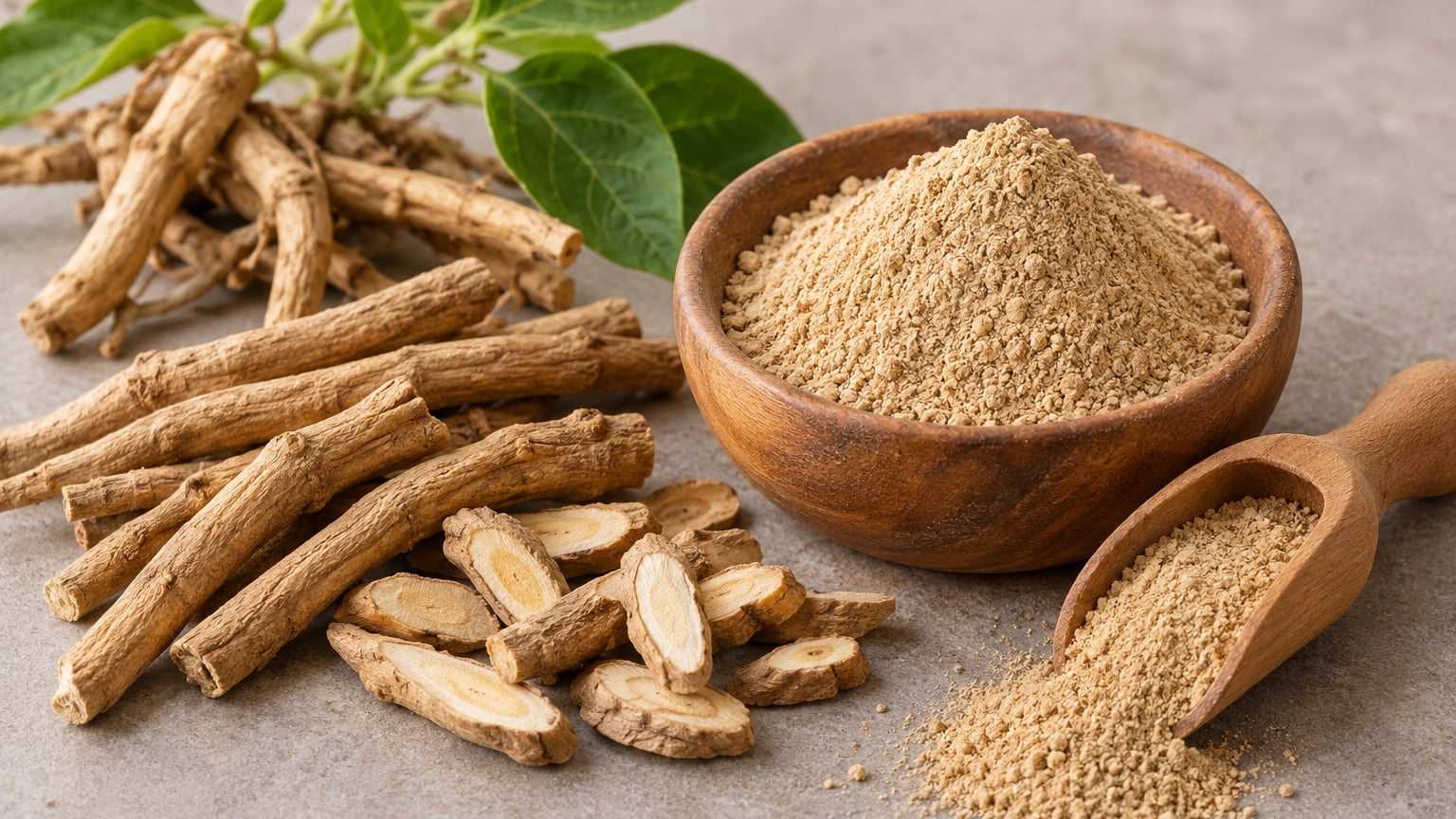
Ashwagandha may modestly help with stress, anxiety symptoms and sleep, and those are the benefits backed by the most human research. The evidence is uneven everywhere else, with claims about cholesterol, thyroid function, fertility, muscle and even cancer resting on smaller or laboratory-only work. Here is how the research actually breaks down.
Most listicles flatten the benefits of ashwagandha and what research shows into one confident paragraph. The problem is that a result from a mouse study and a result from a randomized trial in adults are not the same kind of fact, and the difference matters a lot when you are deciding whether something is worth taking.
This guide grades each claim by the type of evidence behind it, explains why the form you buy changes which studies apply to you, and covers the safety questions worth asking a pharmacist. It is general information, not medical advice, and anyone on medication or with a health condition should talk to a clinician first.
Table of Contents
- What Is Ashwagandha and Why Do People Use It?
- What Research Shows About the Benefits of Ashwagandha
- How Might Ashwagandha Affect the Body?
- Which Forms of Ashwagandha Are Studied?
- What Do Human Clinical Trials Actually Show?
- Is Ashwagandha Safe for Everyone?
- How to Evaluate Ashwagandha Claims Before Buying
- Frequently Asked Questions
- Does ashwagandha really help with stress and anxiety?
- How long do studies on ashwagandha last?
- Can ashwagandha replace sleep medication or treatment?
- Who should avoid taking ashwagandha?
- Why do people experience different results from ashwagandha?
- What should I look for on an ashwagandha supplement label?
- What to Do First: A Practical Bottom Line
What Is Ashwagandha and Why Do People Use It?
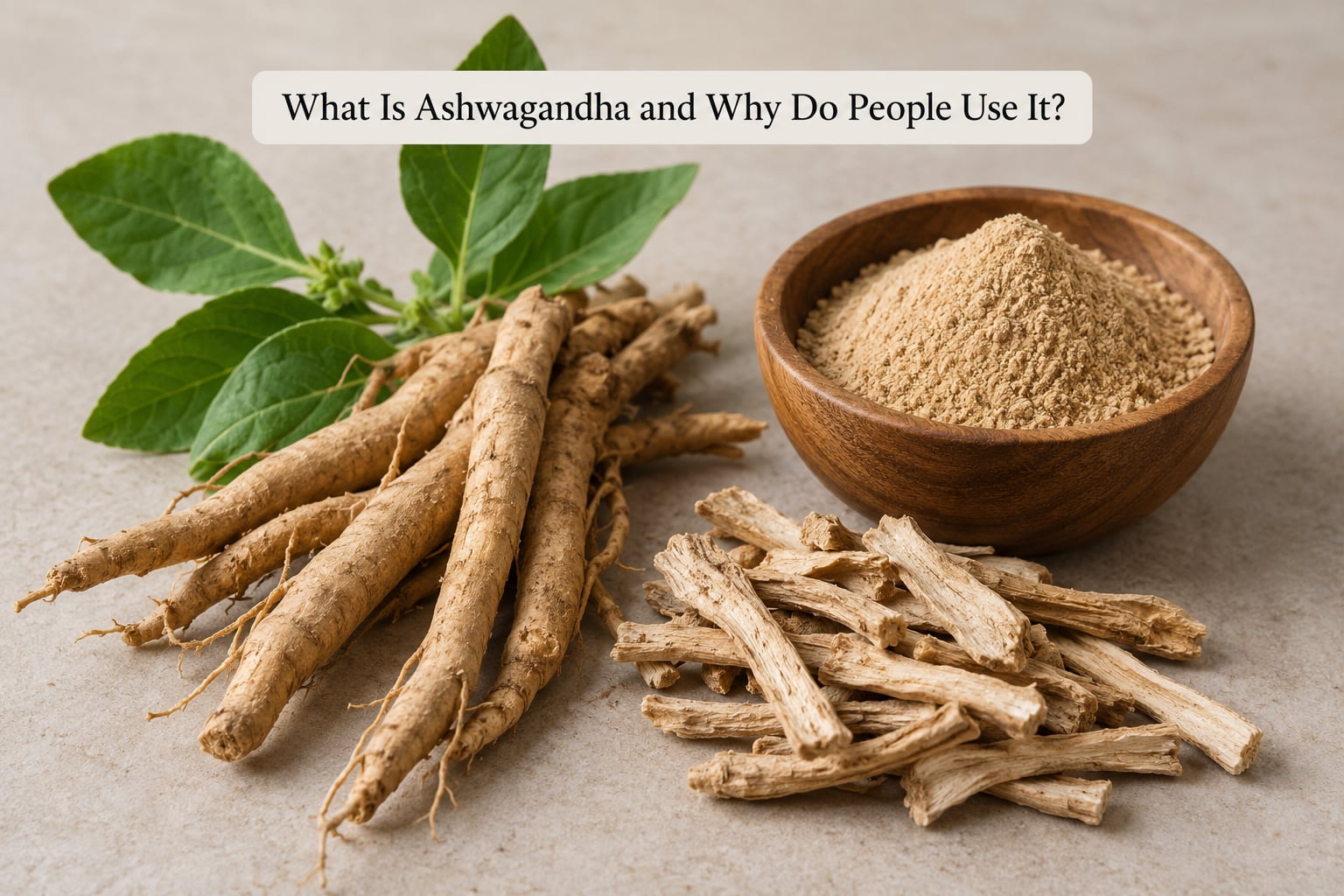
Ashwagandha is Withania somnifera, an evergreen shrub in the nightshade family that has been used in Ayurvedic practice for thousands of years. It goes by the names Indian ginseng and winter cherry, though it is unrelated to either ginseng or cherry.
Supplements come from two main plant parts: the root and the leaves. The root is the traditional Ayurvedic material and the one most research focuses on, while leaf extracts exist because they concentrate certain compounds differently.
What does the adaptogen label actually mean?
Ashwagandha is usually marketed as an adaptogen, a term for herbs described as helping the body cope with physical and mental stress. Adaptogen is a traditional wellness concept, not a medically established category, and no regulator has approved a supplement as a treatment for stress, anxiety or any other condition.
What people tend to notice is a calmer, less jittery feeling within the first hour, alongside better sleep after several weeks of consistent use. Forum users ask this constantly, and the answer is usually the same: any immediate effect is mild, and the cumulative effects take a month or two.
What Research Shows About the Benefits of Ashwagandha
Direct answer: human clinical trials support real but modest effects on stress, anxiety symptoms, cortisol and sleep. Everything else sits one or two tiers lower, and some popular claims have no human evidence at all.
The NIH Office of Dietary Supplements and the National Center for Complementary and Integrative Health both describe ashwagandha as promising with limited clinical evidence, and Mayo Clinic’s own position is that much remains unknown. That caution is not hedging for its own sake. Most trials run weeks, involve a few dozen participants, and are funded by companies that sell the product.
| Claimed benefit | What the evidence actually is | Confidence |
|---|---|---|
| Stress and anxiety symptoms | Randomized placebo-controlled trials in adults, plus several systematic reviews pooling them | Moderate |
| Cortisol reduction | Human trials measuring blood cortisol alongside stress and anxiety scores | Moderate |
| Sleep quality and falling asleep faster | Human trials lasting six to eight weeks, often in people with anxiety or insomnia | Moderate |
| Depression symptoms | Small human trials used alongside standard care, not instead of it | Limited |
| Strength and exercise recovery | Human trials in resistance-trained adults over roughly two to three months | Limited |
| Testosterone and sperm parameters | Human trials concentrated in men under stress or with fertility concerns | Limited |
| Thyroid hormone levels | Human trials in people with low thyroid values, small and short | Limited |
| Blood sugar, cholesterol, inflammatory markers | Human trials tracking blood markers over weeks, results inconsistent between studies | Limited |
| Cancer, tumor shrinkage, nerve regeneration, vitiligo | Cell cultures and animal studies only | Preclinical |
| Treating a diagnosed condition | Not studied as a therapy for any disease | Not supported |
Two patterns are worth noticing. First, the benefits with the best evidence are all stress-related, which makes sense given the proposed mechanism. Second, effects reported in trials are usually modest, and the improvements people notice in daily life tend to be smaller than the marketing suggests.
How Might Ashwagandha Affect the Body?
The honest version is that the mechanism is proposed, not settled. Researchers describe several overlapping pathways, and none has been confirmed as the reason the herb appears to work.
- Stress response and the HPA axis. The hypothalamic-pituitary-adrenal axis governs how the body responds to stress. Trials that report lower cortisol alongside better stress scores are consistent with an effect somewhere along this axis, though they do not prove where.
- GABA-related signalling. Withanolides, the plant’s best-studied compound group, appear to influence GABA receptor activity in laboratory work. That is often offered as the sleep explanation, and it remains a mechanism described in animals and cells rather than a confirmed pathway in people.
- Inflammatory markers. Some human trials report reductions in markers such as C-reactive protein, which sits downstream of many processes and means little on its own.
- Thyroid hormones. Small trials report increases in T3 and T4 in people with low values, which is exactly why people with thyroid conditions are advised to avoid it without medical input.
None of this establishes a proven mechanism. When supplement pages explain ashwagandha as though the science settled decades ago, that is marketing talking.
Which Forms of Ashwagandha Are Studied?
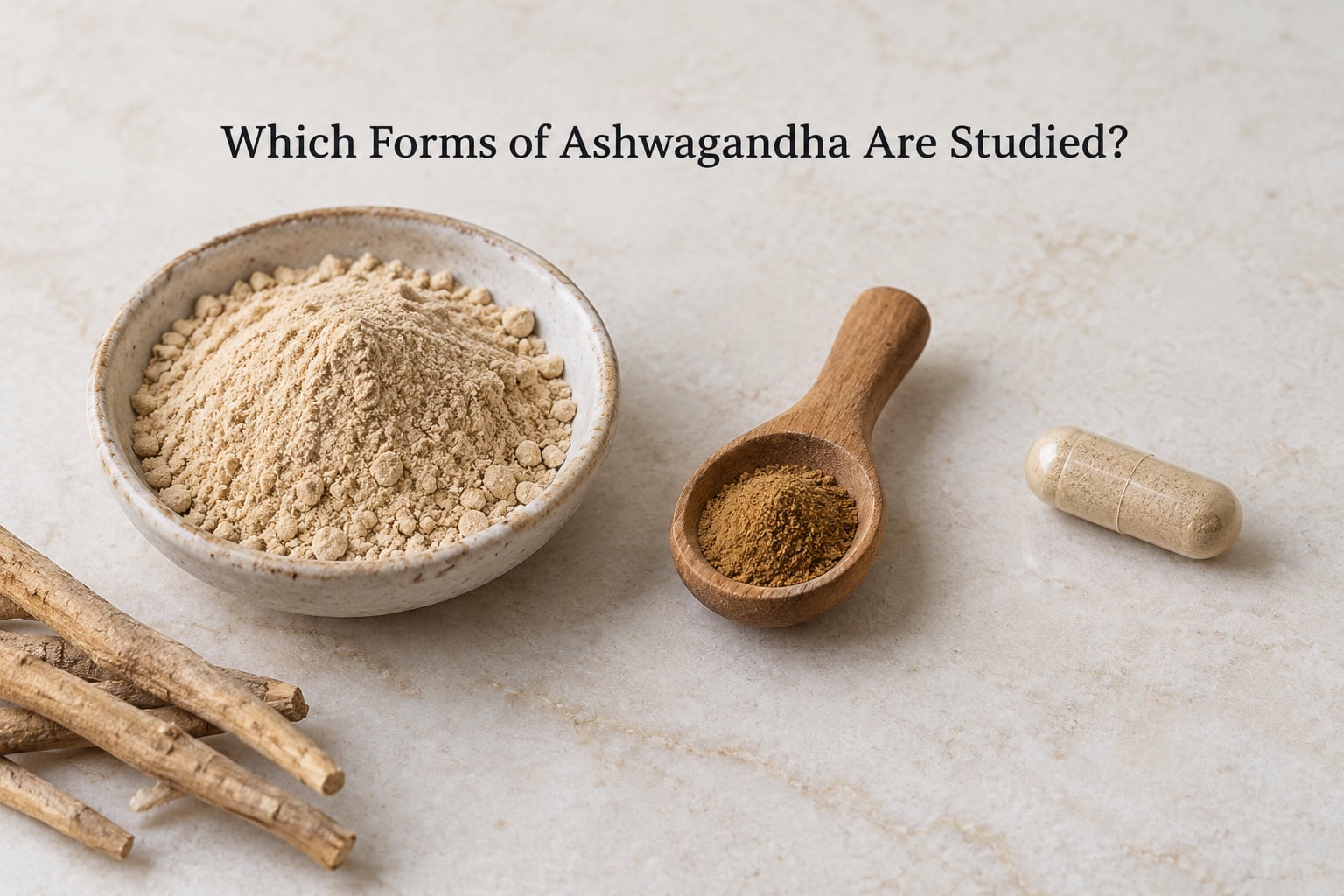
The form changes what is in the capsule, and that changes which studies you can actually apply to yourself. This is the single biggest reason two people can take the same herb and get different results.
- Root powder is the traditional Ayurvedic preparation and the least concentrated option. Traditional use and trial results are not interchangeable.
- Standardized root extracts concentrate withanolides from the root and have the largest body of human research behind them. KSM-66 is a root-only extract and the form used in many of the better-known stress and strength trials.
- Root-and-leaf extracts such as Sensoril pull in leaf material, which shifts the compound profile and includes a different mix of withanolides.
- Traditional preparations such as powder mixed with milk or ghee are foods rather than standardized doses, so dose varies meal to meal.
A trial on a high-concentration root extract cannot be extended to a low-dose capsule, or to a leaf-heavy blend, or to a spoonful of powder in warm milk. Check the plant part and the standardization on the label before assuming a study applies to what you hold.
What Do Human Clinical Trials Actually Show?
Human trials are the only research that tells you anything directly useful, and they share weaknesses that shape how much weight any single result can carry.
Sample sizes are small, often fewer than a hundred people split between the ashwagandha group and a placebo group. A difference that looks meaningful in 30 people can shrink or vanish with 300, which is why systematic reviews of the same studies often reach softer conclusions than the individual papers do.
Durations are short. Six to eight weeks is typical, with very few studies running past three months, so long-term safety and long-term benefit are largely unknown. Mayo Clinic makes that same point when it says the effects are not well understood over time.
Participants are specific: adults who are stressed, anxious, training hard or trying to conceive. A result in that group says little about a healthy 25-year-old or someone with multiple conditions and several prescriptions.
Funding is the biggest quiet problem. Much of the published work comes from supplement manufacturers or patent holders, and industry sponsorship is consistently linked to more favourable results. Independent replication in this area remains thin, which is a real reason for healthy skepticism. One long-running thread on r/ItalyFitness put it bluntly: any positive effect is probably mostly the placebo effect. That may be too harsh, but it is a fair description of the evidential gap.
Is Ashwagandha Safe for Everyone?
Ashwagandha is not safe for everyone, and the groups below have a specific reason to avoid it rather than a vague caution.
- Pregnancy and breastfeeding. Avoid in both. Traditional use in pregnancy is debated, and there is no reliable safety data.
- Thyroid disorders. Trials report raised thyroid hormone levels, which can be dangerous in someone already on thyroid medication.
- Autoimmune conditions. Immune-stimulating effects may work against immunosuppressants or flare conditions.
- Liver conditions and past liver injury. Liver injury has been reported in people taking ashwagandha, and product contamination is a known concern.
- Surgery. Stop in advance of surgery, because effects on blood pressure, blood sugar and sedation can complicate it.
- Medications. Sedatives, thyroid medication, diabetes medication, blood pressure medication, anticonvulsants and immunosuppressants all warrant a pharmacist conversation.
Common side effects are usually mild: nausea, diarrhoea, abdominal discomfort, drowsiness and headaches. A headache after starting is a recognised complaint and is a reasonable reason to stop rather than push through.
Less discussed is the emotional side. Forum users on r/Supplements and r/herbalism report feeling calm but noticeably flat, and one summary noted that while a large share reported stress relief, over a quarter described emotional blunting. Others report reduced libido despite higher testosterone readings, increased anxiety, or a strange calm that turns into irritability. A relaxed feeling that flattens your mood is a side effect, not a feature.
How to Evaluate Ashwagandha Claims Before Buying
Label reading is the most reliable filter, and it takes about a minute.
- Find the exact plant part. Root, root-and-leaf, or leaf only. Root-only is what most of the human stress research used.
- Look for standardization. A stated withanolide percentage means the manufacturer tested the batch. Without it, the label tells you almost nothing.
- Check for third-party testing. Independent programs screen for heavy metals and undeclared pharmaceuticals, which matters because supplements are not pre-approved by regulators.
- Be sceptical of certification marks you cannot verify. A logo on a label is not proof. Look for a certificate tied to the specific batch.
- Discount anything promising a cure. Claims about treating cancer, repairing nerves or reversing vitiligo all trace back to cells and animals. Those are four of the biggest content gaps in the ashwagandha category: no supplier page admits these are preclinical.
- Watch for borrowed authority. A page saying “clinically proven” while citing no study is a page selling a product.
Users comparing brands often describe independent testing results as disappointing, with underdosed products common. That gap is why the same ingredient can feel like nothing on one shelf and noticeable on another.
While you are reading labels, it helps to keep the fundamentals in view too. what to eat for gut health every day covers the food side that no supplement replaces, and if you are managing weight alongside stress, why very low calorie diets backfire is worth a look before adding anything else to your routine.
Frequently Asked Questions
Does ashwagandha really help with stress and anxiety?
Several randomized placebo-controlled trials in adults report improvements in perceived stress and anxiety scores over roughly six to eight weeks, and independent systematic reviews of those trials reach generally positive but modest conclusions. The strongest evidence is for short-term symptom relief in otherwise healthy adults, not for treating an anxiety disorder. Effects vary between studies, and the trials are small and often industry-funded.
How long do studies on ashwagandha last?
Most run six to eight weeks, with some reaching two to three months. Very few continue past three months, which is why long-term safety and long-term benefit are largely unknown. If you decide to try it, thinking in four-week blocks matches how the research was actually designed, and gives you a clear point to reassess instead of drifting into indefinite use.
Can ashwagandha replace sleep medication or treatment?
No. Sleep studies of ashwagandha look at insomnia symptoms and sleep quality in people with existing difficulty sleeping, not at replacing prescribed medication. Stopping a prescribed sleep aid and substituting a supplement is exactly the situation where a clinician should guide you, since sleep medications need to be tapered rather than swapped abruptly.
Who should avoid taking ashwagandha?
Pregnancy and breastfeeding, thyroid disorders, autoimmune conditions, liver disease or a history of liver injury, and anyone preparing for surgery. It also warrants caution with sedatives, thyroid medication, diabetes and blood pressure medication, anticonvulsants and immunosuppressants. People who are pregnant or nursing should not start it, and anyone with a condition or prescription should ask a doctor or pharmacist first.
Why do people experience different results from ashwagandha?
Form, strength and label accuracy are the big reasons. Trials used concentrated root extracts at standardized doses, while a capsule or a spoonful of powder may deliver something quite different. Add the fact that stress and sleep have many causes, that people take it at different times relative to bed, and that some users report feeling flat rather than calm, and variation is expected rather than surprising.
What should I look for on an ashwagandha supplement label?
Check the plant part first, since root, root-and-leaf and leaf-only products are not interchangeable and most human research used root. Then look for a stated withanolide percentage and independent third-party testing tied to the batch. Anything promising to cure a disease, or carrying no standardization figure at all, is a reason to walk away rather than save money.
What to Do First: A Practical Bottom Line
Treat ashwagandha as an optional supplement with promising but uneven evidence. The benefits of ashwagandha and what research shows point to one honest summary: stress, anxiety symptoms, cortisol and sleep have modest human evidence behind them, while cholesterol, thyroid, fertility, muscle and any disease-related claim do not.
Before buying, check the plant part, the standardization and independent third-party testing. If you take any medication or have a health condition, ask a doctor or pharmacist rather than reading a label as permission. And put the foundations first, because no supplement outruns consistent sleep, decent food, regular movement and actual rest.