
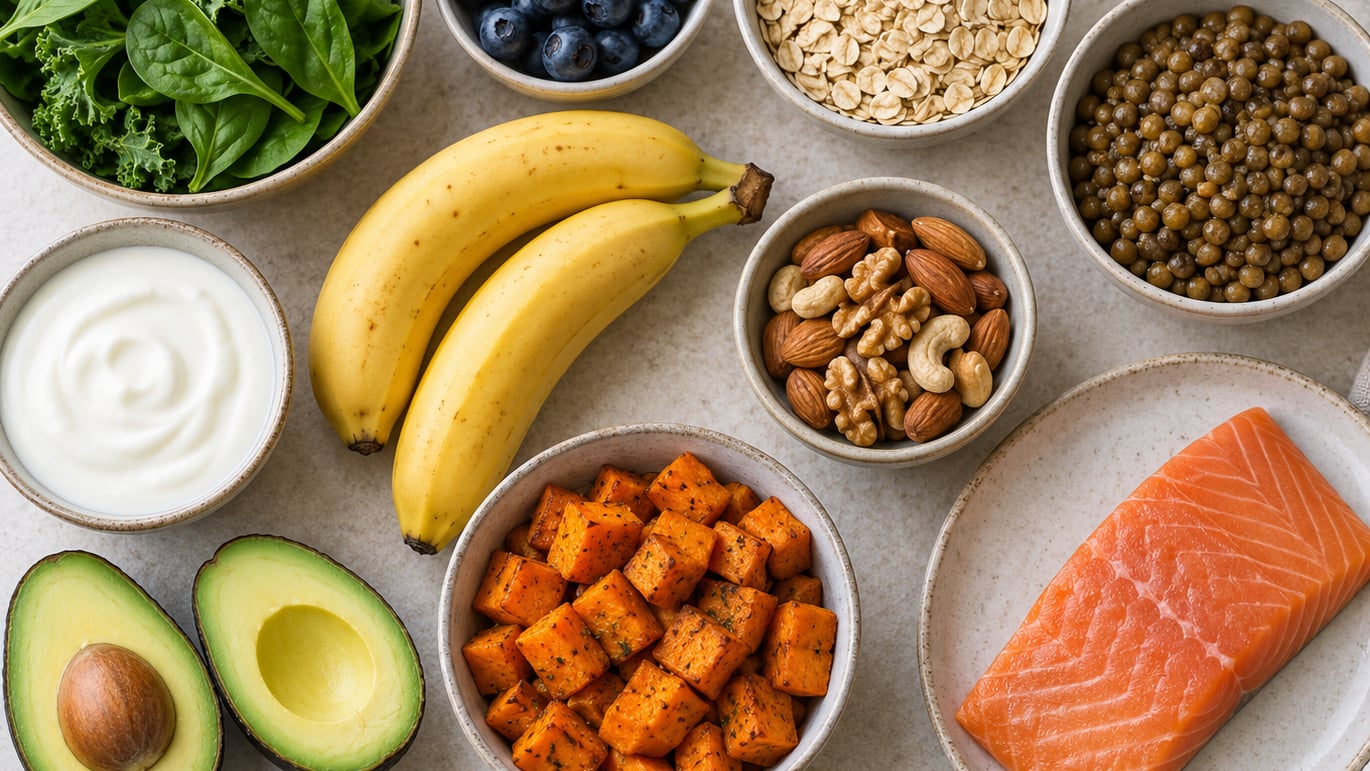
During menstruation you lose blood along with iron, and estrogen and progesterone drop, which is why energy sags and cravings show up around day one. Foods to eat during your period that are iron-rich, high in magnesium and omega-3 fats, and full of fiber tend to make cramps, fatigue, and mood swings easier to manage. None of it stops your flow. It just changes how the days feel.
This is general nutrition information, not medical advice. If your flow is heavy enough to leave you breathless, or your symptoms stop you living your normal week, talk to a doctor or a registered dietitian rather than adjusting your diet alone.
If you are still building the habit, our guide to iron rich plant foods and how to absorb more is a good companion read.
Table of Contents
- Foods to Eat During Your Period at a Glance
- 1. Iron-Rich Beans and Lentils
- 2. Oats with Fruit and Seeds
- 3. Dark Leafy Greens
- 4. Fatty Fish Such as Salmon
- 5. Plain Yogurt with Berries
- 6. Avocado
- 7. Bananas
- 8. Sweet Potatoes
- 9. Chia Seeds and Flaxseed
- 10. Nuts and Nut Butters
- 11. Citrus Fruit
- 12. Whole-Grain Toast or Rice
- Frequently Asked Questions
- A Simple First Step
Foods to Eat During Your Period at a Glance
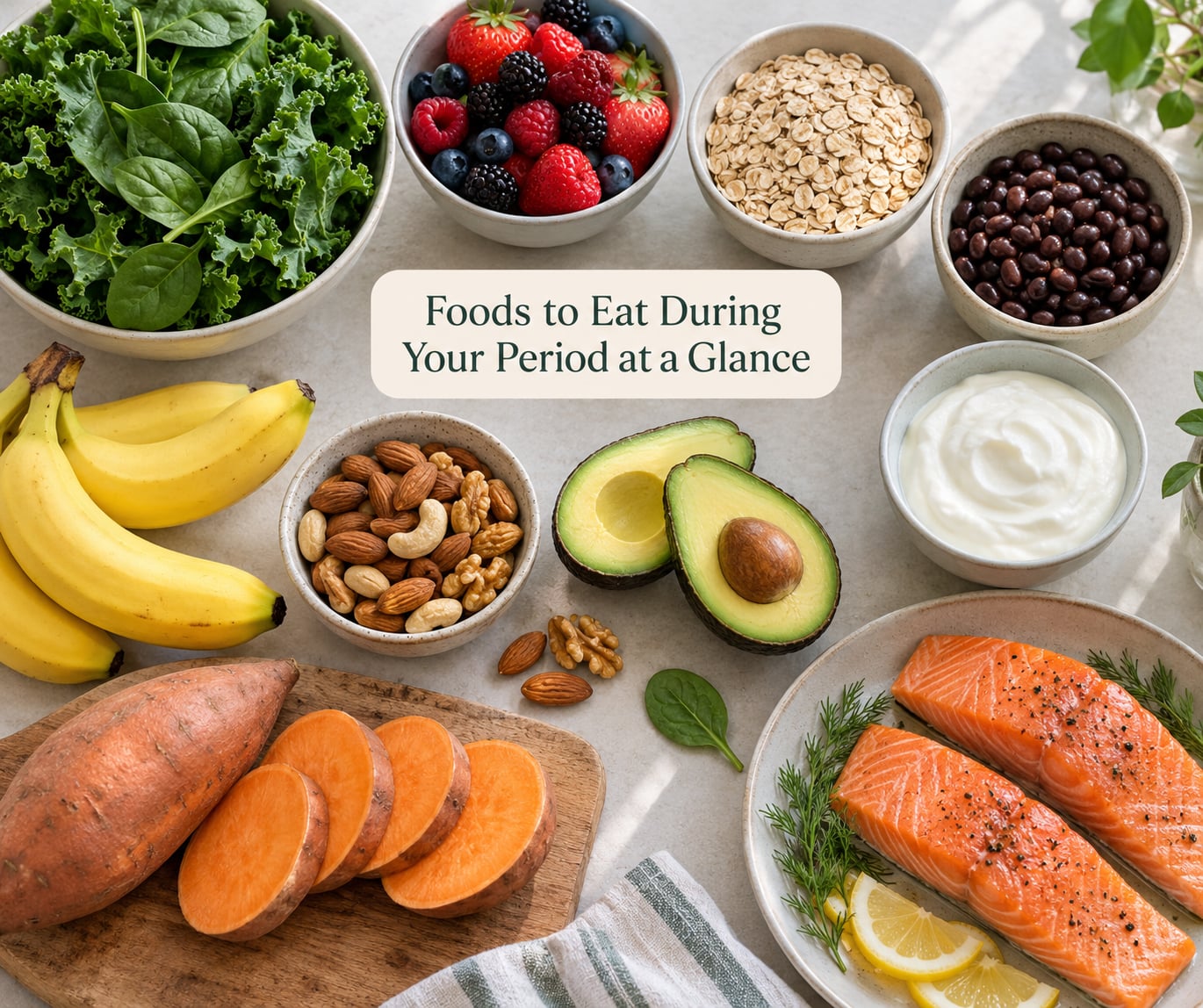
Every food below earns its place for a specific reason. The table shows what each one mainly contributes and when it fits best into your day.
| Food | Main nutrition | Best time to eat it |
|---|---|---|
| Beans and lentils | Plant iron, fiber, protein | Lunch or dinner bowl |
| Oats with fruit and seeds | Fiber, slow carbohydrate | Breakfast |
| Dark leafy greens | Folate, vitamin K, minerals | Lunch or dinner side |
| Salmon and other oily fish | Omega-3 fats, protein | Dinner, twice a week |
| Plain yogurt | Protein, calcium, live cultures | Breakfast or snack |
| Avocado | Unsaturated fat, fiber | Any meal |
| Bananas | Carbohydrate, potassium | Snack or breakfast |
| Sweet potatoes | Complex carbohydrate, vitamin A | Lunch or dinner |
| Chia and flaxseed | Plant omega-3, fiber | Breakfast or snack |
| Nuts and nut butters | Magnesium, unsaturated fat | Snack |
| Citrus fruit | Vitamin C, fiber | Snack or alongside iron foods |
| Whole-grain toast or rice | Steady carbohydrate | Breakfast, lunch, or dinner |
1. Iron-Rich Beans and Lentils
Every menstrual cycle costs you iron, and beans and lentils are the most budget-friendly way to put it back. A half cup of cooked lentils delivers a solid share of the roughly 18 milligrams of iron an adult woman needs daily, plus fiber and about 18 grams of protein.
That fiber matters as much as the iron. It keeps digestion regular and slows how quickly sugar hits your blood, which steadies the afternoon crash that so many people describe on day one.
Plant iron is absorbed better next to vitamin C and worse next to tea, coffee, or a large serving of calcium. If you want the practical version, our piece on how to absorb more iron from plant foods spells it out. A lentil soup with a squeeze of lemon, or a chickpea bowl over toast, does the job in one pot.
2. Oats with Fruit and Seeds
Oats are the answer to the forum question I see most: what is a filling period breakfast that is not just toast. They are cheap, take five minutes, and combine a slow-digesting carbohydrate with enough fiber to hold you until lunch.
Build it in layers. Oats, then a banana or berries, then chia or ground flax, then a spoon of yogurt or nut butter on top. That gives you carbohydrate, fiber, plant omega-3, and protein in one bowl, which is a genuinely balanced breakfast rather than a treat.
3. Dark Leafy Greens
Spinach, kale, and Swiss chard are the quiet workhorses here. They supply folate for cell division, vitamin K, magnesium, and non-heme iron, all in a small serving that is easy to fold into a meal you already eat.
On a low-appetite day, a smoothie is the version that gets eaten. Wilted spinach in a pasta at the end of cooking takes thirty seconds and no extra dish. Keep in mind that greens deliver iron less efficiently than meat does, and pairing them with citrus helps.
4. Fatty Fish Such as Salmon
Salmon, sardines, and mackerel bring protein and omega-3 fatty acids to the table. Omega-3s have been studied for their anti-inflammatory effects, which matters because prostaglandins, the compounds that make the uterus contract, drive much of the cramping.
Bake a fillet at around 200°C for 12 to 14 minutes with lemon and salt. A sheet pan of salmon and broccoli does the washing-up too, and leftovers fold into tomorrow’s lunch. Two servings a week is the usual advice for adults and applies here as well as any other week.
5. Plain Yogurt with Berries
Yogurt supplies protein and calcium, and when it carries live cultures it adds fermented bacteria to the diet. That is the whole case for the Greek yogurt question people ask: it is a reasonable food, it is not a cramp treatment, and the protein is what keeps you full.
Choose plain and sweeten it yourself with berries, a spoonful of honey, or a few pieces of chopped fruit. Flavored versions often carry as much sugar as a dessert, which is exactly the blood sugar spike you do not want on a crampy afternoon.
6. Avocado
Avocado is a compact source of unsaturated fat and fiber, which makes it useful when a meat-free meal leaves you hungry an hour later. The fat also helps you absorb fat-soluble vitamins from the greens on the same plate.
Half a fruit on toast, cubes in a salad with chickpeas, or mashed into tacos works. There is no wrong time of day for it, and it travels well in its whole form if you cut it at home.
7. Bananas
On a day when cooking feels impossible, a banana is food that needs no preparation. They carry carbohydrate for quick energy along with potassium and vitamin B6, and they pair well with anything that adds protein or fat.
Sliced onto oats, blended into a smoothie, or paired with peanut butter and whole-grain toast makes it a real snack rather than a stand-alone banana. If you notice they leave you hungrier than you started, that is your cue to add the nut butter.
8. Sweet Potatoes
Sweet potatoes deliver complex carbohydrate, fiber, and beta-carotene, which the body converts to vitamin A. That combination means steady energy rather than a spike, which is what most people are looking for on day two.
Roast cubes at 200°C for about 25 minutes with olive oil and salt, mash one with Greek yogurt, or simmer them into a soup with black beans and lime. They freeze well too, which makes them a good buy when your week is already full.
9. Chia Seeds and Flaxseed
Both seeds bring plant omega-3 fats and soluble fiber in a small spoonful. Flaxseed works best ground, because whole seeds pass through undigested. Chia has a gel-like texture once hydrated and is the easier of the two to keep in a routine.
Stir either into oatmeal, yogurt, or a smoothie, or mix ground flax into pancakes and muffins. Drink extra water alongside them, since fiber without fluid can leave you more bloated, which is the opposite of what you want this week.
10. Nuts and Nut Butters
Almonds, walnuts, cashews, and their butters provide plant protein, unsaturated fat, and magnesium. Magnesium is the nutrient most often linked to muscle relaxation and steadier mood, and a small handful closes the gap on a busy afternoon.
Our guide to magnesium rich foods and why they matter goes deeper on how much you actually need. Thinly spread almond butter on apple slices, or keep a small jar at your desk so the snack does not require a kitchen.
11. Citrus Fruit
Oranges, grapefruit, clementines, and kiwi add vitamin C and fiber, and they do one specific job well: vitamin C improves absorption of the iron in the beans, lentils, and greens on your plate.
Eat the fruit instead of drinking juice, since whole fruit keeps the fiber that slows the sugar. A clementine in the morning and a kiwi with lunch is an easy way to pair them with an iron-rich meal.
12. Whole-Grain Toast or Rice
Carbohydrates are not the villain here, even if you have read that they are. Whole-grain toast and brown rice give you steady energy through a long day, and they make the rest of the meal work: protein, vegetables, and a source of fat all land better on a carbohydrate base.
Toast topped with avocado and a poached egg, or a bowl of brown rice with salmon and edamame, are both quick. When your stomach feels unsettled, plain toast and rice are among the blandest things you can eat, which sometimes is the goal.
How to Build a Period-Friendly Meal
Use a four-part formula and stop thinking about individual superfoods. Pick one carbohydrate, one protein, one vegetable or fruit, and one source of unsaturated fat.
Lentil soup with a side salad and olive oil fits. So does toast, yogurt, berries, and almonds. If a meal leaves you hungry again within an hour, it is usually missing protein or fat rather than carbohydrate. And if bloating is your main issue, it helps to know which foods tend to set it off in general, which we cover in foods that trigger bloating for many people.
Frequently Asked Questions
What do not eat during periods?
High-sodium packaged foods, sugary drinks, alcohol, and large amounts of caffeine are the usual ones, because they leave you more bloated, dehydrated, and prone to an energy dip. Very fatty or fried foods and artificial sweeteners are worth trimming too. None of these are dangerous, and none are banned, so treat them as a short list rather than a rulebook.
What should be eaten during my period?
Build meals around iron, magnesium, omega-3 fats, and fiber: beans and lentils, oats, dark leafy greens, salmon, plain yogurt, avocado, bananas, sweet potatoes, chia and flaxseed, nuts, citrus, and whole grains. Each covers a different job, replacing iron, easing cramps, steadying blood sugar, or keeping digestion moving. Eat what you tolerate rather than forcing a perfect list.
Can Greek yogurt help with period cramps?
Yogurt gives you protein, calcium, and live cultures, which makes it a solid breakfast on days when you barely have an appetite. There is no good evidence that it treats cramps directly, though calcium and magnesium support normal muscle and nerve function. Choose plain varieties and add fruit, since sweetened ones carry as much sugar as a dessert.
Is it normal to feel weak on my period?
Feeling worn down during menstruation is common, mostly because you are losing blood and iron along with hormonal changes. Lightheadedness, breathlessness after stairs, or needing to nap daily are worth raising with a doctor, since they can point to iron-deficiency anemia from heavy menstrual bleeding. A clinician can check your iron levels and advise whether a supplement is appropriate.
Do you need more food before your period?
Many people notice a bigger appetite in the week before bleeding begins, which tracks with appetite changes across the cycle. Eating a little more is fine, and adding protein, fiber, and fat to snacks helps steady appetite and blood sugar. There is no fixed extra number that applies to everyone, so use hunger as your guide and keep meals balanced.
What is the 7-2-1 rule for menstruation?
The 7-2-1 rule circulates online as a way to eat around your period, pairing portions of protein, carbohydrates, and fats to ease symptoms. It has no clinical basis, no research backing it, and no professional body recommends it. Balanced meals with adequate protein, fiber, and fluids are the sensible version, and you do not need a formula to get there.
A Simple First Step
Pick one meal tomorrow morning and make it from this list: oats with banana, chia, and a spoon of yogurt takes five minutes and covers carbohydrate, fiber, plant omega-3, and protein at once. Add a handful of almonds or an orange later in the day and you have covered most of the list without shopping for anything unusual.
Adjust from there based on your own comfort, your dietary needs, and what your body tolerates. If period symptoms are consistently hard to manage, a registered dietitian or your doctor can help you put together a plan that fits your health history rather than a generic list.