
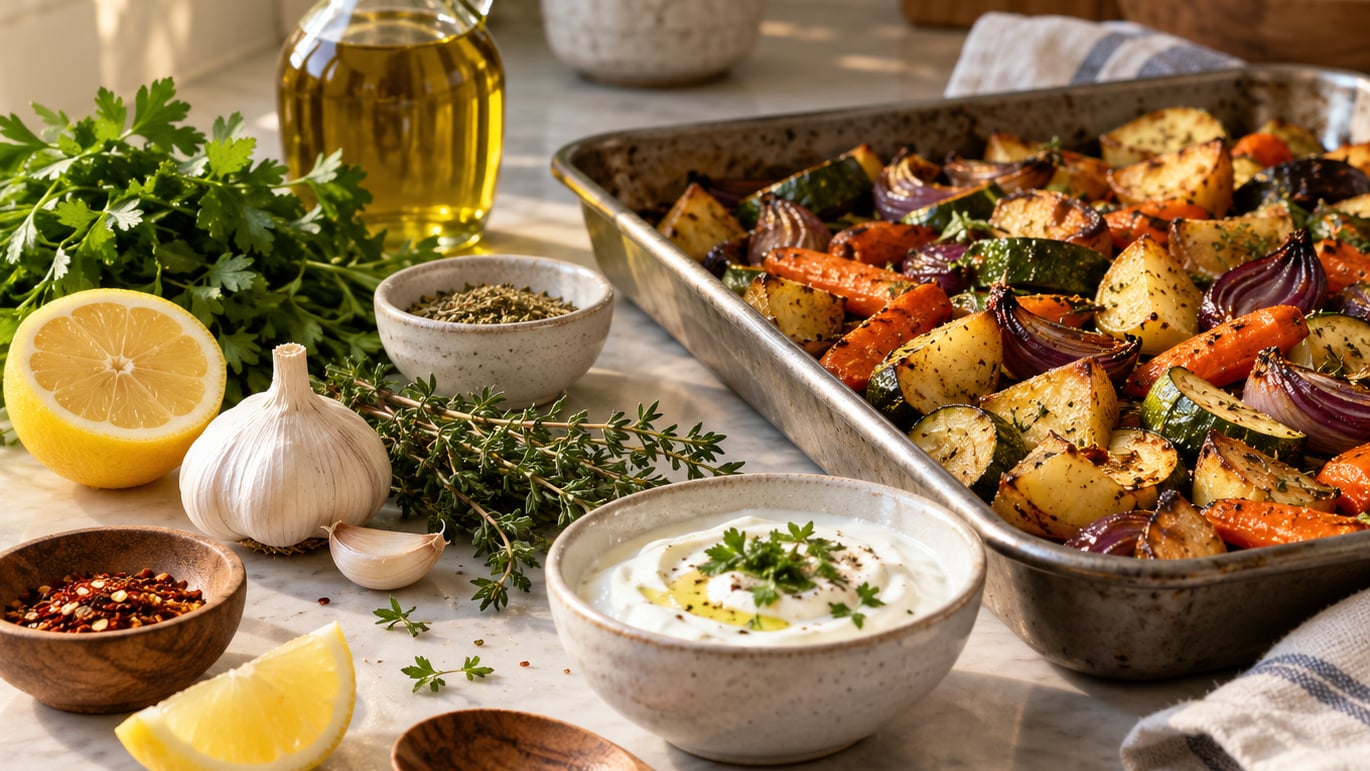
Healthy food tastes flat when it is missing something, not when it needs butter or sugar. The fix is a small set of levers you can turn in order: aromatics first, then acid, salt, fat, texture, and heat, finished with something fresh. Most of it comes out of the pantry and takes under a minute once you know the order.
The whole thing fits in a dozen minutes for a weeknight bowl, which matters because the recipes that fail are the ones that need a plan.
Table of Contents
- What You Need: Flavor Builders and Pantry Staples
- Step-by-Step: How to Make Healthy Food Taste Good
- Common Mistakes
- Frequently Asked Questions
- How can I make healthy food taste better without adding sugar?
- Why does my healthy food taste bland even when I use spices?
- What is the best sauce for vegetables that is healthy but flavorful?
- How can I make salads and grain bowls more filling without meat?
- How do I balance bitter, spicy, or acidic flavors in a healthy recipe?
- What herbs and spices work well with everyday nutrient-dense meals?
- Conclusion
What You Need: Flavor Builders and Pantry Staples
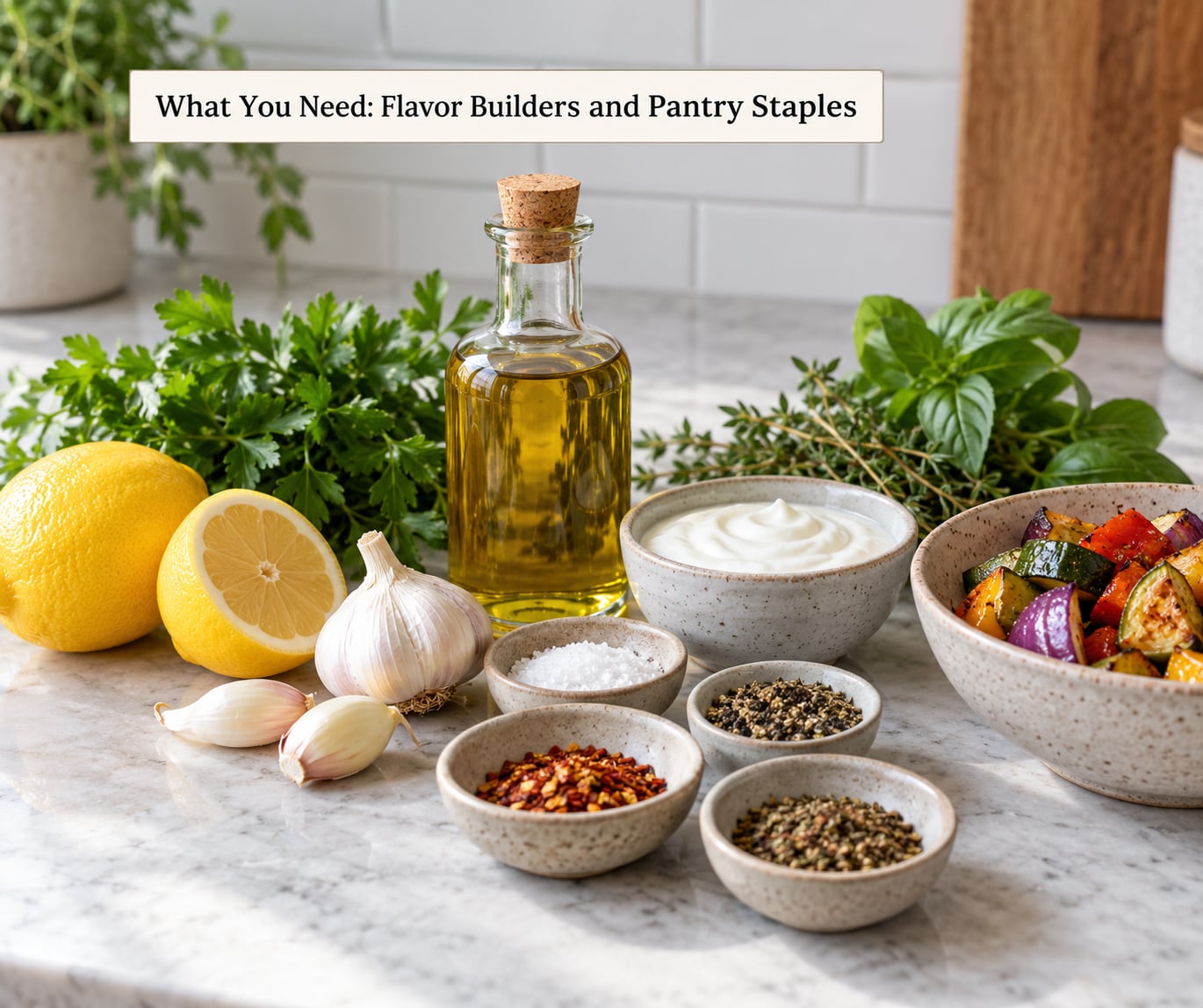
You do not need a specialty grocery run. Everything below is either something you already have or something that lasts for months in a cupboard.
Aromatic base: garlic, onion, shallot, ginger, celery. These build the savory floor a dish stands on. Cook them in fat until they soften and turn sweet, not until they brown.
Acids: lemon juice, lime, rice vinegar, apple cider vinegar, balsamic, and a jar of pickled onions or peppers. Acid is the fastest fix for a dish that tastes heavy or flat.
Fats that carry flavor: extra virgin olive oil, tahini, nut butters, Greek yogurt, and cold-pressed avocado. Fat is how you taste aroma, so a drizzle at the end is not optional.
Umami boosters: tomato paste, miso paste, soy sauce, nutritional yeast, dried porcini or shiitake, and a strip of kombu. A spoonful of any of these makes beans, tofu, and mushrooms taste cooked rather than boiled.
Heat and texture: chili flakes, smoked paprika, Aleppo pepper, toasted nuts, seeds, and coarse breadcrumbs. Crunch is a flavor lever people underestimate.
Tools worth using: a wide cast iron skillet or sheet pan that gets hot, a small whisk for dressings, and a microplane for citrus zest. Zest carries more aromatic oil than juice, and it costs nothing.
Step-by-Step: How to Make Healthy Food Taste Good
1. Start with a Flavor Base
Heat a spoon of olive oil in a wide pan over medium-high. Add diced onion or garlic and cook for two to three minutes until soft and fragrant, then add your main vegetable, grain, or protein.
You will know it worked when the pan smells good before you taste anything. If you skipped this step and went straight to the vegetables, that is usually why the dish tastes flat.
The same idea works at breakfast. Savory oats with garlic, cumin, and a soft egg use exactly the same base, which is why how to make savory oatmeal tastes nothing like plain oats cooked in water.
2. Add Acid, Sweetness, and Salt
Season in layers rather than all at the end. Add salt at the start of cooking so it seasons the food, then taste again near the end and adjust.
Then add acid. A squeeze of lemon over roasted vegetables, a spoon of vinegar into a pot of beans, or a splash of pickle brine into a bowl of greens changes the whole dish. It works because acid sharpens the edges of everything else.
For balance, think in pairs: bitter needs fat or acid, sweet needs acid or spice, salty needs acid or sweetness to round it out. A pinch of cinnamon will tame a tomato sauce that tastes too sharp, and a drizzle of honey or maple will soften a bowl that tastes too sharp on the chili.
3. Use Fat and Texture for Satisfaction
Healthy meals fall short on staying power because they are lean and uniform. Add a fat and a crunch and the same bowl of grains behaves completely differently.
Try Greek yogurt in place of sour cream, tahini loosened with water and lemon for a creamy drizzle, or nut butter thinned with a little warm water. Toasted walnuts, pumpkin seeds, or crushed roasted chickpeas on a salad solve the texture problem in one move.
If tahini seizes up and turns bitter in your jar, that is fixable, and it is covered in how to make a tahini dressing that is not bitter.
4. Cook for Contrast and Caramelization
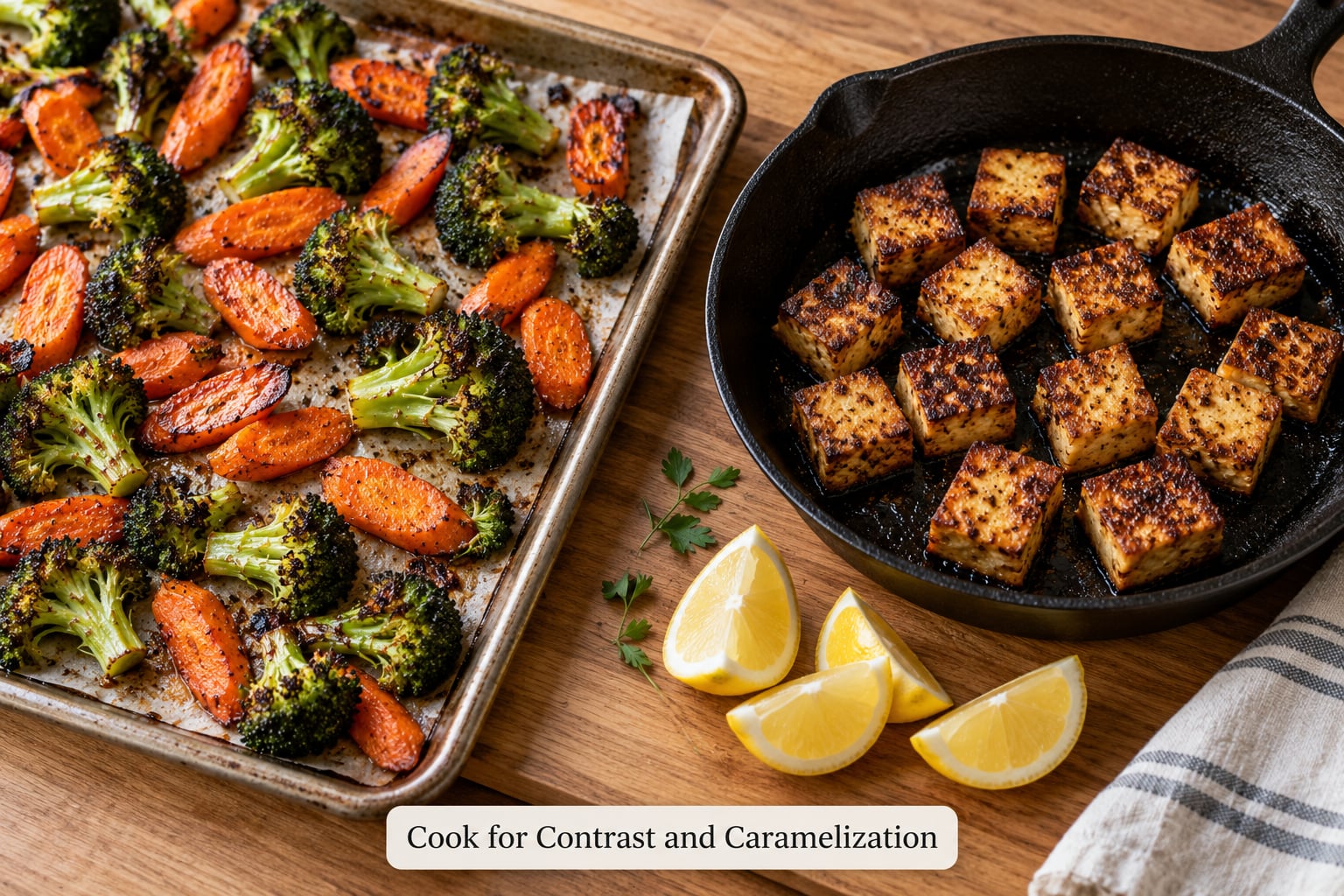
Browning is where vegetables get their sweetness. Give your pan time to heat, spread food in a single layer, and leave it alone for two or three minutes before touching it. Crowding the pan drops the temperature and steams everything instead.
Roast at a high oven temperature until the edges are dark, grill or broil for a hard sear, and deglaze the pan with a splash of water or broth so the browned bits on the bottom become a sauce.
Contrast matters too. Something soft and something crisp, something mild and something sharp. A warm lentil bowl with a cold yogurt-herb topping feels more complete than either alone.
Cook protein to the safe internal temperature: 165F (74C) for poultry, 160F (71C) for ground meat, and 145F (63C) for whole cuts and fish. Rest chicken and fish five minutes after cooking so the juices stay in the meat.
5. Finish with Fresh, Bright Ingredients
The last minute decides whether a dish tastes restaurant-good or homemade. Chop fresh parsley, cilantro, dill, basil, or mint and scatter it over the plate while the food is still hot.
Add citrus zest, a squeeze of juice, a drizzle of good olive oil, or a few toasted seeds. Fresh herbs do more for a plain bowl of vegetables than double the spice, because they add aroma rather than heat.
Dried herbs go into the pot during cooking; fresh herbs go on at the end. Using them interchangeably is a common reason a dish tastes dusty.
6. Adjust the Dish Before Serving: How to Make Healthy Food Taste Good Every Time
Taste each element on its own, then the whole dish. Ask four questions: is it seasoned, does it need acid, does it need fat, does it need contrast?
Still flat after all four? You almost certainly need umami. Stir in a spoon of tomato paste, miso, soy, or nutritional yeast and taste again. That single addition fixes more bowls than any spice blend.
Then eat it immediately while you can still adjust. The dish that went bland in the fridge on day four of meal prep needs a fresh acid and a raw crunch added at eating time, not more salt.
Common Mistakes
Boiling or steaming everything. Water leaches flavor and dilutes the seasonings. Roast, sear, or stir-fry instead, and save steaming for leafy greens.
Underseasoning during cooking. Salt added at the end sits on the surface. Add most of it early, taste, and top up at the end.
No acid at the finish. Many dishes that taste dull rather than flat just need lemon or vinegar. This is the cheapest fix in the kitchen.
Overcooking vegetables. Once broccoli is gray and soft, the sweetness is gone. Pull it a minute or two before you think it is done and let carryover heat finish it.
Blending everything smooth. A pureed bowl has lost its crunch. Reserve some of the ingredients raw, or top with toasted seeds, to put texture back.
Cutting sugar and salt all at once. Food becomes unappetizing and people quit within weeks. Scale back by a small step each week, like dropping one teaspoon of sugar from coffee at a time.
Cooking once and eating it all week. Meal prep tastes flatter by day three. Make a base that travels well, then add fresh acid, herbs, or crunch to each portion at eating time.
A simple dressing base worth memorizing is three parts oil to one part acid to one part mustard or spice, whisked with a little salt. It dresses a grain bowl on Monday and a roasted vegetable tray on Thursday. Garlic powder, smoked paprika, and a pinch of chili flakes turn it into a different sauce each time, which is the whole point.
Texture also responds faster than flavor. Someone who dislikes a vegetable will often eat it happily once it is crisp and roasted, because the complaint was about the mouthfeel, not the taste.
Give any new food roughly 10 to 15 tries, in small portions, without pressure. That range is what people consistently report, and it is far more useful than trying to like a food on the first serving. If a taste or smell change is sudden rather than gradual, it is worth raising with a doctor, since viral illness, smoking, and some medications can dull taste.
Frequently Asked Questions
How can I make healthy food taste better without adding sugar?
Use acid before sugar. Lemon juice, vinegar, or pickle brine sharpens a dish and removes the flat feeling that makes you reach for sweetness. Then add umami, such as tomato paste, miso, soy sauce, or nutritional yeast, and finish with fresh herbs and a good drizzle of olive oil. Those four moves give most bowls more depth than any amount of sugar would, without the sweetness you were trying to avoid.
Why does my healthy food taste bland even when I use spices?
Usually the spice was never given anywhere to go. Powders sit on the surface and taste dusty. Bloom them: toast whole spices in a dry pan for a minute, then add oil and heat for another 30 seconds before they meet the food. Salt earlier, add acid at the end, and use fresh herbs off the heat. Spices layered in stages flavor differently than one scoop at the start.
What is the best sauce for vegetables that is healthy but flavorful?
A quick garlic and lemon pan sauce takes about two minutes and covers almost everything. Cook sliced garlic in a little olive oil until golden, add a splash of water or broth to deglaze, then finish with lemon juice, salt, and red pepper flakes. For a creamy option, stir tahini or Greek yogurt into that pan sauce off the heat. Both carry strong flavor with a small amount of fat.
How can I make salads and grain bowls more filling without meat?
Add fat, texture, and protein density rather than more raw vegetables. A spoonful of tahini or olive oil, a handful of toasted nuts or seeds, and beans, lentils, tofu, or edamame turn a plate of greens and grains into a full meal. Acid is the fourth lever, because undressed salad greens taste flat rather than fresh. A three-to-one oil-to-acid dressing solves that fastest.
How do I balance bitter, spicy, or acidic flavors in a healthy recipe?
Bitterness is usually softened with fat or acid, so add olive oil, tahini, or a squeeze of lemon. When a dish is too hot, dairy, fat, or a sweet element such as a date or a little maple syrup rounds it out. Too much acid gets fixed with more fat and a little sugar. Add these gradually and taste each time, because the balance shifts fast once one element is corrected.
What herbs and spices work well with everyday nutrient-dense meals?
Keep a short, rotating list rather than a large one. Cumin, smoked paprika, garlic powder, and chili flakes handle chicken, beans, cauliflower, and roasted root vegetables. Cumin, coriander, and turmeric suit lentils and rice bowls. Basil, cilantro, parsley, dill, and mint finish almost anything, while cinnamon, ginger, and cardamom make oatmeal and fruit taste like something worth eating.
Conclusion
Start with one meal and build it around a flavor base: garlic and onion cooked in olive oil until fragrant, then your vegetable or grain. Season it early, taste, and adjust in this order: salt, acid, fat, crunch, heat.
Then add umami, which is usually what is missing. From there, make one sauce you can reuse all week and finish every plate with something fresh. Learning how to make healthy food taste good is a matter of habit and order, not expensive ingredients.