
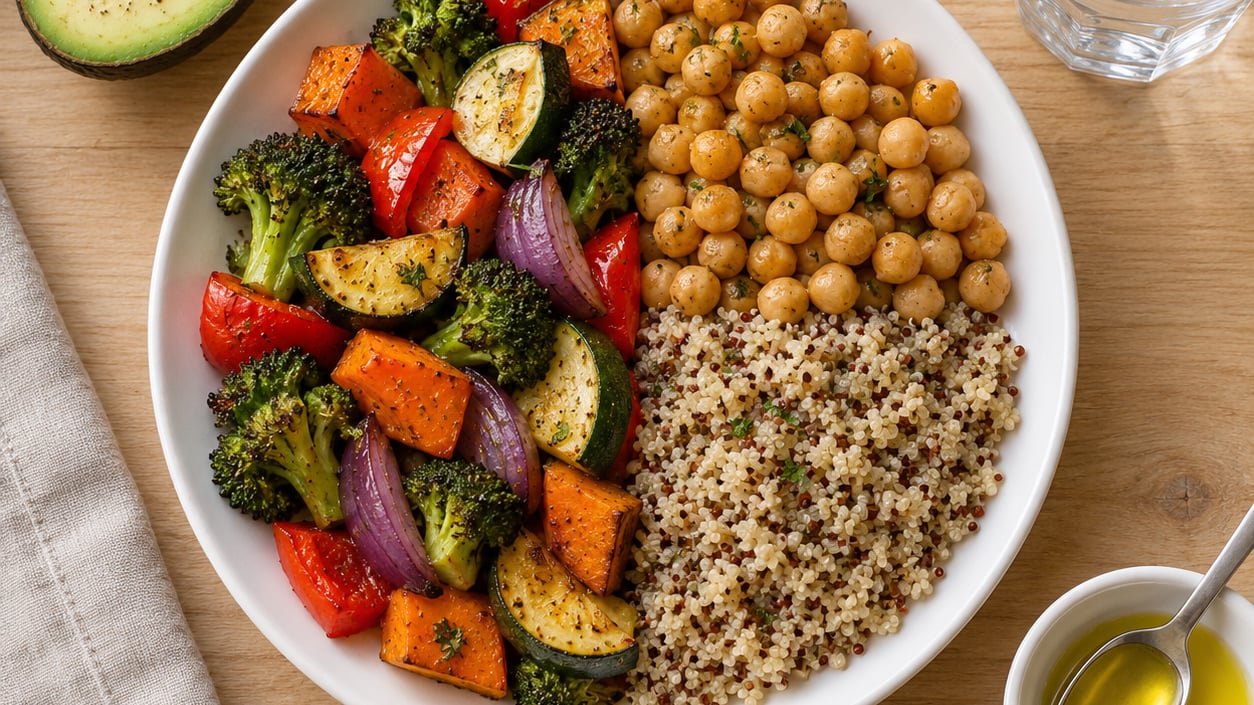
Building a balanced plate is simple: fill half your plate with vegetables and fruit, one quarter with a protein, and one quarter with a whole grain or starchy vegetable, then add a little healthy fat and a glass of water. No scale, no app, no counting calories. It takes about the same effort as clearing the counter and picking one plate.
That is the honest version of how to build a balanced plate at every meal. It comes from the Harvard Healthy Eating Plate, and it lines up closely with the USDA MyPlate and the American Diabetes Association’s Diabetes Plate. All three use the same visual idea: the plate itself does the portion measuring for you.
What follows is the framework, the five-step assembly, and three complete meals you can copy without buying anything unusual. It is a guide, not a rule. Your needs change with your age, activity, health and goals, and a person with a medical condition should get individual advice from a doctor or registered dietitian rather than from a blog post.
Table of Contents
- What You Need
- Step-by-Step: How to Build a Balanced Plate
- How to Build a Balanced Plate at Every Meal: Breakfast, Lunch, and Dinner
- Simple Balanced Plate Combinations
- Tips
- Frequently Asked Questions
- How do I build a balanced plate without weighing food?
- Do I need to balance every meal, or is balancing across the whole day enough?
- Which two vegetables should not be eaten together?
- What is the 3-3-3 rule for meals?
- What is the 5 4 3 2 1 food rule?
- When should I ask a doctor or dietitian instead of using the plate method?
- Conclusion
What You Need
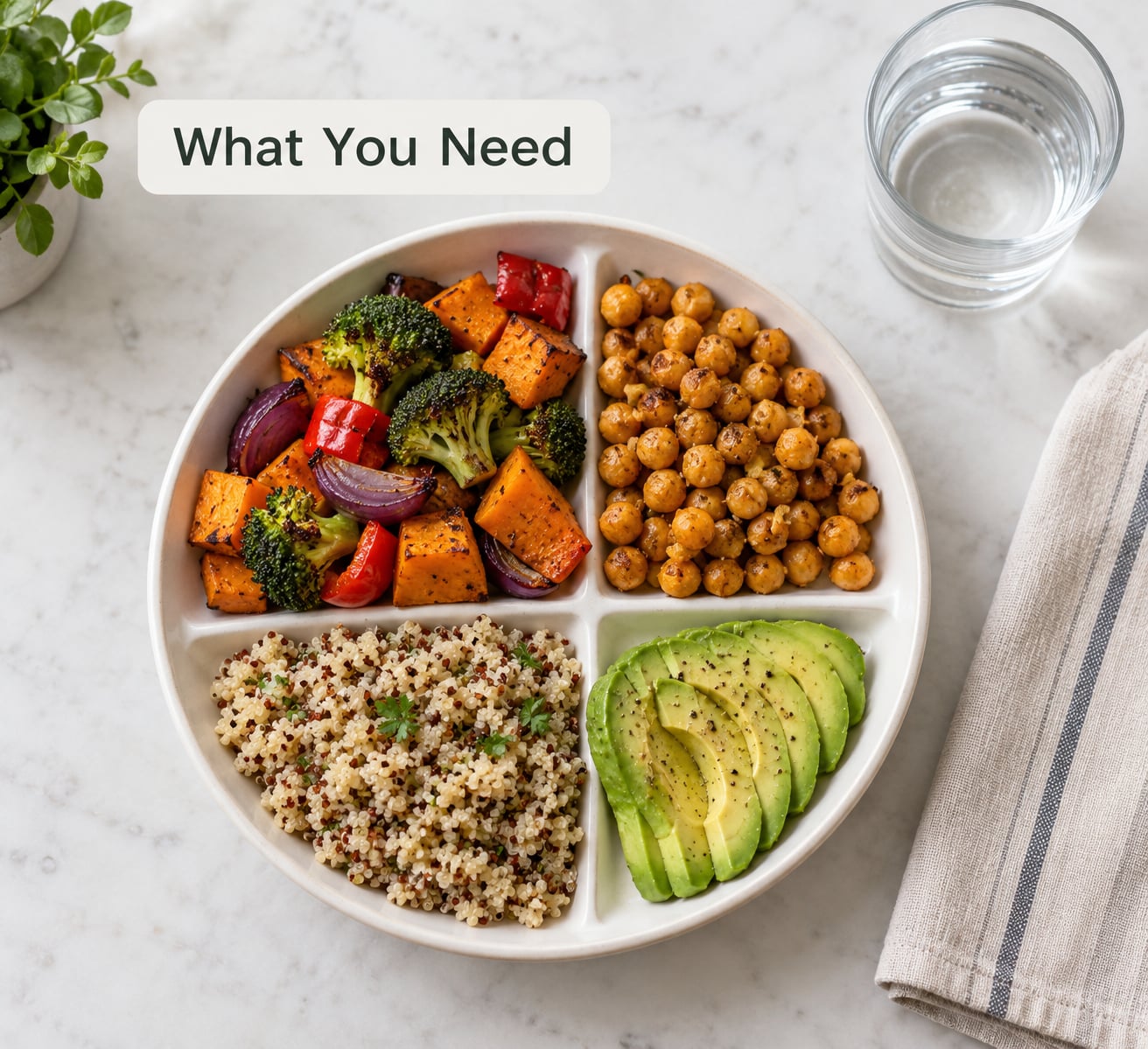
You need an ordinary dinner plate and five components. That is the whole shopping list.
- Vegetables and fruit. Roughly half the plate. Non-starchy vegetables are the anchor: leafy greens, broccoli, peppers, carrots, tomatoes, cauliflower, courgette, green beans. Fruit also counts here, and two or three berries or a sliced apple on the same plate works fine.
- A protein. About one quarter. Beans, lentils, tofu, tempeh, eggs, fish, poultry, plain Greek yogurt, nuts and seeds all qualify.
- A whole grain or starchy vegetable. About one quarter. Brown rice, oats, quinoa, whole-grain bread, buckwheat, whole-grain pasta, plus potatoes, sweet potato, corn and winter squash count too.
- A healthy fat. A small amount, added on top rather than given its own section. Olive oil, nuts, seeds, avocado and nut butter are the usual choices.
- Water or another unsweetened drink. This is the default pairing. Sugary drinks belong to an occasional treat, not the daily habit.
Two terms worth defining once. Non-starchy vegetables means vegetables with less carbohydrate per bite than potatoes or corn, which is why they can fill half the plate without crowding out the grain quarter. Complex carbohydrates simply means starches that still carry their fibre, such as oats and whole grains, rather than their stripped-down versions.
For portion cues without weighing anything, use your own hands. A palm-sized piece is roughly a quarter-plate of protein. A fist is a good serving of vegetables. A cupped handful is a serving of grains or beans. A thumb-sized portion is about right for fats, mostly oils and nuts, because those are calorie-dense even when they are good for you.
Plate size matters more than most people expect. A 9-inch plate has roughly 40 to 45 percent less surface area than a 12-inch one, so the same food looks like a bigger portion on the smaller dish. You do not need a special plate, but if your dinner plates are enormous, that is worth knowing.
Step-by-Step: How to Build a Balanced Plate
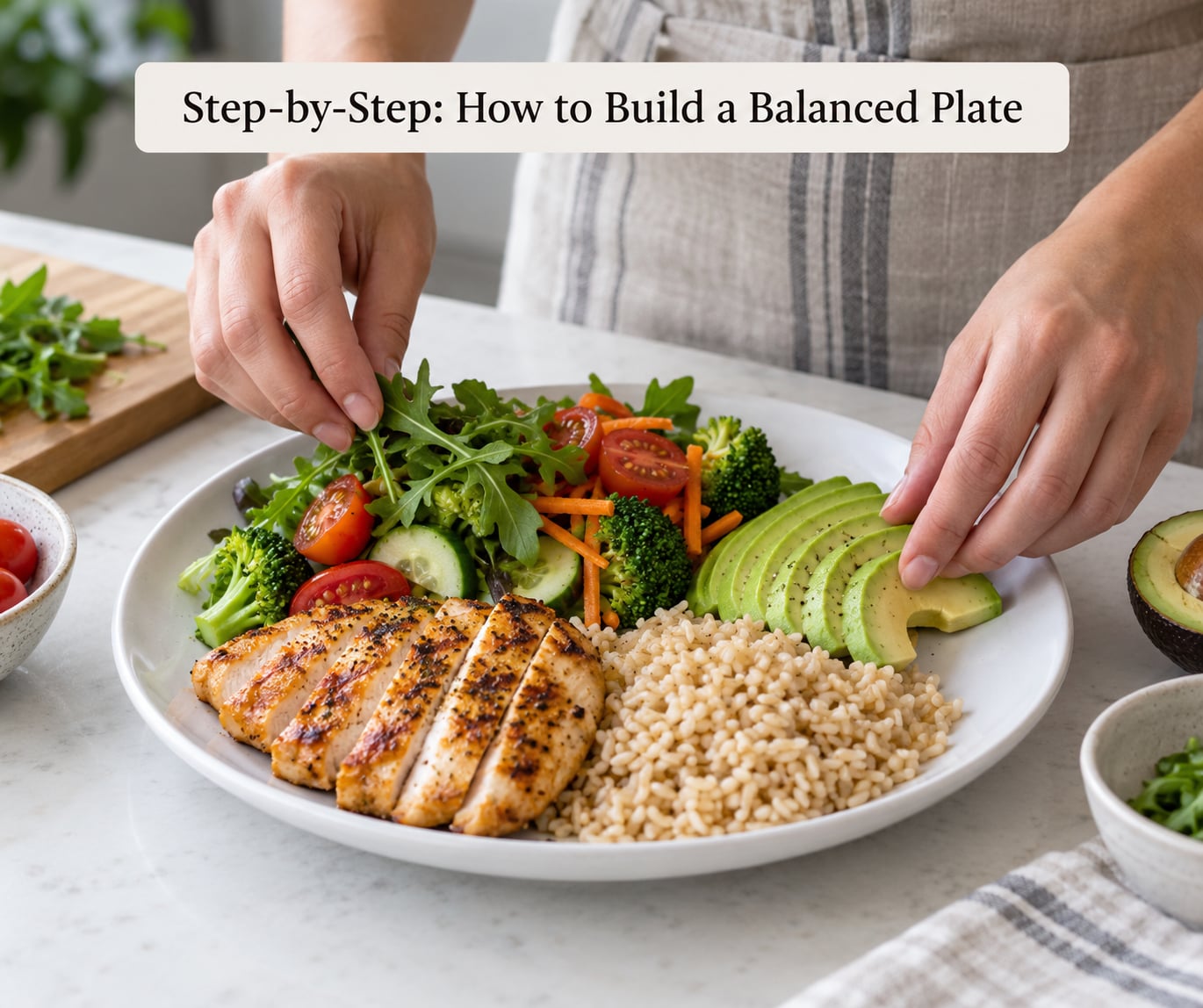
Step 1: Divide the Plate Into Food Groups
Do not draw lines. Just look at the plate and decide that the left half is produce and the right half splits into two quarters, one for protein and one for grain. Mentally halving is enough, and it takes a second.
The proportions are flexible. If you are training twice a day you may want a bigger protein quarter. On a low-carb day you may swap the grain quarter for extra vegetables. The ratio is a starting point you adjust, not a target you fail.
Step 2: Add Colorful Vegetables and Fruit
Start with the half plate and get two or three colours onto it, because different colours bring different nutrients. A mix of greens, a roasted root vegetable and something with a bright colour such as peppers or tomatoes covers more ground than a single pile of one vegetable.
Texture matters as much as colour. Something raw, something roasted and something soft means a plate is satisfying rather than dutiful. Frozen vegetables count fully here, and if you find yourself skipping vegetables most days, our guide on eating more vegetables without cooking every night is worth a look.
Step 3: Choose a Protein Source
This is the quarter people skip, and it is the quarter most readers ask about. A palm-sized portion of anything on the list covers it.
- Plant proteins: chickpeas, black beans, lentils, tofu, tempeh, edamame, peanut butter
- Animal proteins: eggs, chicken, turkey, fish, shellfish, plain yogurt, cottage cheese
- Seeds and nuts: useful as a supporting source, though they blend into the fat portion rather than the protein quarter
Plant proteins bring fibre and are cheap in bulk, which is why most of the examples below lean that way. If you eat fish a couple of times a week, that is a straightforward swap for the protein quarter.
Step 4: Add a High-Fiber Carbohydrate
Starchy food does not need eliminating. Carbohydrate-containing foods fit comfortably into a balanced plate, and the quarter you are filling now is what keeps the meal from feeling skimpy.
Choose the version that still has its fibre or its skin. Whole grains, legumes, potatoes, corn and squash are all fine. White bread, white pasta and sugary cereal are the ones that tend to leave you hungry again an hour later, because the fibre is gone and the meal lands fast.
People on r/nutrition point out the useful part of this: eating a potato or another higher-glycemic carbohydrate alongside protein, fibre and fat noticeably blunts the blood sugar rise compared with eating the same carbohydrate on its own. That is most of the reason the grain quarter sits next to the protein quarter instead of on a separate plate.
Step 5: Finish With Healthy Fats and Hydration
Fats are the one component with no plate zone, because a little goes a long way. A drizzle of olive oil, a small handful of nuts, a spoonful of nut butter or a few slices of avocado finishes the plate, and the reason is flavour and staying power as much as nutrition.
Then pour water. If you drink something else, unsweetened tea, sparkling water and black coffee all work. Sugary drinks deliver a large amount of sugar with none of the fibre or chewing that slows it down, which is why they are the easiest thing to cut back without feeling like a sacrifice.
How to Build a Balanced Plate at Every Meal: Breakfast, Lunch, and Dinner
“At every meal” is the part that makes the framework stick. Eating it three times a day is easier than doing it once and worrying about the rest.
Breakfast: yogurt, berries, oats and seeds
Put plain Greek yogurt in a bowl or on a plate, add a handful of berries, a spoon of oats and a spoonful of pumpkin or sunflower seeds, and a drizzle of nut butter if you want something richer. Yogurt and oat porridge fits the same shape if you would rather cook it, and either way you get protein, fibre-producing carbohydrate, produce and fat in one bowl.
Breakfast is where the protein quarter is hardest to fill, which is why people who skip it end up ravenous by mid-afternoon. Adding one protein source to breakfast fixes more than the first meal of the day.
Lunch: a bean and grain bowl
Base it on cooked chickpeas or black beans over quinoa or brown rice, then pile on whatever vegetables you have. Roasted peppers, cucumber, cherry tomatoes, spinach, corn and a spoonful of salsa all work. Finish with olive oil and lemon, or with a few pumpkin seeds for crunch.
This is also the meal that travels best. Built in a container, it keeps for a couple of days and needs no reheating, which matters on the days you do not want to cook.
Dinner: salmon, roasted vegetables and brown rice
Roast a fillet of salmon with broccoli, carrots and red onion, and serve it over a small portion of brown rice with lemon and olive oil. Tofu or tempeh works in place of the fish for a plant-based version, and so does white fish or a chicken thigh.
Roasting several trays at once means dinner for two nights plus the next day’s lunch, which is where the method quietly starts paying for itself.
Simple Balanced Plate Combinations
These are working combinations rather than recipes. Each one already satisfies the half-quarter-quarter shape.
- Tofu and vegetable rice bowl: cubed tofu, brown rice, stir-fried broccoli and peppers, sesame oil and a spoonful of peanuts.
- Chickpea and quinoa salad: chickpeas, quinoa, cucumber, tomato, parsley, olive oil and lemon.
- Egg and whole-grain plate: two eggs, a slice of whole-grain toast, roasted tomatoes and a handful of spinach.
- Black bean tacos: black beans, corn tortillas, cabbage slaw, salsa, avocado and a squeeze of lime.
- Lentil pasta with vegetables: lentil or whole-grain pasta, zucchini, cherry tomatoes, spinach, garlic and olive oil.
Every one of these can be made from pantry staples plus fresh produce, and most take under half an hour. For a plant-based version of any plate, the swap is usually just the protein: beans, tofu or tempeh replacing the meat or fish.
Common Mistakes in Building a Balanced Plate at Every Meal
The plate becomes mostly protein. A quarter plate of protein is plenty for most people. If the protein has taken over the dish, push it back to one quarter and refill the other three.
Vegetables get skipped entirely. This is the most common version. The fix is to keep one vegetable you will actually eat in the fridge or freezer at all times, and start with it rather than with the main course.
The grain quarter is a refined carbohydrate. White bread and white pasta still fill the same quarter, so the plate looks right while the fibre is missing. Swap in the wholegrain version; it is a one-ingredient change, not a diet change.
Fats quietly fill the whole plate. Oil, nuts and cheese are easy to add without counting. Measure the oil with your thumb, and add nuts as a garnish on top rather than as the main texture.
Fruit replaces vegetables. Both belong on the half plate, but fruit is not a vegetable. Keep both, with vegetables as the larger share.
One perfect meal gets treated as a test. A single unbalanced plate is not a failed day and says nothing about you. The framework is about the average of the week, not a scorecard at every sitting.
Tips
Frozen vegetables are a legitimate half plate. They are picked and frozen at their peak, they cost less, and they take less time than washing and chopping.
Beans and lentils are the fastest protein in a kitchen. Keep a couple of tins, or cook a batch of dry beans on the weekend and use them through the week.
You do not need specialty ingredients for variety. Frozen broccoli and frozen spinach are two different colours and two different vegetables, and they cost a fraction of fresh.
Adjust portions to your own day. Someone running a long shift may need a larger protein quarter and more carbohydrate, while someone sitting still all day may need less. Age, activity level, health conditions and goals all change the right answer.
Buy from a shop where you can read labels. If you want a reference for foods that feed your gut as well as the rest of you, read our guide to everyday foods for gut health.
Rotate your foods across the week rather than eating the same plate every day. People on r/NoStupidQuestions put it plainly: repeating the same foods every day is how a balanced plate quietly becomes unbalanced, because variety is where the micronutrients come from.
This is general nutrition information, not medical advice. If you are pregnant, managing diabetes, kidney disease, celiac disease, a history of disordered eating, or any other health condition, talk to your doctor or a registered dietitian before changing how you eat.
Frequently Asked Questions
How do I build a balanced plate without weighing food?
Use your hands and the plate itself. A palm-sized portion covers the protein quarter, a fist covers the vegetables, a cupped handful covers grains or beans, and a thumb-sized amount covers fats like oil and nuts. Combined with the half-quarter-quarter split, these give a good approximation without a scale or an app.
Do I need to balance every meal, or is balancing across the whole day enough?
Balancing each meal works best because it steadies energy and blood sugar through the day, and it is what the plate method was designed for. Eating a well-balanced plate at one or two meals and letting another slide is still far better than not trying. Treat the plate as your default, not a pass-or-fail test at every sitting.
Which two vegetables should not be eaten together?
There is no medically established list of vegetable pairs that must never be eaten together. Food combining rules you see online are not supported by mainstream nutrition guidance, and eating two vegetables in the same meal is perfectly normal. The useful rule is simply variety: rotate colours and vegetables across the week rather than relying on one or two.
What is the 3-3-3 rule for meals?
The 3-3-3 rule is an eating pattern rather than a plate method: eat roughly three meals a day, with about three hours between them, and stop after roughly three hours of eating. Some people find the structure helpful for blood sugar and snacking. It is not a nutritional guideline from any public health body, so treat it as a personal rhythm rather than a rule.
What is the 5 4 3 2 1 food rule?
The 5-4-3-2-1 rule suggests five servings of vegetables and fruit, four servings of other core foods such as grains and protein, three servings of dairy or fortified alternatives, two portions of foods high in fat and sugar, and one portion of something you enjoy. It was designed as a dietary assessment prompt rather than a meal rule, and the plate method is a simpler way to build one meal.
When should I ask a doctor or dietitian instead of using the plate method?
Ask a professional if you are managing diabetes, kidney disease, celiac disease, a food allergy, a history of disordered eating, or any condition where nutrient amounts matter precisely. Pregnancy and childhood also need individual guidance. A doctor or registered dietitian can adapt the proportions and portions to your specific needs, which no general guide can do.
Conclusion
Half the plate produce, one quarter protein, one quarter whole grain or starchy vegetable, a little fat and a glass of water. That is the whole method, and it works without weighing anything.
Start with one action tonight: take an ordinary plate, fill half of it with vegetables, add a palm-sized protein and a cupped handful of grains, then finish with a thumb-sized drizzle of oil and a glass of water. Do it three meals in a row this week and see whether it feels easier than you expected.