
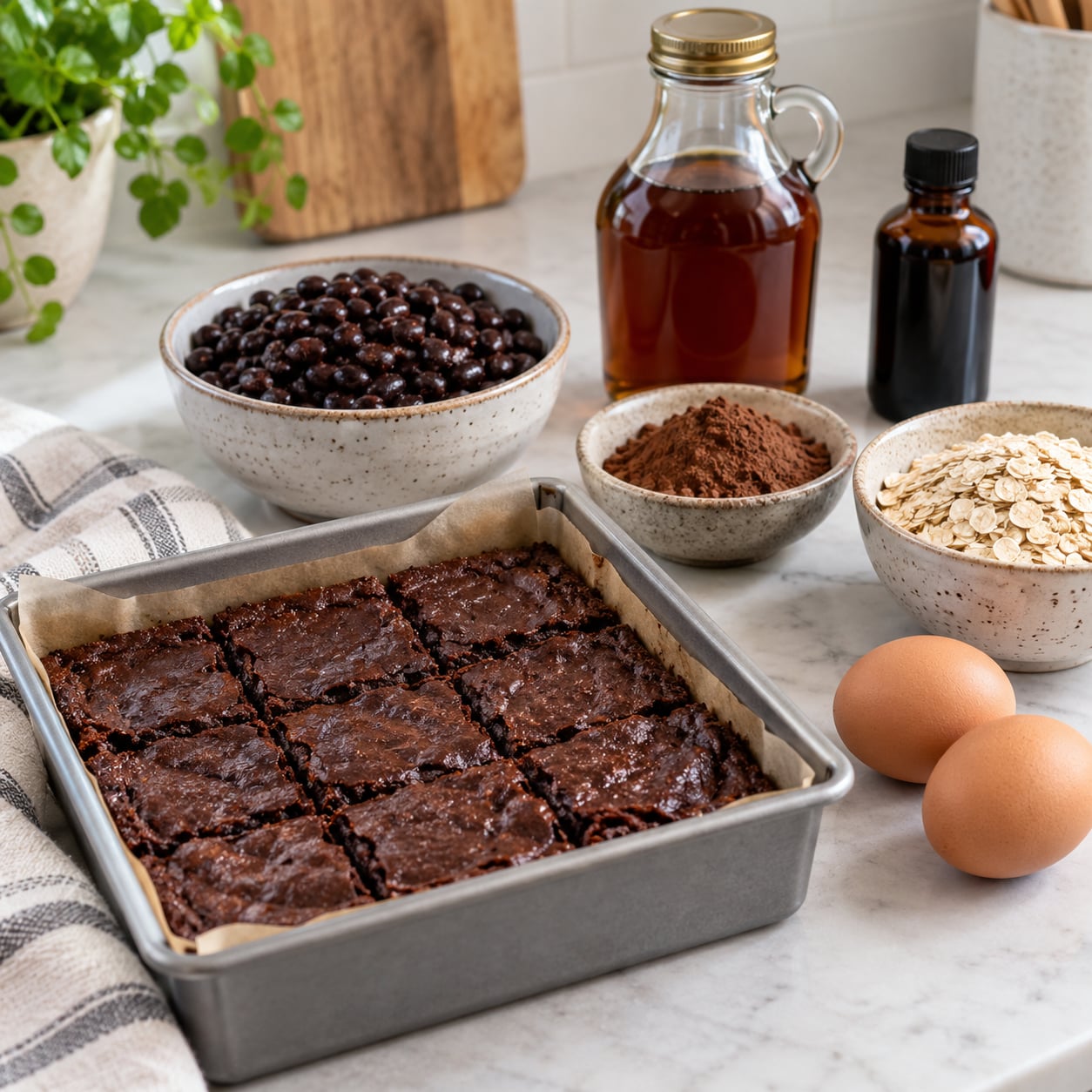
To make a healthy brownie with black beans, you puree one can of black beans until smooth, sweeten and flavor them with cocoa, maple syrup and vanilla, then bake at 350 F for about 25 to 30 minutes until the center looks set. The beans replace refined flour entirely, so the result is gluten-free, high in fiber and fudgy rather than cakey.
Most people assume this means a sad compromise. It doesn’t. A can of black beans costs the same as a can of chickpeas and does more for the batter than plain flour ever did.
Here is the version I make most often, with gram and cup measurements, a blender workaround, and the fixes for the four problems that come up most: dry brownies, a beany aftertaste, batter that spreads, and a center that never sets.
Table of Contents
What You Need
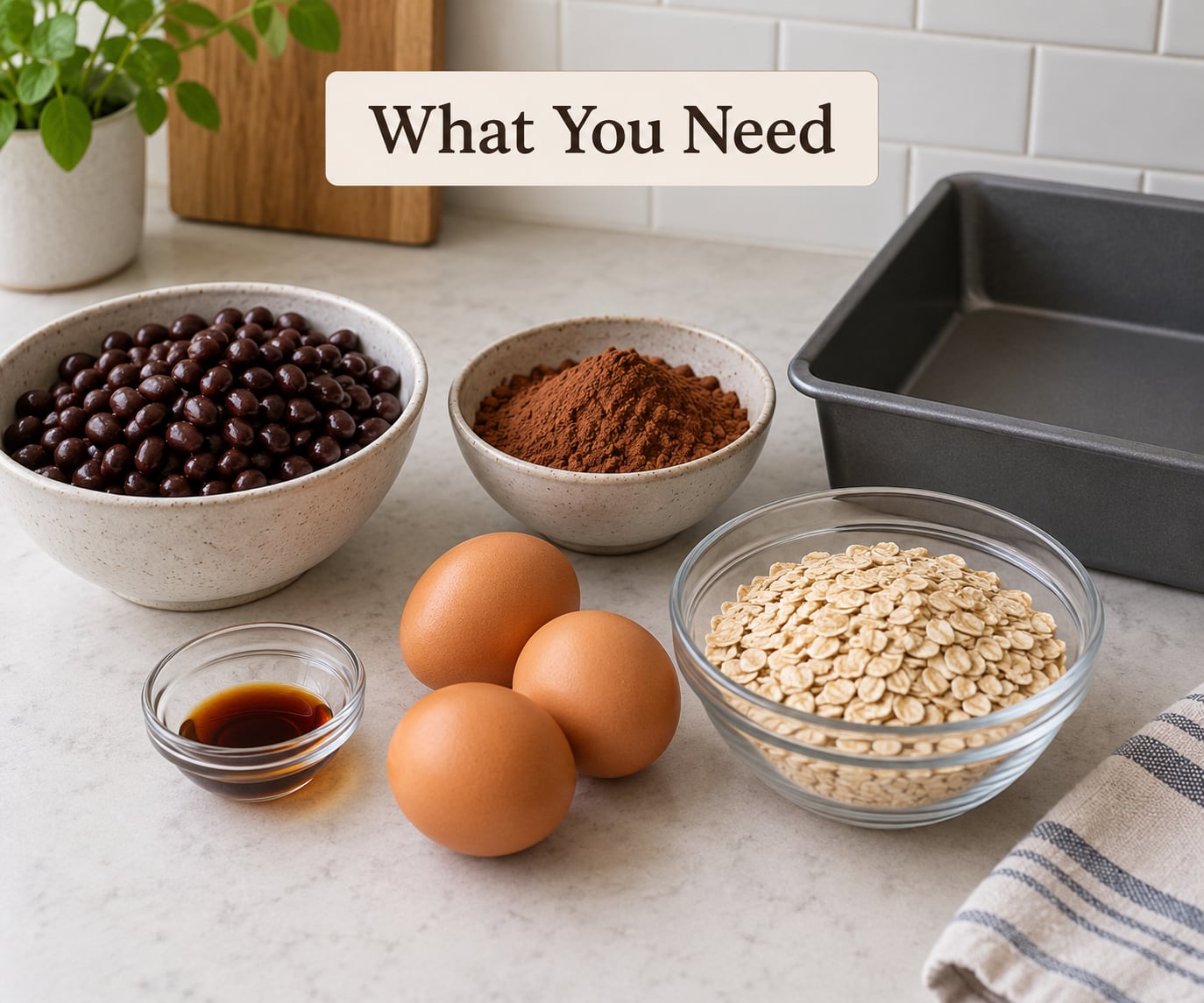
Everything here is a pantry staple except the beans. The list makes nine to ten brownies in an 8-inch square pan.
- 1 can (15 oz / 425 g) black beans, rinsed and drained well
- 3 large eggs
- 1/2 cup (120 ml) maple syrup, or 1/3 cup honey, or 1/2 cup sugar
- 1/3 cup (80 g) unsweetened cocoa powder
- 1/4 cup (60 ml) melted coconut oil, melted butter, or a neutral oil
- 1/2 cup (45 g) quick oats, plus 2 tablespoons for the pan
- 2 teaspoons vanilla extract
- 1/2 teaspoon baking powder
- 1/4 teaspoon salt
- 1/2 cup chocolate chips, stirred in at the end
Weighing the oats matters more than it sounds. A loosely filled cup of oats can swing by 20 grams or more, and that is often the difference between fudgy and crumbly.
Optional swaps and what they change
- Pumpkin puree, 1/2 cup. Replaces half the oil and adds moisture. Lower the added oil by 2 tablespoons, or the batter spreads.
- Almond flour, 1/2 cup. A straight swap for the oats. Adds fat and protein and keeps the brownie gluten-free, though it dries slightly faster.
- Coconut flour. Absorbs far more liquid than wheat flour. Use only a third of the volume and expect a longer bake, closer to 35 minutes.
- Stevia or monk fruit. Use about 3/4 cup of a baking blend and cut the maple syrup to 1/4 cup. Stevia alone does not carry enough bulk to keep the center moist.
- Egg whites, 4. Lower fat, higher protein. Bake time drops by a few minutes, so check early.
- Protein powder, 1/2 cup. Substitutes for the oats and cocoa together. Add a tablespoon of extra liquid if the batter drags.
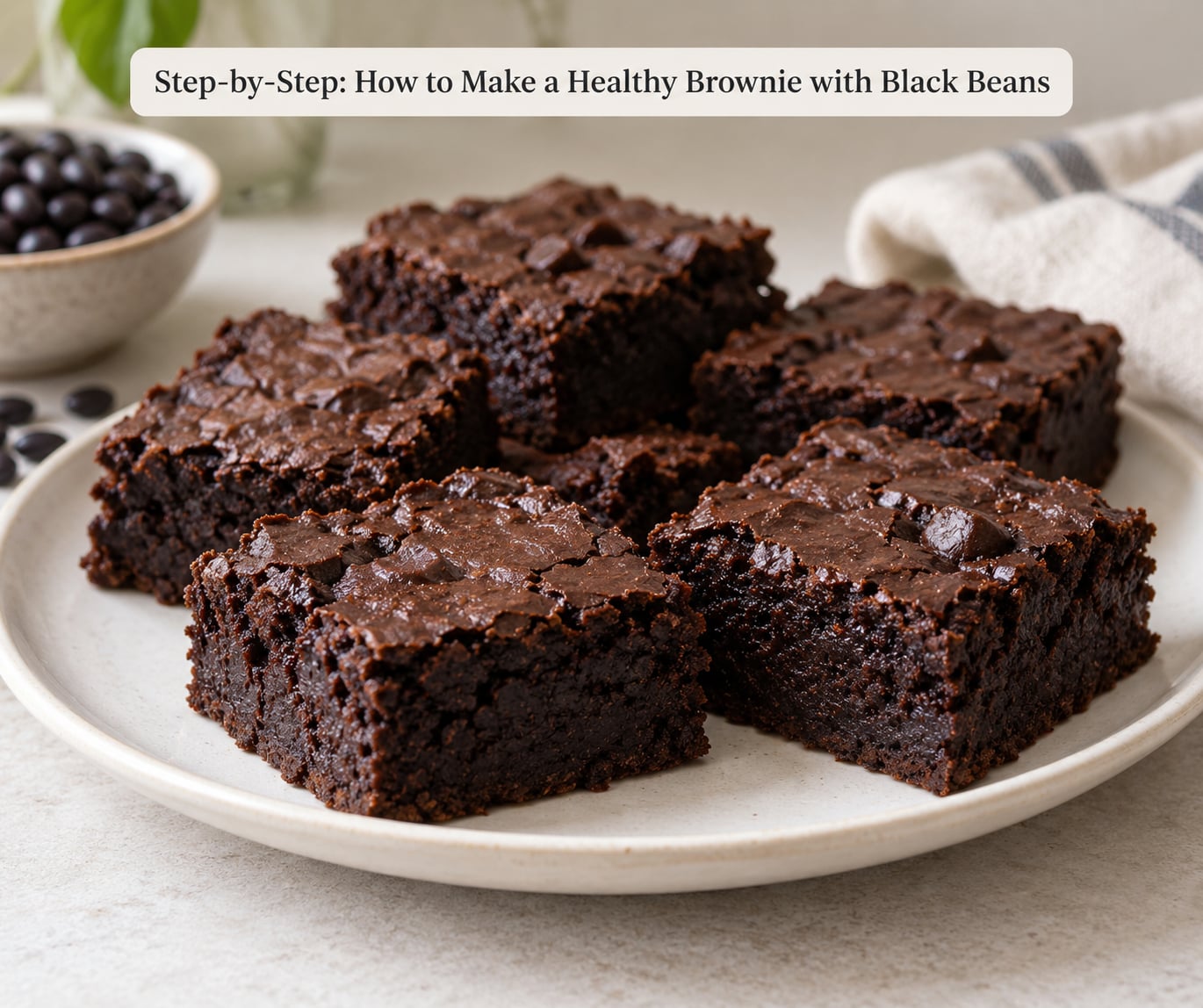
Step-by-Step: How to Make a Healthy Brownie with Black Beans
1. Prepare the Baking Pan and Oven
Heat the oven to 350 F and line an 8-inch square pan with parchment, letting it hang over two sides so you can lift the whole slab out later.
Grease the parchment with a little oil, then scatter 2 tablespoons of oats over the base. Those oats set into a thin crust that keeps the bottom from turning gummy against the paper.
If you only own a 9 by 13 pan, spread the batter thin and expect 18 to 22 minutes at a slightly lower temperature, 325 F. A thin brownie sets faster and dries faster, so pull it while the middle still looks a little dull.
2. Blend the Black Beans Until Smooth
Drain and rinse the beans in a colander and let them sit for ten minutes. That rest lets surface water drain off, which keeps your batter from running thin.
In a food processor, blend the beans alone first for a full minute. Then add the maple syrup, eggs, melted oil, vanilla, baking powder and salt, and blend another 60 to 90 seconds, scraping the bowl down twice.
Stop when you can run a finger across the side of the bowl and leave a clean streak. That streak is the test. A few small lumps are fine and will disappear in the pan, but any whole beans or gritty patches mean another minute of blending.
No food processor? Use a blender and this order: blend 1/2 cup of the beans with the maple syrup and oil until smooth, add the remaining beans with the eggs, blend again, then pass the batter through a fine mesh strainer if you want a completely uniform texture. Grind the dry oats to a flour first in a dry jar blender, otherwise they settle in the corners and leave the finished brownie gritty.
3. Add the Dry Ingredients
Sift the cocoa into the blender or processor and pulse a dozen times to break up any lumps. Add the oats and pulse again.
Only mix until no dry cocoa streaks remain, usually 15 seconds. Overmixing is the single most common reason these come out tough and dense rather than fudgy.
Fold the chocolate chips in with a spoon at the very end. Chips added before blending get pulverized into the batter and lose their texture, and they add no sweetness, just chocolate flavor.
4. Bake Until the Center Is Set
Pour the batter into the pan and smooth the top. It should settle to about 3/4 inch thick and look glossy.
Bake at 350 F for 25 to 30 minutes. The toothpick test is unreliable here, because fudgy batter legitimately pulls up wet. Ignore the crumbs and watch the surface instead: done means the top has lost its wet shine, the edges have set and pulled slightly from the sides, and a toothpick inserted in the very center comes out with a thick, moist crumb rather than liquid batter.
If the top browns before the center sets, tent it loosely with foil and give it another five minutes. A deeply browned top usually means the oven runs hot, so drop to 325 F next time.
5. Cool, Cut, and Store
Let the pan sit on a wire rack for at least 20 minutes before cutting. The brownie is still setting as it cools, and cutting warm gives you ragged, sticky edges.
Cut with a thin knife dipped in hot water and wiped clean between cuts. It glides through without pulling the top apart.
Store loosely covered at room temperature for up to three days, in the fridge for about five days, or in the freezer for three months. Cold brownies firm up considerably, so many people prefer a few seconds in the microwave before eating one straight from the freezer. If beans bother you in general, read about how to reduce gas from beans and lentils before serving a big batch to guests.
Common Mistakes
The brownie tastes beany. Almost always a blending problem, not a recipe problem. Beans carry earthy notes that survive unless they are fully broken down. Add a minute of blending, and cover the finished bars with chocolate chips, a thin layer of peanut butter frosting, or a drizzle of melted chocolate.
It bakes up dry and crumbly. Three causes: you skimmed the melted oil, you measured the oats loosely, or you baked the pan for too long. Weigh the oats, keep the full 1/3 cup of fat, and pull the pan the moment the top loses its shine.
The batter spread into a thin layer. Moisture was added without fat being reduced. Pumpkin puree and mashed banana both need 2 tablespoons less oil, and coconut flour needs its sugar cut back because it dries out the batter and loosens it.
The center is still gooey. Either it needed more time or the pan was overfilled. An 8-inch square pan holds about 2 cups of batter; deeper pans need 8 to 12 extra minutes. Also check that your oven is actually at temperature, since a cool oven stalls the set.
It tastes bitter or too sweet. Bitterness comes from cocoa that has been overmixed or scorched on the bottom, so scrape the bowl and keep the bake to 30 minutes. Too sweet means the sweetener was doubled; cut it for next time and add a pinch of salt, which flattens the perception of sweetness.
The top baked before the middle. That is oven heat, not recipe. Use the foil tent described above, and if you own a small oven thermometer, check it. Oven runs ten degrees hot are the most common finding.
Frequently Asked Questions
Do black bean brownies taste like beans?
Not when the beans are blended properly, which takes about two minutes total in a food processor. The earthy flavor people associate with beans comes from whole bean skins, and those disappear into the batter once there are no visible pieces left. Adding chocolate chips on top also covers any trace flavor, and most people who cannot tell in a blind taste test are the ones who did not know beans were in the batter.
Can I make these brownies without eggs?
Yes, but expect a denser, chewier brownie. Replace each egg with a tablespoon of ground flaxseed mixed with three tablespoons of water, or use a commercial egg replacer according to its directions. Let the flax mixture sit for ten minutes before adding it so it thickens. The beans and oats already supply plenty of structure, so the eggs are less critical here than in a flour-based recipe.
Why are my black bean brownies dry?
Dry brownies usually come down to three things: too little fat, loosely measured oats, or too long in the oven. Keep the full 1/3 cup of melted oil or butter, weigh the oats on a kitchen scale, and pull the pan as soon as the surface loses its wet shine, which is usually before 30 minutes. An extra tablespoon of maple syrup also helps the center hold moisture.
Can I use oat flour instead of another flour?
Yes. Oat flour is the easiest swap in this recipe because the standard version already uses oats, so you can simply grind them. Replace the 1/2 cup of quick oats with 1/2 cup of oat flour for an identical result. Make sure it is certified gluten-free if you are baking for someone with celiac disease, since regular oats are often processed alongside wheat.
How long do black bean brownies keep in the refrigerator?
About five days in an airtight container or a loaf bag, and they hold up better chilled than at room temperature because the bean starch continues to set as it cools. Room temperature storage in a cool kitchen gives you roughly three days. Many people find that brownies stored overnight in the fridge have a noticeably denser, more fudgy crumb.
Can I freeze black bean brownies?
Freezing works well. Cut the cooled brownies into individual squares, set them on a baking sheet, and freeze until firm before moving them to a freezer bag or container so they do not stick together. They keep for about three months. Thaw at room temperature for 20 minutes, or warm a square for 10 to 15 seconds in the microwave if you want a soft, just-baked texture.
Conclusion
The easiest first step is the one people skip: rinse those beans, let them drain ten minutes, and blend them a full minute before anything else goes in. Everything after that is a 30-minute bake and a short cool.
Once you have a batch that works, adjust it to your taste. Fold in walnuts, raspberries, or a swirl of peanut butter for a post-workout snack, add pumpkin puree for extra moisture, or switch maple syrup for honey if that is what you have on hand. If you like building out the snack side of things, our guide to how to make your own trail mix pairs well with a batch of these stashed in the freezer.