
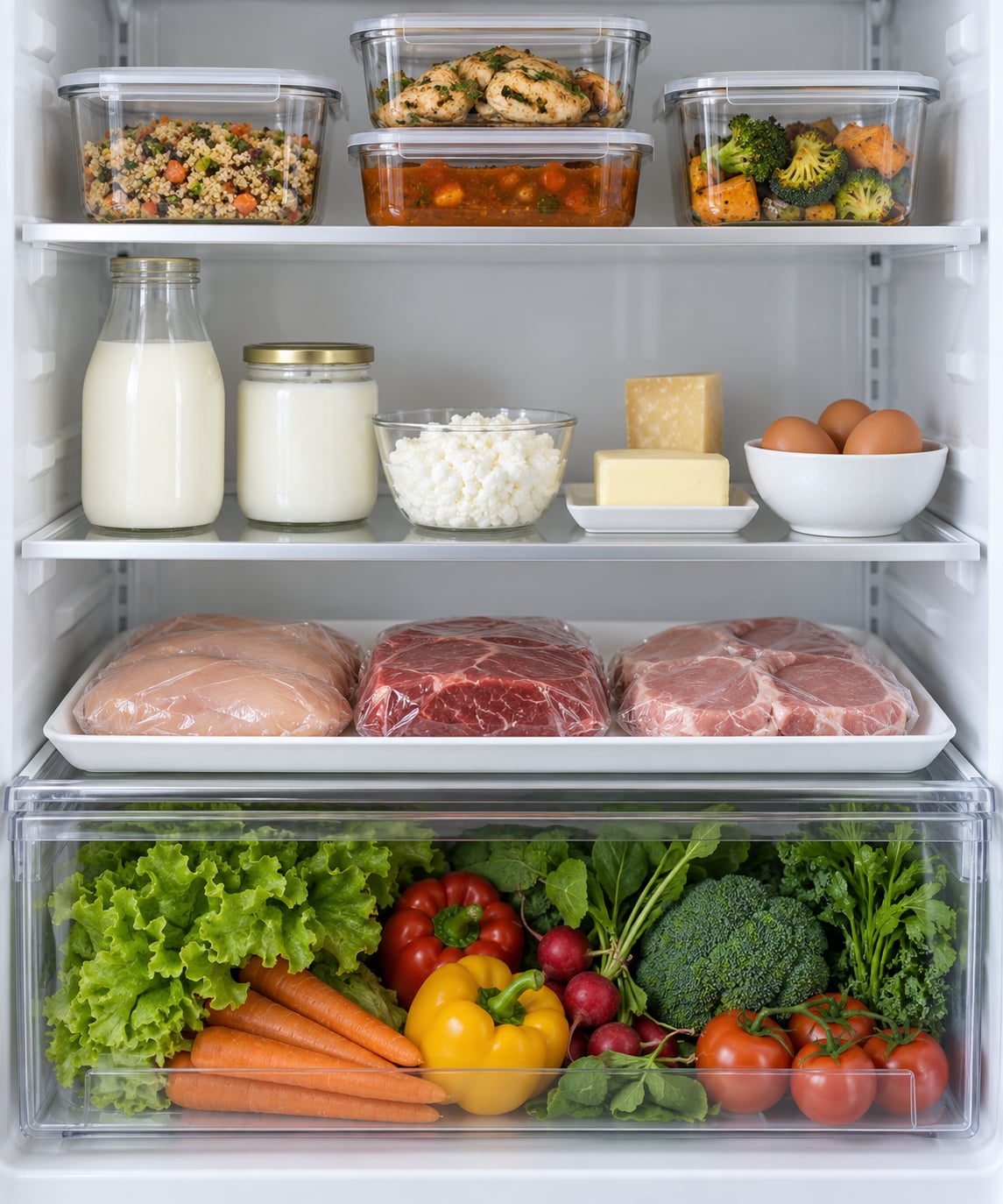
To organize a refrigerator to reduce waste, empty it onto the counter, sort everything into four piles, wipe the shelves, then reload it by zone with older food at the front. The whole reset takes about 30 minutes and needs nothing you do not already own.
The reason it works is simple. Most food does not get thrown out because it went bad while you watched it. It gets thrown out because nobody saw it. A container shoved behind the milk, pushed to the back of a shelf, or buried under a taller box turns into something you stop noticing, and the next time you open the door you are buying a replacement.
Households in the US throw away roughly 30 to 40 percent of the food they buy, and most of that loss happens at home rather than at a store. Visibility is the fix, and visibility is exactly what a zone system gives you. Once everything has a home, you stop buying duplicates and you start eating the container in front of you before the one behind it.
This guide covers the reset itself, the zones that keep food fresher for longer, and the short weekly habit that stops the whole thing from falling apart by 2026.
Table of Contents
- What You Need
- Step-by-Step: How to Organize a Refrigerator to Reduce Waste
- How to organize a refrigerator to reduce waste by creating clear food zones
- Put older and ready-to-eat foods where you will see them first
- Store produce according to its needs
- Use clear containers and label what is already open
- Make a weekly refrigerator check part of the routine
- What to leave out of the refrigerator entirely
- Common Mistakes
- Frequently Asked Questions
- How should I arrange a refrigerator to reduce food waste?
- Should I throw away food as soon as its use-by date passes?
- What is the best way to store leftovers so I remember them?
- How long can prepared food safely stay in the refrigerator?
- Where should fruits and vegetables be stored in the refrigerator?
- How often should I clean and reorganize my refrigerator?
What You Need
You need very little. The system is about where things sit and how you label them, not about matching hardware.
Four containers or boxes to sort into as you unload the fridge. A laundry basket, a sheet pan, a big bowl, a cardboard box. Their only job is to hold the four piles while you work, so any household object works.
A marker and a roll of masking tape, or a cheap stack of label stickers. You are writing the food name and the date it went in, nothing more elaborate.
A phone note for the running inventory. This is the most underrated item on the list and the one people skip. A note that reads eggs, yogurt, spinach, half a cabbage does more for waste reduction than any organizer you could buy.
Warm water, dish soap, and a cloth for the shelves, drawer dividers, and the rubber door gasket. Food odors stick to plastic and to the gasket seal, and a smelly fridge makes people avoid opening it.
Optional extras: a refrigerator thermometer, drawer dividers, and a turntable for the condiments. Each of those helps, and none of them is required. A small fridge with two shelves and no drawers organizes fine with tape and a note.
Step-by-Step: How to Organize a Refrigerator to Reduce Waste
Budget one coffee break for the reset and about five minutes a week afterward. Work top shelf down so nothing you carry has to be put back.
How to organize a refrigerator to reduce waste by creating clear food zones
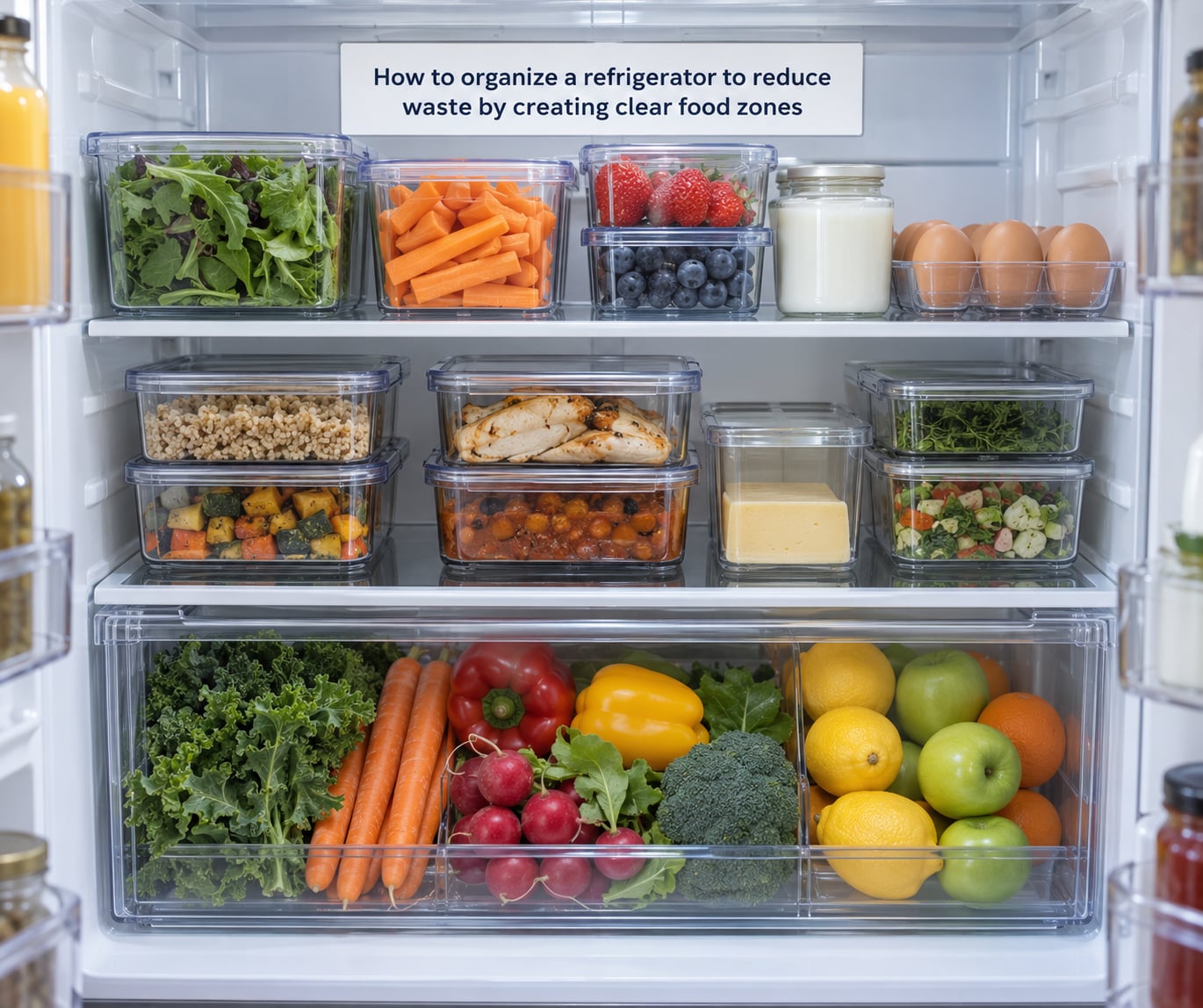
A zone is a shelf or drawer that only holds one kind of thing, and every item in it belongs to the same use pattern. Most refrigerators also run colder at the bottom and back and warmer in the door, so zones double as temperature zones. That is not a detail you can ignore, because cold is what buys you extra days.
| Zone | What Goes There | Why |
|---|---|---|
| Top shelf | Cooked leftovers, ready-to-eat meals, drinks | Eye level. The first place you look and the first place you grab from. |
| Middle shelf | Dairy, eggs, opened packages, cheeses | Steady temperature, easy to see, safe from drips. |
| Bottom shelf | Raw meat, poultry, seafood, in a tray | Coldest spot. A tray below stops drips reaching other food. |
| Crisper drawers | Fruit and vegetables, separated | Humidity controls slow wilting. |
| Door shelves | Condiments, butter, jam, drinks | Warmest zone. It swings with the door, so nothing delicate goes here. |
Put condiments in one bin so you can see duplicates instead of finding a third open bottle of the same dressing. Nobody buys a fourth jar of mustard on purpose. It happens because the old ones were invisible.
Put older and ready-to-eat foods where you will see them first
FIFO means first in, first out, a rotation habit from restaurant kitchens that works just as well at home. New stock goes to the back. Older food moves to the front. That single change kills most of the forgotten leftovers.
Some people keep a shallow tray or bin on the top shelf as an eat-me-first zone. Everything that needs using within two days lives there and nowhere else. A strip of colored tape on the shelf edge makes it obvious even in a dim fridge.
Label with two pieces of information: what it is and the date it went in. For cooked leftovers, use cooking date. For an opened jar, use the opening date. Masking tape and a marker cost almost nothing and take five seconds, which is less time than reheating food you forgot about and finding it unappetizing.
Store produce according to its needs
Crisper drawers have a vent or slider that controls humidity. Set it high for leafy greens and other vegetables that wilt from losing moisture, and low for fruit and vegetables that rot in damp air, including many berries and mushrooms.
Ethylene gas is the natural ripening gas fruit gives off. Apples, bananas, pears, avocados and tomatoes speed up the ripening of everything near them, and greens, broccoli, and carrots react badly to it. Keeping those groups apart in separate drawers stretches the life of the sensitive stuff by days rather than hours.
Store herbs in a jar of water in the fridge like a bouquet, loosely covered. Leave berries unwashed until you intend to eat them. Dry, unwashed berries keep longer than washed ones, and a paper towel in the container absorbs the last of the moisture. Remove any spoiled item the day you spot it, because one soft tomato quietly takes its neighbors with it.
Use clear containers and label what is already open
Uniform clear containers make portions, dates, and leftovers visible at a glance. They stack, and stackable containers stop leftovers sliding to the back where they disappear. Match containers roughly in size rather than buying a variety, because mismatched lids end up in a drawer instead of on food.
Keep the refrigerator at or below 40°F, which is 4°C. A cheap thermometer on the middle shelf tells you whether your dial setting is actually doing anything, and most refrigerators run warmer than people think.
Cooked leftovers keep three to four days in the refrigerator. Anything left at room temperature for more than two hours, or one hour in very warm conditions, goes into the bin or gets refrigerated immediately. When you cook, cool food in shallow containers and refrigerate it within two hours.
Use a thermometer rather than guess. Poultry is done at 165°F (74°C), ground meat at 160°F (71°C), and whole cuts of meat and fish at 145°F (63°C). It is the only reliable way to know a chicken thigh in the back of the fridge is actually safe to eat.
For raw proteins, keep them wrapped on the bottom shelf in a tray so drippings cannot reach produce or ready-to-eat food below. That single tray prevents the cross-contamination that turns a harmless spill into a foodborne illness risk.
Make a weekly refrigerator check part of the routine
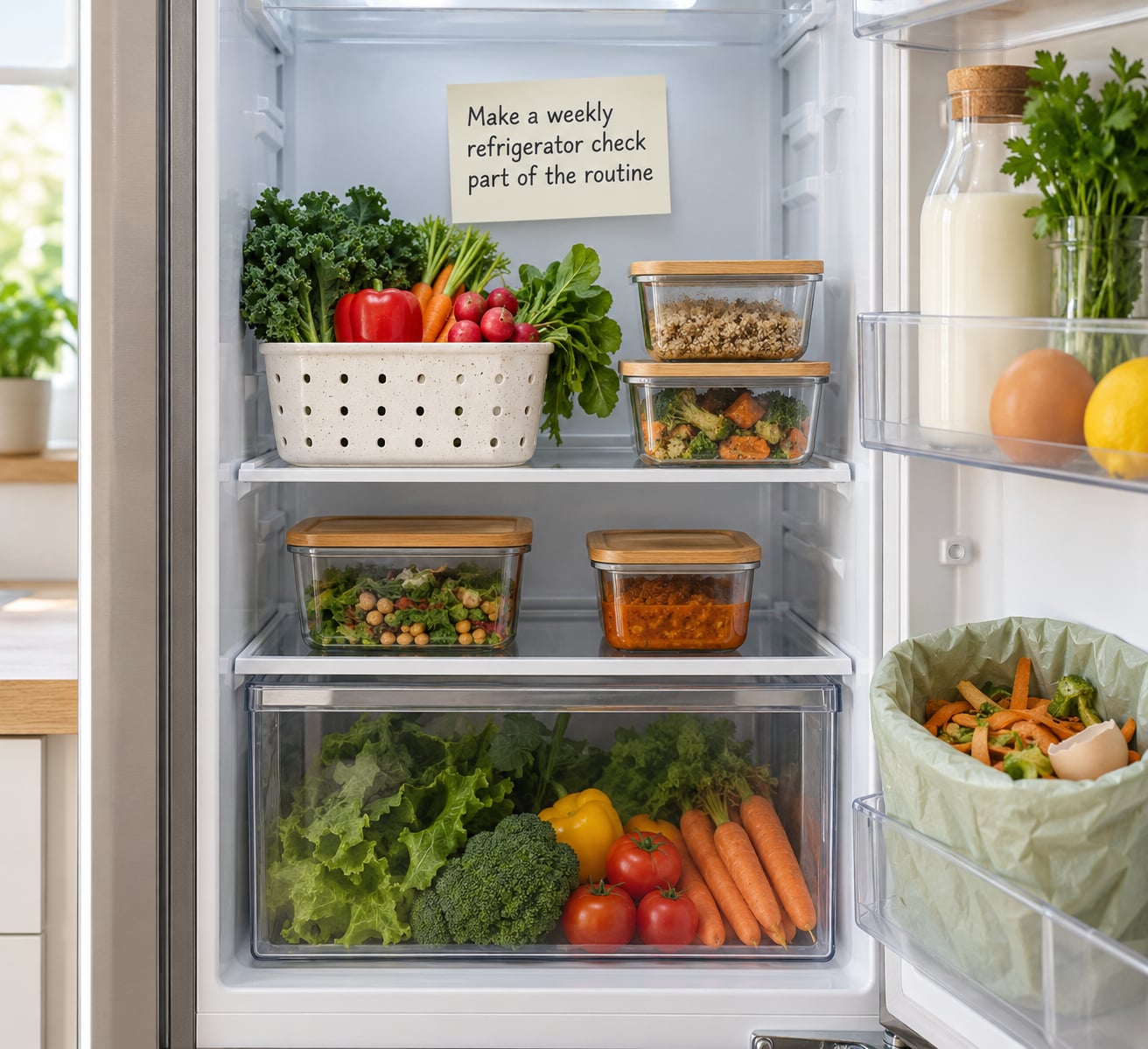
Five minutes on a fixed day, Sunday evening works well because you are already thinking about the week of food ahead. Ask three questions about every item you touch. Can I eat or cook this in the next two days? Should I freeze it now? Does it need to go to the compost or the bin?
Freezing is the answer more often than people expect. Soft berries, cooked grains, sliced vegetables, grated cheese, banana bread and soup all freeze well and thaw without much fuss. Portion them flat so you can pull out one serving instead of thawing the whole thing.
Beans and lentils are worth cooking in bulk for the same reason. One pot on a Sunday gives you a container in the fridge for the week and a portion in the freezer for the week after. If soaking and cooking times are what put you off, our guide on how to reduce gas from beans and lentils covers the prep side.
Keep a waste log for two weeks. Write down what you threw away and why, and the pattern tells you where the loss actually comes from. Most people find a repeat offender: a vegetable they never cook, a condiment bought for one recipe, or a container they freeze and then forget about.
One group of people describes the same fix in slightly different words. On r/Frugal, the advice that keeps coming back is to give everything a standard place, because leftovers hidden behind jugs get forgotten. On r/organization, the complaint is rarely about space. It is about losing track of food and giving up on it.
What to leave out of the refrigerator entirely
Some foods do worse in the cold. Potatoes, sweet potatoes, onions, and garlic keep in a cool, dark, dry cupboard or pantry, where air moves around them. Cold converts their starch to sugar, which changes the texture after you cook them.
Whole tomatoes lose flavor and texture in the fridge. Store them at room temperature until you cut them, then refrigerate the cut portion covered.
Lemons, limes, and other citrus keep better on the counter. Bread goes stale faster in the fridge. Bananas blacken quickly when refrigerated.
Milk and eggs belong on an interior shelf, not in the door. The door is the warmest spot and its temperature swings every time you open it, which shortens how long both keep.
Common Mistakes
Filling every inch. A refrigerator needs air moving around the food to keep a steady temperature, and a packed fridge cools unevenly. Leave a couple of inches of space on the shelves and keep the vents clear.
Pushing leftovers to the back. That is where they go to be forgotten. Everything you might eat this week lives at eye level or on the top shelf, and the newer batch stacks behind it.
Using opaque containers with no label. People describe these as mystery boxes, and nobody wants to open a container they cannot identify. Clear or labeled, always.
Keeping food without dates. Without a date you are guessing, and guessing usually ends in throwing away food that was fine.
Leaving spoiled produce in the drawer. Mold and soft spots spread. Take the bad item out immediately and check its neighbors before you close the drawer.
Shopping before you look. Open the door first. Check the inventory note, then write the list. Most duplicate purchases start before the store, not in it.
Storing unrelated foods in one container. A mixed container hides how much is left and makes reheating awkward. Separate them and label each one.
Cleaning the shelves but not the door gasket. The rubber seal around the door collects residue and odors. Wipe it with warm soapy water and check that the seal still grips the door when closed.
A monthly reset keeps the system honest. Pull everything out, wipe the shelves, and check dates. Once a month is the cadence people report as realistic, and it catches the accumulating clutter that a weekly sweep misses.
Frequently Asked Questions
How should I arrange a refrigerator to reduce food waste?
Group food by temperature zone and by how quickly you eat it. Keep cooked leftovers and ready-to-eat food on the top shelf at eye level, dairy and opened packages on the middle shelf, raw meat and poultry in a tray on the bottom shelf, fruit and vegetables in the crisper drawers, and condiments in the door. Put older items at the front and newer ones behind so the food closest to expiring is always the first thing you see.
Should I throw away food as soon as its use-by date passes?
Not automatically. Use-by dates on packaged food are about quality for most items, not safety, so check the food itself: smell, look and texture matter more than the printed date. Food safety is different. If fish, raw poultry or ground meat has been at room temperature for more than two hours, discard it regardless of the date. Frozen food stays safe indefinitely while solid, and quality declines slowly.
What is the best way to store leftovers so I remember them?
Use one shallow, clear container per leftover, write the food name and the cooking date on masking tape stuck to the lid or the front, and store it at eye level on the top shelf or in a designated eat-me-first tray at the front. Shallow containers cool faster and stack, so nothing slides to the back. Cooked leftovers keep three to four days in the refrigerator.
How long can prepared food safely stay in the refrigerator?
Cooked leftovers, soups and sauces generally keep three to four days at or below 40°F, which is 4°C. Refrigerate food within two hours of cooking, and use shallow containers so it cools quickly. When you reheat, bring the food to 165°F. If you will not eat it in time, freeze it that day instead of waiting until it is about to spoil.
Where should fruits and vegetables be stored in the refrigerator?
Use the crisper drawers, and turn the humidity vent high for leafy greens and vegetables that wilt, low for fruit and vegetables that rot in damp air, including many berries. Separate ethylene-producing fruit such as apples, bananas and pears from ethylene-sensitive greens, broccoli and carrots, because the ripening gas speeds their decay. Store whole tomatoes, potatoes, onions and citrus outside the refrigerator.
How often should I clean and reorganize my refrigerator?
Do a five-minute sweep once a week: check leftovers, produce and opened packages, and use, freeze or compost anything close to its limit. Pull everything out and wipe the shelves, drawers and door gasket once a month. Deep cleaning twice a year is plenty for most people, as long as nothing perishable sits in there during the process.
Start with one shelf tonight rather than the whole refrigerator. Clear the top shelf, put every leftover on it in a container you can see through, write the date on the lid, and put the newest batch behind the oldest. Do the same five-minute check on Sunday. That is the whole habit, and it is enough to cut a surprising amount of what you throw away in 2026.