
Eating out with a food sensitivity comes down to four things: knowing exactly what you react to, researching the restaurant before you arrive, telling your server in plain words, and ordering something simple enough that you can trace every ingredient. It takes about ten minutes of prep and roughly two minutes of conversation at the table.
This guide is general information, not medical advice. If you have never been tested or diagnosed, if your symptoms are new or worsening, or if you react with any breathing difficulty, swelling or widespread hives, talk to an allergist or doctor and use any prescribed auto-injector and emergency services rather than waiting. Nothing here replaces a diagnosis, and no restaurant can promise a meal is risk-free. What you can do is raise your odds, one question at a time.
Table of Contents
- What You Need
- Step-by-Step
- Common Mistakes
- Frequently Asked Questions
- Can I eat out if I have a food sensitivity?
- How should I explain a food sensitivity to restaurant staff?
- What if a restaurant cannot guarantee that a meal is safe?
- Are menu labels or online descriptions enough to identify allergens and ingredients?
- How can I reduce cross-contact risk when eating out?
- When should I consult a doctor or registered dietitian about food sensitivity symptoms?
- Conclusion
What You Need
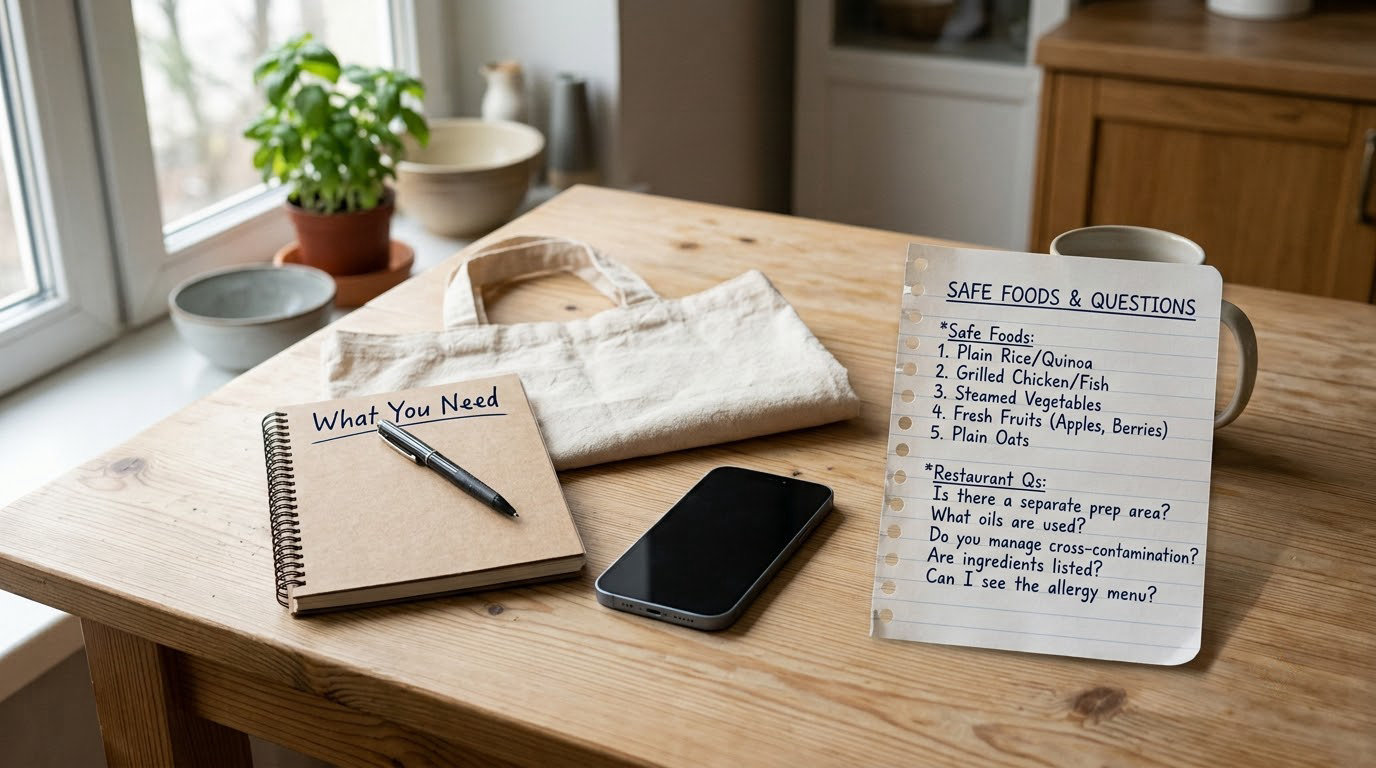
Most bad restaurant experiences trace back to a conversation you had not prepared. Get these five things straight at home and the dinner itself gets much easier.
Your exact trigger. “Dairy” is not a usable answer. Write out the specific food and the specific form that bothers you, because lactose, milk protein, butter and whey behave differently in a kitchen. If you react to gluten, note whether you are avoiding wheat, barley, rye or all three.
Your severity. Decide how you would describe yourself to a stranger: mild discomfort, symptoms within hours, or a serious reaction needing an auto-injector. That description tells the kitchen how much attention your order deserves, and it prevents the awkward moment where staff assume you are fussing over a preference.
Your list of safe ingredients. Note the proteins, vegetables and staples you reliably eat, plus a few borderline items. If you react to onion and garlic, that is a huge deal in most cuisines and much less of an issue in others, so your safe list is what tells you whether a kitchen works for you.
Your questions. Six of them, written down: can you tell me what is in the dish, is the sauce made in house, is anything fried in a shared fryer, can you use separate utensils and a clean pan, who in the kitchen should I speak to, and is there an allergen guide for this menu.
Your card and your medication. A wallet-sized chef card listing your name, your exact sensitivities and a line asking the kitchen to confirm preparation cuts through a lot of noise, especially when the order goes through several people. If a clinician has prescribed you an auto-injector or antihistamine, carry it, keep it where you can reach it, and make sure whoever you’re dining with knows where it is. Learning what is actually in a packaged item is the same skill at home, and [how to read an ingredient list on a food package](https://www.superfoodliving.com/how-to-read-an-ingredient-list-on-a-food-package/) covers the label side of it.
Step-by-Step
1. Identify exactly what you need to avoid
A food allergy, an intolerance and a sensitivity are not the same thing, and mixing them up makes your restaurant strategy wrong. An allergy involves the immune system and can escalate within minutes; an intolerance is usually a dose-dependent digestion problem, such as lactose intolerance; a sensitivity sits in between, often with delayed symptoms like bloating, cramps or fatigue hours later.
The distinction changes your plan. An allergy calls for strict cross-contact questions and carries real emergency risk. An intolerance often means a conversation about ingredients and quantities. A sensitivity often means avoiding the obvious source and being sensible about hidden ones. If you are not sure which category you are in, that is a conversation for a doctor or registered dietitian, not a guess you make over a menu.
2. Research the restaurant and menu
Read the online menu before you pick the restaurant, not at the table on your phone. Look for a published allergen guide, and read the ingredient notes rather than skimming. Then call during off-hours, ideally mid-afternoon, when the kitchen is quiet and the person on the phone has time to think. Ask for a manager or chef if you can get one.
Say what you react to, ask whether the kitchen cooks to order or relies on pre-made components, and ask which dishes they would feel confident preparing for you. Kitchens that cook from scratch have more control over ingredients. Kitchens running heat-and-eat items from sealed pouches have almost none, because nobody there can tell you what is inside the sauce mix. Do not assume a cuisine is risky or safe because of its name, and treat an online description as a starting point rather than a confirmation.
3. Tell the server what you need
Say it as soon as you are seated, before the order is taken, and keep it to three sentences. Something like: “I react to lactose, so I need to avoid milk, butter and cheese. Is the sauce for this dish made in house, and can it come on the side? Could the kitchen use a clean pan and separate utensils?”
Then ask your server to repeat it back before they walk away. That single request does more than anything else you can do, because a large share of mistakes happen when an order crosses the pass unverified. If your server seems unsure or says they will check, let them check. Hand over your chef card rather than reciting a list they have to memorise.
4. Choose a safer menu order
Simple dishes are your friends. Grilled meat with plain vegetables, a rice dish with sauce on the side, or a salad with dressing you can inspect are all easier to trace than a layered casserole. The more components a dish has, the more places an ingredient can hide.
Ask about the places it hides: sauces, marinades, dressings, stocks, breadcrumbs, butter used in finishing, desserts and any fryer. A “gluten-free” item is frequently fried in a shared fryer, and a dish described as dairy-free may still have cheese in the sauce. If nothing on the menu is clearly suitable, say so plainly and order the safest available item plus something you can manage rather than gambling on a description.
A few substitutions add more safety than people expect. Grilled instead of battered, sauce on the side, no garnish, extra vegetables, a side of rice instead of a shared potato dish. And if a friendly tweak makes the dish more pleasant too, so much the better; [adding greens without it tasting like greens](https://www.superfoodliving.com/how-to-add-greens-to-food-without-tasting-them/) is worth knowing if your safe list is short.
If your safe list is thin because you avoid most stocks and broths, [how to get more collagen from food](https://www.superfoodliving.com/how-to-get-more-collagen-from-food/) is worth a read before you spend an evening decoding sauce lists.
5. Confirm the meal before eating
Before you take the first bite, glance over the plate and ask one question if anything looks unfamiliar. “Is the garnish fried?” is enough to open the door. If you asked for a modification, check that it actually arrived without it, and if it did not, the fix is a remake.
Say this calmly and without accusation: “I asked for this without butter, and it looks like it has some on top. Could you take it back and remake it with fresh ingredients?” Removing a slice of cheese from a finished plate does not undo cross-contact, and a good kitchen knows that. You should never feel embarrassed for raising it. If a dish arrives and nobody can tell you what happened to it, that uncertainty is itself the reason not to eat it.
6. Keep a backup plan for cross-contact or uncertainty
Know your exit before you sit down. If the kitchen cannot answer your cross-contact questions, the only option is a buffet or shared fryer, or staff respond dismissively, you have a second restaurant picked in advance or a plan to head somewhere else.
“We can’t guarantee it” is often an honest answer rather than a refusal. Decide in advance what level of uncertainty you personally can accept, because that threshold belongs to you and to your clinician, not to the restaurant. Brief your dining companions too, so somebody else is watching if you go quiet or your face changes. A plan you have rehearsed once is worth more than a perfect conversation you never get to have.
Common Mistakes
Trusting the dish name. Vegetarian, vegan, natural and gluten-free describe a style or a label, not a kitchen. “Nutty” salmon, “veggie” stir-fries and salad dressings are where hidden ingredients live. Ask what is in the sauce instead of what is on top.
Assuming allergen labels settle it. Published guides help, but recipes change, and a filtered menu tells you nothing about shared oil, grills or toasters. Treat a label as a starting point that still needs a cross-contact question.
Waiting until you have already ordered. The kitchen builds your plate during the same rush as forty others. Tell someone early, or tell the manager at the door while you are making the reservation.
Downplaying the severity. If a clinician has given you an auto-injector, say so directly and early: “I carry an auto-injector, so this is a medical allergy, not a preference.” Staff respond well to a clear fact and poorly to a vague hint they have to interpret.
Doing the research on the walk in. Scrolling through a menu at the table under bright light with noise around you is the worst possible research setting. Read it before you leave the house.
Going at the busiest hour. A 7pm Friday service is the worst place to need a chef’s attention. Go at 5:30 or after 8:30 when the pass is calmer and the kitchen can actually listen.
Forgetting the desserts and drinks. Desserts, ice cream, and some cocktails carry dairy, nuts, egg and gluten, and they arrive after you have relaxed. Ask before you order, not after the main course lands.
Letting social pressure shrink your request. Being the guest who asks a lot is genuinely uncomfortable, which is why people under-communicate. Clear, matter-of-fact phrasing works better than apologising, and staff remember it better too. Once you have spoken, you can relax and enjoy the evening.
Frequently Asked Questions
Can I eat out if I have a food sensitivity?
Yes. Most people with a diagnosed food sensitivity eat out regularly by researching the kitchen beforehand, calling ahead, asking about cross-contact, and ordering simple dishes. The aim is not a risk-free meal, since no kitchen can promise that, but reducing your odds by controlling what you ask about. Cook-to-order kitchens give you the most control. Keep a backup restaurant in mind for nights when the answers are vague.
How should I explain a food sensitivity to restaurant staff?
Keep it to three sentences at the start of the meal: name the specific ingredient and food, say whether you carry a prescribed auto-injector if that applies, and ask one concrete question about preparation. Finish by asking your server to repeat the request back before the order goes to the kitchen. A wallet-sized chef card carries the same information and removes the risk of a long list being misremembered.
What if a restaurant cannot guarantee that a meal is safe?
Most restaurants will not guarantee safety, and that is a realistic answer rather than a red flag. What matters is whether they will answer specific questions about ingredients, shared fryers, surfaces and utensils, and whether they will modify a dish. If they cannot do either, order the plainest available item or leave and use your backup plan. Deciding your own level of acceptable uncertainty in advance makes the call much easier.
Are menu labels or online descriptions enough to identify allergens and ingredients?
No. Labels and online descriptions tell you what is in the dish, not what touched it. A gluten-free plate may be fried in a shared fryer, a vegan sauce may be cooked in the same pan as a dairy dish, and staff may not know that a house dressing contains your trigger. Use labels as a starting point, then ask about shared equipment, cooking oils, garnishes and the sauce or dressing separately.
How can I reduce cross-contact risk when eating out?
Cross-contact means an allergen moves from one food, surface or utensil to another without ever appearing on the menu. You reduce it by asking whether the kitchen can use separate utensils, a clean pan and a clean cutting board, whether anything is fried in shared oil, and whether special accommodation meals can be prepared at a different station. Avoiding buffets, sharing platters and shared fryers removes the risk entirely, which is usually the simplest change you can make.
When should I consult a doctor or registered dietitian about food sensitivity symptoms?
Consult a clinician if you have never had your symptoms assessed, if they are new, worsening or interfering with daily life, or if you are not sure whether you have an allergy, an intolerance or a sensitivity. Seek urgent help for any reaction involving breathing difficulty, throat tightness, swelling, widespread hives or dizziness, using any prescribed auto-injector and calling emergency services. A doctor or registered dietitian can also help you work out which foods you can safely keep in your diet.
Conclusion
Start with the one thing most people skip: write down your exact trigger and your severity before you ever look at a menu. Everything after that is a short loop. Call the restaurant in the afternoon, pick something simple, say three sentences to your server, ask them to repeat the order back, and check the plate before you eat it.
Have a second restaurant in your pocket for the nights the answers are vague. And if any of this is new to you, or you react with anything beyond mild digestive discomfort, talk to a doctor or registered dietitian before you plan the next dinner out.