
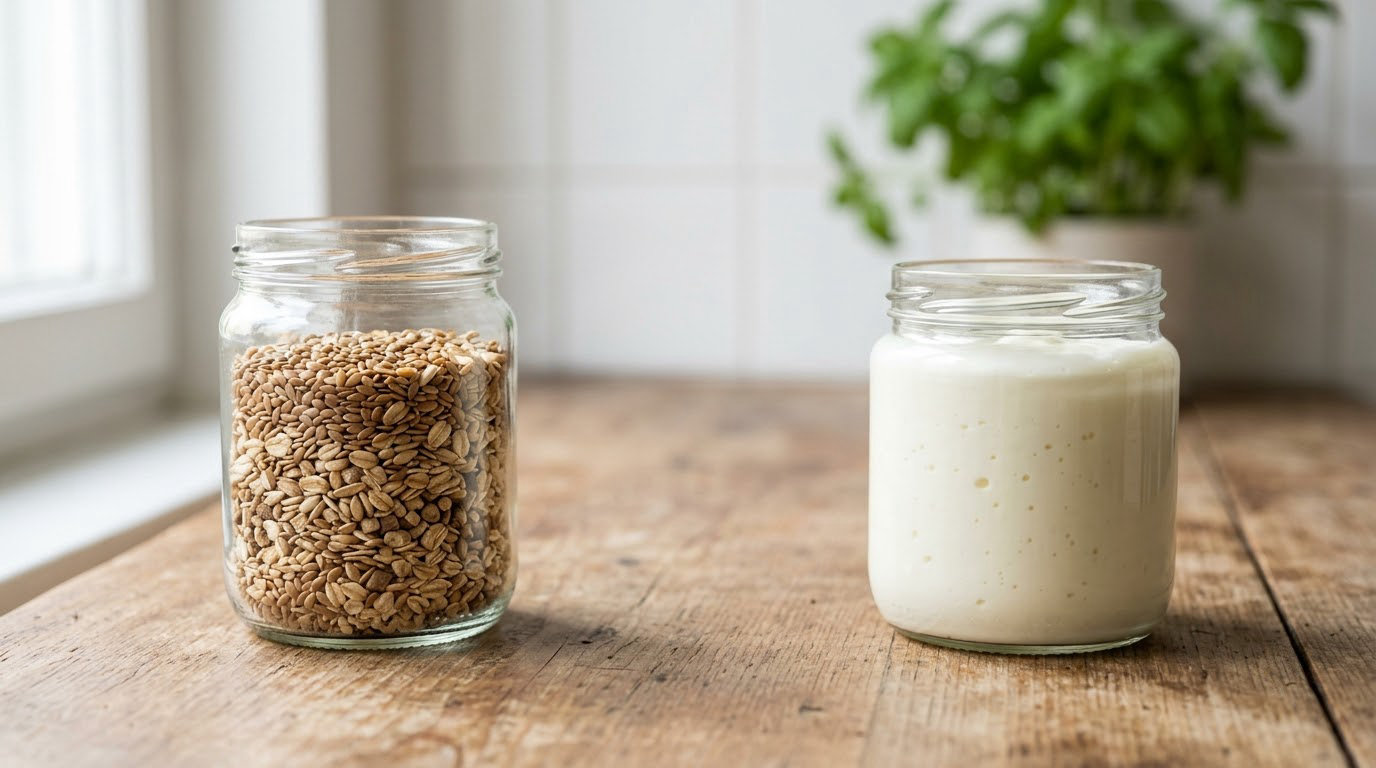
Prebiotics are the parts of food your body cannot digest, and they feed the microorganisms already living in your gut. Probiotics are live microorganisms you take in to add to that community. One is food for bacteria, the other is bacteria itself.
The confusion is easy to understand, because both terms float around in the same wellness aisles and get blurred together on labels and in headlines. The distinction is simple, though, and once you have it, the rest of the topic gets much calmer.
This guide covers what each one actually does in the colon, where to find them in everyday food, how to read a supplement label, and when a supplement is a sensible step versus an expensive habit. It is general information, not medical advice, so personal questions belong with a doctor or a registered dietitian.
Table of Contents
- Prebiotics vs Probiotics Explained Simply at a Glance
- What Are Prebiotics and Probiotics?
- How Prebiotics vs Probiotics Work in Your Gut
- Which Foods Provide Prebiotics?
- Which Foods and Supplements Provide Probiotics?
- What Are the Main Benefits and Limitations?
- Should You Take Prebiotics and Probiotics Together?
- Which Should You Choose?
- Frequently Asked Questions
- The Simple Takeaway
Prebiotics vs Probiotics Explained Simply at a Glance
| What to compare | Prebiotics | Probiotics |
|---|---|---|
| What it is | Types of nondigestible carbohydrate, usually fiber | Live bacteria or yeasts, given as a defined strain |
| Main job | Feed bacteria that are already present in the colon | Add organisms to the gut community, at least temporarily |
| Typical food sources | Onions, garlic, leeks, asparagus, chicory root, Jerusalem artichokes, oats, barley, bananas, beans | Yogurt with live cultures, kefir, sauerkraut, kimchi, tempeh, miso |
| Supplement form | Powder, capsule, or a food product carrying added fiber | Capsule, powder, or refrigerated drink |
| Who might consider it | Someone whose usual diet is low in fiber or plant variety | Someone advised to use a specific strain, or trying one clearly labeled product for a defined short-term goal |
| Key limitation | Too much too fast can cause gas and bloating | Strain specific, effects are often modest, products are not interchangeable |
Neither column wins outright. Most healthy adults get what they need from a varied diet, and a supplement earns its place only when it solves a specific problem for that person.
What Are Prebiotics and Probiotics?
Put simply, prebiotics feed gut microbes and probiotics add them. Everything else, including the marketing, grows out of those two sentences.
What prebiotics are
Prebiotics are nondigestible carbohydrates that reach the large intestine intact and are fermented there by resident bacteria. Common ones include inulin, fructooligosaccharides, galactooligosaccharides, and resistant starch.
They are not microorganisms and they cannot colonize anything. They are simply the type of carbohydrate that selected gut species use as fuel, and the byproducts of that fermentation matter as much as the fiber itself.
What probiotics are
Probiotics are living microorganisms that, when taken in adequate amounts, confer a health benefit. In practice this means a specific bacterium or yeast, identified to the strain level, delivered in a product that is meant to keep it alive.
Strain detail is not fussiness. Closely related strains can behave differently, which is why a product listing only a genus and species tells you less than one naming the strain itself.
How Prebiotics vs Probiotics Work in Your Gut
Prebiotics pass through the stomach and small intestine without being broken down. In the colon, bacteria ferment them into short-chain fatty acids, including butyrate, which the cells lining the colon use as fuel.
That is the whole mechanism, and it is a modest one. Prebiotics do not add anything new. They work only on organisms already present, which is why the response to a prebiotic varies so much from person to person.
Probiotics take a different route. The organisms arrive, and many do not stay: they pass through the system over days rather than settling permanently. Studies using sequencing have found that most people return to roughly their original community after stopping.
Treating your gut as an ecosystem rather than a project helps. It is a dense, self-regulating community of hundreds of species, and single additions interact with everything else living there. Healthy adults pick up plenty of microorganisms from a varied diet without deliberate supplementation.
Which Foods Provide Prebiotics?
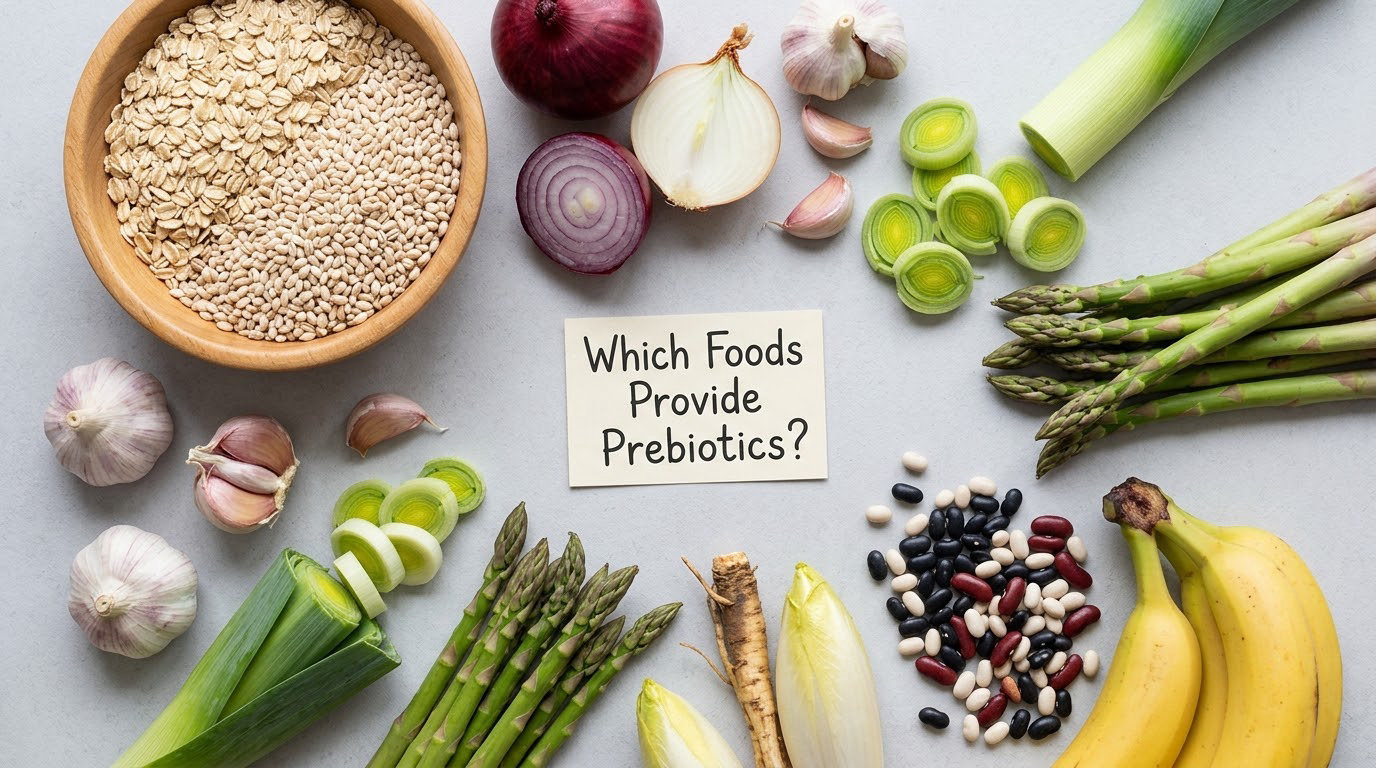
Onions, garlic, leeks, asparagus, artichokes, chicory root, oats, barley, bananas and legumes are the everyday standouts. If a plant has a decent amount of fiber and some starch that resists digestion, it is a candidate.
Not all fiber is prebiotic, which surprises people. The compounds that qualify are a narrower set than the fiber on a nutrition panel, and different species prefer different ones. Inulin and fructooligosaccharides, concentrated in chicory root, are heavily studied, while resistant starch comes mostly from cooled starchy foods such as cooked and chilled potatoes, rice or pasta.
Two things worth separating. Naturally occurring compounds are present in ordinary food and work as part of a balanced diet. Products marketed as high in added prebiotic fiber deliver a concentrated dose, which is useful if your diet rarely includes these foods and a common source of early discomfort if it arrives all at once.
Raise fiber gradually and drink enough fluid. Going from a low fiber intake to several servings of beans and onions in one week is a common way to end up with gas and cramping, and slowing down usually fixes it.
Which Foods and Supplements Provide Probiotics?
Probiotic sources split into two very different groups, and only one of them is reliably alive by the time you eat it.
Yogurt labeled as containing live and active cultures, kefir, unpasteurized sauerkraut, kimchi, tempeh, miso and certain fermented cheeses fall in the first group. These are foods that were deliberately fermented, and many of them do carry viable organisms when they are fresh and unpasteurized.
The second group is supplements, where the dose is defined. Manufacturers label them in colony forming units, or CFU, and a guarantee of organisms through the use-by date is the number that matters. A higher number on the front of a bottle is not automatically a better product.
How to read a probiotic label
Look for five things, in this order: the full strain designation including the strain code, the CFU guaranteed through the end of the shelf life rather than at the moment of manufacture, a storage instruction you can actually follow, a use-by or expiration date, and whether refrigeration is required.
Supplements are regulated as food rather than as medicines in most places, which means quality varies between brands. Storage matters too, since heat during shipping and a kitchen counter kill organisms that were alive when the bottle was sealed.
And be clear on one point: not every fermented food is a probiotic. Pasteurization kills live cultures, and so does high heat during cooking, so a crunchy sauerkraut at the fridge and a jar of pickles are not the same product.
What Are the Main Benefits and Limitations?
The honest summary is that most benefits are modest, strain specific, and best studied in particular circumstances. There is no version of this where one category fixes everything.
For digestive regularity, more dietary fiber reliably helps, and prebiotics contribute as one route to that. Probiotic evidence is strongest around specific situations such as antibiotic-associated diarrhea, where certain strains have been tested directly alongside a course of antibiotics.
Three limitations shape the rest. Benefits attach to a named strain, so a product cannot borrow the reputation of a different strain in the same species. Supplements are not interchangeable, either with each other or with foods. And prebiotics, like any fermentable fiber, can produce gas and bloating, particularly in people with sensitive guts or a condition such as small intestinal bacterial overgrowth.
Safety notes matter here. Anyone who is pregnant, immunocompromised, seriously ill, or considering giving a supplement to a child should talk to a clinician first, as should people with a diagnosed digestive condition. Live organisms are not automatically appropriate for every person.
Should You Take Prebiotics and Probiotics Together?
You can combine them, and pairing foods works nicely in practice: yogurt with live cultures alongside a serving of berries and oats, or kefir with a banana. But combining them does not automatically make one better, and the result stays unpredictable.
Terms like synbiotic describe products that deliberately combine the two, usually choosing a fiber that the included strain is known to use. The appeal is obvious, and the evidence is still developing. Better-designed studies are emerging, though the confidence you would want for a health claim is not there yet.
Practical guidance stays simple. Follow the label directions for any supplement rather than guessing at timing or combining doses. Introduce one new food at a time so you can tell what your system likes. And keep a note of how you respond, because your own history is better evidence for your body than any general study.
No dosage or schedule advice belongs here, and if you take prescribed medication, your doctor or pharmacist should weigh in before you add anything new.
Which Should You Choose?
Start with food, and in a specific order of preference.
For general digestive regularity, widen the range of fiber-rich whole foods you eat: more beans, lentils, oats, barley, vegetables, fruit with the skin, nuts and seeds. Variety across weeks matters more than one large serving, and your gut responds to the pattern.
Consider a prebiotic supplement when getting those foods in is genuinely difficult, whether through appetite, time, a restricted diet, or a doctor-recommended plan for fiber intake. Start low, move gradually, and treat early gas as a signal to slow down rather than push through.
Consider a probiotic when a clinician has recommended a specific strain for a specific reason, or when you want to try one clearly labeled product for a defined, short-term goal. A short defined trial is a reasonable way to find out whether it does anything for you.
Skip the stack. Buying five bottles at once tends to produce confusion, cost and stomach discomfort rather than insight. And if symptoms are persistent, worsening, or accompanied by weight loss, bleeding or pain, that is a conversation for a clinician rather than a self-directed experiment.
Frequently Asked Questions
Do prebiotics or probiotics work faster?
Prebiotics often act faster because fiber reaches the colon within hours and begins fermenting there, though the effect depends on the person and the dose. Probiotic benefits are usually judged over weeks rather than days, since most studies run for several weeks. A fair comparison is at least a month of consistent daily habits for either, and many people notice nothing at all.
Should you take prebiotics and probiotics at the same time?
There is no rule against it. Some products combine both on purpose, and a plain food pairing works just as well, such as yogurt with live cultures next to oats and berries. Taking them together does not make one automatically stronger or produce predictable results. Follow the directions on any label, and introduce one change at a time so you can tell what helped.
Are fermented foods the same as probiotic supplements?
Not quite. Fermented foods rely on wild or added cultures and vary a lot from batch to batch, so the dose is unknown. Supplements specify the strain and the number of organisms guaranteed through the use-by date. Some fermented foods, like pasteurized yogurt or cooked tempeh, contain no live cultures at all, so the fermented label alone is not a guarantee.
Can prebiotics or probiotics cause bloating?
Yes, and it is the most common early complaint. Prebiotics ferment quickly, so a large increase in fiber can cause gas, cramping and bloating that usually settles after one to two weeks of steady intake. Probiotics can also cause temporary gas, particularly at a high dose or in someone with a sensitive gut. Starting with a smaller serving and building up slowly is the usual fix.
When should I talk with a doctor before using gut health supplements?
Before starting, if you are pregnant, immunocompromised or seriously ill, or if a supplement is being considered for a child. Also talk it through first if you have a diagnosed digestive condition, take regular medication, or are about to finish a course of antibiotics. And skip self-treatment entirely when symptoms include bleeding, unexplained weight loss or persistent pain, since those need assessment rather than a bottle.
The Simple Takeaway
Start by eating a wider range of fiber-rich whole foods, since that is where most people get everything they need for regular, comfortable digestion. Treat prebiotic or probiotic supplements as targeted options afterwards, and judge each one on its named strain, its own risks, and the specific evidence behind it.