
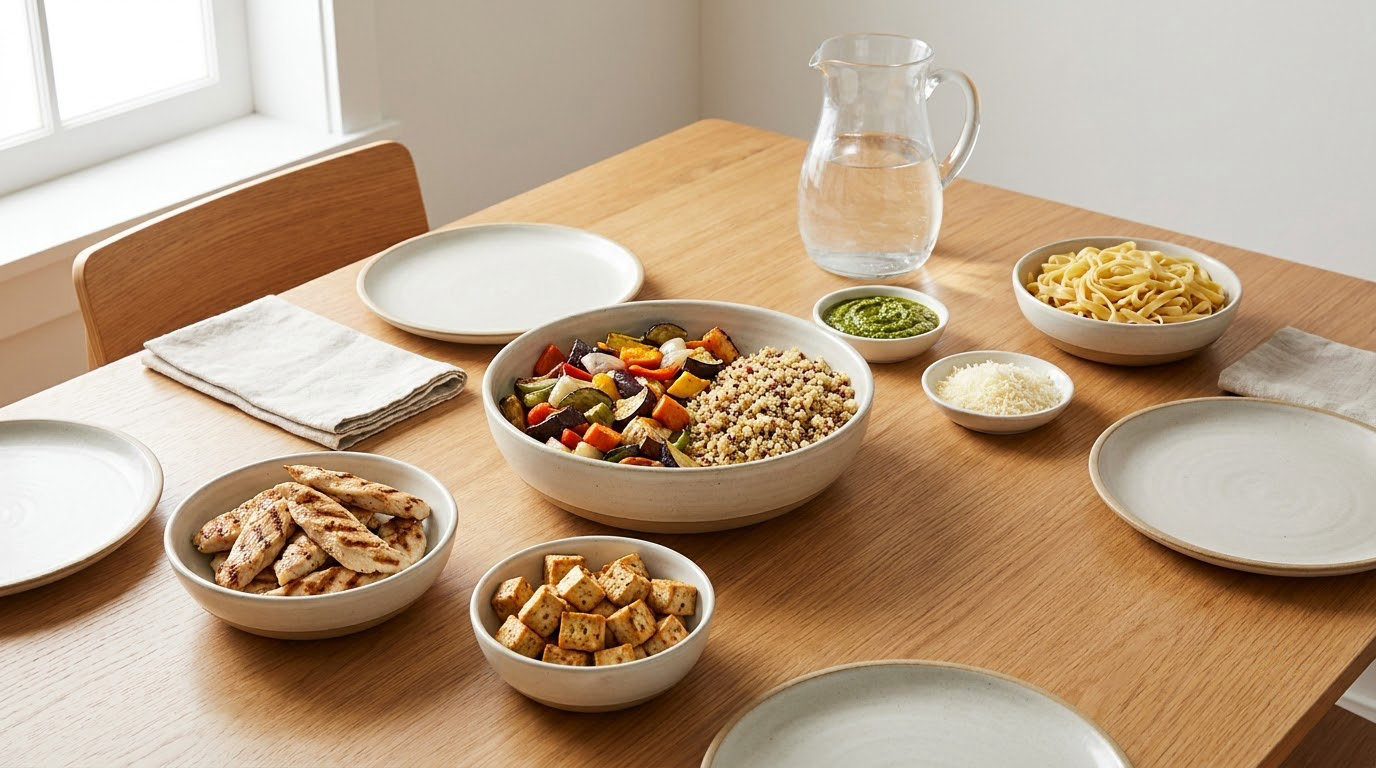
How to cook for a family with different diets comes down to one change: stop trying to build a single plate that satisfies everyone. Instead, cook a shared base — a grain, a protein, roasted vegetables and a sauce on the side — and let each person finish their own meal at the table. That single shift takes most weeknights from three pans to one, and it keeps everyone at the same table.
The most common household I hear about is one medically restricted eater, one or two picky eaters, and everyone else eating normally. This guide gives you a repeatable six-step system for that exact combination, plus the swap list and safety rules that make it work.
Table of Contents
- What You Need
- Step-by-Step
- 1. List Every Dietary Need Without Labeling People
- 2. Choose a Flexible Shared-Base Meal
- 3. Plan the Menu and Shop Once
- 4. Cook the Common Parts in Batches
- 5. Add Substitutions Without Rebuilding the Meal
- 6. Serve Components Separately and Involve the Family
- Common Mistakes
- Tips for Making Mixed-Diet Meals Easier
- Frequently Asked Questions
- How can I cook one meal when everyone has different food preferences?
- What is the easiest meal for a family with mixed diets?
- How do I prevent cross-contact when preparing food for allergies?
- Can I cook separate foods in the same oven or on the same sheet pan?
- How long can mixed-diet meal prep stay safe in the refrigerator?
- When should someone with a restrictive diet see a doctor or registered dietitian?
- Start With One Shared Meal
What You Need
You do not need special equipment. A sheet pan, a pot with a lid, a couple of mixing bowls and a set of wooden spoons will carry you through most weeks.
What you do need is an honest inventory. Before you shop, write down for each person the concrete requirement, not the label. “Gluten-free” is not a requirement until you know whether it is a coeliac diagnosis, a sensitivity, or a preference. “Dairy-free” is different again for a child with a milk allergy than for an adult who feels bloated after cheese.
- Pantry staples that cross diets well: rice, oats, potatoes, corn tortillas, black beans, lentils, canned tomatoes, olive oil, vinegar, garlic, onion, paprika, cumin, cinnamon and a supply of plain herbs.
- Flexible proteins: chicken thighs or breasts, ground beef or turkey, eggs, canned beans and lentils, firm tofu, and fish fillets.
- Two sauces you can adjust: one made without dairy or gluten, one that people can season themselves.
- Cross-contact tools if a severe allergy is in the house: a second cutting board, a second spatula, a colander the family will not touch, and a separate toaster if wheat or dairy is involved.
- A written list per person of one must-have ingredient and one ingredient they refuse. Genuinely refuses, not “is suspicious of.”
That last item matters more than any kitchen gadget. Knowing that nobody eats Brussels sprouts saves you from buying them optimistically every Friday.
Step-by-Step
1. List Every Dietary Need Without Labeling People
Sort each person’s needs into one of four buckets, because they need different amounts of accommodation from you. Getting this sort right is the difference between cooking one meal and cooking four.
| Type of need | What it requires from the cook | Example |
|---|---|---|
| Medical allergy | Separate utensils, safe plate prepared first, ingredient labels checked every time | Peanut, tree nut, shellfish, sesame |
| Medical condition | Ingredient swaps that change nutrition, not just taste | Coeliac disease, type 1 diabetes, kidney disease, IBS |
| Intolerance | Modest swaps; no cross-contact worry | Lactose, FODMAP sensitivity |
| Preference or religious practice | A component they skip or replace, served alongside everyone else | Vegetarian, vegan, halal, kosher, pescatarian |
Notes work better than nicknames. “Sam: no peanuts, own utensils” is usable in a kitchen. “The picky one” is not, and it turns a practical list into a grievance.
2. Choose a Flexible Shared-Base Meal
A flexible base is any meal that arrives in bowls or trays rather than as one plated dish, so people add and remove at the table instead of you cooking variants. These four cover most weeks:
- Taco bowls: seasoned protein, rice, black beans, corn tortillas, shredded lettuce, salsa, cheese and sour cream — each separately swappable.
- Sheet-pan vegetables plus tray chicken or tofu: two trays, one oven, everything deconstructed.
- Loaded baked potatoes: a neutral base everyone accepts, topped with cheese, beans, butter, bacon bits and sour cream.
- One-pot pasta or curry with a plain sauce: cook the base without dairy or gluten, serve toppings in small bowls so people can build their own.
The test is simple: could the person with the strictest restriction eat at least half of it, unmodified, and add the rest themselves? If the base itself is forbidden to someone, it is not a shared base. Move to a different meal.
3. Plan the Menu and Shop Once
Use a simple formula for each dinner: one shared base, one adaptable protein, two vegetables, one grain, one versatile sauce, and optional toppings. Shop for the formula once rather than for three separate dinners, and every meal that week reuses the same ingredients in different shapes.
Plan for three dinners and check the extra portions before you plan a fourth. Cooked food kept at 40°F or below is safe in the refrigerator for three to four days, so anything beyond that gets frozen the day you cook it, not the day you remember it.
4. Cook the Common Parts in Batches
Batch the components, not the finished plates. One pot of rice, one tray of vegetables, one batch of protein, one jar of sauce. Reheat the sauce with a splash of water or stock and it loosens back up; reheat rice with a damp towel over the top and it stops drying out.
Cook the safe portion first, before anything allergenic touches the pan or board. Use a clean utensil to move it straight into its own container so nothing has to be re-handled later.
Hold cooked components warm, not in the danger zone. Anything held above 140°F for more than two hours is no longer safe, and the same two-hour limit applies to food sitting out at a party or a long dinner.
Check the protein with a thermometer rather than the clock. Poultry reaches 165°F, ground meat 160°F, and whole cuts and fish 145°F, measured in the thickest part. The timing on a package is an average for an average oven, not a guarantee.
5. Add Substitutions Without Rebuilding the Meal
The meal survives if you change one ingredient at a time rather than swapping the whole dish. Here is the short list I keep going back to.
| Instead of | Swap in | Watch for |
|---|---|---|
| Wheat bread, pasta, tortillas | Rice, corn tortillas, potatoes, oats, buckwheat or gluten-free pasta | Cross-contact in shared toasters, fryers and colanders; check soy sauce and bouillon |
| Milk, cream, butter, cheese | Coconut milk, oat or soy milk, olive oil, nutritional yeast, tofu | Whey and casein in breading, sauces and “cream” products; many butters contain milk solids |
| Eggs in baking | Ground flax and water, mashed banana, unsweetened applesauce | Egg in noodles, breading, mayonnaise and some marshmallows |
| Peanut and tree nuts | Sunflower seed butter, roasted chickpeas, toasted seeds | Not always “nut free” facilities — check the shared line if it matters to your household |
| Soy | Chickpeas, white beans, lentils | Tofu, tempeh, soy sauce and most Asian-style sauces; sunflower seed butter as a nut-butter alternative |
| Meat or poultry | Canned beans, lentils, firm tofu, mushrooms | Broths, gravies and Worcestershire-style sauces often contain animal products |
| Onion and garlic | Garlic-infused oil, green parts of scallions, chives | Both are triggers for low-FODMAP diets, which also rules out wheat, beans, apples and mango |
| Tomato and pepper | Roasted squash, carrots, zucchini | Also nightshade triggers, along with eggplant and white potatoes for some people |
| Heavy seasoning | Extra herbs, lemon, vinegar, mild dried spices at the table | Lower-sodium versions of broth and soy sauce beat most specialty products |
Ask the person with the strictest restriction what they actually avoid rather than guessing. Some families can eat a little butter and some cannot eat any at all, and those two households need different grocery lists.
6. Serve Components Separately and Involve the Family
Put everything in bowls on the table, sauces included, and let people build their own plates. It removes the moment where you announce what each person is eating, which is usually where the resistance starts.
Offer extras rather than policing portions. Extra cheese, extra herbs, extra toasted seeds on the side gives picky eaters room without adding a second dinner.
Let the family help. Kids who choose one component of the meal, wash a vegetable or stir the sauce tend to eat more of it than kids handed a finished plate. Nobody has to explain that the vegetables are good for you.
Keep language neutral. “You are having the gluten-free version” puts a child in a category; “the corn tortillas are in the middle bowl” keeps it about the food.
Common Mistakes
- Cooking one restrictive meal for everyone. The fix: cook the shared base that most people can eat, and hold the substitutions aside rather than building the whole dish around one restriction.
- Trusting labels like “vegan” or “gluten-free” without checking the ingredient list. The fix: read the list every time, because recipes change and a shared line may not be allergen-free.
- Serving a full plate to someone who will not finish it. The fix: serve smaller portions on a second plate, and put the rest in the fridge while everyone is still at the table.
- Assuming a substitute is automatically allergy-safe. The fix: treat every new product as a new risk until the label confirms it.
- Preparing three days of food in advance. The fix: cook components for two days and freeze the rest, then reheat from frozen in a covered dish.
- Hiding extra food inside familiar dishes. The fix: build the plate in components they can see and skip. Hidden vegetables in mac and cheese end one relationship permanently.
Tips for Making Mixed-Diet Meals Easier
- Keep a substitution board on the fridge listing each person’s needs, in their words, with the date.
- Label stored food with the person’s name and the date. In a shared fridge, mystery containers become a risk and an argument.
- Rotate flavors, not formats. Change the seasoning profile of the same bowl — Mediterranean this week, Mexican next — and the meal still feels new.
- Use extra spices, herbs and vinegar rather than specialty allergy products. Store-bought gluten-free pasta and single-serve sauces cost several times more than rice, corn tortillas and beans.
- Ask everyone for one must-have ingredient and one ingredient they will not eat. Write both down and follow them.
- Put mild seasoning in the shared dish and serve hot sauce, chili flakes and salt at the table. One mild-plus-spicy split stops being a problem when the hot stuff is optional.
- Once a base works, repeat it. Boredom and food waste are separate problems, and a rotation of four reliable bases beats twenty recipes nobody finishes.
If you want to see how this scales across a week rather than a single night, our guide to batch cooking for the week without getting bored covers the component-prep side. Lentils work well as the shared protein here, and cooking lentils so they hold their shape keeps them from turning to mush in a bowl that gets assembled at the table. For school nights and weekend trips, packing real food for a long walk or hike handles the same rules away from the kitchen.
Frequently Asked Questions
How can I cook one meal when everyone has different food preferences?
Cook a base that most people can eat, then serve the flexible parts in separate bowls: protein, grain, vegetables, sauce and toppings. Everyone builds their own plate, so preferences get handled with a pinch of an ingredient instead of a separate pan. Keep the base neutral and let seasoning happen at the table.
What is the easiest meal for a family with mixed diets?
Taco bowls and loaded baked potatoes are the easiest because everything arrives separately. A neutral base, a cooked protein, a vegetable and a sauce cover four or five diets without separate cooking. Baked potatoes take roughly an hour in a hot oven, and the toppings let each person finish their own plate.
How do I prevent cross-contact when preparing food for allergies?
For a severe allergy, use a separate cutting board, knife and spatula, and cook the safe portion first in a clean pan before anything allergenic touches the surface. Keep allergy-free items stored above other food and separate from shared crumbs. Check labels every purchase, since recipes and shared production lines change.
Can I cook separate foods in the same oven or on the same sheet pan?
Yes, as long as allergens do not transfer. Cook the allergy-safe food first, on its own rack or on a covered tray, and keep it away from the allergenic item so no juices or crumbs touch it. Do not cook gluten-free breaded items and wheat items on the same sheet pan, and use separate oil for fries and breading.
How long can mixed-diet meal prep stay safe in the refrigerator?
Cooked food kept at 40°F or below stays safe in the refrigerator for three to four days. Cool components in shallow containers rather than one deep dish so they chill quickly. Anything planned for later in the week should be frozen on the day you cook it, then reheated until steaming hot throughout.
When should someone with a restrictive diet see a doctor or registered dietitian?
See a clinician whenever the restriction is medical rather than a preference, including diagnosed coeliac disease, food allergy, type 1 diabetes, kidney disease or a suspected intolerance that affects daily life. A registered dietitian can also help a restricted family eat enough, which a swap list alone will not solve. Bring ingredient labels and a two-week food record to the first visit.
Start With One Shared Meal
Start tonight, not on Sunday. Write down each person’s concrete needs, pick one meal that arrives in components — taco bowls, sheet-pan vegetables or loaded potatoes — and cook only the shared parts. Then make just the substitutions someone actually requires, serve the sauces on the side, and let everyone build their own plate.