
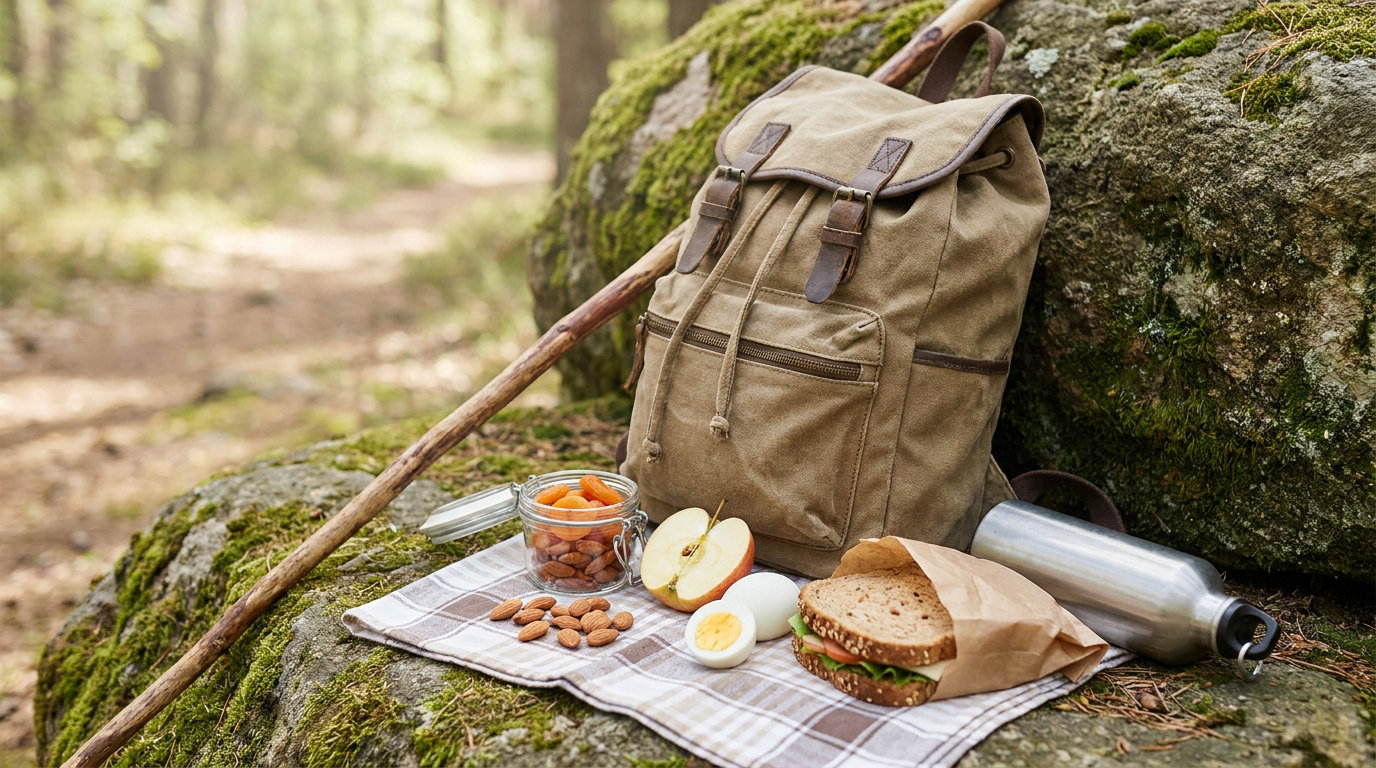
Most long walks go wrong in a boring way: you feel great at mile three and heavy and foggy by mile nine. The fix is boring too. Eat about 200 to 300 calories every 45 to 60 minutes, mostly carbohydrate, from ordinary shelf-stable food, and start before you feel hungry. That is the whole idea behind how to fuel a long walk or hike with real food.
You do not need gels, gels-plus-gels, or a bag of freeze-dried meals to get there. Bread with nut butter, oats mixed in a bag, dried fruit, salted nuts, jerky, tortillas and hard cheese will carry you a long way, and they cost a fraction of what specialty trail food does.
This guide covers the whole plan: what to gather, how to size portions, how to keep food safe in summer heat, how to eat when a steep climb makes you nauseous, and what to do in the first hour after you finish.
Table of Contents
- What You Need
- Step-by-Step: How to Fuel a Long Walk or Hike With Real Food
- Common Mistakes
- Frequently Asked Questions
- How much food should I pack for a long walk?
- Do I need energy bars or other sports fuel for a long hike?
- What are the best real foods to eat while walking?
- How can I prevent stomach trouble from eating on the trail?
- How do I keep trail food safe in hot weather?
- Should I eat more food when walking uphill?
What You Need
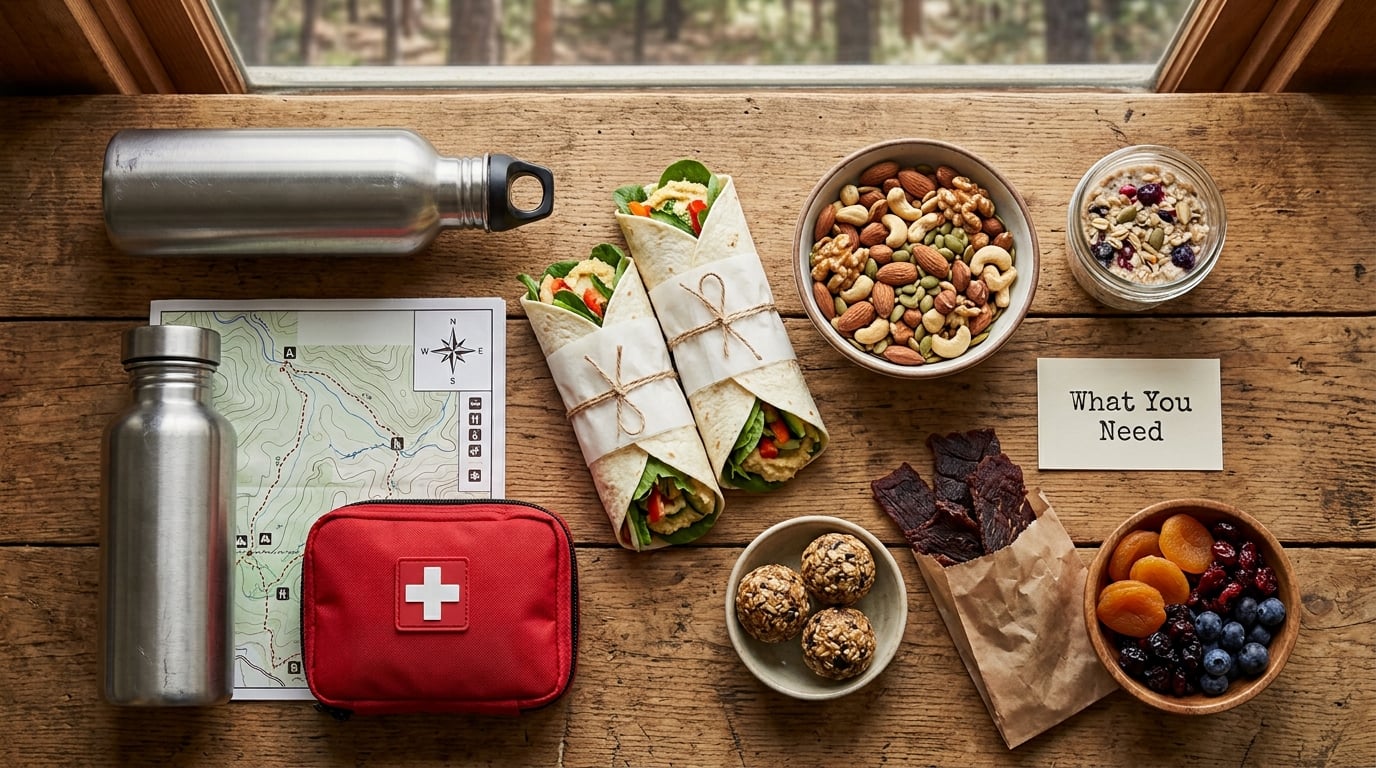
Food is the part everyone plans. The other items are what decide whether the food stays edible and whether you get back.
- Trail food sized to the hours, not the miles. Pack for the walking time you expect plus an hour of slack for a slow section, a wrong turn, or a long rest stop.
- Lightweight containers. Small zip bags, a flat container for tortillas, or a couple of small tubs for wet items. A hard shell for anything crisp.
- Water and a way to carry it. Enough capacity to hold what you drink between reliable sources, plus a filter or chlorine dioxide if you are relying on natural water.
- Navigation. A paper map and compass even if you carry a phone, because a dead battery should not end your day.
- Weather information. A forecast you checked before leaving, and a layer that handles the worst version of it.
- A small first-aid kit. Blister care, tape, a painkiller, and anything else you normally carry.
- A bag or container for storage and waste. A freezer bag keeps food cool longer and doubles as your trash bag.
On the food side, aim for four properties: it does not spoil without refrigeration, it does not need water to swallow, it does not crumble into your jacket, and you have eaten it before.
Step-by-Step: How to Fuel a Long Walk or Hike With Real Food
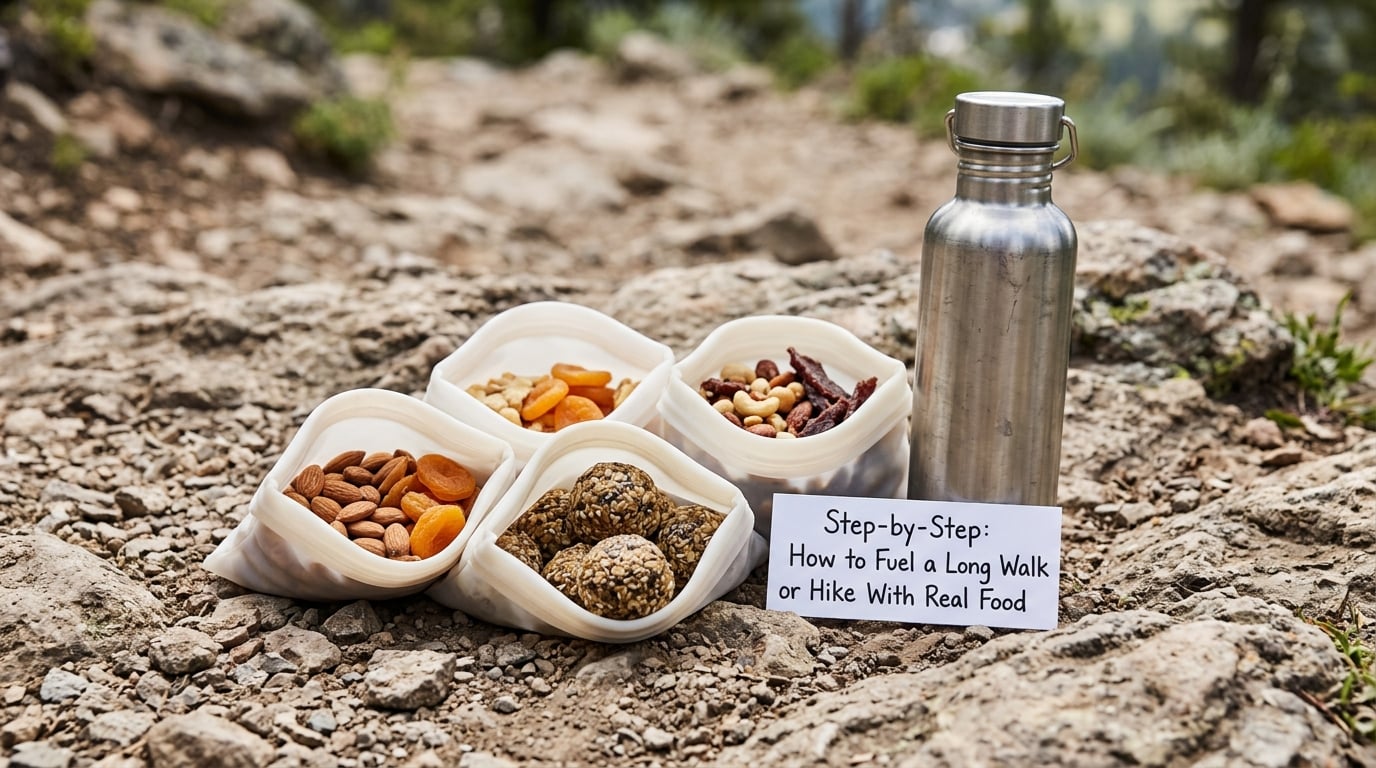
Estimate the Route Before Choosing Food
Write down four numbers before you touch the food: total walking time, elevation gain, longest stretch without water, and where you can refill. Elevation matters more than distance because climbing is the expensive part.
A rough guide is one hour of walking per 3 miles of flat trail, one hour per 2 miles with moderate hills, and slower than that with a loaded pack. Add 20 to 30 percent for a loaded pack or rough ground.
If you plan an eight-hour day, pack nine hours of food. Nothing ends a hike faster than arriving at a junction with nothing left, and extra food weighs less than the frustration does.
Build a Balanced Real-Food Trail Menu
Carbohydrate is the fuel you burn most, so it should be the biggest share of every eating stop. Protein and fat ride along to keep you full and satisfied. Produce matters, but pick low-fibre options, since raw vegetables and large amounts of fruit tend to sit badly in a moving gut.
| Real food | Approximate calories per serving | Approximate weight per serving |
|---|---|---|
| Tortilla with peanut butter | 230 | 2 oz |
| Instant oats mixed with nut butter and dried fruit | 300 | 3 oz |
| Almonds or mixed nuts, salted | 170 | 1 oz |
| Beef or turkey jerky | 80 | 0.6 oz |
| Dried apricots | 90 | 1.5 oz |
| Hard cheese, sliced | 110 | 1 oz |
| Whole-grain bread with cream cheese | 160 | 1.5 oz |
| Trail mix with dried fruit | 200 | 1.5 oz |
| Dark chocolate bar | 170 | 1.5 oz |
| Cooked noodles, dry weight | 200 | 2 oz |
| Rice and beans, pouch, cold or with hot water | 320 | 4 oz |
| Apple sauce pouch | 90 | 3.5 oz |
These numbers are typical grocery values, not lab measurements. Check the label on what is actually in your kitchen, because nut butters and granolas vary more than most people expect.
Variety does the work that extra bars cannot. Sweet, salty and fatty together keep a meal interesting, which matters more than calorie density once you are eight hours into a day and the thought of another identical wrapper makes you queasy. That late-hike appetite loss has a name, taste fatigue, and it is the reason a trail menu with three flavours beats a trail menu of one flavour three times over.
Long-distance hikers in r/hiking’s multiday fueling thread describe a haul that looks a lot like this list: instant oatmeal and dry bread with toppings for breakfast, noodles or a pouch meal plus dry bread for lunch, and nuts and jerky carried as the between-meal food.
Pack Portions Without Carrying Excess Weight
Divide the total food into small servings before you leave. A zip bag of 20 almonds is a planned portion, and a jar of almonds is a problem waiting to happen at hour seven.
Use calorie density as your guide. Food that gives you 300 calories in 3 ounces is doing more for your pack than food that gives you 300 calories in 8 ounces. Nuts, nut butter, cheese, jerky and chocolate win here. Whole apples, raw carrots and crackers lose.
Drop weight anywhere you legitimately can. If there is a hut, a café or a picnic table halfway through, leave the meal you would eat there at home. If your route passes a town, plan to buy one item there. Every ounce you do not carry is an ounce you do not resent at the end.
Store and Prepare Food Safely
Most hiking food is shelf-stable, which is the whole appeal. The exceptions are the things you cut, cook or soak: meat, cheese, eggs, cooked rice and pasta, and anything in a pouch you hydrated.
For those, keep the cold chain. USDA minimum internal temperatures are 165 F for poultry, 160 F for ground meat, and 145 F for whole cuts of meat and fish. Refrigerated, cooked food keeps about three to four days, raw poultry and ground meat one to two days, and deli slices three to five days.
Above 40 F outside, a closed cooler holds safe temperatures for roughly one day. Beyond that, freeze what you can or change the menu. Keep raw meat in a separate sealed bag underneath everything else, or better, leave it at home and take a pouch meal instead.
No-cook assembly is the trick that makes real food work on a trail. Spread nut butter on a tortilla, add dried fruit and a sprinkle of salt, and roll it. Put oats, nut butter and chopped dried fruit in a jar at home and eat it dry with a splash of water. Both work, both taste fine cold, and neither needs a stove.
How to Fuel a Long Walk or Hike With Real Food While You Walk
Set the cadence before you leave and hold to it. Every 45 to 60 minutes, take in 200 to 300 calories whether or not you feel hungry. Hunger on a long effort is a lagging signal, by which point you are already behind.
Eat your familiar, well-loved foods first and save the more adventurous items for later when taste fatigue sets in. Test anything new at home, ideally during a training hike, not on the day of a big route.
Then adjust to effort. Uphill burns more, downhill burns less but needs fluid, and a long flat section is where a salty, fatty bite does more than another carbohydrate hit.
Adjust for Weather, Terrain, and Recovery
Heat raises fluid needs and lowers appetite. Drink roughly half a litre of fluid an hour as a baseline and drink more in heat or at altitude, in small sips, with sodium from salty food, a broth cube, or an electrolyte mix. Overdrinking plain water without sodium is its own problem, and it causes headache, confusion and swelling that look like dehydration but are not.
Cold weather does the opposite. Your body burns more energy keeping warm, so expect to want 25 to 50 percent more calories, and make them easy to eat rather than just more numerous.
In the first hour after finishing, get protein and carbohydrate in. A meal with 20 to 30 grams of protein, plus carbohydrate, within about 30 to 60 minutes helps rebuild what the day pulled down. If you have a medical condition, take prescription needs into account, and ask a doctor or registered dietitian before changing anything unusual about your nutrition. For healthy adults the rules above are enough.
How to Eat When Climbing Makes You Nauseous
This is the most common complaint in long-hike conversations and the least often answered. Someone who hiked 18 miles over two 10,000-foot peaks in about eight hours told a r/hiking thread they were proud and sore but could not eat because of nausea on the climbs.
Six techniques help:
- Finish the eating stop on flat ground before the ascent starts, not at the bottom of the steepest pitch.
- Take small bites every 10 to 15 minutes rather than a big mouthful every hour.
- Drop fat uphill. Peanut butter, cheese and nuts are fine on the flat and heavy on the climb.
- Keep the flavour mild. Spicy food and strong-smelling jerky trigger nausea in people who are fine with them at rest.
- Take liquid carbohydrate first, since it leaves the stomach faster than solids.
- Sip water in small amounts with each bite. Large swallows worsen the problem.
If nausea is already happening, stop, sit, breathe, and eat four or five bites of something plain and dry while the ascent is behind you.
Common Mistakes
Packing only sweets. A bag of candy is fast energy and nothing else. You need salt and fat too, or you will feel the wall in the last third of the day.
Trying new foods on hike day. Real foods are worth the fuss, not the risk. If you have never eaten it on a walk, you do not know how your stomach will handle it at mile 14.
Overeating at rest stops. Sitting down and eating a full meal feels great, and it often turns into a nap and a sluggish restart. Keep rest stops short, or eat your calories while walking.
Carrying overly heavy containers. A glass jar, a metal mess tin and a bulky lunch box add weight for nothing. Zip bags and small plastic tubs do the same job at a fraction of the weight.
Ignoring food temperature. Cheese, meat and cooked grains go bad quietly in a warm pack. If it needs cold for more than a day, freeze it or choose something else.
Leaving too late in the day to eat properly. The last two hours are when most hikers under-fuel, because they feel fine right up until they do not. Set an alarm or check the time at every break.
A few trail tips to keep handy: eat on the schedule even on the easy sections, sip before you are thirsty, keep one salty item and one sweet item within arm’s reach at all times, and pack out every wrapper.
Frequently Asked Questions
How much food should I pack for a long walk?
For a walk or hike over about 90 minutes, aim for 200 to 300 calories per hour, eaten every 45 to 60 minutes. An eight-hour day means roughly 2,000 calories of trail food, and you should add an hour of slack for delays. Most of that should be carbohydrate, with smaller amounts of protein, fat and salt. Pack it in small portions so you eat the planned amount rather than grazing.
Do I need energy bars or other sports fuel for a long hike?
No. Energy bars, gels and chews work, but they are not required and they are not always the best choice. Ordinary food like tortillas with nut butter, salted nuts, jerky, dried fruit and oats delivers the same carbohydrate with more fat and protein, which means slower digestion and better satiety. If you prefer bars, use them, and keep one thing you genuinely enjoy for the final hours.
What are the best real foods to eat while walking?
Choose foods that are shelf-stable, easy to eat one-handed, low in fibre and already familiar to you. Good picks include salted nuts, nut butter on a tortilla, jerky, dried fruit, hard cheese, dark chocolate, dry bread, instant oats mixed with nut butter, apple sauce pouches and cooked noodles. Aim to carry a mix of sweet, salty and fatty items so you do not tire of one flavour.
How can I prevent stomach trouble from eating on the trail?
Eat smaller amounts more often instead of large meals at long stops, and start early in the day while you are fresh. Choose low-fibre, low-fat, mild options, especially on climbs, and sip water in small amounts with each bite. Keep liquid carbohydrate for hard sections and dry, salty foods for flat ground. If nausea still hits, stop, sit, and take four or five bites of something plain while you recover.
How do I keep trail food safe in hot weather?
Shelf-stable foods such as nuts, dried fruit, jerky, crackers, chocolate and unopened pouches need no refrigeration. Anything you cut, cook or hydrate does: meat, cheese, eggs, cooked rice and pasta. Keep it in a sealed cooler below 40 F, separate raw meat from everything else, and follow USDA minimum internal temperatures of 165 F for poultry, 160 F for ground meat and 145 F for whole cuts and fish.
Should I eat more food when walking uphill?
Yes, but the adjustment is usually timing rather than a large increase. Climbing burns more energy, so many hikers plan an extra carbohydrate-rich item on long ascents. Cut the fat uphill and eat mostly dry, mild, salty foods, because fat sits badly while you are working hard. On the flat and downhill, put more of the nuts, cheese and chocolate back into the plan.
Pick one menu, test it on a training hike, and adjust it to the route in front of you. How to fuel a long walk or hike with real food comes down to three habits: know your hourly number, eat on the clock, and carry a spare hour of food you would rather have than need.