
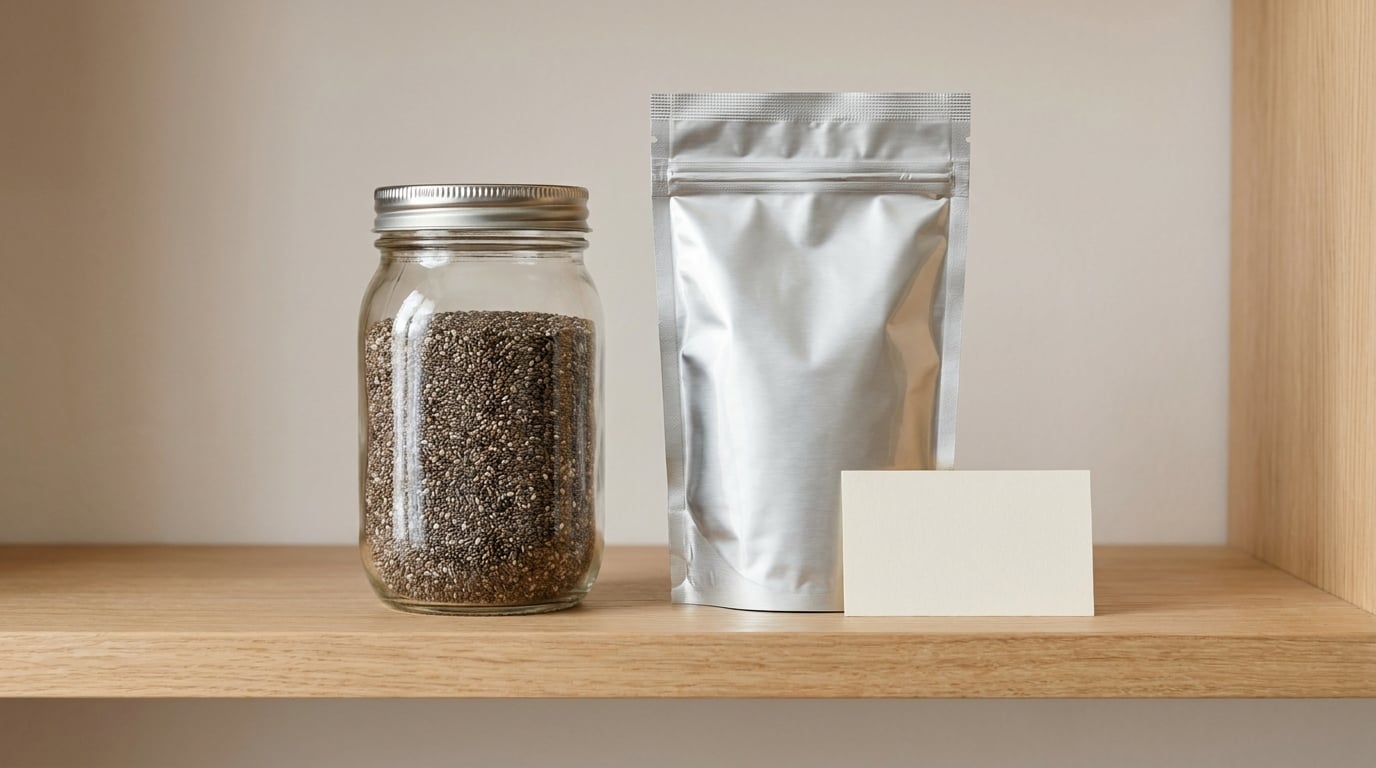
To store chia seeds so they stay fresh, move them out of the bag they arrived in and into an airtight, opaque container, then keep that container cool and completely dry. A dark pantry is fine for whole seeds you will use within a few months, the refrigerator buys you a couple of years, and the freezer buys you several more. The whole job takes about two minutes, once.
Storage matters more for chia than for most pantry seeds because the nutrition people buy them for sits in the fat. Chia is unusually high in ALA, the plant-based omega-3 fatty acid, and ALA is a polyunsaturated fat, which means it oxidizes when it meets air, warmth and light. Oxidation is what turns a nutty seed into something that tastes like old paint, and it happens quietly, before anything looks wrong.
What You Need
Three things, and you probably already own all of them.
- An airtight, opaque container. A glass mason jar with a two-piece lid is the everyday choice. A dark or green glass jar adds a light barrier. Failing that, a resealable pouch with a proper zip seal, or a container with a silicone gasket lid.
- A clean, completely dry spoon. This is the single habit that saves the most jars. Every scoop with a damp spoon puts moisture back into a dry seed.
- A cool, dry spot. A pantry shelf away from the stove, a refrigerator door shelf, or the back of the freezer. Choose the location based on how long you need the seeds to last and how humid your kitchen is.
- A marker or tape. Dating the jar costs ten seconds and removes the guesswork every time you reach for it.
Step-by-Step
Here is the whole process in five moves, then I break each one down.
- Decant the seeds out of the paper or thin plastic bag into an airtight, opaque container.
- Fill it only as far as you need for the next few weeks, and keep the bulk sealed somewhere colder.
- Always scoop with a dry spoon, and reseal the lid immediately after each use.
- Store the container in a cool, dark place, away from sunlight, steam and the stove.
- Write the date on the container and check it with a smell test before you open it for the first scoop.
Choosing an Airtight Container
Glass wins for a reason: it does not absorb odors, it blocks light if it is tinted, and a mason jar lid makes a genuinely airtight seal. That seal is doing most of the work, because oxygen is what drives the oxidation.
Plastic works fine for a bag you will empty within a month, but light gets through clear containers and the surface area of thin plastic is not a strong moisture barrier. Metal tins block light well and seal well, which makes them a decent choice, but a lined tin still has a gasket that can age. A resealable foil pouch with a zip seal is the best of the cheap options, because foil blocks light and the zip blocks air.
Skip loose paper packaging for anything but the shortest trip home. Paper breathes, so the seeds pick up humidity from the pantry and pick up pantry smells, and the bag tears the first time it snags on a shelf corner. If you bought a big bag, decant a working jar and reseal or clip the big bag shut.
Keeping Seeds Away From Moisture and Light
Dry seeds stay dry. That sounds obvious until you look at a jar where someone scooped with a wet measuring spoon, which is how mold gets a start.
Keep the container away from the kettle, the coffee maker and the oven door, since steam is invisible and settles on anything nearby. Keep it out of a window, because light speeds up oxidation even at low intensity, and keep it off a shelf directly under a bright light. Do not store seeds next to anything strongly aromatic; chia is bland and picks up neighboring smells without complaint.
When humidity is the problem rather than heat, the freezer is the tool that solves it. Frozen seeds cannot take on condensation from the air because the air around them is dry and still. That is also why you move a jar of seeds from the freezer to the pantry a few spoonfuls at a time, not all at once.
Choosing a Pantry, Refrigerator, or Freezer
Choose by timeline and by how much seeds you grind yourself, because ground seeds lose freshness far faster than whole ones.
Cool, dark pantry. Whole seeds hold their quality for roughly a year to two in a sealed, dark container, and unopened commercial packages often carry a use-by date around two years out. Ground chia is a different story: in a room-temperature jar it can turn rancid within a couple of weeks, which is the complaint that comes up most often in seed-storage forums. If you grind your own, do it in small batches and treat ground chia as a refrigerated ingredient.
Refrigerator. This is the sweet spot for most people. Whole seeds comfortably run two to four years, and ground chia keeps somewhere around three to six months before the omega-3 flavor starts to fade. A refrigerator door is warmer and experiences more temperature swings than a back shelf, so put the jar on an interior shelf rather than in the butter compartment.
Freezer. Freezing is the slowest spoilage you can manage for a seed, with whole seeds holding up for several years and some people in storage forums keeping jars in the freezer far longer with no problems. You do not need to thaw before use. Scoop the amount you need, set it out for ten minutes, and it goes straight into water or a smoothie. Use a freezer-safe jar and leave headroom, because chia expands as it soaks and frozen glass with no room to swell can crack.
For bulk buys, a simple first-in, first-out rule saves the work of thinking about it. Keep one open working jar and keep the rest sealed and colder, moving a fresh refill in when the old one runs low.
Checking Stored Chia Seeds for Freshness
Your nose is the most reliable test, and forum threads on storing seeds agree on this more than any other point. Fresh chia has a mild, slightly nutty smell. Rancid chia smells fishy, musty or sharp, like old cooking oil, and that smell is present the moment you open the jar.
Then look at them. Good seeds are hard, dry and separate, and black chia has that characteristic mottled grey-and-black speckle. Discard the batch if you see fuzzy growth, webbing between seeds, dark powdery patches, or seeds stuck together in a damp clump that does not break apart. Discoloration on a few seeds usually means a handful got wet, not that the whole jar is ruined, but smell decides it either way.
Do not taste-test a batch you suspect. A single teaspoon stirred into a glass of water will show you a cloudy, slimy gel instead of the clean gel you expect, which is a safer way to confirm what the smell told you. Anything that smells off has rancid fats in it, and that is not a quality-versus-convenience trade worth making.
One more case comes up often: soaked seeds. Chia gel keeps in a sealed jar in the refrigerator for roughly one to two weeks, and it should be discarded sooner if it smells fermented or develops a fizzy, sour character. It does not freeze well as a gel, so freeze the dry seeds instead and hydrate them fresh.
Common Mistakes
Leaving the seeds in a humid kitchen. A pantry above the sink or next to the dishwasher is a warm, damp room, and that is the worst combination for a seed. Move the jar to a cooler shelf, or step up to the refrigerator.
Using a damp scoop. Two tablespoons of water added back to a jar is enough moisture to start clumping. Dry the spoon first, and if you like using a measuring cup, keep a dedicated one for dry seeds and dry it properly after washing.
Leaving the original bag open on the counter. Reseal it or clip it, or better, decant it. Once the seal is broken, a bag is a paper bag with a seed problem.
Grinding a whole bag at once. Grinding breaks the seed coat and exposes all that ALA to air at the same time. Grind a few weeks of supply at a time, in a spice grinder, and refrigerate what you do not use immediately.
Treating the freezer as optional, or as a waste of steps. Freezing is the only method that meaningfully slows oxidation, and it costs you nothing but a jar with headroom. Not using it is a fine call for someone eating two tablespoons a week out of a small jar. It is a bad call for anyone who buys five-pound bags or grinds their own.
Frequently Asked Questions
How long can chia seeds sit in water before going bad?
Soaked chia seeds, or chia gel, keep in a sealed jar in the refrigerator for about one to two weeks. Toss the batch once it goes past that, and make a new one, because soaked seeds are no longer protected by that hard outer coat. Discard sooner if the jar smells sour or fizzy, or if the gel turns slimy. Freeze the dry seeds and hydrate them fresh instead, since gel itself does not freeze well.
How long will chia seeds last in an airtight container?
Whole seeds in a sealed, dark container in a cool pantry last roughly one to two years. In the refrigerator they run two to four years, and in the freezer they hold for several years. Ground chia is the short end of every one of those windows: a few weeks at room temperature, and roughly three to six months in the refrigerator.
Do chia seeds need to be refrigerated after opening?
Not strictly, if you use them up within a couple of months and keep the jar sealed and away from light. Refrigeration becomes worthwhile once you grind the seeds, buy in bulk, live in a humid kitchen, or simply want the omega-3 fats to last. A lot of people refrigerate out of habit and never go back to the pantry, and that is a perfectly reasonable trade for a jar that costs almost nothing to keep cold.
How can I tell if chia seeds have gone bad?
Smell first. Fresh chia smells mild and a little nutty, while seeds that have oxidized smell fishy, musty or sharp, like stale cooking oil. Then check for fuzzy growth, webbing, dark powdery patches, or seeds fused into a damp clump. Rancid seeds can also taste bitter. If any of those show up, discard the batch rather than mixing the good seeds back in.
Can you eat chia seeds two years after the expiration date?
A printed date is a quality guideline rather than a safety deadline, and chia is a low-moisture seed that resists spoilage well. If the seeds were sealed and stored cool and dark, and they still smell mild with no clumps or fuzz, they are generally fine to eat two years past the date. If the date is well past that and the smell is off, throw them out. A smell test tells you more than any number on the bag.
Conclusion
Start with the jar, not the fridge. Pour the seeds out of the bag they came in, seal them in an airtight opaque container, put that container somewhere cool and completely dry, and write today’s date on the lid. Everything after that is a small adjustment: the refrigerator for ground seeds or bulk buys, the freezer if you want them to sit for years, and a smell test whenever you are not sure.