
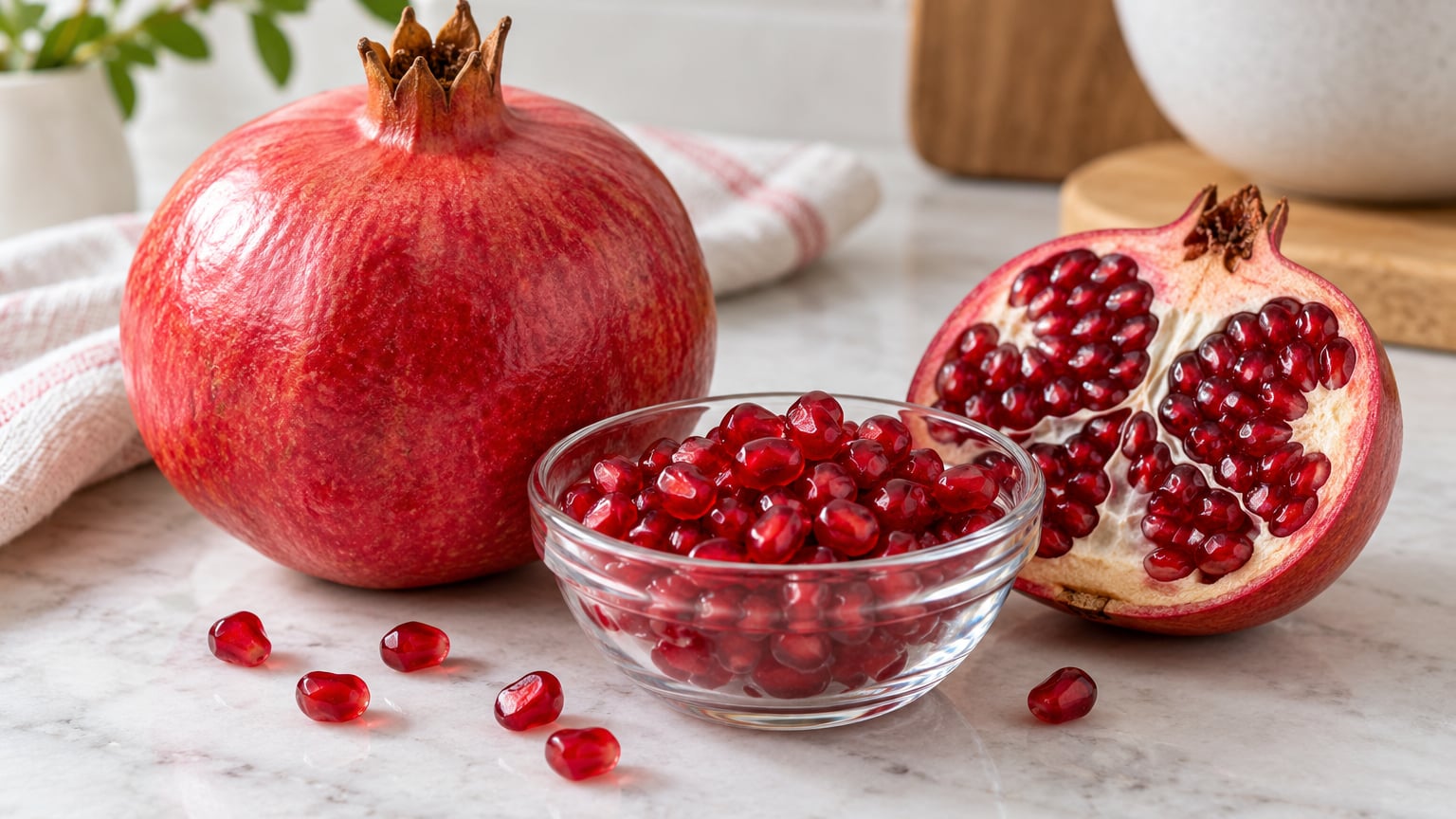
If you want the short version on the benefits of pomegranate and how to eat one: eat the ruby arils, not the peel. Each aril is a juicy sac wrapped around a small edible seed, and it is packed with fiber, vitamin C, potassium, and polyphenols such as punicalagins and anthocyanins. Cut the fruit into quarters, pick the arils out with your fingers, and eat them cold.
A pomegranate is awkward to eat straight from the rind, which is why most people never get past the first knife. It also gets short shrift in a lot of kitchens even though it is one of the few everyday fruits that still shows up on counters in the middle of winter.
- Fiber for digestion and fullness, which comes almost entirely from the arils, not the juice
- Polyphenols that act as antioxidants in lab studies, with heart and blood-pressure research still mostly preliminary
- Vitamin C and potassium in useful amounts for a fruit
- Low calories and almost no fat, so it fits easily into a weight-conscious diet
- Urolithin A, a compound under study for its effects on mitochondria and healthy aging
- Easy ways to add color and tartness to breakfast bowls, salads, grain bowls, and desserts
Table of Contents
What Are the Benefits of Pomegranate?
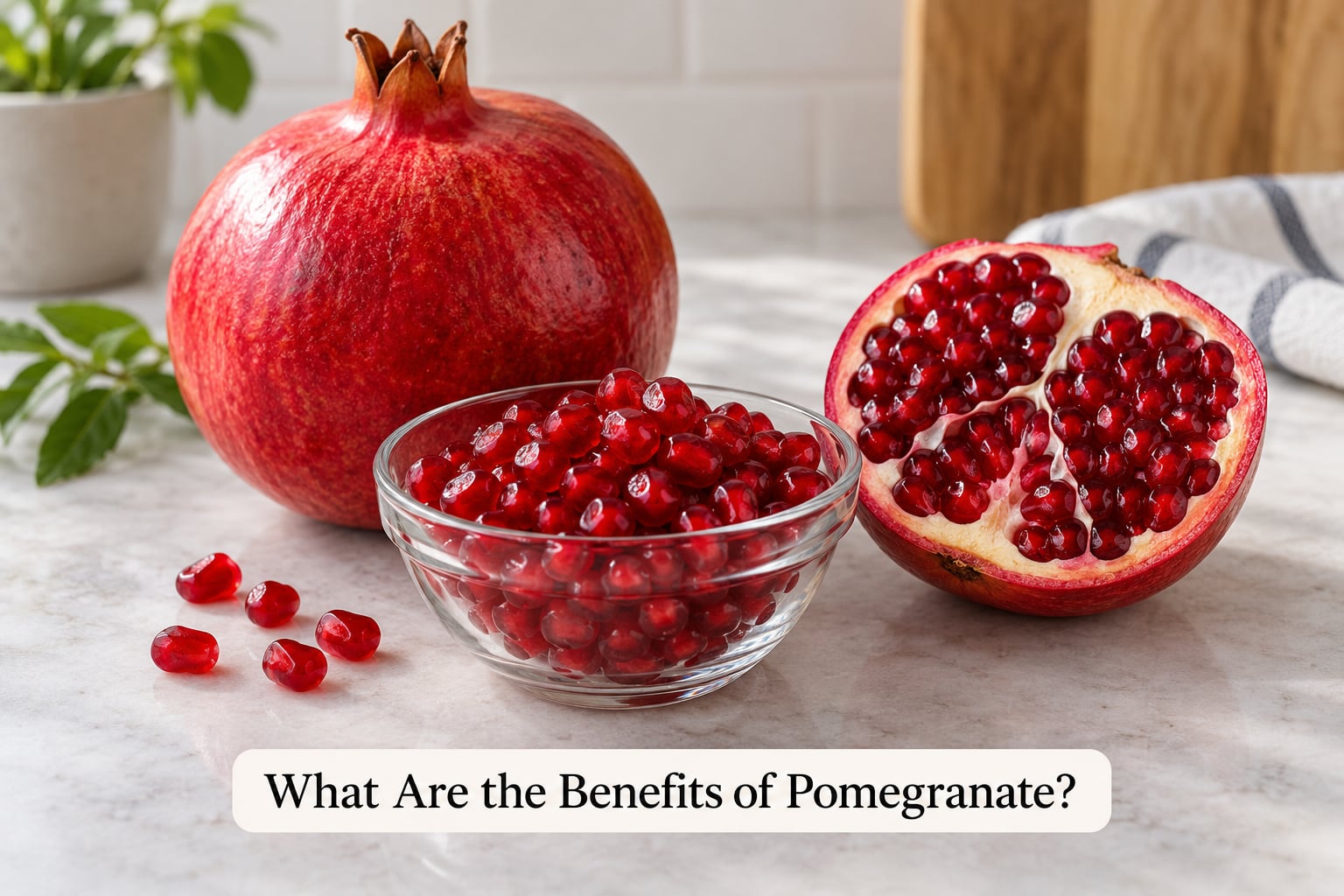
The benefits of pomegranate come from what is packed into the aril: a mix of fiber, vitamin C, potassium, and a dense group of plant compounds called polyphenols. The peel and the white pith carry their own bitter polyphenols, but those are not what you eat.
Start with fiber. A single cup of arils gives you roughly 8 grams, which is a solid chunk of the 25 to 34 grams most adults aim for in a day. That fiber feeds your gut bacteria and slows digestion, so a bowl of arils alongside a meal usually leaves you more satisfied than a glass of juice from the same fruit. The fiber is also why pomegranate shows up in conversations about steadier blood sugar after meals, though you should not treat it as a treatment for diabetes.
Vitamin C and potassium round out the nutrition. Vitamin C supports collagen formation, wound healing, and iron absorption. Potassium plays a role in blood pressure regulation, fluid balance, and muscle contraction. Neither nutrient is a pomegranate exclusive, but the combination sits in a fruit that is also high in polyphenols and low in calories.
Then there is the research everyone asks about, and it deserves careful wording. Trials suggest pomegranate polyphenols may support blood-vessel function, may modestly lower blood pressure, and may help limit inflammation markers and oxidative stress. Human studies are small, short, and often use concentrated juice or supplements rather than fresh arils, so the honest summary is that pomegranate is a good food inside a healthy pattern, not a treatment that prevents or cures heart disease. If you have a diagnosed condition, your doctor decides where fruit fits.
A few more areas researchers keep coming back to: gut microbiome diversity, exercise recovery and soreness, and the ways urolithin A may influence mitophagy, the cellular cleanup process linked to aging. All of that is early. The everyday benefit is simpler and easier to measure: a fiber-rich, unsweetened, vitamin-rich snack that most people can eat without any fuss.
One caution on frequency. People on warfarin or other blood-thinning medication should ask their doctor before eating large amounts, and anyone who gets stomach upset after fruit should start with a small portion. Pomegranate can also interact with some cholesterol-lowering and blood-pressure medications.
Pomegranate Nutrition at a Glance
The table below uses one clearly defined serving: 1 cup of pomegranate arils, about 174 grams, with the seeds included. Whole-fruit numbers and juice numbers are very different, and mixing them is the most common mistake in online nutrition lists. Values are approximate and shift a little with cultivar and ripeness.
| Nutrient | 1 cup of arils (about 174 g) |
|---|---|
| Calories | about 235 |
| Protein | about 4.7 g |
| Total fat | about 2.6 g |
| Carbohydrate | about 28.7 g |
| Dietary fiber | about 8 g |
| Naturally occurring sugars | about 23.7 g |
| Vitamin C | about 19 mg |
| Potassium | about 380 mg |
| Folate | small amount |
For context, a whole medium pomegranate weighing roughly 280 grams gives you about 235 calories and the same 8 grams of fiber, because most of the fruit’s weight is aril. That is why the per-fruit and per-cup figures often come out similar.
Polyphenols and Heart Health
Pomegranate polyphenols fall into a few groups. Punicalagins are the signature compounds, large molecules that show strong antioxidant activity in laboratory studies. Anthocyanins are the pigments that make the arils ruby red, ellagic acid is a polyphenol also found in berries, and quercetin is a flavonoid present in many fruits. When ellagic acid is metabolized by gut bacteria, one of the resulting compounds is urolithin A, which researchers have been studying for its effect on mitochondria.
Most of what we know about these compounds comes from test tubes, animals, and a modest number of human trials using daily juice or supplement doses far larger than a serving of arils. Eating fresh arils is the sensible move, and swapping them in for a snack high in added sugar or saturated fat is probably where the real-world value sits. Concentrated supplements carry more risk of side effects and drug interactions than the fruit does.
How to Eat One
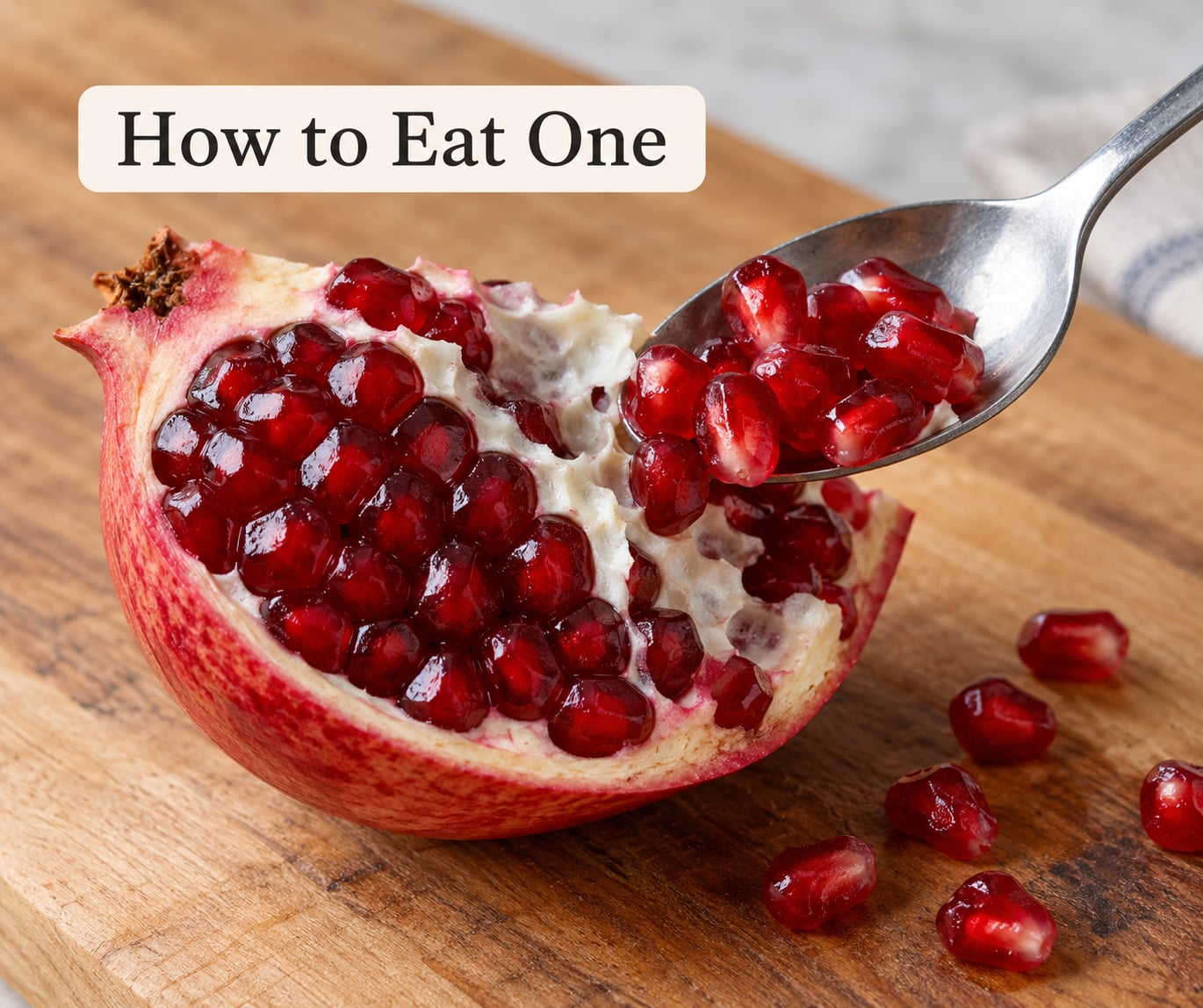
Rinse the fruit under cool water, cut off the crown, then slice through the fruit into quarters. Bend each quarter gently until the inside separates, and pick out the arils with your fingers. Pull the pith away as you go and eat the arils, seed and all.
The two methods below both work. The water bowl method keeps juice off your hands and cutting board. The quarter method is faster and better when you only want a few arils.
Method one, the water bowl:
- Score the rind all the way around, then cut the crown off the top.
- Pull the sections apart and drop them into a bowl of cold water.
- Swish with your hands. The arils sink and the heavy pith floats.
- Skim off the floating pith, then drain the arils through a sieve.
- Dry thoroughly and eat or store.
Method two, quarters and fingers:
- Stand the fruit on its end and cut through the sides into four wedges.
- Hold one wedge over your palm and bend it until the segments separate.
- Pick out the arils one at a time, stripping away the white membrane.
- Repeat with the other wedges and eat straight from your hand.
A few practical notes. A sharp knife plus a board goes a long way, but some people crack the rind with the back of a heavy spoon first. Cutting on a light-colored board, or setting a sheet of parchment under the wedge, keeps the juice stains manageable. Rubbing a little cooking oil on your hands before you start works surprisingly well too.
Easy Ways to Serve Pomegranate
- Straight from a bowl. The default. A cup of chilled arils with a pinch of flaky salt if they taste flat.
- Over oatmeal or yogurt. Add them after cooking so the arils stay crisp rather than turning soft in the hot oats.
- In salads. Feta, arugula, pear, and a walnut vinaigrette is the classic version, but they work with any bitter green.
- As a grain bowl topping. Quinoa, farro, or brown rice with roasted squash and a yogurt drizzle. The arils add sweetness and crunch in one move.
- Frozen into ice cubes. Half a handful per cube works well, or blend arils with water and a squeeze of lime and pour that in.
- Blended into smoothies. Add them after blending, not before, so the arils do not turn the drink pink and watery.
- As a dessert topping. Over Greek yogurt, ricotta cheesecake, or a dark chocolate tart. A spoonful of pomegranate molasses does the job with less sugar than a sugary sauce.
- In drinks. Press them into a mocktail or add to sparkling water with mint. Watch the seeds, since they tend to sit at the bottom.
Fresh, frozen, and dried are not interchangeable. Frozen arils keep most of their flavor and are thawed in minutes in a bowl of cool water. Dried arils are concentrated, so a small handful tastes as sweet as a full cup of fresh, and they carry far less vitamin C because drying and heat destroy some of it. Read the label on any unsweetened dried product, because flavored ones are often coated in sugar or oil.
Should You Eat the Seeds, Skin, or Membrane?
Each aril is a small sac of juice wrapped around a hard seed, and the seed is edible. Swallow it whole. It adds a little fiber and crunch, and most people digest it without trouble. This is the single most common question about pomegranate seeds, and the answer is yes, eat the whole aril.
The white membrane between the arils is different. It carries tannins, which is the same family of compounds that make green tea astringent, so it tastes bitter. Pick it out and discard it. The outer rind is not eaten raw. Its skin is tough and unpleasant, and the tannins in it are intensely bitter.
Pomegranate peel does appear in Middle Eastern cooking as a cooked ingredient, usually dried and simmered, and pomegranate molasses is made by reducing the juice of the bitter peel. That is a culinary use of the peel, not a nutrition shortcut, and eating peel raw is not something to try.
Oral allergies to birch or walnut sometimes cross over to pomegranate and show up as itching or swelling around the mouth. That is uncommon but worth knowing about if you have a history with either.
Can You Eat Pomegranate Every Day?
Daily intake is fine for most adults if your portion makes sense. A cup of arils is a reasonable daily serving, and plenty of regulars eat half a fruit or a small handful. The two things to keep an eye on are fiber and sugar.
Going from nothing to a large amount overnight is the usual cause of stomach discomfort, bloating, or cramping that people search for later. Pomegranate is rich in fiber, and gut bacteria need time to adjust. Ramp up gradually and drink enough water.
On sugar: a cup of arils has roughly 24 grams of naturally occurring sugar, along with 8 grams of fiber and intact cell walls that slow absorption. That is a different profile from a glass of pomegranate juice, which keeps the sugar and loses the fiber. People managing diabetes often find the whole fruit far easier to work with, but your own numbers come from your doctor or a registered dietitian.
Dried arils deserve extra attention because the serving size is small and the sugar is dense. Rinse your mouth afterward, since the tannins dry the mouth out and can increase surface staining, especially on teeth that have already been whitened.
How to Choose and Store Pomegranate
Pick a fruit that feels heavy for its size, with skin that is firm and taut. Color varies by variety, so do not judge ripeness by shade alone. A deep red fruit with tight skin is fine, and a lighter or greenish-yellow one can be just as good.
Walk away from fruit with splits, soft spots, mold, or any leaking. Those are signs the rind has broken down and bacteria have gotten in. Trimming around a damaged area does not make it safe, so it goes in the compost.
For storage, whole uncut fruit keeps in the fridge for a week or two, and a few days on a cool counter is fine. Once you cut into it, both the cut wedges and the loose arils belong in the fridge in an airtight container, and they are best used within about three or four days.
Wash the rind just before you cut, since the outside picks up everything it sits on. For freezing, spread the arils on a tray to freeze solid, then transfer them to a bag. They keep for about six months and are good straight from the freezer, where they come out pleasantly crunchy.
Frequently Asked Questions
How do you eat a pomegranate without a knife?
Crush the rind gently with the back of a heavy spoon, score it all the way around, and pull the top off. Another no-knife option is the water bowl: break the fruit into chunks over a bowl of cold water, swish, and let the arils sink while the pith floats. Just make sure the fragments are small enough to be picked out before you eat them.
Is the white skin inside a pomegranate safe to eat?
It is technically safe, but you will not want much of it. The white membrane and the outer rind both contain tannins, which make them sharply bitter, and the rind is also too tough to chew. The seed inside each aril is a different story: it is edible and worth swallowing for the extra fiber and crunch.
Can you freeze pomegranate arils for later use?
Yes, and freezing is the easiest way to keep a big batch on hand. Spread the arils in a single layer on a tray, freeze until solid, then move them into an airtight bag or container. They keep for roughly six months. Thaw a small handful in cool water for a minute or use them straight from frozen, where they are still pleasantly crunchy.
What is the easiest way to remove pomegranate seeds?
For most people, cutting the fruit into four wedges and picking out the arils with your fingers is the fastest method. If you have a large batch to do, the water bowl wins: break the fruit apart over cold water, swish, and the arils sink while the pith floats. Wear an apron or use a light-colored cutting board, because the juice stains fast.
Is it healthy to eat pomegranate every day?
For most adults, yes, as long as the portion is reasonable. About a cup of arils a day is a common serving, and it brings 8 grams of fiber, vitamin C, potassium, and a solid amount of polyphenols. Going too fast from none to a lot can cause bloating, so build up gradually. Anyone on warfarin, statins, or blood-pressure medication should check with a doctor first.
The Best Place to Start
Buy one pomegranate this week, cut it into quarters, and pick the arils out with your fingers. Put the rest in an airtight container in the fridge and eat a few handfuls over breakfast for the next few days, which is about the time most people decide whether they actually like them.
That is really the whole answer to the benefits of pomegranate and how to eat one: the aril is the part worth eating, the seed inside it is fine to swallow, and the bitter white membrane and peel can go in the compost. If you have any health condition, take a blood-thinning medication, or want help fitting pomegranate into a diabetes or digestive plan, a registered dietitian or your doctor is the right person to ask, not a search result, including this one.
Updated for October 2026.