
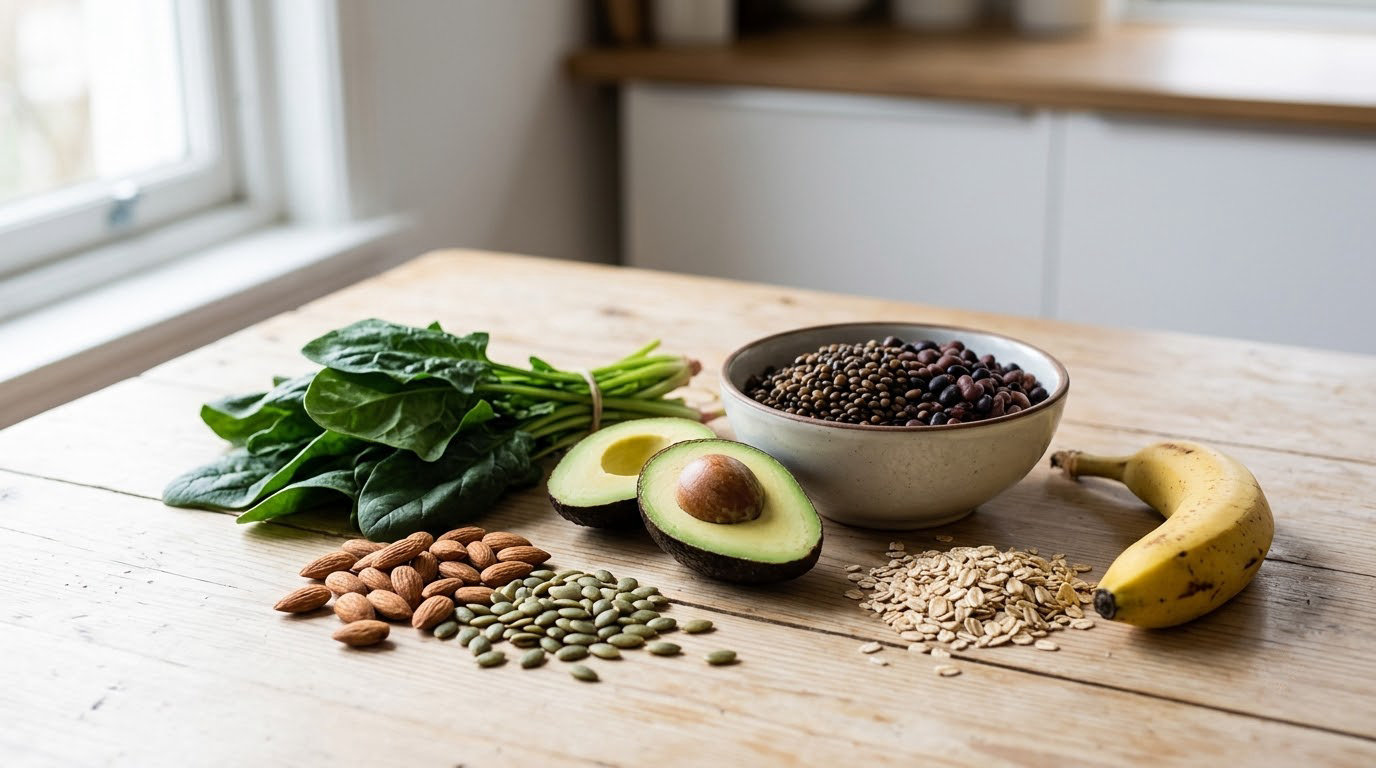
Magnesium rich foods are seeds, nuts, dark leafy greens, legumes and whole grains, with pumpkin seeds leading the pack at roughly 156 mg of magnesium per one-ounce serving. Spinach, almonds, chickpeas, oats, tofu, salmon and dark chocolate carry meaningful amounts too, and magnesium is an essential mineral for nerve signalling, muscle function, heart rhythm, blood sugar control and bone strength.
One thing about magnesium gets lost in the noise: most people eating a modern diet fall a little short, usually not dramatically, just a quiet gap that adds up across the week. Closing that gap is mostly about eating different foods, not buying a new product. This guide covers how much magnesium you need, what it actually does, which foods deliver the most per realistic serving, how absorption works, and where the safety limits sit.
Figures below follow US reference values from the NIH Office of Dietary Supplements and USDA FoodData Central, checked for 2026. Values shift with variety, soil, portion size and preparation, so treat them as ranges rather than exact lab results. If you are pregnant, managing a health condition, or taking medication, talk with your doctor or a registered dietitian before making big changes to what you eat.
Table of Contents
- How Much Magnesium Do You Need?
- Why Does Magnesium Matter?
- Which Foods Are Highest in Magnesium?
- What Does Magnesium Do for Energy, Sleep, and Stress?
- How Can You Get More Magnesium Without Overdoing It?
- Are Magnesium Supplements Necessary?
- Can You Get Too Much Magnesium From Food?
- Frequently Asked Questions
- Start With One Practical Addition
How Much Magnesium Do You Need?
Recommended daily allowances for magnesium in the US are set by age and sex, and they are lower than most people expect. Adult men need between 400 and 420 mg a day, adult women between 310 and 320 mg. Pregnancy adds a small amount on top, and teenagers need more than young children because of bone growth.
| Group | Recommended amount per day (US) |
|---|---|
| Children 9 to 13 years | 240 mg |
| Teen girls 14 to 18 years | 340 mg |
| Teen boys 14 to 18 years | 410 mg |
| Women 19 to 30 years | 310 mg |
| Women 31 and older | 320 mg |
| Men 19 to 30 years | 400 mg |
| Men 31 and older | 420 mg |
| Pregnancy (adult) | 360 mg |
| Breastfeeding (adult) | 310 mg |
The Daily Value printed on US nutrition labels is 420 mg, so a food listing 14% DV for magnesium gives you roughly 59 mg per serving. That label number is a convenient shortcut when you are comparing two products on a shelf.
There is a second number people confuse with this one. The tolerable upper intake level for magnesium from supplements and medication is 350 mg per day for adults, and that figure deliberately excludes magnesium in food. Your intestines absorb magnesium from a meal efficiently and pass the excess through, which is why a food-first approach rarely runs into trouble. Concentrated supplements are a different story, and I cover that later in this guide.
Why Does Magnesium Matter?
Magnesium is an essential macromineral, meaning you cannot make it in your body and must get it from food. It works as a cofactor in more than 300 enzymatic reactions, which is a slightly abstract way of saying that a lot of basic cell machinery stalls without it.
Its most concrete job is electrical. Magnesium sits inside every cell as part of the electrolyte system, balancing calcium and potassium and keeping nerves firing and muscles contracting on schedule. That is why it shows up in almost every conversation about cramps, recovery, heart rhythm and blood pressure.
Beyond that, magnesium participates in normal glucose metabolism, helps calcium and vitamin D do their work in bone mineralisation, and supports a healthy gut. Protein and DNA synthesis both rely on it too. Adequate intake means these processes happen normally, and that is a quieter claim than most magnesium marketing would like you to believe.
Several groups run lower than they should without it being obvious. Adults over 65 absorb less from food than they used to, and people with type 2 diabetes often excrete more. So do people with gastrointestinal conditions such as Crohn’s disease or coeliac disease, since damaged gut lining changes absorption. Long-term users of proton pump inhibitors, and heavy drinkers, are also frequently flagged.
Signs that intake may be short are vague rather than dramatic, which is exactly why the topic breeds confusion. Muscle cramps, twitching eyelids, fatigue that sleep does not fix, irritability, headaches, constipation and menstrual cramps all appear on deficiency lists. None of them proves anything on its own. If several show up together, a blood test and a chat with your clinician will tell you more than guessing from symptoms.
Which Foods Are Highest in Magnesium?
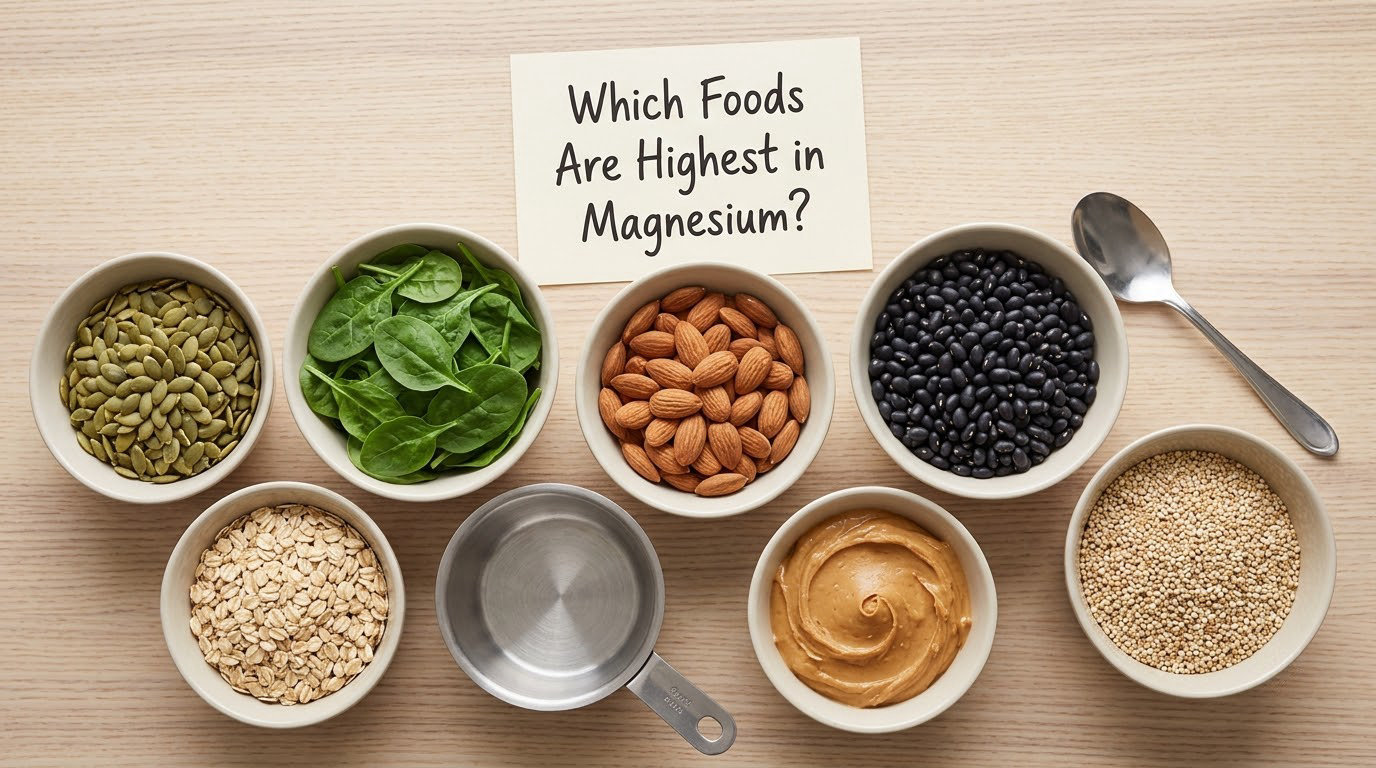
Pumpkin seeds are the single richest everyday food source, delivering about 156 mg of magnesium per one-ounce serving, which is close to 37% of the adult Daily Value. Nothing else in a normal pantry comes close per ounce, and a tablespoon of the seeds in a morning bowl does most of the work.
Then it depends on how you eat. Some foods look modest by the ounce and climb quickly once you measure a cup or a full bowl. Cooked spinach delivers far more per cup than raw spinach does, because the water you cook it in is water you no longer have to eat. Chickpeas look unimpressive per spoonful and hit 40 mg per half cup. Oats, quinoa and buckwheat sit in the same range. Serving size is the whole game here.
The confusion people run into usually comes from comparing a raw number to a cooked one. A cup of raw spinach has roughly 24 mg of magnesium, a cup of boiled spinach has about 84 mg, and the difference is almost entirely moisture. Nothing was destroyed, the food just got denser. If a source tells you spinach has 40 mg and another says 157, check whether the second number is the much smaller cooked half-cup or a different unit entirely.
Magnesium Rich Foods Compared
The table below lists magnesium rich foods with a typical serving and the magnesium that serving delivers. Percentages use the US Daily Value of 420 mg.
| Food | Typical serving | Magnesium (mg) | % Daily Value |
|---|---|---|---|
| Pumpkin seeds, roasted | 1 oz (28 g) | 156 | 37% |
| Swiss chard, cooked | 1 cup | 150 | 36% |
| Chia seeds | 1 oz (28 g) | 111 | 26% |
| Hemp seed hearts | 3 tbsp (1 oz) | 106 | 25% |
| Edamame, cooked | 1 cup | 82 | 20% |
| Almonds | 1 oz (23 g) | 76 | 18% |
| Mackerel, cooked | 3 oz (85 g) | about 70 | 17% |
| Quinoa, cooked | 1 cup | 64 | 15% |
| Whole grain bran cereal | 1/2 cup | 62 | 15% |
| Oatmeal, cooked | 1 cup | 63 | 15% |
| Cashews | 1 oz (28 g) | 48 | 11% |
| Kale, cooked | 1 cup | 52 | 12% |
| Whole wheat bread | 2 slices | about 40 | 10% |
| Dark chocolate, 70 to 85% cocoa | 1 oz | 64 | 15% |
| Spinach, boiled | 1 cup | 84 | 20% |
| Black beans, cooked | 1/2 cup | 40 | 10% |
| Chickpeas, cooked | 1/2 cup | 40 | 10% |
| Sunflower seeds | 1 oz (28 g) | 40 | 10% |
| Peanut butter | 2 tbsp (32 g) | 38 | 9% |
| Ground flaxseed | 1 tbsp (10 g) | 38 | 9% |
| Lentils, cooked | 1/2 cup | 36 | 9% |
| Firm tofu | 1/2 cup | about 40 | 10% |
| Soy milk, fortified | 1 cup | about 40 | 10% |
| Brown rice, cooked | 1 cup | about 40 | 10% |
| Avocado | 1 medium | 30 | 7% |
| Banana | 1 medium | about 31 | 7% |
| Milk | 1 cup | 24 | 6% |
| Plain Greek yogurt | 1 cup | about 20 | 5% |
| Raspberries | 1 cup | about 27 | 6% |
| Cacao powder | 1 tbsp (5 g) | about 32 | 8% |
| Salmon, cooked | 3 oz (85 g) | 37 | 9% |
Two things stand out once you read the whole table. First, seeds do the heavy lifting per serving, and a tablespoon of pumpkin seeds or chia quietly outperforms most vegetable servings. Second, everyday staples nobody calls superfoods, chickpeas, lentils, oats, tofu, milk, sit comfortably in the 20 to 40 mg band, and those are the foods you will eat again tomorrow.
| Food | Flavour and texture | Best used as | Watch out for |
|---|---|---|---|
| Pumpkin seeds | Roasty, slight chew | Sprinkled on oats, yogurt, salads | Calorie-dense, so a tablespoon rather than a handful |
| Chia and flax seeds | Mild, soft when soaked | Overnight oats, smoothies, yogurt bowls | Whole flax passes through; grinding improves access |
| Almonds and cashews | Roasted, crunchy | Snacking, topping cereal, nut butter | Cashews carry more copper than most people need |
| Spinach and chard | Cooked down sweet; greens tender | Soups, curries, sautéed sides | Oxalates limit absorption somewhat in raw greens |
| Black beans, chickpeas, lentils | Earthy, soft, filling | Bowls, soups, salads, chilli | Increase gradually to let your gut adjust |
| Oats, quinoa, brown rice | Neutral, nutty, chewy | Breakfast porridge, grain bowls | Instant and heavily processed oats are lower in minerals |
| Tofu and soy milk | Soft, mild, spongy | Plant-based protein anchor | Check labels; unfortified soy milk gives less magnesium |
| Dark chocolate | Rich, bittersweet | A few squares as a treat | Flavoured bars add sugar and less cocoa |
| Salmon and mackerel | Oily, firm, savoury | Two servings a week, any preparation | Mackerel is high in vitamin A if eaten daily in large amounts |
What Does Magnesium Do for Energy, Sleep, and Stress?
Magnesium helps with energy because it sits inside the molecule that cells use for fuel. It also supports normal muscle function, and fatigued muscles feel heavy and slow in a way that is easy to notice. When intake is adequate, all of that runs normally and most people stop thinking about it, which is the honest outcome.
For sleep and stress, the connection is steadier and worth explaining carefully. Magnesium helps keep nerve signalling within its normal range and supports normal muscle relaxation, including the involuntary kind. Low magnesium status is common enough, and sleep complaints are common enough, that the two get linked constantly.
What magnesium does not do is single-handedly cure insomnia or dissolve anxiety. The oversold version of that claim is the one to watch for online. If you are struggling with either, treat it as a health question worth a doctor’s appointment rather than a nutrition puzzle, and change one or two foods in the meantime. There is no harm in adding pumpkin seeds to your breakfast while you sort out the rest.
Magnesium also has a modest, well-studied effect on blood pressure in people with high readings, and it plays a normal part in insulin handling and blood sugar regulation. Those are dietary-support roles, not treatments, and anyone on medication for blood pressure or blood sugar should not change anything based on a nutrition article, mine included.
How Can You Get More Magnesium Without Overdoing It?
Because magnesium is absorbed from food rather than stored in large reserves, spreading intake across the day works better than one enormous serving in the evening. A few repeated moderate servings also reduce the chance of the loose stomach that a very large serving at once can cause.
Breakfast is the easiest place to add it, and almost nobody does. One ounce of pumpkin seeds in a bowl of oatmeal puts roughly 219 mg in front of you before breakfast is over. Steel-cut oats cooked in fortified soy milk and topped with banana and almonds lands in the same range, which is roughly the sort of arithmetic people build in nutrition forums when they are trying to reach 400 mg without supplements.
Lunch is easier to fix than most people assume. A chickpea or lentil bowl over quinoa with a handful of spinach and a spoon of pumpkin seeds can carry 150 to 200 mg on its own. Black beans in a salad or wrap work just as well, and beans are also the cheapest magnesium per pound on the shelf. Dinner follows the same pattern: a pot of black beans, some firm tofu, or a serving of cooked Swiss chard alongside the protein.
Snacks are the forgotten opportunity. Greek yogurt with a tablespoon of ground flaxseed, a small handful of almonds, or a few squares of high-cacao dark chocolate each add 20 to 40 mg without any fuss. For drinks, fortified soy milk gives about 40 mg a cup, which is why it is a common swap in magnesium drinks. Cacao powder stirred into a smoothie contributes about 32 mg per tablespoon. Tap water is worth a mention too: hard water can add a meaningful amount, while soft or filtered water can add almost none.
Plant-based eaters have more options here than any other group, since seeds, beans, lentils and tofu sit right at the centre of most plant-based eating. A vegan day built around oats, beans, quinoa and seeds can clear 400 mg without any effort at all. Keto and low-carb readers can use leafy greens, spinach, zucchini, broccoli, pumpkin seeds, almonds and cacao powder, and generally land lower than other diets, so a seed habit matters more for them.
For anyone avoiding seeds, nightshades or legumes, the list narrows but does not empty out: spinach, Swiss chard, broccoli, oatmeal, quinoa, buckwheat, almonds, sunflower seeds, tofu and fortified soy products all remain. People following a low-histamine approach say the same thing in forums: without a filtered list, the generic magnesium articles are hard to use.
What helps absorption and what works against it
Absorption from food is generally efficient, but a few things shift the amount that actually makes it into your system.
- Cooking greens concentrates magnesium. Boiled spinach has several times more magnesium per cup than raw, simply because the water left the bowl.
- Spread your intake across meals. The body handles smaller doses more readily than one very large serving.
- Food beats supplements. Dietary magnesium comes with fibre and phytate that slow release and steady absorption.
- Calcium and magnesium in the same meal is fine. The idea that dairy blocks magnesium is one people argue about endlessly in forums, and mainstream guidance treats normal mixed meals as no problem.
- Phytates and oxalates modestly reduce absorption. Nuts, seeds and leafy greens contain them, which is why soaking, sprouting, fermenting and cooking all help a little. None of that cancels out a diet built around these foods.
- Very high supplemental calcium is the real confounder. Concern belongs with large supplement doses taken together, not with a bowl of cereal and a cup of milk.
Increase gradually. Legumes in particular can upset digestion if you go from a serving a week to a bowl a day overnight, and the resulting discomfort tends to sour people on the food that was helping.
Are Magnesium Supplements Necessary?
For most people eating a varied diet, food is enough and a supplement adds nothing worth the money. If you eat seeds, beans, whole grains and leafy greens most days, you are very likely meeting a good share of your target already. If you skip most of those categories, the fix is a food habit rather than a tablet.
Supplements are worth discussing with a clinician when intake is genuinely hard to reach: a diagnosed deficiency, a restricted diet, malabsorption, or long-term use of medicines that lower magnesium. During pregnancy, and for older adults with low appetite, a clinician may recommend one based on a blood test rather than symptoms.
If one is recommended, the forms readers meet most often are magnesium oxide, citrate, glycinate and threonate. At a general level, oxide is the most common and the least well absorbed, citrate is well absorbed and looser on digestion, and glycinate is often chosen for gentler effects. This is orientation only. Absorption varies by person, dose, stomach acid and what you have eaten, and a doctor or registered dietitian can pick a form and amount that fits your situation.
Can You Get Too Much Magnesium From Food?
Very unlikely. Your gut absorbs magnesium from food efficiently, regulates what it takes and passes the rest out, which is why the 350 mg upper limit for adults applies to supplements and medication only, not to meals. Eating pumpkin seeds for breakfast and lentils for dinner will not take you over any limit.
High-dose supplements are different. Above the upper intake level, loose stools and diarrhoea are the commonest complaint, and cramping, nausea and abdominal discomfort can follow. Very large doses can drive magnesium into the blood, and in people with impaired kidney function that becomes a genuine safety concern rather than an inconvenience.
That is the group to be careful about. If you have kidney disease or reduced kidney function, do not increase magnesium on your own, including through supplements, and ask your doctor what your intake should be. The same advice applies to anyone on certain diuretics or antibiotics that interact with magnesium. For everybody else, the risk from food is low enough that focusing on variety rather than limits is the sensible approach.
Frequently Asked Questions
What is the best magnesium rich food to eat each day?
There is no single winner, but pumpkin seeds come closest: one ounce gives roughly 156 mg, close to 37% of the adult Daily Value. If you eat them daily, fill the rest of the day with oats, beans, lentils, spinach or tofu. Repeating the same food every day is the part that matters most, not finding a magic superfood.
Does cooking destroy the magnesium in vegetables and grains?
No, and for leafy greens cooking concentrates it. A cup of boiled spinach has around 84 mg of magnesium compared with about 24 mg in a cup of raw, because cooking water leaves the pot and the minerals stay behind. Longer cooking times and discarding liquid are what reduce mineral content in stews and soups.
Are nuts and seeds better magnesium sources than spinach?
Per serving, yes. An ounce of pumpkin seeds gives roughly 156 mg and an ounce of almonds about 76 mg, against 84 mg for a full cup of boiled spinach. Per calorie, spinach wins, and per serving size the picture flips again. Eating several across the week beats ranking any one food as best.
When should someone consider a magnesium supplement?
Talk with your doctor or registered dietitian if a blood test shows you are running low, if you follow a restricted diet, if you have a condition affecting nutrient absorption, or if you take long-term medicines that lower magnesium status. Food usually works first otherwise, and supplements bring side effects and interactions worth discussing individually.
Can magnesium-rich foods help with stress or poor sleep?
Adequate magnesium supports normal nerve function, muscle relaxation and energy metabolism, which can leave you feeling steadier if your intake has been low. It is not a treatment for insomnia or anxiety, and anyone with persistent sleep problems or anxiety should see a clinician. Improving meals is a sensible baseline step, not a solution on its own.
Start With One Practical Addition
Pick the magnesium rich food you would actually eat every day, and add one realistic serving of it to a meal you already eat. A tablespoon of pumpkin seeds on your usual breakfast oatmeal does more than a week of good intentions, and it costs nothing to find out whether you like it.
Then widen from there rather than optimising a single number. Legumes, oats, leafy greens and tofu fill the gaps without any of them becoming the whole plan. If you have kidney disease, take medication, or are chasing a specific symptom such as constant fatigue, cramps or poor sleep, get individual advice from a doctor or registered dietitian before you change your intake. Sources used for the figures here: the NIH Office of Dietary Supplements, USDA FoodData Central and the Harvard Nutrition Source, checked for 2026.