
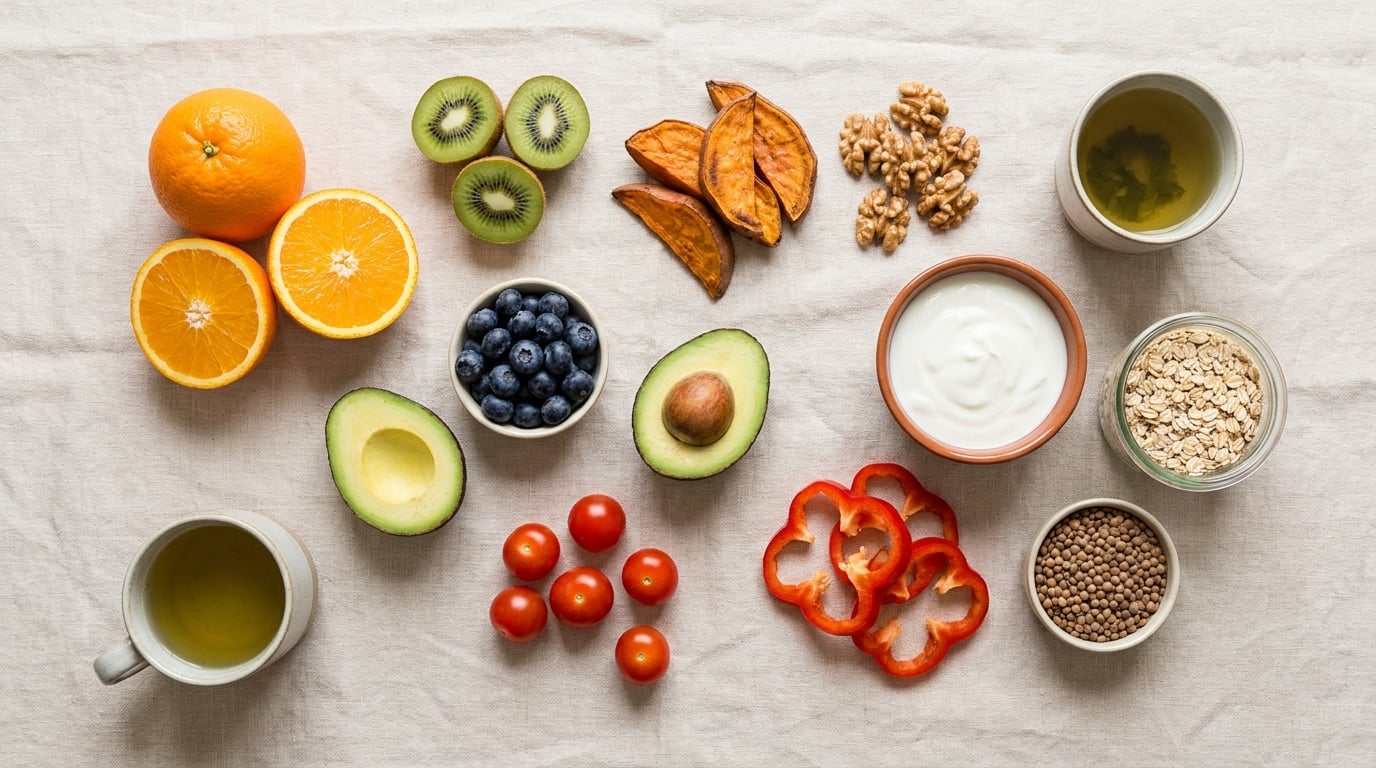
Dull skin is skin that has lost its natural brightness and looks flat, rough or tired, usually because of dead skin cell buildup, dehydration, poor sleep, sun exposure, stress or a diet short on antioxidants. The foods that help skin look less dull fall into three groups: vitamin C for collagen, omega-3 and other healthy fats for the skin barrier, and carotenoids for natural luminosity. Protein matters too, because collagen is built from it. Updated for October 2026.
That is the honest version of the question, and it matters because the common advice — eat more vegetables — gives you nowhere to start. Naming the food, the nutrient and the portion is what actually changes a shopping list.
Table of Contents
- Foods That Help Skin Look Less Dull at a Glance
- 1. Citrus Fruits
- 2. Leafy Greens
- 3. Berries
- 4. Avocado
- 5. Sweet Potatoes
- 6. Nuts and Seeds
- 7. Tomatoes
- 8. Bell Peppers
- 9. Green Tea
- 10. Whole Grains
- 11. Legumes
- 12. Fermented Foods
- Frequently Asked Questions
- Can foods really help skin look less dull?
- Which vitamins and minerals support healthy-looking skin?
- How quickly could dietary changes affect my skin?
- Are superfoods or supplements better than everyday foods?
- What other habits matter alongside eating for dull-looking skin?
- When should I see a healthcare professional about changes in my skin?
- Conclusion
Foods That Help Skin Look Less Dull at a Glance
The table below lists twelve everyday foods, what each one contributes, and a simple way to work it into a normal day. No exotic powders, no nine-ingredient recipes.
| Food | Key nutrients | What it does for dull skin | Easy serving idea |
|---|---|---|---|
| Citrus fruit | Vitamin C, folate, water | Supports collagen production and antioxidant protection | An orange with breakfast, grapefruit halves at lunch |
| Leafy greens | Vitamins A, C, K, folate, lutein | Folate and protective plant compounds support steady cell turnover | Handful of spinach in a morning omelet or salad |
| Berries | Vitamin C, anthocyanins, fiber | Antioxidants help limit free-radical damage from sun and pollution | Half a cup over oatmeal or plain yogurt |
| Avocado | Unsaturated fat, fiber, vitamin E, carotenoids | Fat helps absorb fat-soluble vitamins and supports barrier lipids | Sliced on toast, cubed in salad, mashed as a dip |
| Sweet potatoes | Beta-carotene, vitamin A, potassium, fiber | Beta-carotene converts to vitamin A, which supports cell turnover | Baked wedges with olive oil and a protein |
| Nuts and seeds | Vitamin E, zinc, selenium, magnesium | Zinc and selenium are involved in skin repair and wound healing | A small handful in the afternoon, two tablespoons of seeds |
| Tomatoes | Vitamin C, potassium, lycopene | Cooked tomatoes deliver more lycopene, a skin-friendly carotenoid | Roasted, canned in sauce, or in soups |
| Bell peppers | Vitamin C, carotenoids | One red pepper can supply more than a full day of vitamin C | Raw with hummus, stir-fried, or stuffed |
| Green tea | Polyphenols, modest caffeine | Plant compounds with antioxidant and anti-inflammatory activity | One to three cups a day, unsweetened |
| Whole grains | Fiber, B vitamins, magnesium | Steady blood sugar and steady energy instead of spikes and crashes | Oats at breakfast, quinoa or barley at dinner |
| Legumes | Plant protein, iron, folate, fiber | Supplies the amino acid building blocks for collagen and keratin | Lentil soup, chickpea curry, black bean bowls |
| Fermented foods | Live cultures, protein | Support the gut-skin axis linked to inflammatory skin conditions | Plain yogurt with fruit, kefir, sauerkraut, kimchi |
1. Citrus Fruits
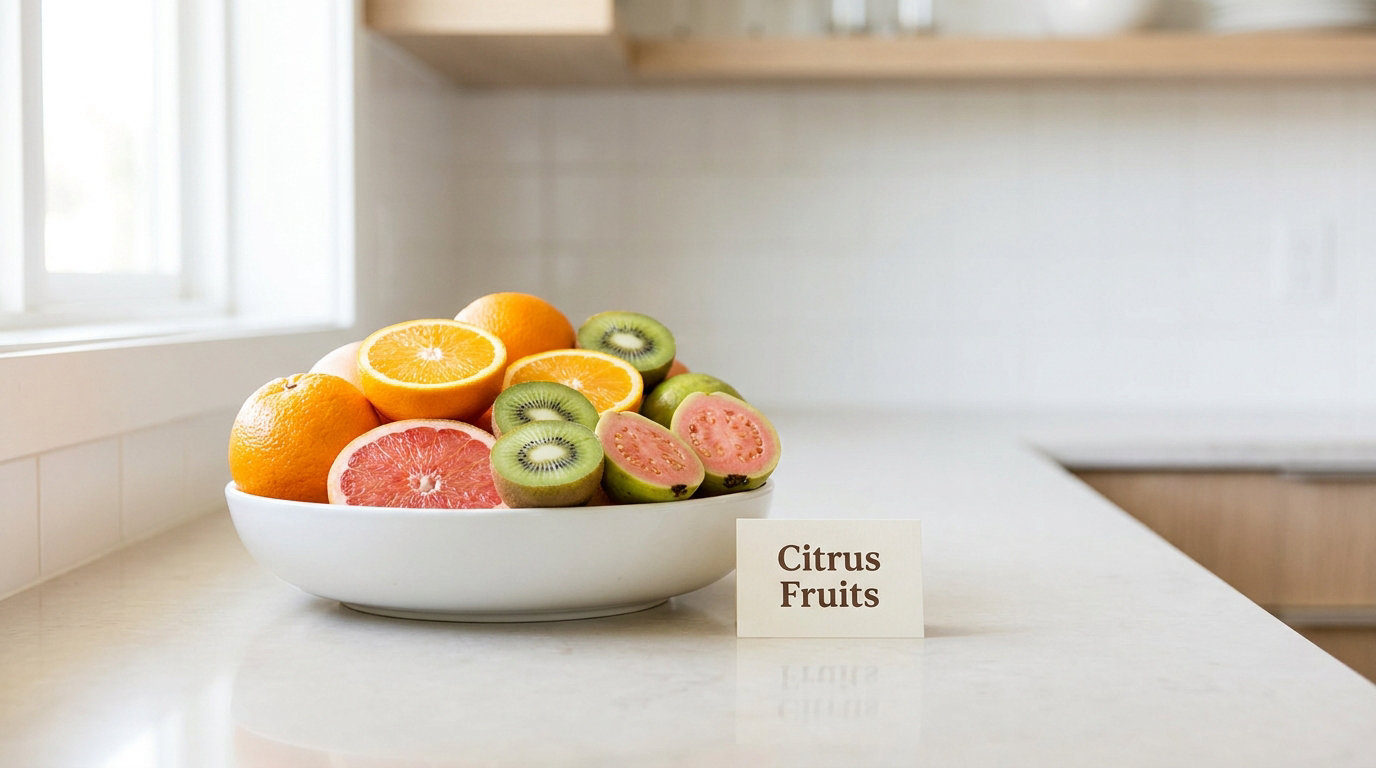
Vitamin C is the one nutrient with a direct job in the skin: it acts as a cofactor for the enzymes that build collagen, the structural protein that keeps skin firm. Low vitamin C and skin thinning have been linked in research, including work out of Otago University that looked at kiwifruit consumption, skin thickness and how quickly new cells form at the surface over an eight-week period.
Citrus also brings folate and a useful amount of water, and the peel of an orange carries flavonoids that act as antioxidants. In practice, the everyday sources are more useful than the exotic ones: oranges, grapefruit, kiwi, clementines, and guava when it is in season.
How to Include Citrus in Your Diet and Other Foods That Help Skin Look Less Dull
Whole fruit beats juice here. A glass of orange juice delivers the vitamin C but removes most of the fiber, and you lose the chewing that slows the sugar load. A medium orange has a few dozen calories and keeps you full until lunch.
Some combinations that work without any effort: segments added to a pot of tea or sparkling water, kiwi sliced over breakfast oats, grapefruit at the start of a lunch, lemon and zest in a dressing, guava in halves with a spoon. If you take a supplement, food still does more for you, because the whole-food package carries the fiber and the plant compounds that a capsule does not.
2. Leafy Greens
Kale, spinach, Swiss chard, romaine and arugula are nutrient-dense in a way most vegetables are not. They supply vitamins A, C and K, folate, plus lutein and zeaxanthin, the pigments that protect light-sensitive tissue and help keep the skin barrier intact.
Most people eat greens as a side dish and then wonder why nothing changed. A better approach is to make them the base: a bed of greens under a protein, a handful folded into scrambled eggs, or chard massaged into pasta with garlic and lemon. Cooked greens lose some of their vitamin C, which is one of several reasons the foods that help skin look less dull work best as a mix of cooked and raw.
3. Berries
Blueberries, raspberries, strawberries, blackberries and cherries are full of anthocyanins, the pigments that give them their color. Those pigments have antioxidant activity in the body, and the same fruits bring vitamin C and fiber along for the ride.
They are also one of the easiest foods to add anywhere. Toss half a cup into oatmeal, blend with yogurt and a spoon of nut butter, or use them in place of a sweet snack. Frozen berries count and cost less, which matters if fresh ones run expensive in your area.
4. Avocado
Avocado is unusual among fruits because it is mostly fat, and that fat is the point. It carries unsaturated fat, fiber, vitamin E and a range of carotenoids, and eating fat alongside vegetables measurably improves absorption of fat-soluble nutrients including carotenoids. If you add avocado to a plate of leafy greens and peppers, you get more out of all of them.
Portion matters more than people expect. Half a fruit is a normal serving; a whole large avocado is closer to a meal in calories. Common uses: sliced on wholegrain toast, cubed into a salad with tomatoes, or mashed with lime, salt and garlic as a dip for vegetables.
5. Sweet Potatoes
A medium sweet potato is a good source of beta-carotene, which the body converts to vitamin A, along with potassium, fiber and vitamin C. Vitamin A supports normal cell turnover, and the fiber keeps the rest of the meal from spiking your blood sugar.
Roast them whole, cut them into wedges with a little olive oil, or blend them into soups. Olive oil or avocado alongside is worth it because it improves how much beta-carotene you absorb. That is a general pattern across several of the foods on this list, including carrots, which were the focus of a Northumbria University study on carotenoid-rich diets and skin appearance.
6. Nuts and Seeds
Walnuts, almonds, sunflower seeds, chia seeds and hemp hearts cover a lot of ground in one small serving. You get vitamin E, zinc, selenium and magnesium, plus plant-based omega-3 in the case of chia and hemp, and omega-3 ALA in walnuts and flaxseed.
Zinc matters for skin repair, and selenium supports thyroid function, which affects skin and hair. Portion awareness is the issue: a small handful of nuts or two tablespoons of seeds fits into a day’s eating, and larger handfuls turn a supportive habit into a heavy one. Pumpkin seeds are an inexpensive, zinc-rich option if nut costs are a strain on your budget.
7. Tomatoes
Tomatoes carry vitamin C, potassium and lycopene, a carotenoid that gives them their red color. Cooking in a small amount of fat raises how much lycopene your body takes in, so a tomato sauce, roasted tomatoes or a soup counts for more on the skin front than a raw tomato eaten straight from the fridge.
That is worth knowing if you are trying to build a plate from the foods that help skin look less dull. Canned tomatoes are not the compromise people assume — they are usually picked ripe and are a cheap, shelf-stable way to get lycopene year round.
8. Bell Peppers
A single red bell pepper can supply more vitamin than a full day’s reference intake, and the same vegetable carries carotenoids of its own. Green, yellow and orange peppers are useful too, just with less of the vitamin C and the sweetness that makes people actually eat them.
The obvious uses are raw with hummus, sliced into salads, stir-fried with other vegetables, or stuffed and baked. Raw is best if vitamin C is the goal, since heat destroys some of it. Paprika and chili powder made from peppers carry carotenoids in a shelf-stable form that is easy to keep in a pantry.
9. Green Tea
Green tea is the one item on this list that is a drink rather than a food. It contains catechins, a family of polyphenols with antioxidant and anti-inflammatory activity in laboratory studies, and it contributes to your fluid intake without the sugar that comes from most drinks.
Keep the claims modest. Green tea is a sensible daily drink, not a treatment, and heavily sweetened versions work against the hydration and blood-sugar goals that support even-toned skin. One to three cups a day, brewed a few minutes and left plain, is enough to make it a habit rather than a project.
10. Whole Grains
Oats, quinoa, brown rice, whole wheat and barley bring fiber, B vitamins and magnesium, and they do something that matters more than any single nutrient: they keep your blood sugar and energy steady through the day. Repeated sharp swings are hard on skin, and steady meals make the rest of the plan easier to follow.
Oats at breakfast, quinoa or barley at dinner, wholegrain bread for sandwiches. If you are used to white versions, change one thing at a time — a week of wholegrain toast is easier to keep than a total switch. Because the foods that help skin look less dull work in combination, a grain is best paired with a legume or an egg rather than eaten alone.
11. Legumes
Beans, lentils and chickpeas are the most budget-friendly way to get protein, iron, folate and fiber in one bowl, and they matter for anyone eating vegetarian or vegan. Skin is made largely of protein, and collagen synthesis needs amino acids available rather than stretched thin.
Pairing them with vitamin C foods is worth remembering: vitamin C improves the absorption of plant-based iron, so lentils with peppers, chickpeas with tomatoes, or black beans with citrus covers two jobs at once. Canned versions with a rinsed label are quick and inexpensive, and a pot of lentil soup on the weekend handles several meals.
12. Fermented Foods
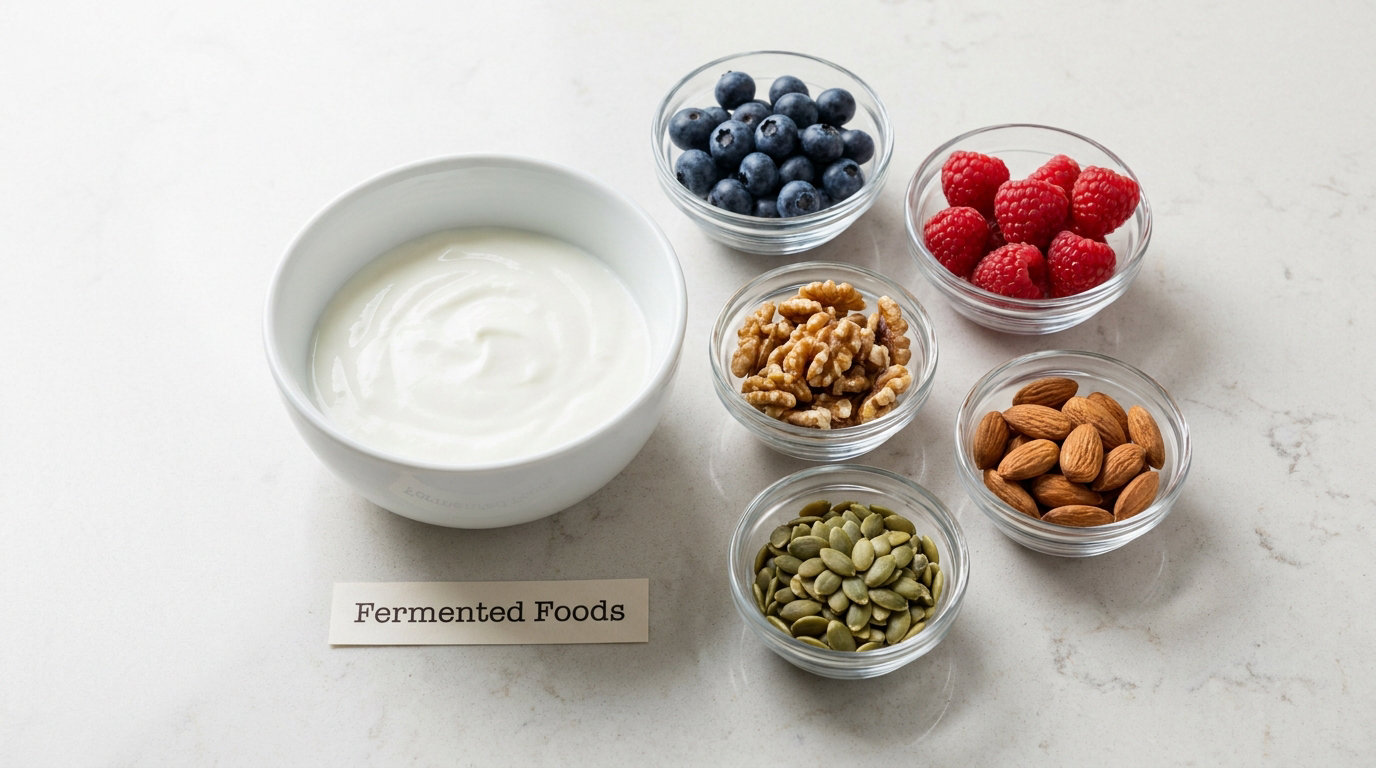
Plain yogurt, kefir, sauerkraut, kimchi, miso and some cheeses contain live cultures. The interest here is the gut-skin axis: the intestines and skin are linked through immune and inflammatory pathways, and a diet that supports gut bacteria tends to show up in skin that behaves better. Trials on fermented milk products and fermented vegetables have reported improvements in inflammatory skin conditions for some participants.
Be clear about the limit. Fermented foods are a reasonable addition to a varied diet, and in the discussion threads on Reddit’s r/SkincareAddiction, people often report steadier skin once they added them. Food choices alone do not determine how your skin looks, and no single culture will transform a complexion. Yogurt with berries and a spoon of seeds, a side of kimchi with rice and vegetables, or a spoonful of miso in soup are all easy ways in.
Frequently Asked Questions
Can foods really help skin look less dull?
Foods cannot change your skin the way a treatment might, but the way skin looks is shaped by what happens beneath it. Eating patterns low in vitamin C, healthy fats, protein and antioxidants are associated with skin that looks flat and uneven, and correcting that takes weeks. Dullness with an otherwise solid routine is one of the cases where diet is worth a proper look.
Which vitamins and minerals support healthy-looking skin?
Vitamin C is central because it is a required cofactor for collagen production. Vitamin A and beta-carotene support normal cell turnover, and vitamin E, zinc, selenium and omega-3 fats help protect against free-radical damage and keep the skin barrier functioning. Protein supplies the amino acids collagen is built from. Eating a variety of whole foods covers all of these more reliably than isolated supplements.
How quickly could dietary changes affect my skin?
Think in weeks, not days. Skin cell turnover means a change made today shows up at the surface over roughly four to eight weeks, and a photograph taken now is a better baseline than a mirror. The research on kiwifruit and vitamin C looked at skin thickness and cell renewal across an eight-week window. Anyone promising a visible glow in ten days is selling something.
Are superfoods or supplements better than everyday foods?
For most people, everyday foods win, because they come with fiber, and often a better price. Supplements can fill a real gap when a clinician identifies one, such as vitamin D or B12 in certain diets. What the forums ask most often is which food actually did something, and the consistent answer is a pattern of varied whole foods rather than one powder.
What other habits matter alongside eating for dull-looking skin?
Three things sit alongside food. Sleep, because skin repairs itself overnight and short nights show up as grey, puffy skin. Sunscreen, since ultraviolet exposure dulls tone and breaks down collagen over time. And hydration, which supports skin that looks plump rather than flat. Gentle exfoliation helps too, but it is easy to overdo, especially on oily skin that people wrongly assume is dry.
When should I see a healthcare professional about changes in my skin?
See a doctor or dermatologist if dullness arrives suddenly, keeps growing, comes with itching, redness, scaling, pain, pus or open sores, or changes in a mole. A persistent flat or tired-looking complexion that does not shift after eight to twelve weeks of consistent habits is worth a check-up too, as are ongoing fatigue, thirst or other symptoms. This article is general information, not a diagnosis.
Conclusion
Start with one meal today: build it around two or three colorful whole foods, some protein and a source of fat, and repeat it tomorrow. Drink water, sleep properly, wear sunscreen, and give the change four to eight weeks before you judge it. If your skin changes suddenly, hurts, or stays flat despite consistent habits, book an appointment with a doctor or registered dietitian rather than adjusting your diet further on your own.