
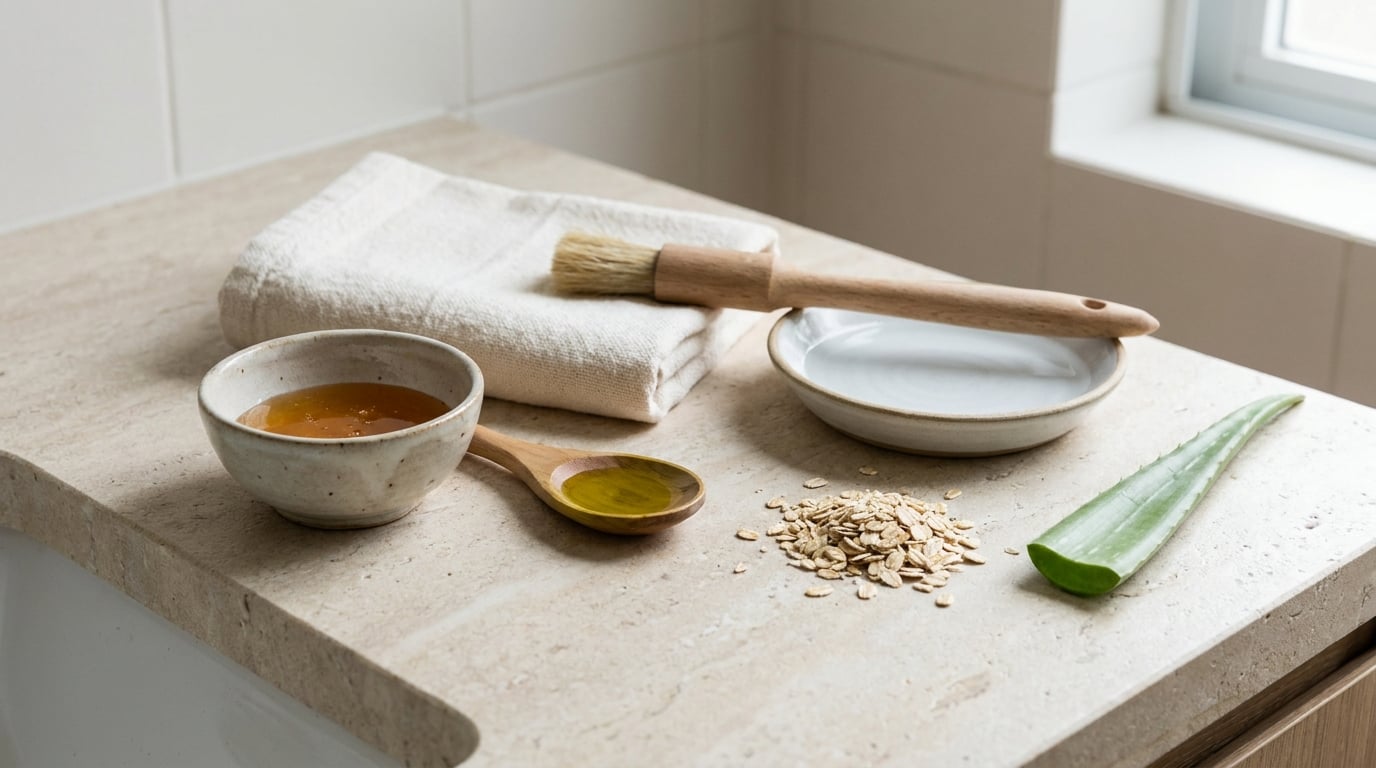
A honey face mask for dry skin is a leave-on treatment made from honey plus a hydrating or sealing ingredient, spread in a thin layer on clean skin for about 10 to 15 minutes, then rinsed off with lukewarm water. Honey works because it draws water into the skin as a humectant and slows that water from escaping, which is exactly what a compromised dry-skin barrier needs.
The whole thing takes five minutes of prep and fifteen minutes of waiting, and it costs about the same as a jar of honey you probably already have. This is the version I keep coming back to in winter, and it has a few rules that most recipes skip.
Table of Contents
- What You Need to Make a Honey Face Mask for Dry Skin
- Step-by-Step: Mixing, Applying and Rinsing
- Common Mistakes With a Honey Face Mask on Dry Skin
- What to Mix With Honey, and What to Skip
- Frequently Asked Questions
- How long should a honey face mask stay on?
- Can honey face masks worsen dry skin or cause irritation?
- Should I add yogurt, aloe, or another ingredient to a honey face mask?
- How often can I use a honey face mask?
- Does a honey face mask replace moisturizer or other skin care?
- What should I do if my skin feels tight afterward?
- Conclusion
What You Need to Make a Honey Face Mask for Dry Skin
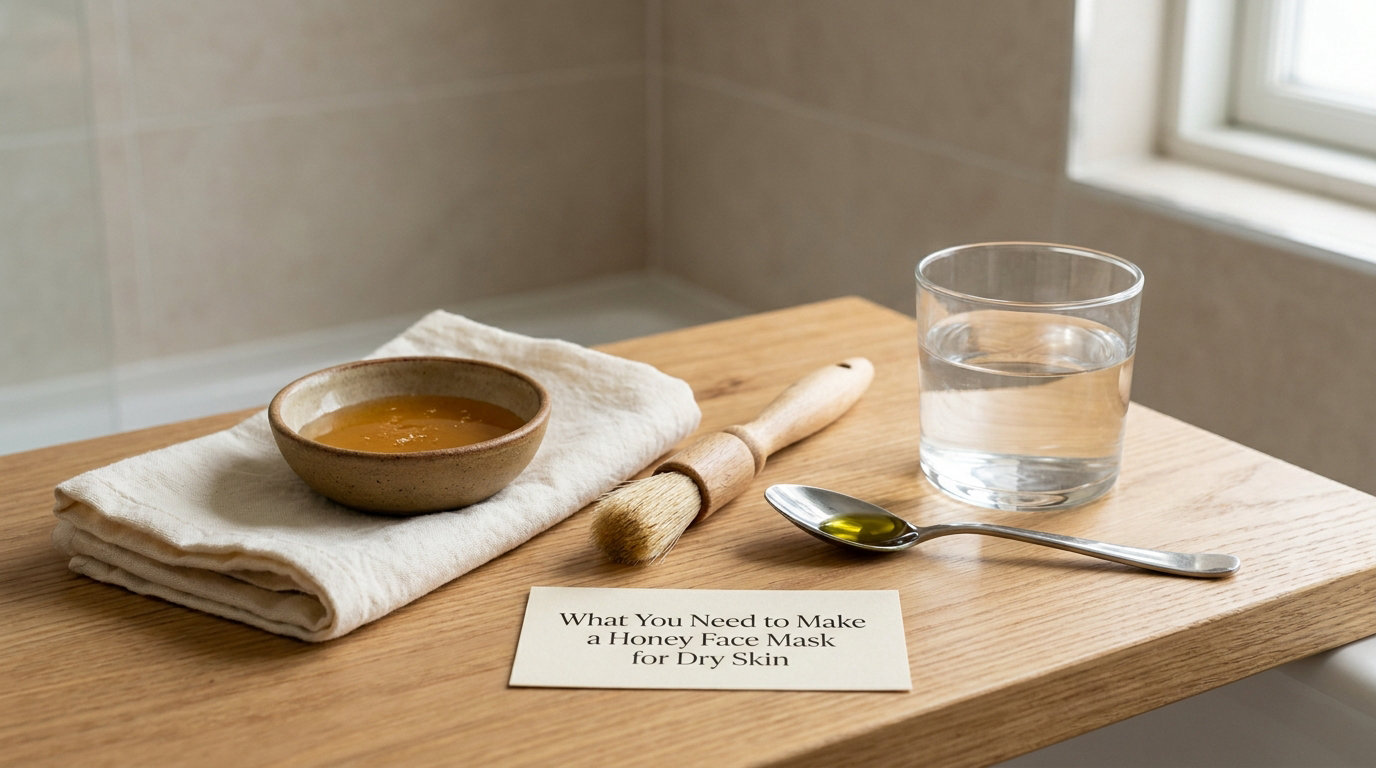
You need three things, and two of them are optional. The base is one tablespoon of honey, and the rest depends on whether your skin is flaky, tight, or just dull.
- The base: 1 tablespoon raw honey. Raw or unpasteurized is preferable because heat processing dulls some of the compounds people are after, but any plain honey works.
- A humectant (draws water in): 1 teaspoon plain whole-milk yogurt, aloe vera gel, or a spoonful of finely ground oatmeal. Choose one, not all three.
- An occlusive (seals water in): 1 teaspoon olive oil, jojoba oil, or avocado. This is the part most dry-skin recipes skip, and it is the part that actually stops the tightness.
- Tools: a small bowl, a fork or whisk, a pastry brush or clean fingertips, a clean towel, and lukewarm water ready to go.
Make it fresh each time. A wet honey mix has no preservatives, and it will sit in a bowl picking up bacteria if you save the leftovers.
Step-by-Step: Mixing, Applying and Rinsing
The method matters more than the ingredients. The whole difference between a soothing mask and a sticky, tight mess is how thin the layer is and how quickly you rinse it.
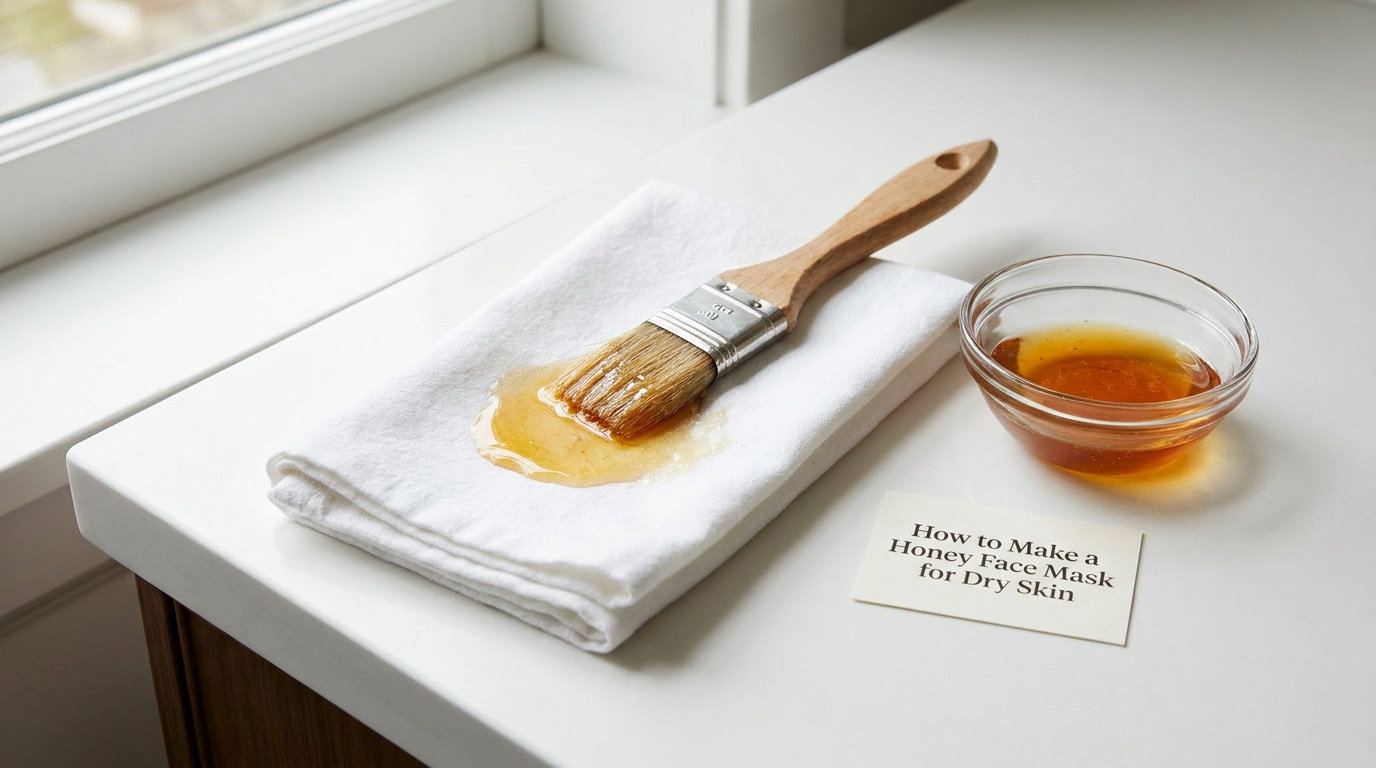
How to Make a Honey Face Mask for Dry Skin
- Patch test first. Dab a little of the mixed mask on your inner forearm or the skin beside your nose, and wait 24 hours. Dry skin is already reactive, so a quick coffee-shop test on the jaw is not the same thing.
- Cleanse and pat dry. Gentle cleanser, lukewarm water, no scrubbing. You want the mask sitting on clean skin, not on sunscreen or a layer of makeup.
- Mix the base. Stir 1 tablespoon honey with 1 teaspoon of your chosen humectant until smooth, then fold in 1 teaspoon of oil. It should be a loose, spreadable consistency, not a paste.
- Apply a thin, even layer. Use a pastry brush or fingertips. Thin enough that you can still see your skin tone underneath, and keep it away from your eyes, nostrils, and lips.
- Wait 10 to 15 minutes. Set a timer. If the mask starts to dry, crack, and pull at your skin, that is your cue to rinse early, not to sit through it.
- Rinse with lukewarm water. Honey clings. Massage it off with wet fingertips for 20 to 30 seconds first, then splash or rinse the rest. Hot water strips the oils you just added.
- Pat dry and moisturize within a minute. Press a towel into the skin rather than rubbing, then apply your moisturizer while the skin is still slightly damp.
That last step is the one people skip, and it is the one that decides whether your skin feels better an hour later. The mask brings water in; the moisturizer keeps it there.
Common Mistakes With a Honey Face Mask on Dry Skin
Nearly every bad honey mask result I hear about comes down to one of these.
A thick, sticky layer. Honey is adhesive by design, and a heavy coat stretches as it dries and pulls at the surface. Fix: half the honey, twice the coverage, and spread thinner than feels reasonable.
Leaving it on until it’s dry and cracking. A dried honey film is not a treatment working harder, it is moisture leaving. Fix: rinse at 10 to 15 minutes, or the moment the mask loses its sheen.
Skipping the patch test. Cinnamon, lemon, and undiluted essential oils are common in honey recipes and are frequent sensitizers. Fix: patch test every new combination, and skip them entirely on compromised or flaking skin.
Forgetting the moisturizer. Fix: decide on your moisturizer before you start, so it is on the counter and there is no excuse to skip it.
Using lemon juice for “glow” on dry skin. Acid on a dry barrier is a reliable way to end up red and flaking. Fix: use yogurt for gentle smoothing instead, or nothing at all.
Rinsing with hot water or scrubbing. Both undo the oil you just applied. Fix: lukewarm water, fingertips, pat dry.
Over-masking. Honey is fine once or twice a week. Daily use on dry skin can leave some people congested around the nose and chin. Fix: twice a week for a month, then reassess.
What to Mix With Honey, and What to Skip
Here is the short version for dry skin specifically. The pairing that matters most is a humectant to pull water in and an oil to hold it.
- Honey and oatmeal: the soothing option for flaky or tight skin. Finely grind the oats first so there are no scratchy bits.
- Honey and plain yogurt: the smoothing option. The lactic acid is mild, so expect a soft result rather than exfoliation.
- Honey and olive or jojoba oil: the dry-skin option, and the one I would start with. Jojoba sits closer to your skin’s own oils.
- Honey and aloe: the cooling option for warm weather or post-sun skin.
- Honey and a splash of rosewater: fine, but think of it as scent and light hydration, not a treatment.
- Skip lemon, cinnamon, and undiluted essential oils when your skin is dry or already irritated.
On frequency, once or twice a week is plenty. More than that is unlikely to add much, and it is the more likely route to breakouts if you are prone to them.
Frequently Asked Questions
How long should a honey face mask stay on?
Ten to fifteen minutes is the useful window. Honey is a humectant and a mild occlusive, and both jobs happen while it is still in contact with damp skin. Leave it on until it loses its sheen or starts to tighten, then rinse. Leaving a honey mask on until it dries and cracks pulls water out of your skin, which is the opposite of what you want.
Can honey face masks worsen dry skin or cause irritation?
Pure honey is rarely irritating, but added ingredients are usually the problem. Cinnamon, lemon juice, and undiluted essential oils are frequent sensitizers, and dry or flaking skin reacts more readily than average. Patch test any new combination for 24 hours, skip the acids and spice on compromised skin, and stop as soon as you feel burning or lasting warmth.
Should I add yogurt, aloe, or another ingredient to a honey face mask?
Yes, if you pick one and know why. Plain yogurt or aloe adds a humectant, and a teaspoon of olive or jojoba oil adds the occlusive layer that actually stops tightness. Adding several at once gives you no way to tell which one your skin disliked, so change one thing per session rather than testing five ingredients in a single mask.
How often can I use a honey face mask?
Once or twice a week is the sensible range for dry skin. Honey is gentle, but any mask used daily can congest the nose and chin area, especially if you are breakout-prone. Keep it at twice a week for a month, take stock of how your skin feels, and drop to weekly if you notice new congestion or redness that clears slowly.
Does a honey face mask replace moisturizer or other skin care?
No. It is an add-on, not a replacement. The mask draws water into the skin and slows its escape for about fifteen minutes; a moisturizer applied on damp skin afterward is what holds that water through the rest of the day. Keep your cleanser, moisturizer, and daily sunscreen in place, and treat the honey mask as a weekly extra.
What should I do if my skin feels tight afterward?
Apply moisturizer immediately, while the skin is still slightly damp, and use a thicker cream or an occlusive balm rather than a light lotion. Warm water next time, a shorter leave-on time, and adding an oil to the mix usually fix a tight feeling. If tightness continues into the next day, or you see redness, scaling, or itching, stop the mask and see a dermatologist.
Conclusion
Mix one tablespoon of honey with a teaspoon of an oil like olive or jojoba, plus a teaspoon of yogurt or oatmeal if your skin is flaking, keep the layer thin, and give it 10 to 15 minutes before rinsing with lukewarm water.
Then moisturize while your skin is damp, and stop the whole thing if you feel burning. If you want to try it tonight, do the forearm patch test first, then the mask.