
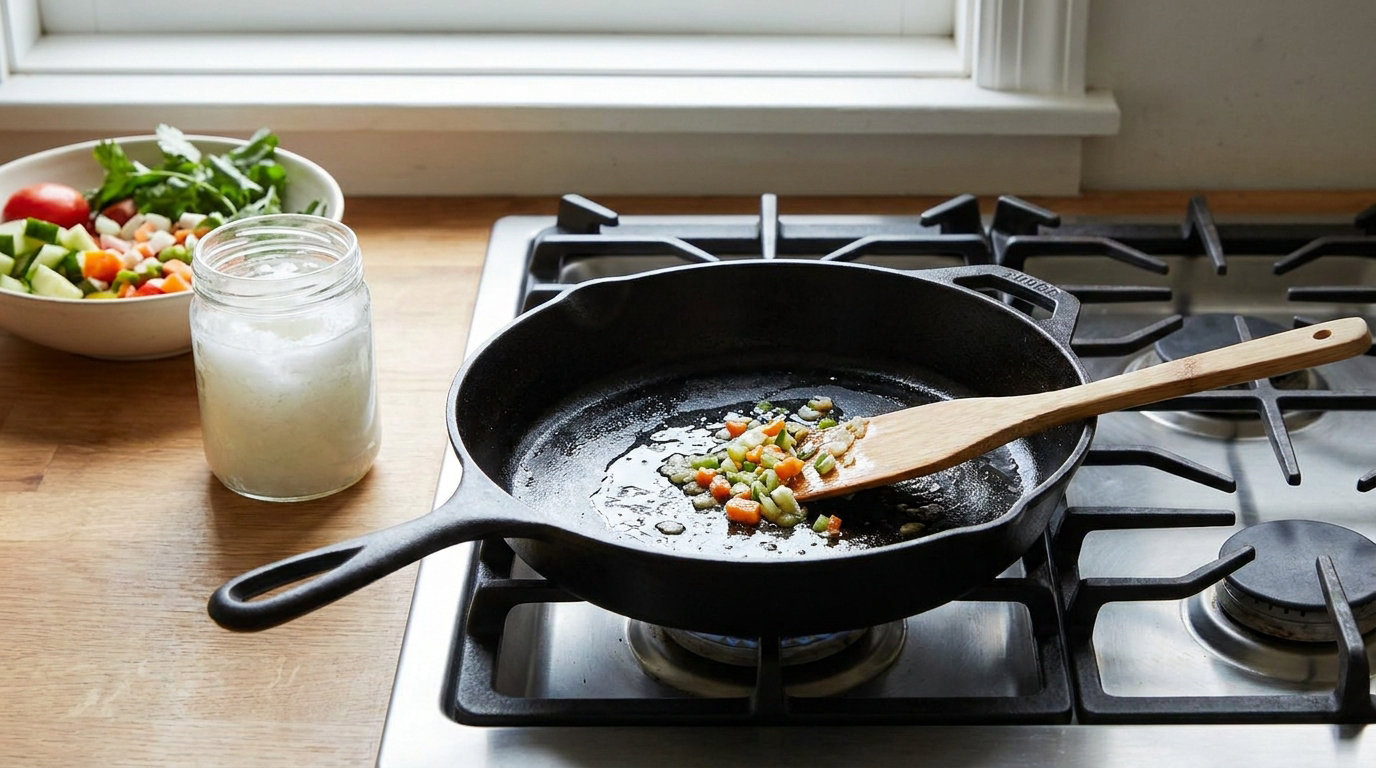
Coconut oil handles high heat, but which jar you grab decides how high you can go. Refined coconut oil holds to roughly 400–450°F (204–232°C) before it smokes, which makes it a solid choice for searing, stir-frying and deep frying. Virgin or unrefined coconut oil tops out closer to 350°F (177°C) and suits medium heat, baking and curries better. Here is the actual technique, step by step.
The conflicting smoke point numbers you find online are not a conspiracy, they are a labeling problem. The same plant behaves very differently once it has been refined, and most charts quote a single number for a category that contains three very different products. Check the grade before you check anything else.
Age matters as much as grade. An old jar, or one that has already been heated several times, smokes well below its listed number because oxidation has happened in the bottle. Cooks on r/popcorn make this point constantly: the fix is a fresh bottle, not a lower burner setting.
Table of Contents
What You Need
Three grades show up on shelves, and they are not interchangeable at high heat. Virgin, also labeled unrefined, cold-pressed or expeller-pressed, keeps the flavor compounds and free fatty acids from the coconut meat. Refined coconut oil is bleached and deodorized, and those stripped-back compounds are the reason it tolerates far more heat. Fractionated coconut oil has part of the lauric and medium-chain content separated out, which makes it the most heat-stable of the three and liquid at room temperature.
| Grade | Approximate smoke point | Flavor | Best high-heat use |
|---|---|---|---|
| Virgin or unrefined | About 350°F (177°C) | Strong coconut aroma | Sautéing, medium-heat curries, baking |
| Refined | About 400–450°F (204–232°C) | Neutral to faintly nutty | Searing, pan-frying, stir-frying, deep frying |
| Fractionated | More heat-stable than refined; follow the label | Very neutral | Deep frying, high-temperature searing |
On the bottle, look for the words refined coconut oil, or the initials RBD for refined, bleached and deodorized. If the jar only says virgin or organic virgin, keep it for baking, popping corn, sautéing and curries.
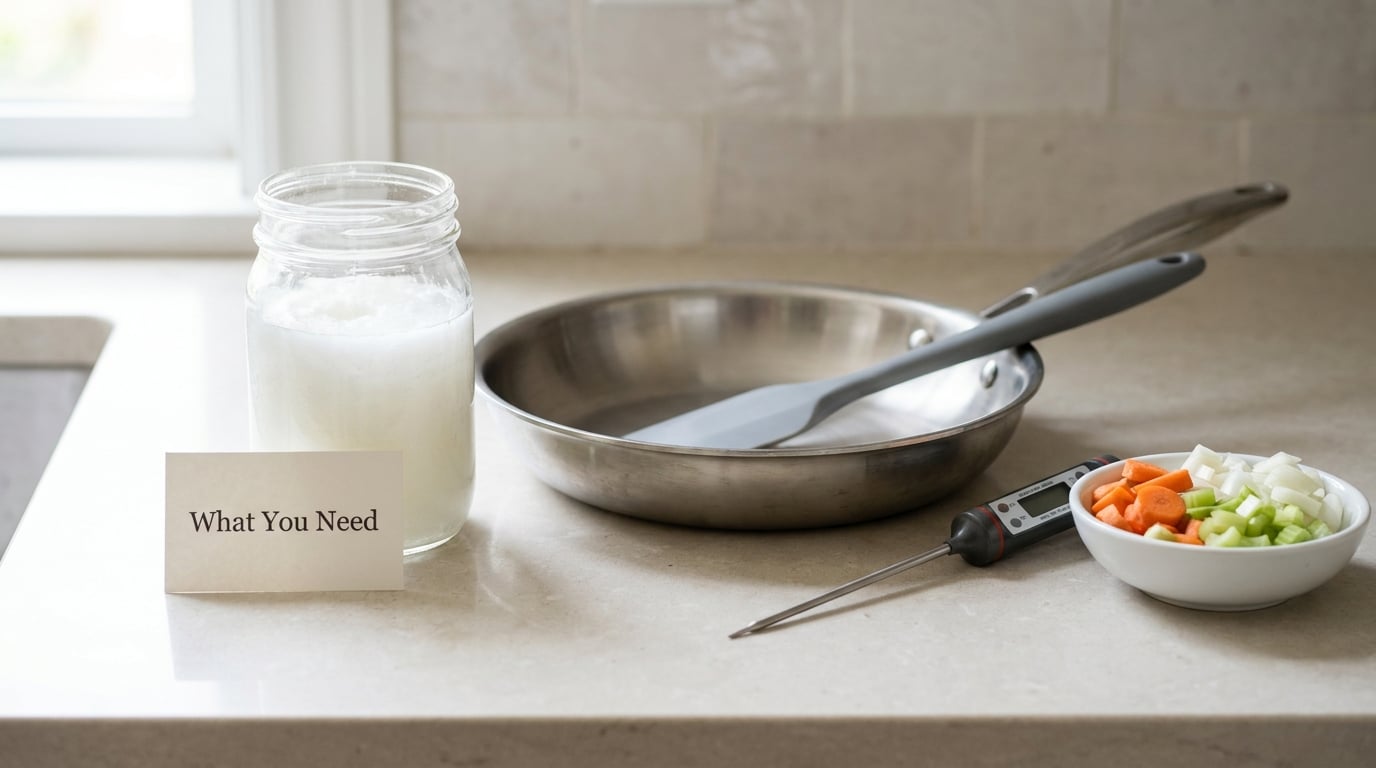
Beyond the oil, you need a heavy skillet or wok, a silicone spatula or wooden spoon, and an instant-read thermometer if you plan to pan-fry or deep-fry. For quantities, think thin film rather than pool: roughly 1 to 2 tablespoons for a 12-inch skillet, enough to coat the base and a little more. For deep frying, follow the temperature, not the bottle.
One honest note on health, because this comes up constantly. Coconut oil is high in saturated fat, and the American Heart Association recommends unsaturated vegetable oils rather than tropical oils for everyday cooking. It fits fine as an occasional cooking fat, but if you want a neutral high-heat fat you can use daily, refined avocado or canola oil is a closer fit. Talk to your doctor or a registered dietitian about your own situation.
Step-by-Step: How to Use Coconut Oil for Cooking at High Heat
Choose the Right Coconut Oil
Refined coconut oil is the version built for high heat, because refining removes the free fatty acids that oxidize and smoke earliest. Fractionated coconut oil goes further and stays liquid at room temperature, which saves you the melting step entirely.
Coconut oil is solid below about 76°F (24°C), so scoop it straight from the jar if your kitchen is cool. Virgin oil that smells strongly of coconut at room temperature will taste even stronger once it heats, and that aroma is the first thing to change when the oil is pushed too far.
Preheat the Pan and Add the Oil
Seasoning a pan and preheating it are different jobs. Seasoning coats the surface with polymerized oil over a long, low bake. Preheating is simply bringing the pan to temperature before food goes in, and that is what high-heat cooking requires.
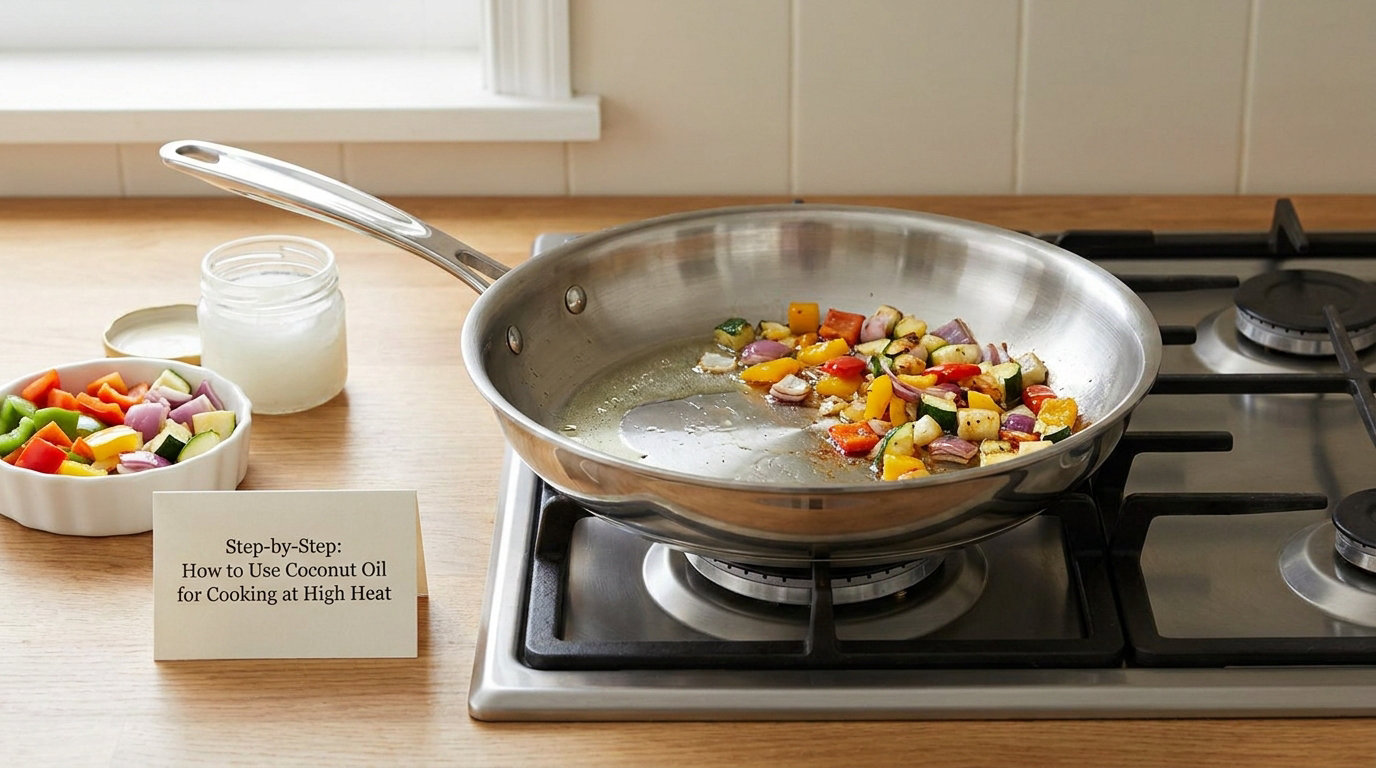
Heat the pan empty for a minute or two on medium-high, add the measured oil, then let it melt and spread before the food goes in. Tilt the pan and swirl so it coats the base in a thin film instead of sitting in one thick puddle. A puddle of oil has its own depth of heat and its own way of going from golden to black.
Cook and Watch the Oil Carefully
A properly heated oil shimmers and flows like water when you tilt the pan. Thin wisps of smoke mean it is past its working range for the food you have in mind, so lower the heat or move the pan off the burner. Thick, continuous smoke with a sharp or acrid smell means stop and discard the oil rather than trying to cook through it.
Food controls the temperature too. Adding wet vegetables, seafood or meat drops the oil temperature fast, which is exactly what you want. Tostones and coconut shrimp brown quickly in refined coconut oil at medium-high, and a whole chicken thigh or a steak needs the pan hotter, so keep those batches uncrowded and let each side develop crust before turning.
Use Food-Safe Temperatures and Store Leftovers
Oil temperature and food temperature are separate measurements, and the food is what makes the meal safe. USDA guidance puts the minimum internal temperature at 165°F (74°C) for poultry, 160°F (71°C) for ground meat, and 145°F (63°C) for whole cuts of meat and fish. Check the thickest part with a thermometer rather than cutting into a piece to peek.
Move leftovers into the refrigerator within two hours, use them inside three to four days, and reheat to 165°F (74°C). Keep the jar closed and stored away from the stove and the window, because heat, light and air are what age it fastest.
Common Mistakes
Treating the smoke point as a promise. Published numbers come from lab tests on fresh samples, so your pan, your burner and the age of your oil all move the real number. Smoke means the fat is breaking down now, regardless of what the label claims.
Searing with virgin oil. It works at medium heat, and it works at low-medium heat for gentle sautéing, but pushing it toward 350°F is how you get the smoky, soapy flavor that people blame on coconut oil in general.
Pouring cold oil into a screaming-hot pan. The oil browns before it spreads, and food hits a sticky, unevenly coated surface. Heat the pan first, add the oil second, give it ten seconds to melt and move.
Using too much oil. More is not better at high heat. A thin film is enough for searing and stir-frying, and extra fat cools the pan and slows the browning you wanted.
Crowding the pan. Food packed in contact steams instead of searing, the temperature drops, and the crust never forms. Cook in batches even when it feels wasteful.
Reusing tired oil. Oil that has been fried in repeatedly, or stored warm, oxidizes and smokes earlier every time. Strain it after one use if you want to store it, keep it cool and dark, and discard anything that smells stale, waxy or acrid before it hits the pan.
Ignoring the flavor turning soapy or bitter. That is the early warning that the oil is degrading. The smell shows up long before visible smoke, so trust your nose and lower the heat or change the oil.
The moment you see smoke, kill the heat, slide the pan off the burner, and cover it with a metal lid. Never add water to hot oil, and never carry the pan. Let it cool where it sits, then discard the oil if the smell is sharp.
Watch the oil more than you think you need to. High-heat cooking in coconut oil is mostly a matter of the first ninety seconds.
Frequently Asked Questions
Is coconut oil safe to cook with at high heat?
Yes, as long as you pick the grade and watch the pan. Refined coconut oil takes heat well and is generally considered stable for everyday high-heat cooking. Virgin or unrefined coconut oil smokes around 350F, so it suits medium heat, baking and curries instead. Freshness matters too: old or repeatedly heated oil breaks down sooner. Keep the burner moderate, do not walk away, and discard oil that turns acrid.
What type of coconut oil is best for high-temperature cooking?
Refined coconut oil is the best all-round choice for searing, stir-frying and deep frying, with a smoke point around 400 to 450F. Fractionated coconut oil is even more heat-stable and stays liquid at room temperature. Save virgin coconut oil for baking, popping corn, medium-heat sautéing and curries, where its coconut aroma is a feature rather than a problem.
What is the smoke point of coconut oil?
It depends on the grade, which is why online numbers disagree. Virgin or unrefined coconut oil smokes at roughly 350F (177C). Refined coconut oil smokes around 400 to 450F (204 to 232C). Fractionated coconut oil is the most heat-stable of the three, so follow the number on the label. Old or repeatedly heated oil smokes well below any of these figures.
Can I use coconut oil instead of cooking spray in a pan?
Yes, and most cooks find it works better on a hot surface. Cooking spray burns off and leaves an aerosol residue on nonstick pans. Melted coconut oil gives you a controllable film you can spread across the pan. Use a small amount, roughly a tablespoon for a 12-inch skillet, and refined oil if you are cooking at high heat.
How should I store coconut oil after opening it?
Keep the jar sealed, in a cool cupboard away from the stove and out of direct sunlight. Heat, light and air drive oxidation, and oxidized oil smokes at a lower temperature than the label states. It does not need refrigeration, though a warm kitchen shortens its life. Coconut oil solidifies below about 76F, so scoop it from the jar in cool conditions and melt it before cooking.
Conclusion
Start by replacing or buying refined coconut oil if the jar you own says virgin. That single change decides whether how to use coconut oil for cooking at high heat works for you: preheat the pan, add a thin layer rather than a pour, keep the food uncrowded, and stay close enough to catch smoke in the first few seconds. Take food temperatures seriously, refrigerate leftovers within two hours, and keep the jar cool and dark so your next pan starts where this one left off.